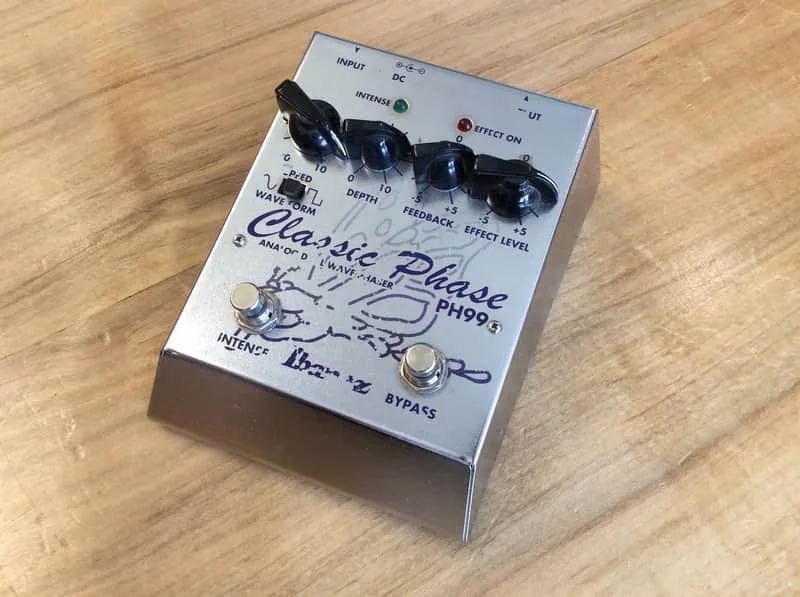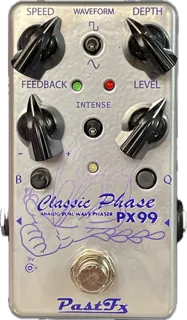

The PastFX Classic Phase PX99 is a compact phaser pedal that revives the Ibanez PH99 Classic Phase, a pedal Ibanez produced only from 1997 to 1999 and never reissued12. PastFX describes it as "our take on the discontinued Ibanez PH99 Classic Phase with extra features"2, rebuilding the original circuit in a smaller box and adding controls the original never had, including a waveform selector, a Q switch and a switchable four or six stage optical path2.
Guitar Pedal X reviewed it at release in July 2024 as a "compact, feature-extended edition" of the PH99, and found it a notably flexible pedal: versatile and full-flavor across its range, with a slight cocked-wah quack at maximum settings3.
Where it came from
The original Ibanez PH99 Classic Phase was produced for only three years, 1997 to 1999, and Ibanez never reissued it1. TONEHOME, which tracks the Classic Series, rates its collectibility as high while noting that availability on the secondhand market is still good1. That combination, a short production run with no reissue, is what made it a candidate for a revival.
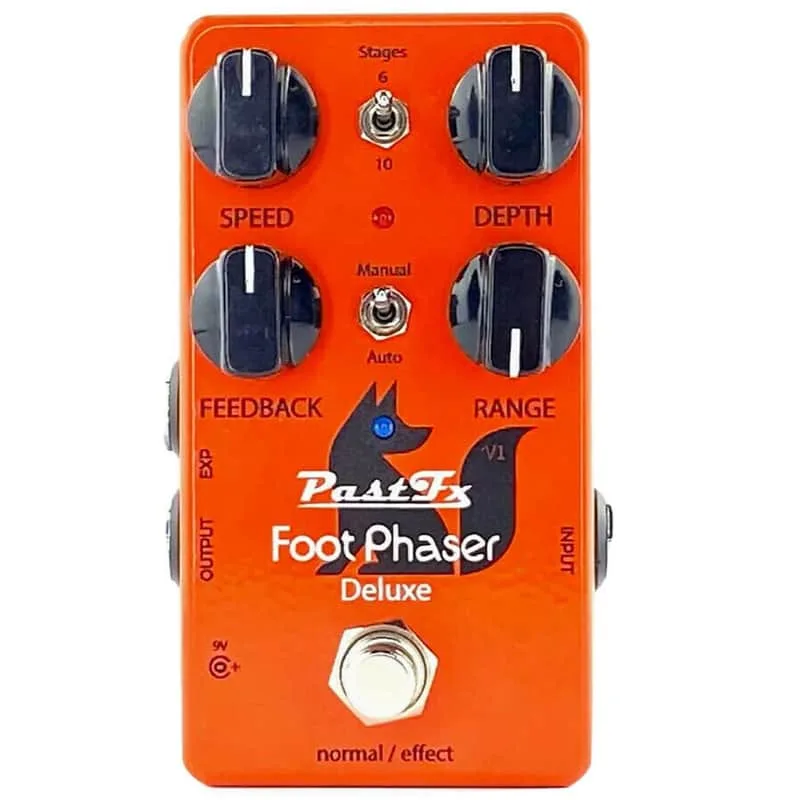
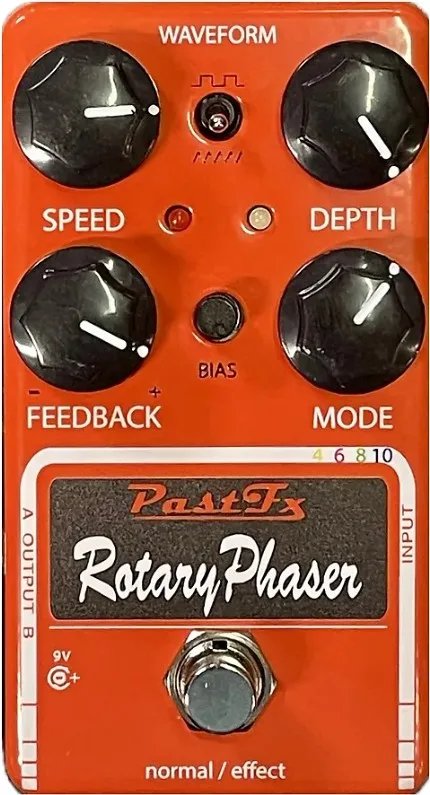
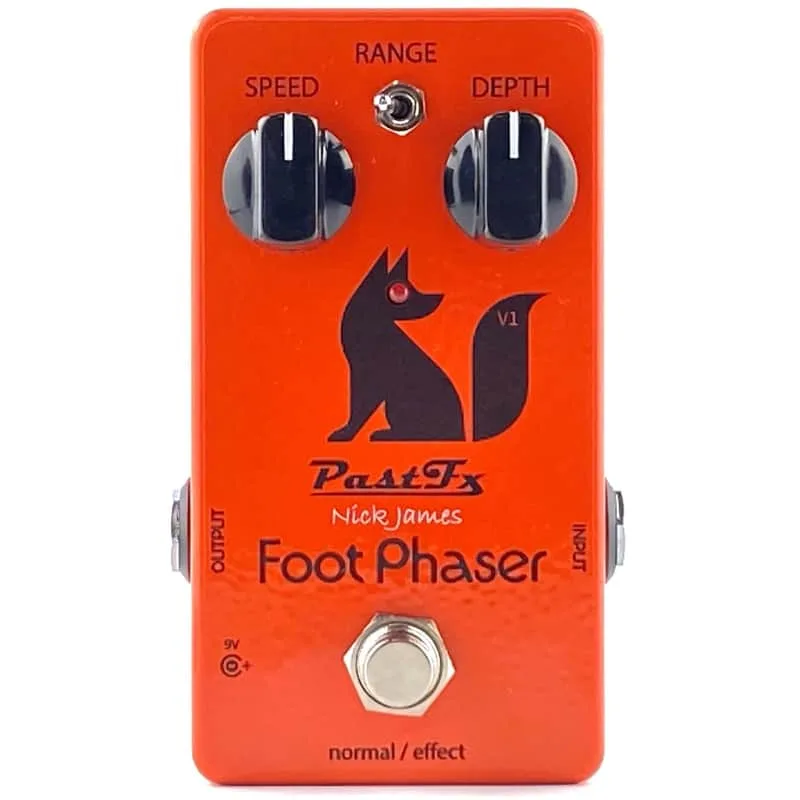
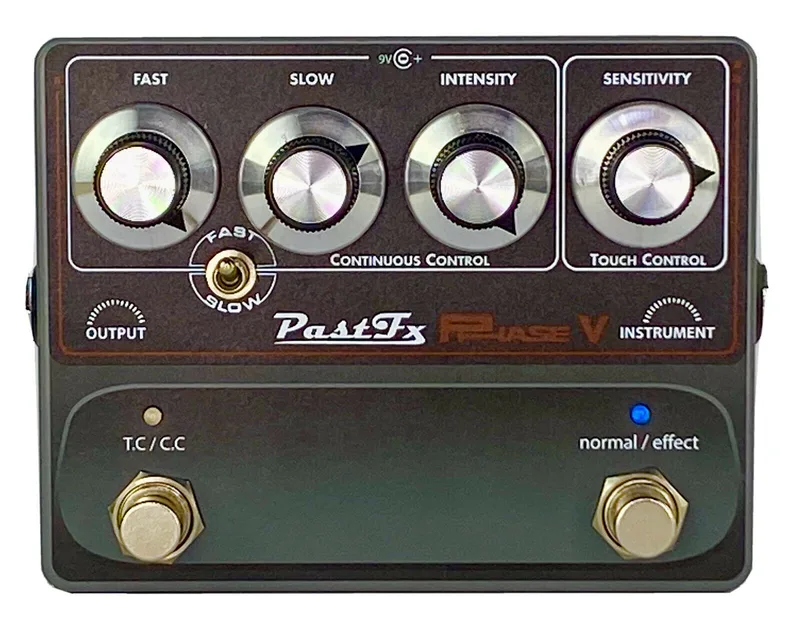
PastFX is a maker built around exactly this kind of work. Beyond the PX99, its phaser line includes the Foot Phaser Deluxe and the Rotary Phaser, and the company has also revived and enhanced other vintage circuits, such as the DOD FX76 Punkifier as the PX76 Punkifriar36. The PX99 was released in July 20243.
Controls and what they do
The PX99 carries the original's speed control plus a set of additions. Guitar Pedal X lists the full control set at release3:
| Control | What it does |
|---|---|
| Speed | Sets the sweep rate of the LFO3 |
| Waveform | Selects square or true sine wave LFO23 |
| Depth | Sets how deep the modulation goes3 |
| Feedback | Sweeps from negative to positive feedback3 |
| Intense (stages) | Selects 6 stages (red) or 4 stages (green)23 |
| Q switch | Increases the Q-factor of the swept filter path2 |
The Q switch is the control the original PH99 never had. PastFX explains it in the manual terms: "The 'Q' switch increases the Q-Factor of the swept filter path, shifting the peaks & notches closer together and producing a deeper, more focused, flange-like phaser tone"2. In practice, a higher Q makes the swept peaks and dips more pronounced and closer spaced, which pushes the pedal away from a subtle shimmer and toward a more vocal, flanger-like sweep.
The stage selector switches between four and six phaser stages, with the six stage position marked "intense"2. A visual LFO LED indicator shows which is active: the green LED for four stages, the red LED for six2. The waveform selector chooses between a square wave LFO, which steps between points, and a true sine wave, which sweeps smoothly2.
Guitar Pedal X's reviewer found the controls interact in useful ways: "Bias, Feedback and Q can produce a pseudo Flanger voice, while maximum settings deliver quacky modulation"3.
Power, bypass and size
The PX99 runs on 9V DC, center negative, through a 2.1mm Boss style jack, with a 40mA current draw2. It is true bypass, so the signal path is out of the circuit when the pedal is off2. The enclosure measures 112 x 60 x 31mm, small enough to sit in a tight pedalboard row2.
The 9V DC center negative requirement means the PX99 runs on a standard Boss style supply rather than a battery, and the 40mA draw should be checked against a daisy chain's per-output budget if you share one supply across several pedals2.
What reviewers said
Guitar Pedal X has covered the PX99 more than once. In the July 2024 release review, Stefan Karlsson wrote:
"It's just an exceptional incredibly versatile and full-flavour phaser - expertly calibrated by Verlie!"3
Verlie is the designer behind PastFX's modulation pedals, and the reviewer noted the PX99 was the third PastFX phaser he had reviewed, after the Foot Phaser Deluxe and the Rotary Phaser, all described as different and distinct3. In a November 2024 survey of PastFX's modulation range, his view had not changed, calling the PX99 "perfectly balanced and really easy to dial in" and his favorite of the maker's phasers to date4. The same site's 2024 round-up of new modulation pedals called it "a great take on Ibanez's Classic Phase"5.
How it fits among PastFX's phasers
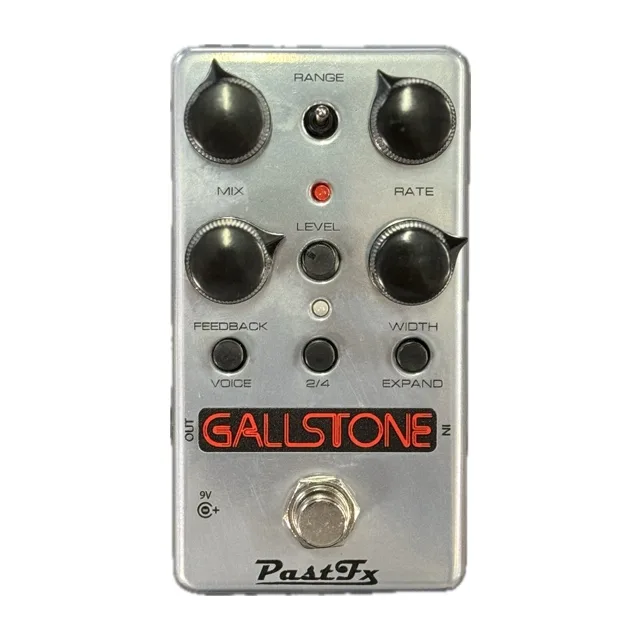
PastFX's phaser line covers several vintage circuits, and the PX99 is the compact, mid-priced option. The Foot Phaser Deluxe and Rotary Phaser came before it3, and the company later added the Gallstone, a recreation of the Electro-Harmonix Small Stone V2 with its own expanded control set. For a player weighing a PH99-style circuit against a Small Stone-style circuit, the practical difference is character and control layout: the PX99 offers the stage switching, waveform selection and Q control described above, in a 112 x 60 x 31mm enclosure2.
Videos
Tri Pedal Reviews
Questions
What is the PastFX Classic Phase PX99 based on?
It is PastFX's take on the discontinued Ibanez PH99 Classic Phase, a phaser pedal produced by Ibanez from 1997 to 1999 that was never reissued. PastFX rebuilt the circuit in a compact enclosure and added extra features, including a waveform selector, a Q switch and a four or six stage selector.
What does the Q switch do on the PX99?
The Q switch increases the Q-factor of the swept filter path, shifting the peaks and notches closer together. PastFX says this produces a deeper, more focused, flange-like phaser tone. Guitar Pedal X found that combining the Bias, Feedback and Q controls can produce a pseudo flanger voice.
Is the PastFX PX99 true bypass?
Yes. PastFX lists the Classic Phase PX99 as true bypass, so with the pedal disengaged the signal passes through without active buffering. It runs on a 9V DC center negative 2.1mm Boss style jack rather than a battery.
How much current does the PX99 draw?
PastFX specifies a 40mA current draw at 9V DC, through a 2.1mm Boss style center negative jack. That is modest by modern standards, but it means the pedal expects a proper power supply rather than a battery.
Who designed the PastFX PX99?
The PX99 was calibrated by Verlie, the designer behind PastFX's modulation pedals. Guitar Pedal X's reviewer, who has covered several PastFX phasers, described the PX99 as an exceptionally versatile, full-flavour phaser expertly calibrated by Verlie.
What do the green and red LEDs mean on the PX99?
The PX99 has a visual LFO LED indicator that shows which phaser stage count is active. The green LED corresponds to the four stage setting, and the red LED corresponds to the six stage, more intense setting selected on the stage selector switch.
Sources (6)
- TONEHOME, TONEHOME
- Classic Phase PX99, pastfx.com, 2026
- Guitar Pedal X, Guitar Pedal X, 2024-07-23
- Guitar Pedal X, Guitar Pedal X, 2024-11-14
- Guitar Pedal X, Guitar Pedal X, 2024-12-19
- Guitar Pedal X, Guitar Pedal X, 2026-10-16