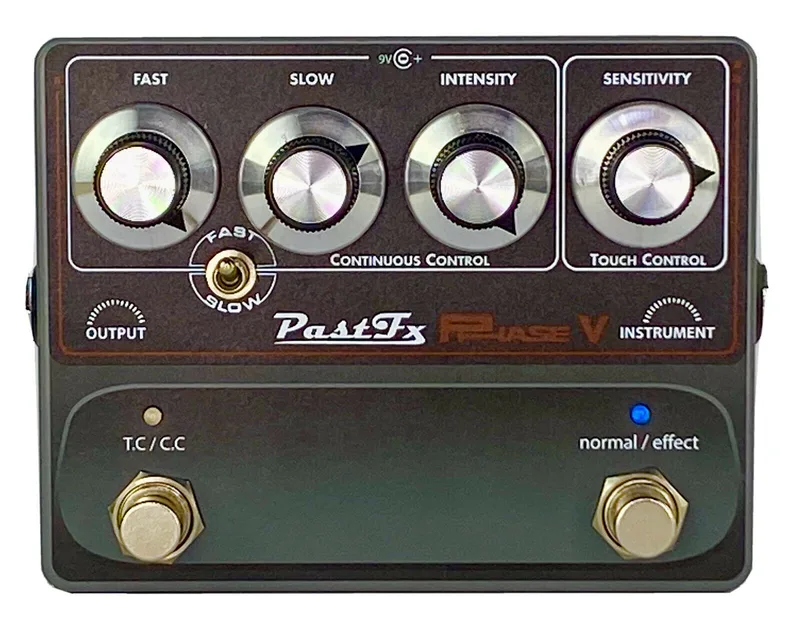

The PastFx Phase V is a phaser built by PastFX as a reproduction of the 1970s Roland AP-5 Phase Five, a unit that ran off mains power and was roughly three times the size and weight of the PastFx version. PastFX says the Phase V is able to achieve all the sonic features of the original in a standard 1590BB style pedal enclosure1.
The AP-5 itself has a strong reputation. In a JHS Pedals interview, Josh Scott said of the original: "I have a Roland AP-5 Phase Five, and this may be the best phaser I've ever played, because it has the sensitivity setting. You pick through it, and the harder..."2. PastFX notes that the original Roland AP-5 now attracts high prices from both artists and collectors alike1.
Continuous Control and Touch Control
The AP-5 was unusual for its time in offering two ways of controlling the phase speed, and the Phase V carries both over. Continuous Control uses a conventional LFO to generate a regular rate of phase, the kind of sweep found in most phasers produced today. Touch Control instead responds to how hard you pick, which is what the sensitivity setting Josh Scott praised was built on32.
Each mode has its own LED indicator: red for Continuous Control and green for Touch Control, so you can see at a glance which mode is active3.
Controls and switching
| Control | What it does |
|---|---|
| Intensity knob | Controls the depth of the phase3 |
| Mode LEDs | Red for Continuous Control, green for Touch Control3 |
| Footswitch | True Bypass Normal / Effect3 |
| Flip switch | Corrects the volume drop found in the original AP-5, via an internal volume trimpot3 |
The Flip switch and internal volume trimpot are PastFX additions. The original AP-5 had a volume drop when engaged, and this feature corrects it3.
Power and hardware
The Phase V operates off industry standard 9VDC with negative tip on a 2.1mm connector, drawing approximately 80mA1. The circuit uses 6 hand matched Jfet transistors1. The enclosure measures 120 x 94 x 50mm in a 1590BB style housing1.
Where it sits among PastFX phasers
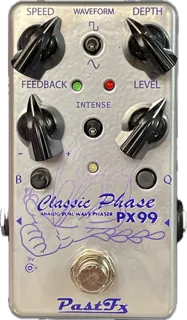
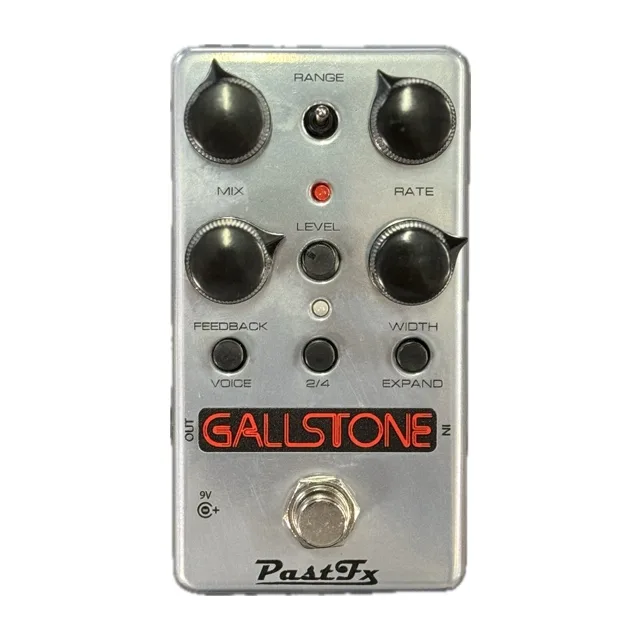
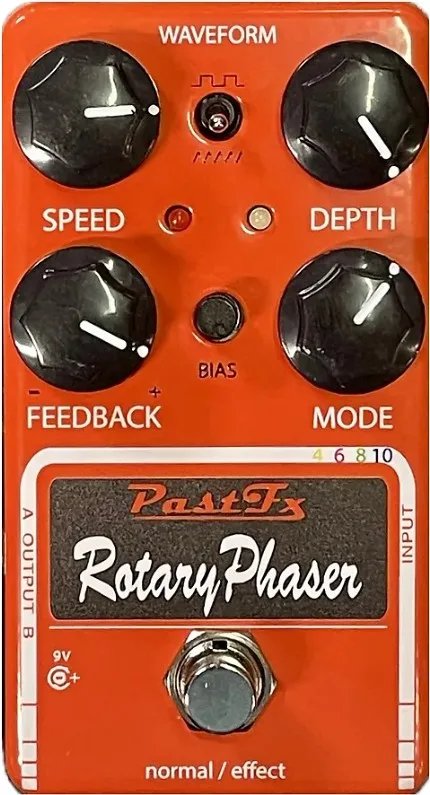
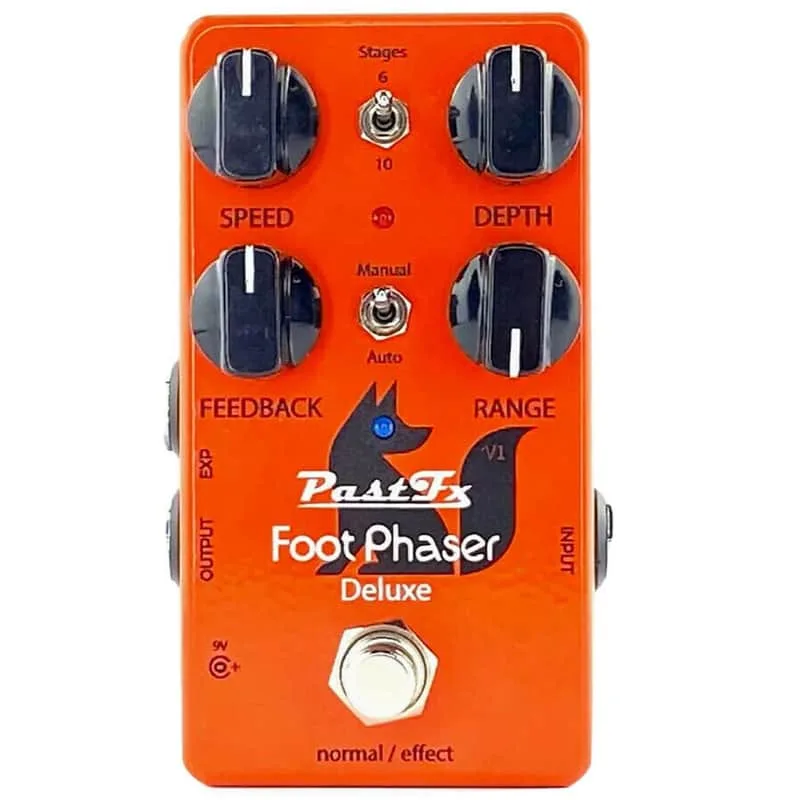
PastFX builds several phasers alongside the Phase V, including the PastFX PX99 Classic Phase, the PastFX Gallstone and the PastFX Rotary Phaser. The Phase V is the one aimed at the Roland AP-5, and its Touch Control mode is what sets it apart from LFO-only designs. For the wider category, see Phaser Pedals13.
Videos
The Pedal Picassos
thepedalpenguin
Questions
What does the Flip switch on the PastFx Phase V do?
The Flip switch, together with an internal volume trimpot, corrects the volume drop found in the original Roland AP-5. The original unit's level dropped when engaged, and PastFX added this feature so the Phase V can be set to match or boost the bypass level, something the 1970s original could not do.
Is the PastFx Phase V true bypass?
Yes. The manual describes a True Bypass Normal / Effect footswitch, so the pedal switches between the effect and a true bypass path. When off, the signal passes through without the phaser circuit loading it.
What is the difference between Continuous and Touch Control?
Continuous Control uses a conventional LFO to generate a regular rate of phase, the kind of sweep found in most phasers produced today. Touch Control instead ties the phase speed to your playing, so picking harder or softer changes how the effect moves. A red LED shows Continuous Control and a green LED shows Touch Control.
Does the PastFx Phase V need a battery or a power supply?
It runs off industry standard 9VDC with negative tip on a 2.1mm connector, drawing approximately 80mA. That current draw is higher than many compact phasers, so a dedicated power supply output rather than a battery is the practical way to run it.
Sources (3)
- Phase V, pastfx.com, 2026
- BEFORE BOSS WAS BOSS, JHS Pedals
- PastFx_Phase_V_manual.pdf, PastFx, 2021