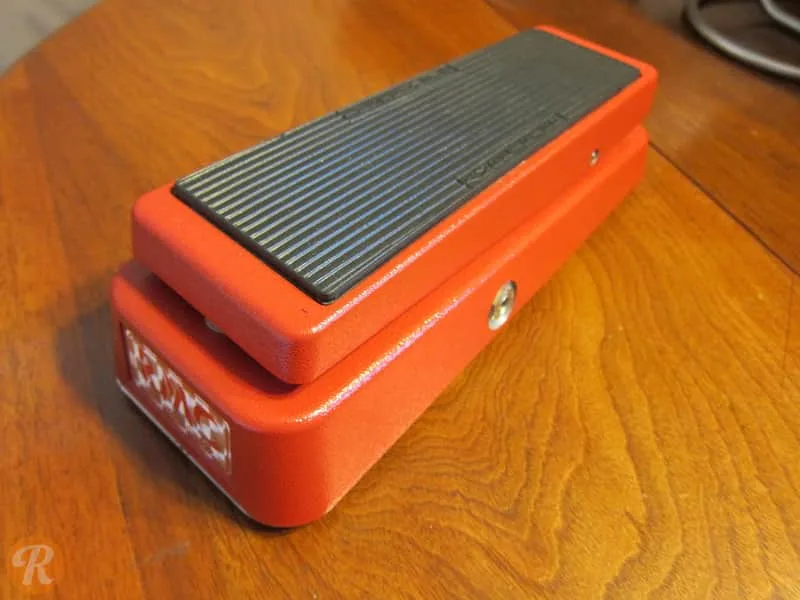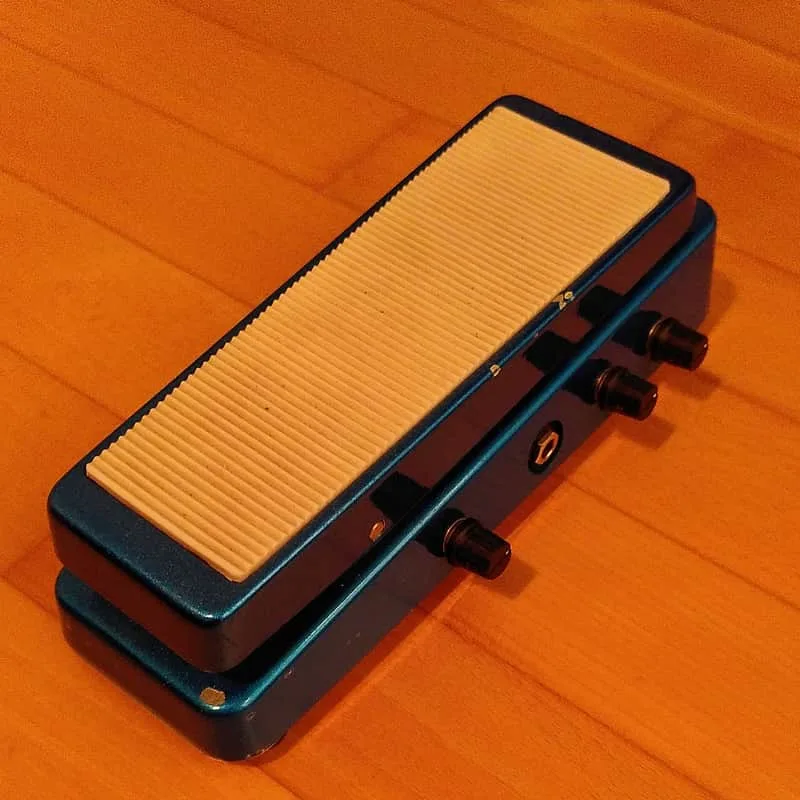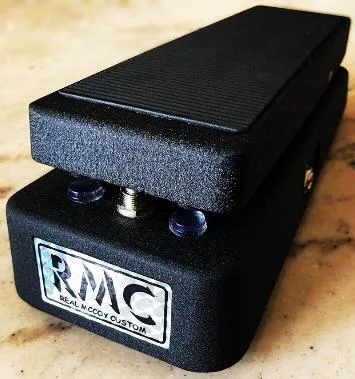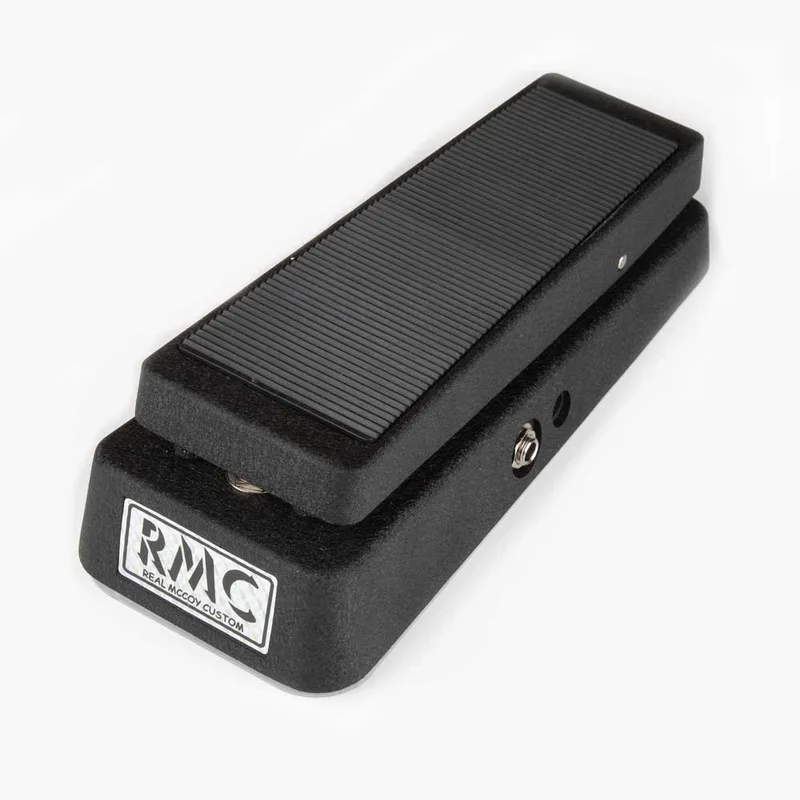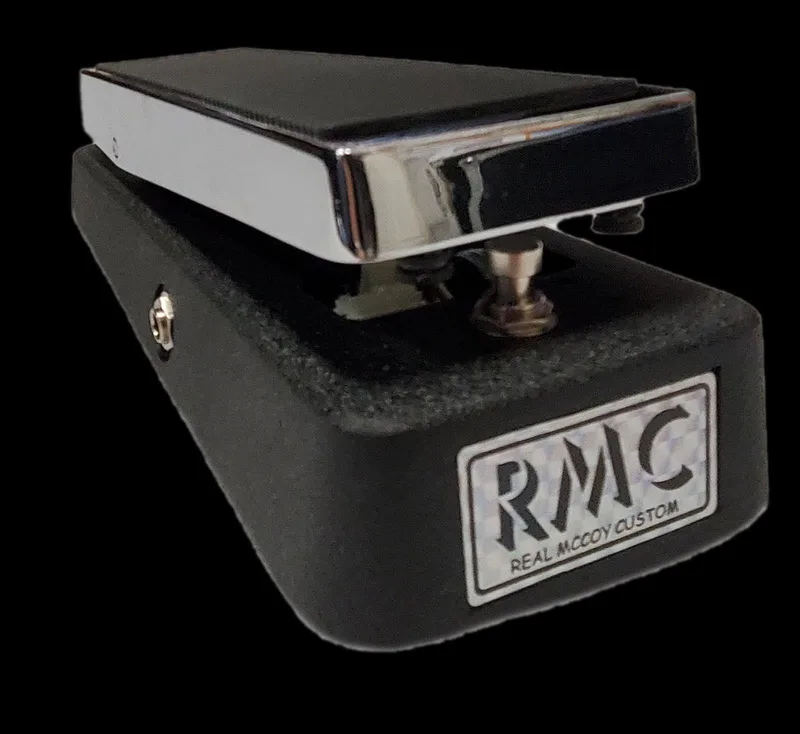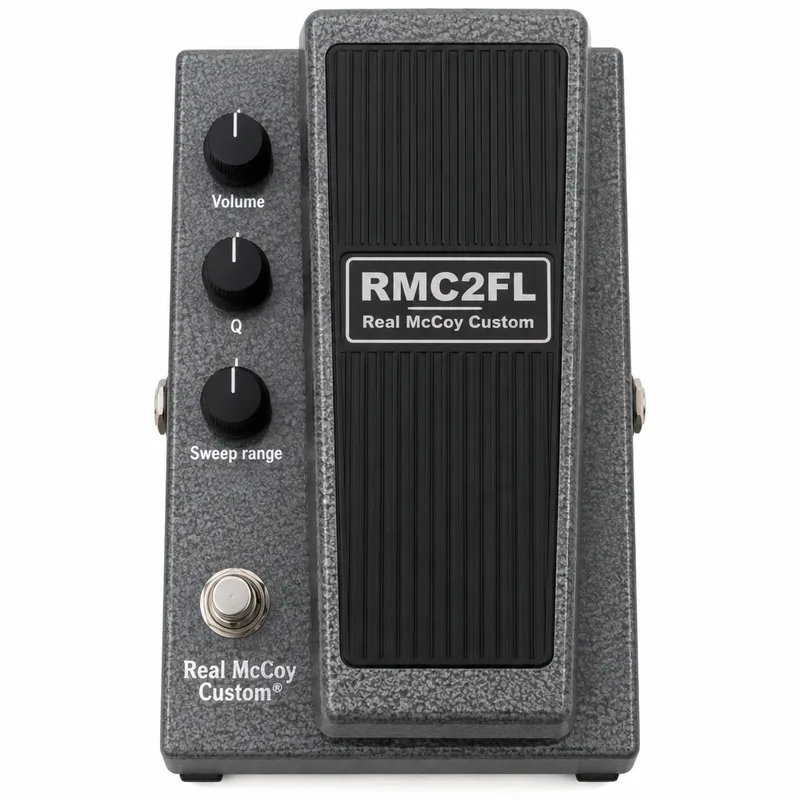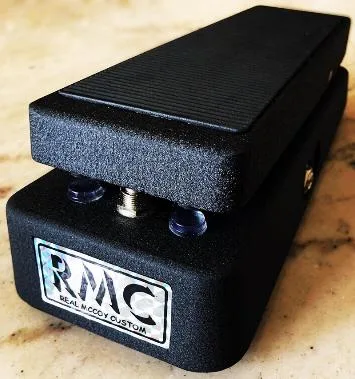


The Real McCoy Custom RMC3 is a wah pedal built by Real McCoy Custom, the company of Geoffrey R. Teese. First created in 1994, the maker describes it as "the world's first (and only) fully tunable self-contained wah," meaning its sweep can be reshaped through controls inside the pedal rather than by swapping parts1. Where most wahs give you a fixed voice, the RMC3 is built around adjustment: open the back plate and the internal trimmers let you set how the sweep behaves2.
The pedal is housed in a standard sized case topped with a black footpad, with a heavy-duty true-bypass on/off switch and a low-noise inductor1. Pedal of the Day, reviewing a 2005 unit, called the build quality out directly: "They're all hand-built and the attention to detail is second-to-none"2.
Power and setup
The RMC3 runs on a 9V DC regulated Class II AC adapter, and the maker is specific about what to feed it: the adapter requires a 5.5/2.1mm coax plug with a negative center post, and an adapter with 20mA to 200mA maximum current output1. The pedal itself draws under 10 mA1, so it is a light load on a pedalboard power supply.
No battery option appears in the maker's power specification. The RMC3 is adapter-powered, so it needs a 9V DC center-negative output on your board or a suitable wall adapter.
There is no battery compartment to manage and no polarity puzzle beyond the standard center-negative plug, which matches most modern pedal power supplies. The maker also covers the pedal with a limited one year warranty1.
Controls and tunable voice
The RMC3's defining feature is its adjustability. The controls live inside the pedal, and each one shapes a different part of the wah response. The LOW control, for example, sets the amount of low frequencies present in the wah's sweep3. The manual goes further and gives concrete starting points: it includes settings for SRV, Hendrix, Clapton, Santana, Colorsound, and Thomas organ sounds, so a player can begin from a known voice and adjust from there3.
Pedal of the Day's reviewer, Mike B, found the pedal works straight out of the box and rewards digging deeper2:
"The stock setup sounds great, but once you open up the back plate and start to play with the internal organs of this gorgeous wah, you’ll begin to understand its true power, and how you can harness it for you own good and well-being."2
He also noted that the review unit, a 2005 model by its serial number, had fewer trimmers than current production: "the newer ones have more specs and 2 more trimmers to play with"2. So a used RMC3's adjustability depends on when it was built.
History and versions
Teese released the RMC3 to the public in the winter of 199431, and the maker notes the model "has had many faces since 1994"1. The early years brought steady changes to how it was sold and housed:
| Date | Event |
|---|---|
| Winter 1994 | RMC3 released to the public4 |
| Late summer 1995 | Europe distribution begins, based in Germany4 |
| Late fall 1995 | Picked up by a small distributor in the U.S.4 |
| Summer 1996 | Begins appearing in its own original case, instead of pedal cases made by another manufacturer4 |
That last change matters to anyone shopping used units: RMC3s from before summer 1996 were built into cases made by another manufacturer, while later units use Real McCoy Custom's own enclosure4. The current version sits in a standard sized case with a black footpad1.
The RMC3's development continued through the mid-1990s. Late in the summer of 1995, Europe came on board, with distribution based in Germany4. In the summer of 1996, the RMC3 began to appear in its own original case, instead of being housed in pedal cases made by another manufacturer4. Its low-noise inductor1 and its LOW control, which sets the amount of low frequencies present in the wah's sweep3, carried across the pedal's run.
How it compares with the RMC5 Wizard Wah
The RMC5 Wizard Wah shares several specifications with the RMC3: true bypass, a current draw under 10 mA, and the same limited one year warranty51. It also adds an easily adjustable rocker tension (as of October 2006) and an AC adapter jack5. Where the RMC3's identity is full tunability of the sweep, the Wizard Wah is a distinct voiced model in the same hand-built line. A player choosing between them is choosing between a wah they can reshape extensively and one with its own preset character.
What reviewers said
Published coverage of the RMC3 is sparse but consistent. Pedal of the Day's 2014 review praised both the build and the sound, calling it "one of the absolute most customizable wahs you'll ever see" and saying it "comes roaring out of the gates with tone and quack"2. The same reviewer found the wah voiced well and reported that it "works on a great level with other pedals"2, which is a practical point for anyone running a wah alongside drives or fuzz.
Videos
tubeampdude
tonguegroover
Joe Gagan
Questions
Is the Real McCoy Custom RMC3 true bypass?
Yes. The maker's product page lists a heavy-duty true-bypass on/off switch, so when the pedal is off the signal passes through without the wah circuit in the path. The RMC5 Wizard Wah from the same builder is also true bypass.
What power supply does the RMC3 need?
It needs a 9V DC regulated AC adapter with a 5.5/2.1mm coax plug and a negative center post. The maker specifies an adapter with 20mA to 200mA maximum current output. The pedal itself draws under 10 mA, so a single output on most pedalboard power supplies is enough.
Does the RMC3 take a battery?
No. The maker's power specification covers an AC adapter only, with no battery option listed. If you run a pedalboard, plan on a 9V DC center-negative output for this one.
What does the RMC3 cost?
The US MSRP is $255, as listed on the maker's product page in 2024. The pedal is covered by a limited one year warranty.
What tones does the RMC3 manual suggest?
The manual includes settings for SRV, Hendrix, Clapton, Santana, Colorsound, and Thomas organ sounds, giving starting points for dialing in the internal controls. A reviewer found the stock setup already sounded good before any internal tweaking.
Who makes the Real McCoy Custom RMC3?
Real McCoy Custom, the company of builder Geoffrey R. Teese, makes the RMC3. He released it to the public in the winter of 1994, and the units are hand-built.
Sources (5)
- RMC3, realmccoycustom.com, 2024
- Geoffrey Teese Real McCoy Custom RMC3 Wah, Pedal of the Day, 2014-12-22
- Teese Real McCoy RMC Wah Wah Pedals, Analog Man Vintage guitar effects (analogman.com), 2025
- RMC HISTORY, realmccoycustom.com, 1996-06
- RMC5-WIZARD WAH, Real McCoy Custom, 2024