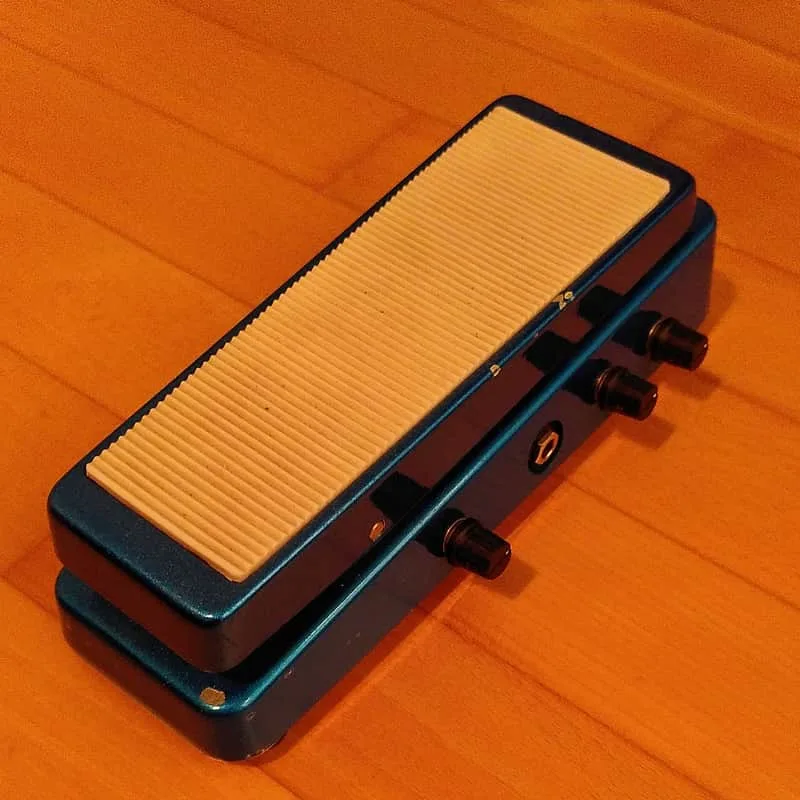
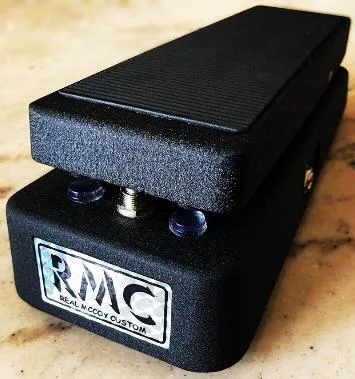
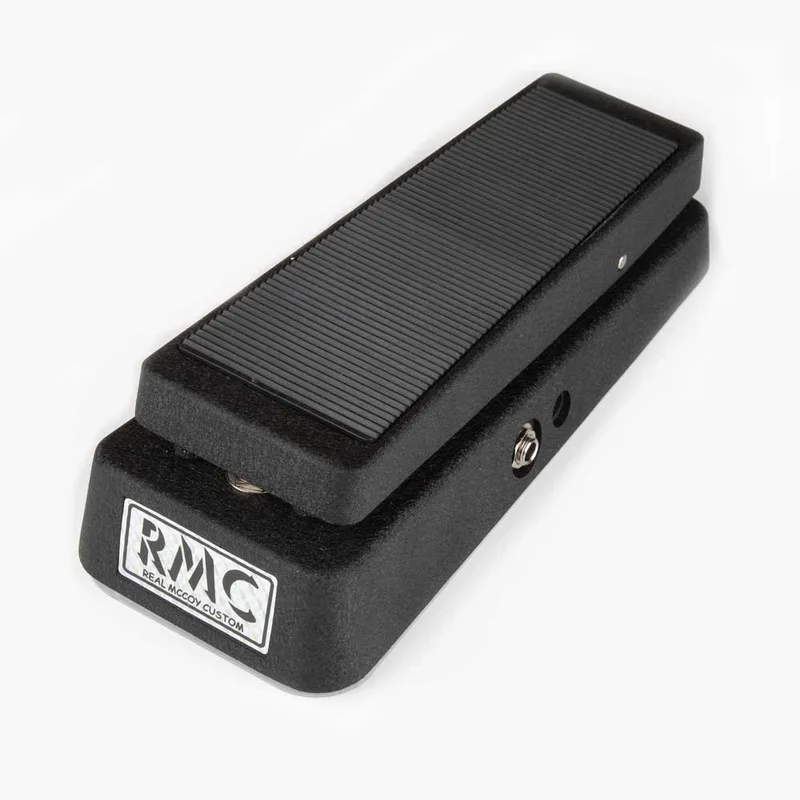
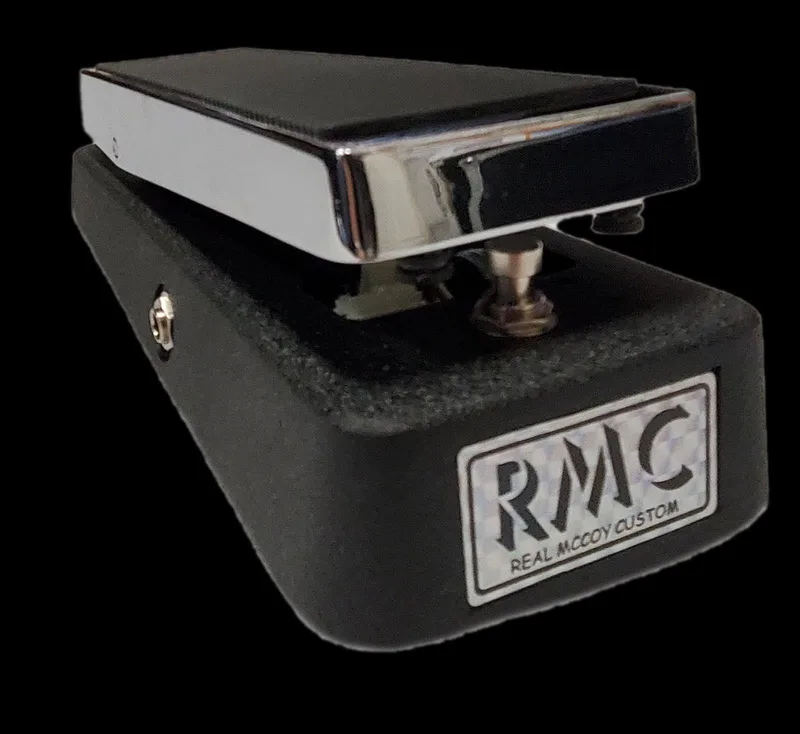
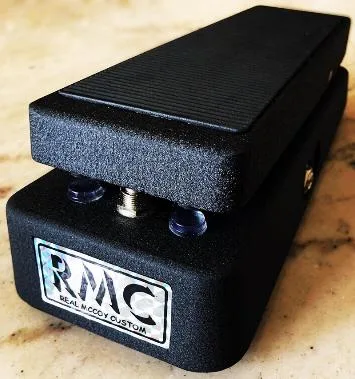
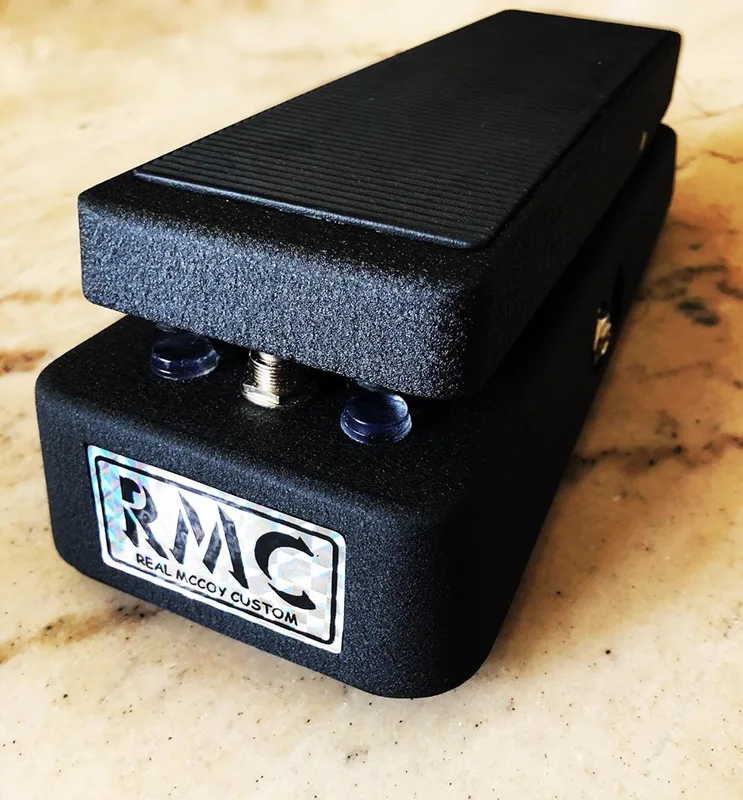
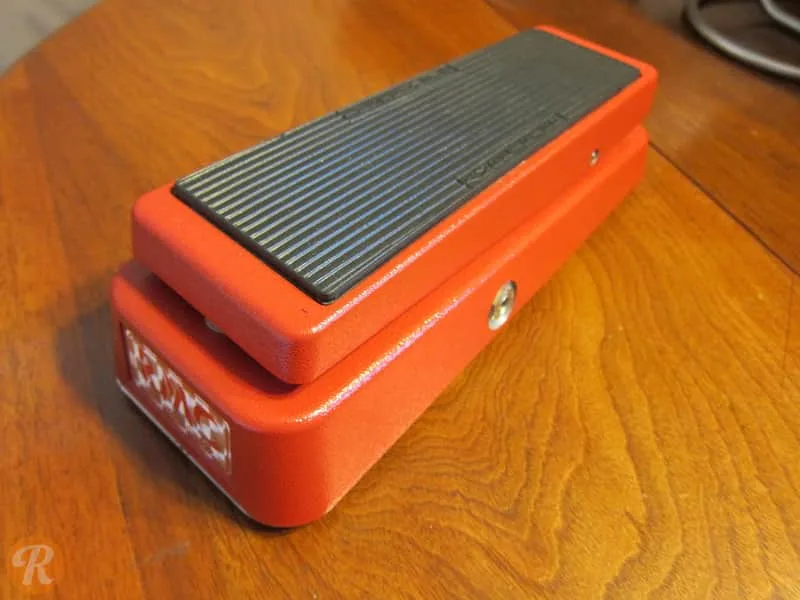
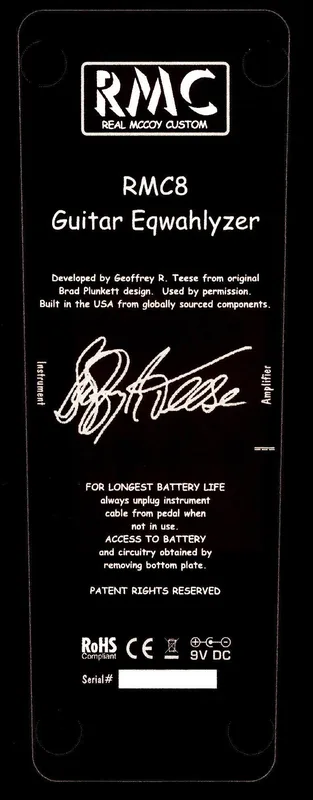
The name reaches back to the wah's origins: the original VOX wah, released in 1967, carried an image of trumpeter Clyde McCoy on the bottom of the pedal2. Real McCoy Custom builds wahs in that Clyde McCoy tradition, and its most famous single product is the Joe Walsh Signature Wah, its first signature pedal, presented on December 14, 20073.
Geoffrey Teese, designer
Every RMC wah is developed and built by Geoffrey Teese, a point the company repeats on each product page: the RMC1 is "developed and built by me, Geoffrey Teese"7, and the same wording appears for the RMC4 Picture Wah, RMC5 Wizard Wah, RMC2FL, RMC6 Wheels of Fire, RMC8, RMC10 and RMC117. All intellectual property rights are the sole property of Geoffrey R. Teese unless otherwise noted or licensed, and buying an RMC product does not transfer any of those rights8.
Other builders speak well of the work. Caroline Guitar Company's wah adjustment guide refers to Teese as "maker of some of the finest wah pedals (in our humble estimation) ever"4.
The model line
RMC's lineup has shifted over the years. A June 2015 announcement listed the current production models as the RMC3FL, RMC4, RMC5, RMC8 and RMC109. The wider line, past and present, includes:
| Model | What it is |
|---|---|
| RMC1 | Wah pedal with a reputation as one of the best in the world, per the maker7 |
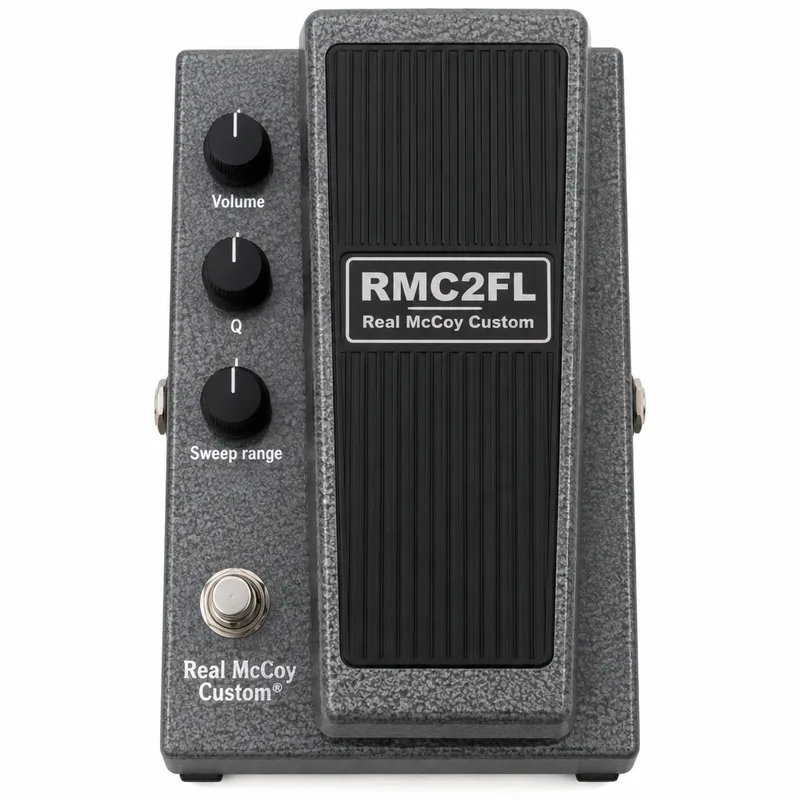
| RMC2FL | Wah starting from the same primary tuning as the RMC1, with Switchcraft jacks10 |
| RMC3 | Described as the world's first fully tunable, self-contained wah11 |
| RMC4 Picture Wah | Wah-wah pedal in the vintage Picture Wah tradition5 |
| RMC5 Wizard Wah | "Part RMC1, part PICTURE WAH," per the maker712 |
| RMC6 Wheels of Fire | Wah voiced after the original Macari-built wahs of 1960s and 1970s England13 |
| RMC8-Guitar Eqwahlyzer | Wah-wah with easily adjustable rocker pedal tension14 |
| RMC10 | Wah pedal in the RMC tradition15 |
| RMC11 | Wah-wah pedal, hand-built16 |
| Joe Walsh Signature Wah | Signature wah based on Joe Walsh's own prototype3 |
The RMC3 stands out in the line. Teese's own description:
"The REAL MCCOY CUSTOM THREE (RMC3) wah-wah pedal is the world's first, self contained, fully tunable wah-wah"
The manual says it was created to let guitarists tailor the wah effect to their own preferences, and notes that many players prefer its tactile response to the stock mass-produced wahs they have used17. Each model except the Walsh Wah has at least 2 different voices9.
The Clyde McCoy lineage and the Joe Walsh Signature Wah
The wah pedal itself began as the VOX Wah Wah, released in 1967 with Clyde McCoy's picture on the bottom2. The original Clyde McCoy pedals, made by the Thomas Organ Company and Jen Electronica, used a Halo inductor for its smooth vocal quality18. That lineage is why the McCoy name carries weight in the wah world, and several other builders work the same ground, among them Wilson Effects with its Clyde Signature Wah and R2R Electric with its Vintage Wah, a reproduction of the late-1960s Clyde McCoy pedals.
RMC's Joe Walsh Signature Wah, announced December 14, 2007, was the company's first signature pedal, the production version of a prototype that had been on Walsh's pedalboard since early summer 2007 and was designed to meet his specifications3. In 2015 Teese noted Walsh still had his original 2007 prototype, a wah with board-mounted jacks9.
The McCoy name now appears on pedals RMC did not build. Vox sells its own Real McCoy Wah and a Limited Edition in a chrome finish, recreations of the original vintage McCoy wah down to the component level, using larger 1/2W carbon film resistors for vintage tone19. Behringer's Real McCoy WahWah, announced July 2026 at $99, is Behringer's own recreation of a 1960s-style wah, not an RMC product20.
Supply changes and builds
RMC's history is marked by supply problems and adaptations, documented in Teese's own news posts and history page119:
- In late 2006 the entire line had to be revamped to meet new European laws, leaving thousands of components and over 100 boards unusable for UK and EU pedals9.
- A case supply deal with Dunlop Manufacturing fell apart after 5 years in 2006, after which the company became fully independent with its own supplier11.
- Custom colors became unavailable in 2011 when the local powder coat shop closed suddenly9; by 2023 flake color cases were offered for all models in purple, gold, red, blue, green and orange9.
- A 2019 supply crisis, with pots lost in shipping and inductors and long-box cases out of production, led to a Go Fund Me push that let Teese buy over-the-counter wah shells and re-boot the company11.
- After the inductor supplier of 10+ years closed in 2019, builds use a variety of inductors, including the red Fasel inductor9.
- As of October 2024, carbon composition resistors in VINTAGE builds are being replaced with carbon film as vintage stock runs out9.
The FK-1 was made in the USA for RMC by Dunlop Manufacturing21, and RMC wah shells are custom made of ROHS-compliant zinc/aluminum alloys9. Components are globally sourced, from the US, England, Italy, India, Taiwan, Mexico, Japan and China9. The office and shop buys 100% renewable power from Pacific Power under its Blue Sky program9.
Support and repairs
RMC designs for repairability. Molex-styled connectors allow most repairs outside the US to be done without on-site soldering and without shipping a five-pound wah pedal back to the shop9. Teese also calibrates each wah pot by ear, a practice resumed at the start of 2011 after a period of toe-down maximum-treble calibration in 2003 and 20049. For wah adjustment generally, Caroline Guitar Company maintains a guide to calibrating a wah pedal, citing Teese's pedals as a reference point4.
The range (11)
Questions
Who makes Real McCoy Custom wahs?
Real McCoy Custom wahs are developed and built by Geoffrey Teese, who designs every model in the line and holds the company's intellectual property. The company describes its products as hand-built wah-wah pedals, and Teese signs much of the product and news copy on the site himself.
Where is Real McCoy Custom located?
The company's mailing address is P.O. Box 217, Coquille, Oregon 97423, USA, a move made in August 2017. The office and shop buys 100% renewable power from Pacific Power as part of its Blue Sky program. Support is available by phone at 864-266-3658.
Is the Behringer Real McCoy WahWah made by Real McCoy Custom?
No. The Behringer Real McCoy WahWah is Behringer's own recreation of a classic 1960s-style wah pedal, announced in July 2026 at $99. It is not a Real McCoy Custom product, though it borrows the McCoy name associated with the original Vox wah.
What models does Real McCoy Custom currently make?
As of a June 2015 announcement, current production models were the RMC3FL, RMC4, RMC5, RMC8 and RMC10. The line has included many other models over the years, among them the RMC1, RMC2FL, RMC6 Wheels of Fire, RMC9 Bass Eqwahlyzer, RMC11 and the Joe Walsh Signature Wah.
Do Real McCoy Custom wahs have more than one voice?
Yes. According to a 2011 announcement from Geoffrey Teese, each model except the Walsh Wah has at least 2 different voices. The RMC3 in particular is described as the world's first fully tunable, self-contained wah, letting a player tailor the effect to their own taste.
Can I get a Real McCoy Custom wah in a custom color?
Custom colors were unavailable after the local powder coat shop closed suddenly in 2011. However, flake color cases have since been offered for all models in purple, gold, red, blue, green and orange, as announced in 2023.
What inductor does Real McCoy Custom use?
After its inductor supplier of more than 10 years closed in 2019, Real McCoy Custom began using a variety of inductors, including the red Fasel inductor. The original Clyde McCoy wahs of the 1960s used a Halo inductor, chosen for its smooth vocal quality.
Sources (21)
- REAL MCCOY CUSTOM, REAL MCCOY CUSTOM, 2024
- The VOX Amps Wah Wah Pedal Story, Vox Amps (voxamps.com), 1967
- JOE WALSH SIGNATURE WAH, Real McCoy Custom, 2007-12-14
- How to adjust/calibrate a wah pedal, Caroline Guitar Company, 2011-06-14
- RMC4-PICTURE WAH, realmccoycustom.com, 2024
- PHYSICAL AND MECHANICAL ADJUSTMENT OF YOUR RMC WAH-WAH PEDAL, realmccoycustom.com, 2020
- RMC1, realmccoycustom.com, 2022
- FKEfx, realmccoycustom.com, 2020
- WHAT'S HAPPENING, Real McCoy Custom, 2015-11-05
- RMC2FL, realmccoycustom.com, 2022
- RMC HISTORY, Real McCoy Custom, 2022
- RMC5-WIZARD WAH, Real McCoy Custom, 2024
- RMC6-WHEELS OF FIRE, realmccoycustom.com, 2020
- RMC8-Guitar Eqwahlyzer, Real McCoy Custom, 2020
- RMC10, realmccoycustom.com, 2020
- RMC11, realmccoycustom.com, 2020
- Analog Man's Teese RMC3 instructions, analogman.com, 2015
- CLYDE MCCOY® CRY BABY® WAH, Dunlop (www.jimdunlop.com)
- VOX Real McCoy Limited Edition Wah Pedal, Vox Amps (voxamps.com), 2025-09-30
- Behringer Real McCoy WahWah:Affordable '60s-Style Wah!, gearnews.com, 2026-07-20
- FK-1, realmccoycustom.com, 2020