

The Recovery Effects Pearl is a fuzz pedal aimed squarely at bass players. Recovery Effects and Devices calls it a "Heavy Low-End Vintage Fuzz" and says its modified vintage circuit "delivers a heavy bass fuzz tone with versatile controls to work with your music"1. It is a compact, hand-built pedal designed and assembled in Seattle, Washington, and it is one of the few fuzzes on the market built with bass as the first priority rather than as an afterthought.
The circuit is built around hand-picked, new-old-stock "oil can" BC109 transistors, a classic silicon fuzz transistor from the vintage era. The maker says these transistors "add a classic, vintage tone to this modern fuzz"1. The design is all-analog, and Recovery Effects says it "sounds great with any pickup type," which matters if you move the pedal between instruments1.
A bass fuzz that also takes a guitar
The Pearl was created for bass. Recovery Effects states this plainly: "This pedal was created for bass, but you can also plug your guitar into it to make your low-end dreams come true!"1. For a guitarist who wants a fuzz with real low-end weight, that is the whole pitch of the pedal: the circuit is voiced to keep bottom end intact under heavy fuzz, which is the problem most guitar-voiced fuzzes present when a bass drives them.
The maker's own description of the sound is a "heavy bass fuzz tone," delivered by a modified vintage circuit1. What that means in practice is a fuzz built on vintage silicon transistor clipping rather than a modern high-gain design, with a control set that lets you shape how the fuzz sits rather than simply switching it on.
The same circuit also exists outside pedal format. Recovery Effects offers a Pearl Eurorack module with the same all-analog silicon design, which the maker says "adds a wall of fuzz to your signal while remaining musical"2. The module carries the same four controls, intensity, tonality, compression and output level, so the circuit's character is consistent across both formats2.
The controls
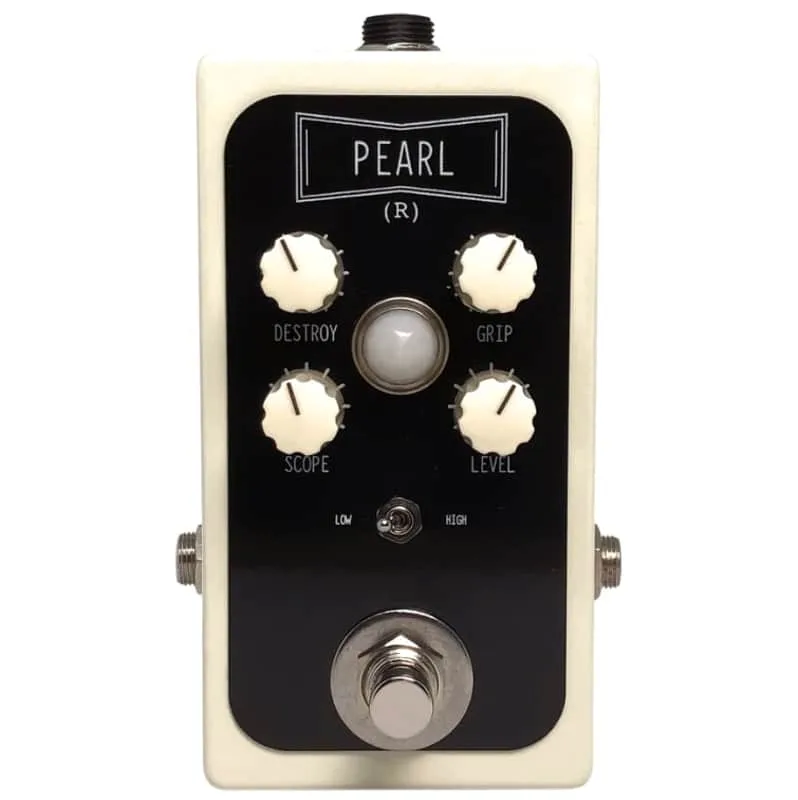
The Pearl gives you four knobs and one switch. Recovery Effects lists the control set as "intensity, tonality, compression, output level" plus "a high/low switch that affects the amount of bottom end"1.
| Control | What it does |
|---|---|
| Intensity | Sets the amount of fuzz1 |
| Tonality | Shapes the frequency character of the fuzz1 |
| Compression | Adjusts how the fuzz compresses the signal1 |
| Output level | Sets the volume leaving the pedal1 |
| High/low switch | Affects the amount of bottom end1 |
The compression control is worth noting for bass players. Fuzz circuits naturally compress the signal, and having a dedicated control over that means you can keep some dynamics and note definition instead of the fuzz flattening everything, or push it further for a thicker, squashed wall1.
The high/low switch is the bass-specific control. It affects the amount of bottom end, so you can choose whether the fuzz keeps the full low register of a bass or tightens up1. A guitarist using the pedal could use the low position for drop tunings and baritone work, or the high position for a more conventional fuzz footprint.
Power, price and build
The Pearl operates on a standard 9V DC Boss-style power supply, which is not included, so plan on supplying your own1. There is no mention of battery operation in the maker's product page, and the enclosure, at 4.77" x 2.6" x 1.39", is a compact footprint that fits a pedalboard without eating much space1.
The maker lists the pedal at a regular price of £129.001. It is designed and assembled in Seattle, Washington, and includes a one-year limited warranty if you register the pedal within 30 days of delivery1.
The power supply is not included with the Pearl. The pedal takes a standard 9V DC Boss-style supply, the same connector format as most modern pedals, so a typical pedalboard power supply will run it1.
Where it sits in the Recovery Effects lineup
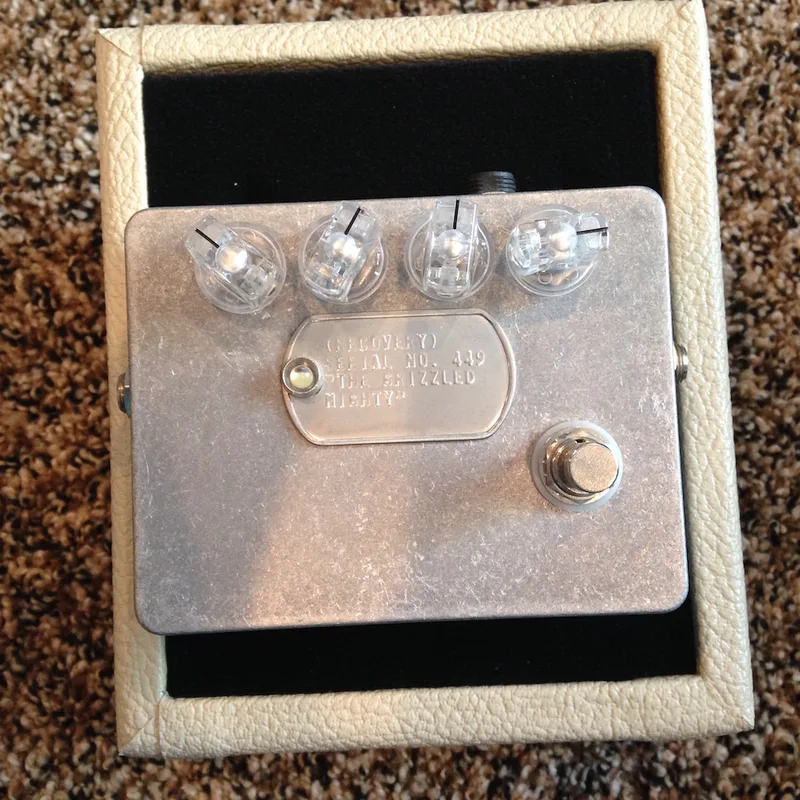
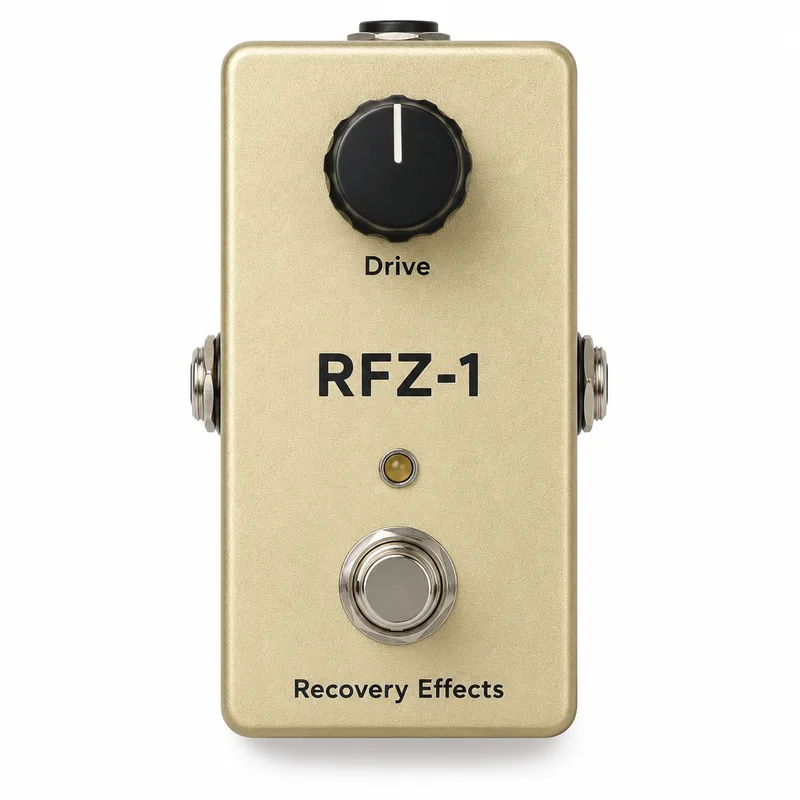
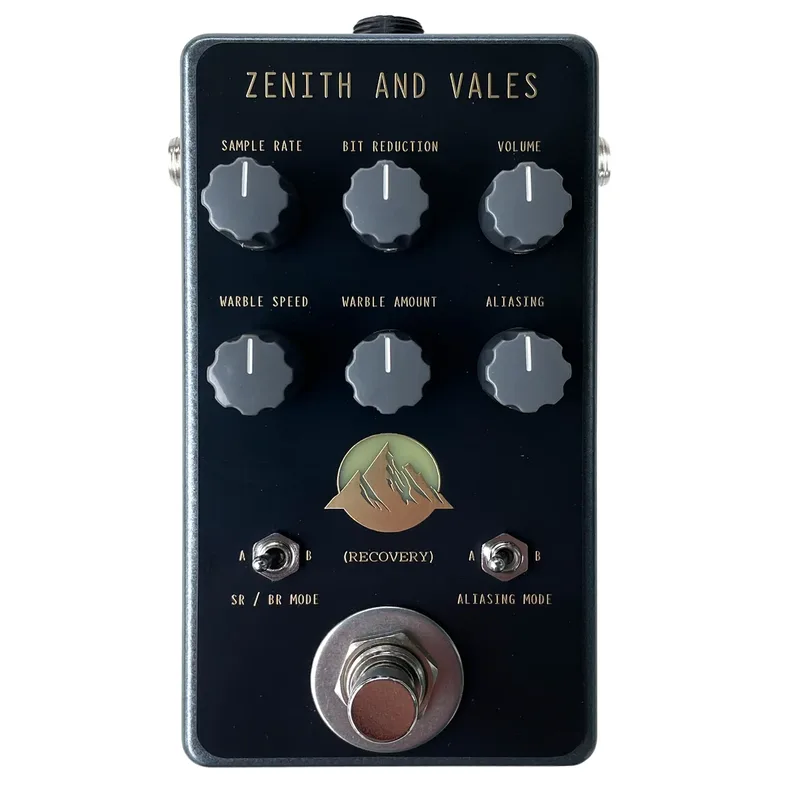
Recovery Effects and Devices builds a range of fuzzes alongside the Pearl. The company's earlier Grizzled Mighty fuzz was originally created for the band The Grizzled Mighty before being made available to the public, and the limited-edition RFZ-1 took the Vox Distortion Booster as its starting point. More recently, the Zenith and Vales brought bit-crushing digital annihilation to the lineup. The Pearl is the bass-first voice among them: vintage silicon transistors, analog throughout, and a control set built around keeping low end under fuzz1.
Videos
recoverysounds
Theo And His Pedals
Theo And His Pedals
Questions
Can you use the Recovery Effects Pearl with a guitar?
Yes. Recovery Effects and Devices says the pedal was created for bass, but that you can also plug a guitar into it. The maker describes the all-analog silicon design as sounding great with any pickup type, so it is not limited to bass instruments.
Is the Recovery Effects Pearl analog?
Yes. The maker describes an all-analog silicon design at the heart of the pedal. The same circuit appears in the Pearl Eurorack module version, which Recovery Effects also describes as all-analog silicon.
What transistors does the Recovery Effects Pearl use?
The pedal uses hand-picked, new-old-stock "oil can" BC109 transistors. According to Recovery Effects and Devices, these transistors add a classic, vintage tone to what the maker calls a modern fuzz.
Does the Recovery Effects Pearl come with a power supply?
No. The pedal operates on a standard 9V DC Boss-style power supply, which is not included, so you need to supply your own. It carries a one-year limited warranty if you register it within 30 days of delivery.
What does the high/low switch do on the Pearl?
The high/low switch affects the amount of bottom end. Recovery Effects and Devices lists it alongside the intensity, tonality, compression and output level controls, so a bass player can dial in how much low frequency the fuzz keeps.
Sources (2)
- PEARL PEDAL (Heavy Low-End Vintage Fuzz), Recovery Effects and Devices
- PEARL EURORACK MODULAR DEVICE (Heavy Low-End Eurorack Fuzz), Recovery Effects and Devices