

The Red Witch Seven Sisters Lily Boost is an analog boost pedal from New Zealand maker Red Witch Pedals, part of the seven-pedal Seven Sisters range. It is a clean boost with up to 30 dB of gain, and Red Witch describes it as "a truly transparent tone retaining desert island clean pedal"1. In use, that means it makes your signal louder, and can push an amp or an overdrive pedal harder, without adding its own clipping or coloring the tone the way an overdrive or distortion pedal would.
What set the Seven Sisters range apart when it appeared was power. Red Witch billed the line as "the world's first rechargeable guitar pedals"2, and the Lily Boost carries an internal rechargeable battery alongside a standard 9V DC power input, so it can sit on a board with no power supply connected at all.
The Lily Boost carries a 119 USD list price on Red Witch's product page, the last figure shown. It weighs 157 grams and measures 90mm x 30mm x 45mm.
A transparent boost with 30 dB of gain
The Lily Boost's job is simple: more signal, without changing its character. With 30 dB of gain on tap1, there is enough range to lift a solo above the band, to drive the front of a tube amp into breakup, or to hit a drive pedal harder to push it into more saturation. Because it is a boost rather than a drive pedal, the extra volume comes from the pedal's own gain stage rather than from clipping the signal, which is what Red Witch means by transparent.
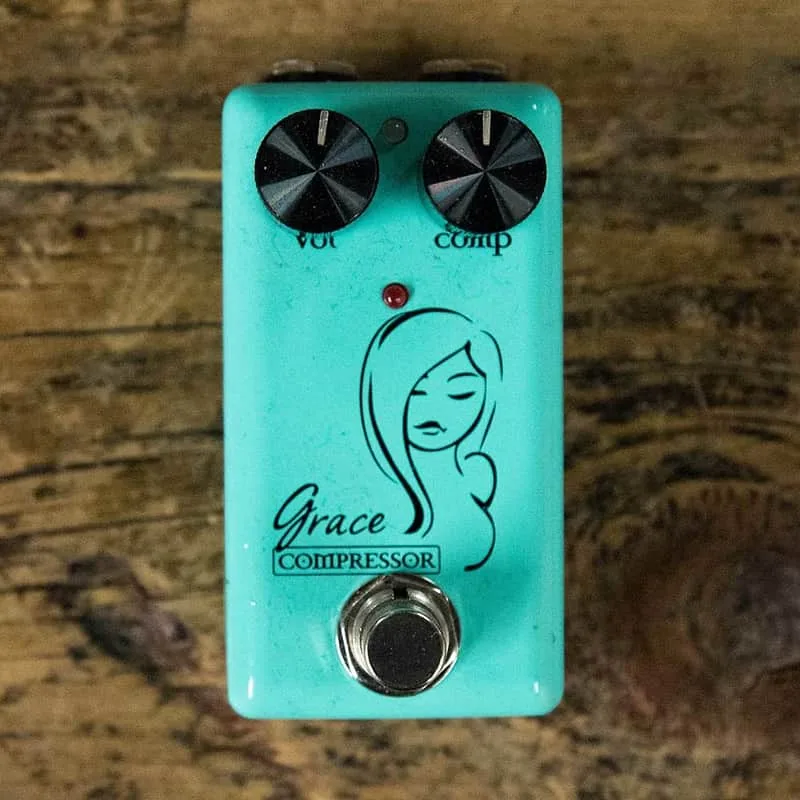
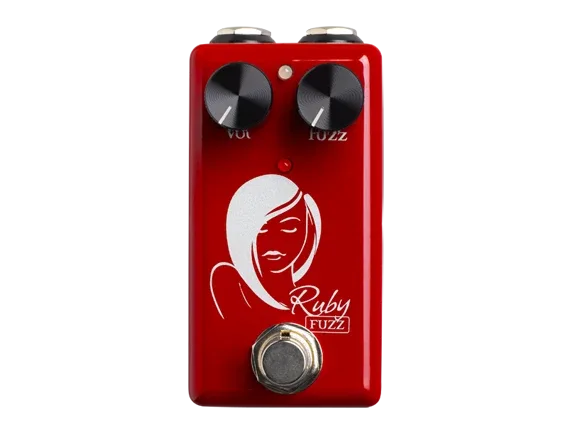
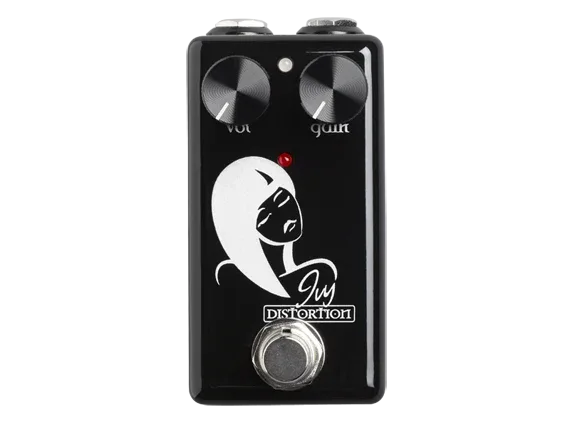
The Seven Sisters range covers the main effect types: alongside the Lily Boost there are the Ruby Fuzz, Scarlett Overdrive, Ivy Distortion, Violet Delay, Eve Tremolo and Grace Compressor3. All share the same compact footprint and the same rechargeable battery system. MusicRadar's Trevor Curwen, reviewing the sister Ruby Fuzz, summed up the appeal of the format: "A red-hot fuzz pedal that's great for tight spaces"4, and the same size advantage applies to the Lily on a crowded pedalboard.
The controls: Volume and Gain
The control set is about as minimal as a boost pedal gets, two knobs1:
Red Witch's own descriptions are refreshingly direct: "Volume controls....... the Volume!" and "Gain controls....... the Gain!"1. In practice, the Gain knob sets how hard the pedal pushes, and the Volume knob sets how loud the output is, letting you dial in a clean level boost or a harder push into whatever comes next in the chain.
Power: 9V DC or the built-in rechargeable battery
The Lily Boost runs from either its internal rechargeable battery or a standard 9 volt DC wall wart supply1. The battery is the interesting part. Red Witch's instructions are to "connect Lily to a regular guitar pedal power supply, charge her for four hours and Voila! 300 hours of actual use"1. Premier Guitar's review of the range adds a detail worth knowing on a first charge: "plug it into the left-hand power socket for four hours (12 hours the first time)"5.
Every pedal in the range runs on an internal rechargeable battery or a standard 9 volt DC wall wart supply1. The Grace Compressor's maker describes a rechargeable lithium battery alongside the 9V adapter option, and the Ivy Distortion uses a Lithium Ion cell67. Red Witch says the range shares its footprint and rechargeable lithium battery system with the Violetta, which the maker describes as offering 300 hours from a charge, with a 9V adapter as an alternative8.
A few practical points for a pedalboard:
- The 110ma current draw1 is higher than many small analog boosts, so check your power supply's per-output capacity if you run it from a supply rather than the battery.
- Running it from the battery removes that draw entirely, which is the format's main selling point.
- True bypass1 means the pedal drops out of the signal path completely when switched off.
Where it came from
The Seven Sisters pedals were sold as compact units: the Lily Boost carried a list price of 119 USD, weighed 157 grams, and measured 90mm x 30mm x 45mm1. Red Witch built the range around that small footprint and the shared rechargeable battery system, with each pedal offering the same choice of internal battery or 9V DC wall wart power81.
Videos
Red Witch Pedals
Guitar Mastery Method
Questions
Is the Red Witch Seven Sisters Lily Boost true bypass?
Yes. Red Witch lists the Lily Boost as true bypass, so with the pedal switched off the guitar signal passes through without active circuitry in the path. True bypass is listed across the whole Seven Sisters range, including the Ruby Fuzz, Scarlett Overdrive, Eve Tremolo, Grace Compressor, Ivy Distortion and Violet Delay.
Does the Lily Boost run on a battery?
Yes. The Lily Boost has an internal rechargeable battery, so it can run with no power supply connected at all. Alternatively it runs from a standard 9 volt DC wall wart supply. The Seven Sisters range was billed by Red Witch as the world's first rechargeable guitar pedals.
How long does the Lily Boost battery last on a charge?
Red Witch says to connect the Lily to a regular guitar pedal power supply and charge it for four hours, which gives 300 hours of actual use. Premier Guitar's review of the range notes the first charge should be 12 hours, and a 2011 press release said an overnight charge was good for one to two weeks of gigging.
How much current does the Lily Boost draw?
Red Witch lists the current draw as 110ma. That is on the higher side for a small analog boost, which is worth noting if you run it from a pedalboard power supply with limited current per output.
How big is the Lily Boost compared with other boost pedals?
It is very small. Red Witch lists the dimensions as 90mm x 30mm x 45mm and the weight as 157 grams, a compact footprint shared across the Seven Sisters range. MusicRadar's review of the sister Ruby Fuzz called it great for tight spaces.
Is the Lily Boost still available?
The Red Witch product page lists the Lily Boost as sold out, as it does for the other Seven Sisters pedals including the Ruby Fuzz, Grace Compressor, Ivy Distortion and Violet Delay. The list price shown was 119 USD.
Sources (8)
- Seven Sisters Lily Boost, Red Witch Pedals
- Seven Sisters Violet Delay, Red Witch Pedals
- Red Witch Lily, Grace & Ivy Pedals Review, Premier Guitar, 2011-12-27
- Red Witch Seven Sisters Ruby review, MusicRadar, 2014-05-12
- Comprehensive Review of Red Witch Guitar Pedals, Premier Guitar, 2011-12-20
- Red Witch Seven Sisters Grace review, MusicRadar, 2014-04-12
- Seven Sisters Ivy Distortion, Red Witch Pedals
- Red Witch Violetta Delay review, MusicRadar, 2014-05-12