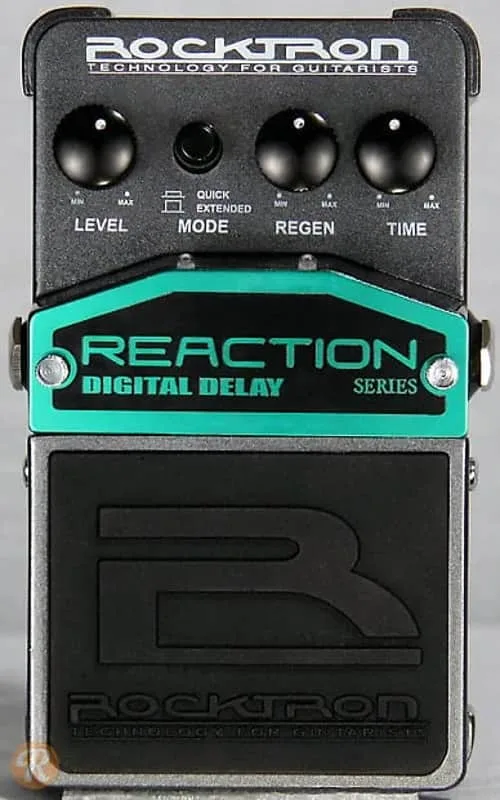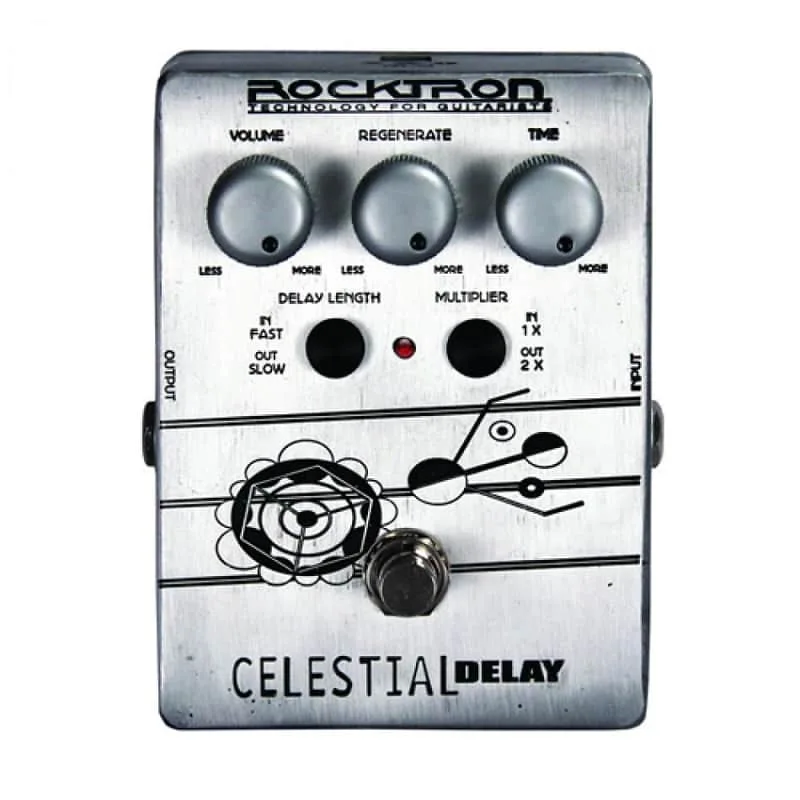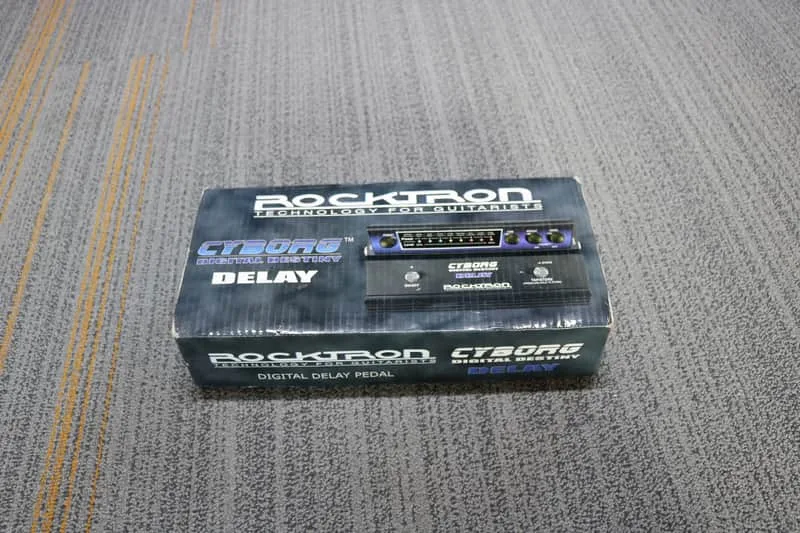


The Rocktron Cyborg Digital Destiny is a digital delay pedal in floor-pedal form, built around a Motorola DSP engine that Rocktron and reviewers credited with delivering studio-quality tone1. It is aimed at players who want a dedicated delay with preset memory and tempo-synced delay times rather than a single-knob stompbox, and it sits in the wider field of delay pedals alongside simpler units like the Rocktron Reaction Digital Delay and the Rocktron Celestial Delay.
What it does
The Digital Destiny is a digital delay: it records your signal and plays it back after a set time, producing repeats. Its Motorola DSP engine is the heart of the unit, and Guitar World's review described the pedal as delivering studio-quality tone as a result1.
Delay time is set with a tap tempo control, which the review called intuitive1. The first five presets tie delay time to the tempo you tap, each storing a different note value:
| Preset | Delay time |
|---|---|
| 1 | Eighth note (maximum delay) |
| 2 | Triplet |
| 3 | Quarter note |
| 4 | Half note |
| 5 | Whole note |
Presets one through five let you set delay time as a fraction of the current tempo, either an eighth note (the maximum delay) or a triplet, quarter note, half note or whole note1. In practice, that means one tap sets the tempo and the pedal places the repeats musically against it, which is faster than dialing in a millisecond value by ear.
Presets and MIDI
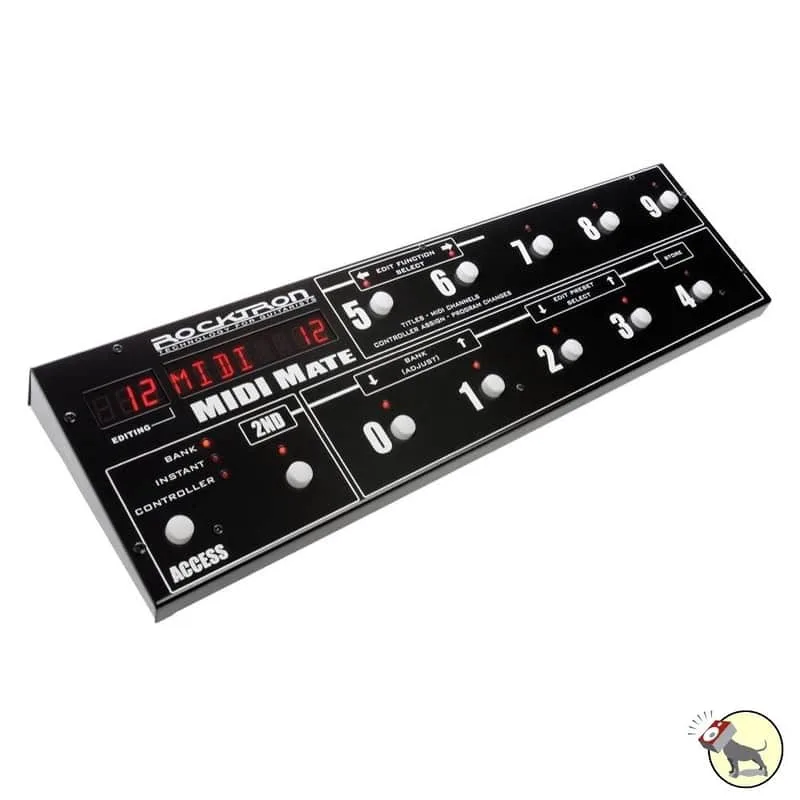
The pedal carries 64 presets, eight of which are instant-access from the pedal itself1. That is the main practical limit of the unit: to change presets by foot beyond those eight, and to reach all 64, you need a MIDI controller, such as Rocktron's MIDI Mate1.
Full preset access depends on MIDI gear. If you do not own a MIDI controller, you are working with the eight instant-access presets.
Players already running a MIDI switcher on their board will find this straightforward; players with a simple pedalboard should weigh whether eight foot-accessible presets are enough before choosing this over a delay without MIDI dependence1.
Power
The unit runs on an included power supply, so there is no fussing with batteries1. There is no battery option, so a power supply is part of the setup from day one.
What reviewers said
The pedal was reviewed as sturdily built, sounding incredible and easy to use, with one reservation: it loses points for requiring MIDI gear to gain full access to its features1. The same review praised its tone for preserving the instrument's nuances and called the hold feature outstanding overall1.
"THE CYBORG IS sturdily built, sounds incredible and is easy to use. It loses some points for requiring MIDI gear to gain [full access]."
The review's overall verdict was that the pedal is outstanding, with superior tone that preserves the instrument's nuances and a hold feature the reviewer called outstanding1.
Videos
Loucos por Pedais
Rudo Reverb
Questions
Does the Rocktron Cyborg Digital Destiny take a battery?
No. According to Guitar World's review, the unit runs on an included power supply, so there is no fussing with batteries. Plan your pedalboard power around the supplied adapter rather than a battery compartment or a battery snap.
Do I need a MIDI controller to use the Cyborg Digital Destiny?
Only for full access. The pedal has eight instant-access presets you can reach from its own footswitches, but Guitar World noted that you need a MIDI controller, such as Rocktron's MIDI Mate, to change presets by foot and to access all 64 of the pedal's presets.
How many presets does the Cyborg Digital Destiny have?
The pedal holds 64 presets in total, eight of which are instant-access from the pedal itself. Reaching the full set of 64 requires a MIDI controller such as Rocktron's MIDI Mate, per Guitar World's review.
Does the Cyborg Digital Destiny have tap tempo?
Yes. Guitar World's review describes an intuitive tap tempo control for setting the delay time, and the first five presets set delay time as a fraction of the current tempo, from eighth note up to whole note.
Sources (1)
- Rocktron Cyborg Digital Destiny digital delay pedal, Guitar World, 2008-01-25