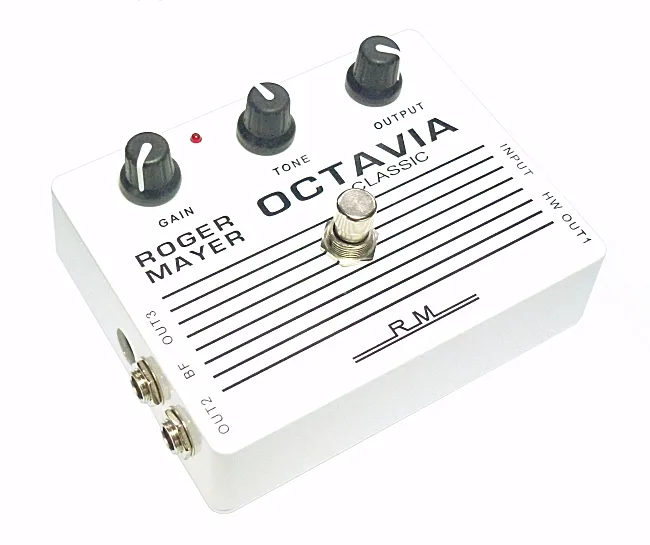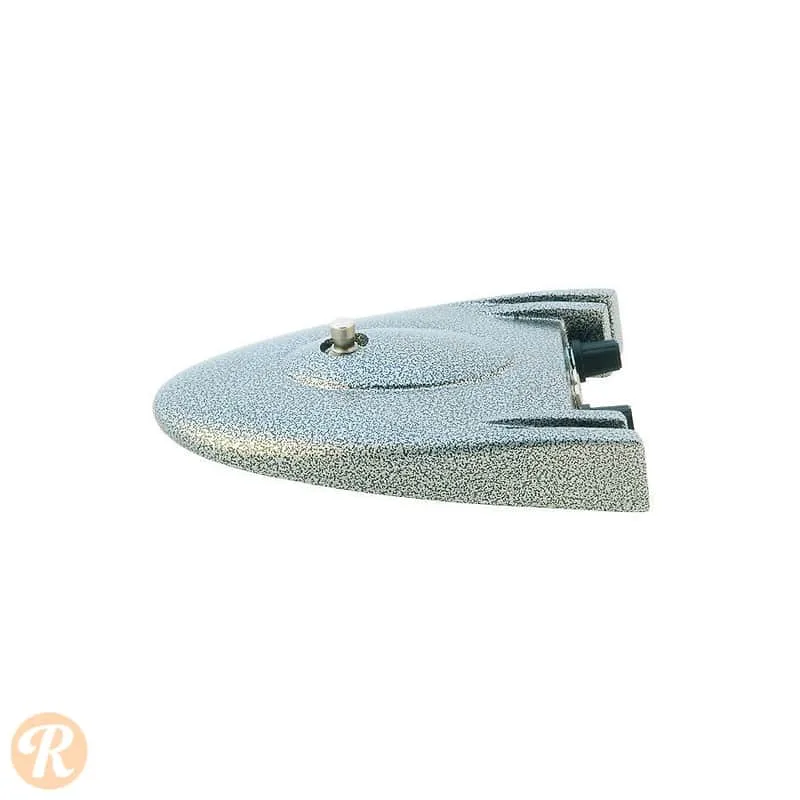


The Roger Mayer Stone-X is a fuzz pedal built around silicon transistors, announced in August 2008 as one of a pair of updated fuzzes from Roger Mayer, alongside the germanium-transistor Classic-X. Premier Guitar described the two as "a modern evolution from the commercial fuzz pedals Roger modified for Jimi Hendrix," with each pedal an updated version of the Rocket series of pedals1.
Where it comes from
The Rocket series dates back decades in Roger Mayer's catalog. On his own history page, Mayer lists the Classic Fuzz, Axis Fuzz, Mongoose and Octavia as its members, writing "The Axis Fuzz was next and then the Mongoose thus completing the series"2. The Stone-X is the modernized X-series take on that line, and it sits beside the Classic-X as the silicon half of the pair, where the Classic-X carries the germanium transistors1.
What it does to your signal
Premier Guitar described both new fuzzes as low-noise, high-gain designs that are stable and free of radio and other electronic interference, with a greatly increased output level that can overdrive the front end of any amp in volume boosting mode1. That last point matters on a board: with the output level up, the Stone-X can act as a clean volume boost into an amplifier as well as a fuzz.
The headline control is the Fatness Control, which Premier Guitar said "allows tweaking without destroying the overall tonal characteristics"1. In other words, it shapes the body of the fuzz without pulling the whole voice of the circuit away from where it was designed to sit.
Buffering, outputs and power
A few practical details set the Stone-X apart from a straightforward fuzz box:
- Switchable front end buffering: the buffer is activated on or off by moving two jumpers on the pc card inside the pedal1
- Two output options: a hard wire output, or two buffered outputs for running two paths1
- Power: a standard DC power jack, with extra internal filtering to ensure low noise performance1
- Battery: easier battery access than earlier versions1
The buffer is set by jumpers on the circuit card inside the pedal, not by an external switch, so changing it means opening the unit up.
Videos
james ryan
james ryan
james ryan
Questions
What does the Fatness control do on the Stone-X?
The Fatness Control lets you tweak the pedal's tone without destroying its overall tonal characteristics. In practice it gives you a way to shape the low end and body of the fuzz while keeping the basic character of the circuit intact, rather than swinging between extremes as a conventional tone control might.
Does the Roger Mayer Stone-X use silicon transistors?
Yes. Premier Guitar describes the Stone-X as the silicon transistor fuzz of the pair announced in 2008, alongside the Classic-X, which uses germanium transistors. Silicon and germanium fuzz circuits differ in feel and temperature stability, and the two pedals are Roger Mayer's updated take on that classic split.
Can the Stone-X run on a battery?
Yes. The 2008 version was designed with easier battery access than before, and it also takes a standard DC power jack. The power jack has extra internal filtering to ensure low noise performance, so it can run from a pedalboard supply as well as a battery.
How do I turn the Stone-X buffer on or off?
The front end buffering is activated on or off by moving two jumpers on the pc card inside the pedal. That means opening the unit up and repositioning the jumpers, not flipping a switch on the outside, so it is a set-and-forget choice rather than something you change between songs.
How does the Stone-X relate to Roger Mayer's Hendrix fuzz pedals?
Premier Guitar describes the Stone-X and Classic-X as a modern evolution from the commercial fuzz pedals Roger modified for Jimi Hendrix, with each pedal an updated version of the Rocket series. The Stone-X carries the silicon transistor side of that lineage, while the Classic-X covers the germanium side.
Does the Stone-X have two outputs?
It can. The pedal offers either a hard wired output or two buffered outputs, so you can run two amplifiers or signal paths from one pedal. The buffered option keeps the signal strong over long cable runs, while the hard wire option leaves the output untouched.
Sources (2)
- New Pedals from Roger Mayer, Premier Guitar, 2008-08-26
- Guitar Effects Pedals by Roger Mayer, Roger Mayer (roger-mayer.co.uk)