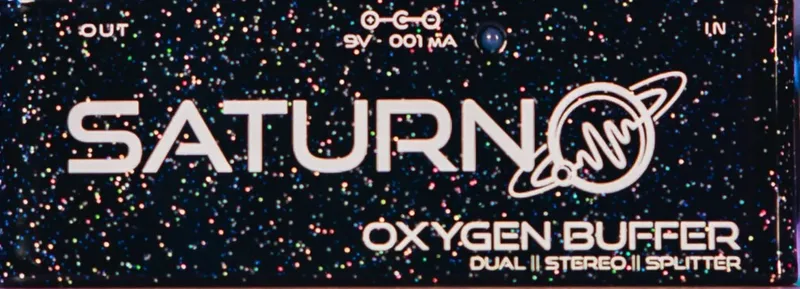



The Saturno Oxygen Buffer is an ultra-compact analog utility pedal from Brazil, designed to maintain signal integrity in long effect chains1. Like every buffer pedal, it addresses a simple problem: a passive guitar pickup driving a long chain of cables and pedals loses top end and dynamics. The Oxygen Buffer converts high-impedance guitar signals to low-impedance, which RockBoard's PedalPedia says eliminates the high-end roll-off and dynamic loss caused by extensive cable runs1.
RockBoard's PedalPedia describes the goal as transparency: the pedal "utilizes high-quality components to emulate the clarity of a guitar plugged directly into an amplifier with a short cable"1.
Modes and how players use them
The Oxygen Buffer supports four modes: Mono, Stereo, Splitter, and Dual1.
- Mono: standard single-channel buffering for a one-signal-path board1.
- Stereo: buffering for stereo rigs with two signal paths1.
- Splitter: sending the buffered signal to more than one output1.
- Dual: simultaneous buffering at both the start and the end of a pedalboard, so one unit covers the input and output ends of the chain1.
Dual mode is the standout arrangement for large boards: a single pedal placed where it can reach both ends of the signal path buffers the guitar's signal before it enters the chain and again after it leaves it1.
Design and power
RockBoard's PedalPedia says the design focuses on maximum space efficiency and road-ready durability for professional rigs, which suits players squeezing a buffer onto a crowded board1. Power is a standard 9V DC, center negative supply1, so it shares the same power feed as most compact pedals.
Saturno's PedalPedia page also lists the pedal under the Saturn Pedals name, with the same analog circuit and 9V DC center negative power2. Both entries refer to the Oxygen Buffer.
Where it sits among other buffers
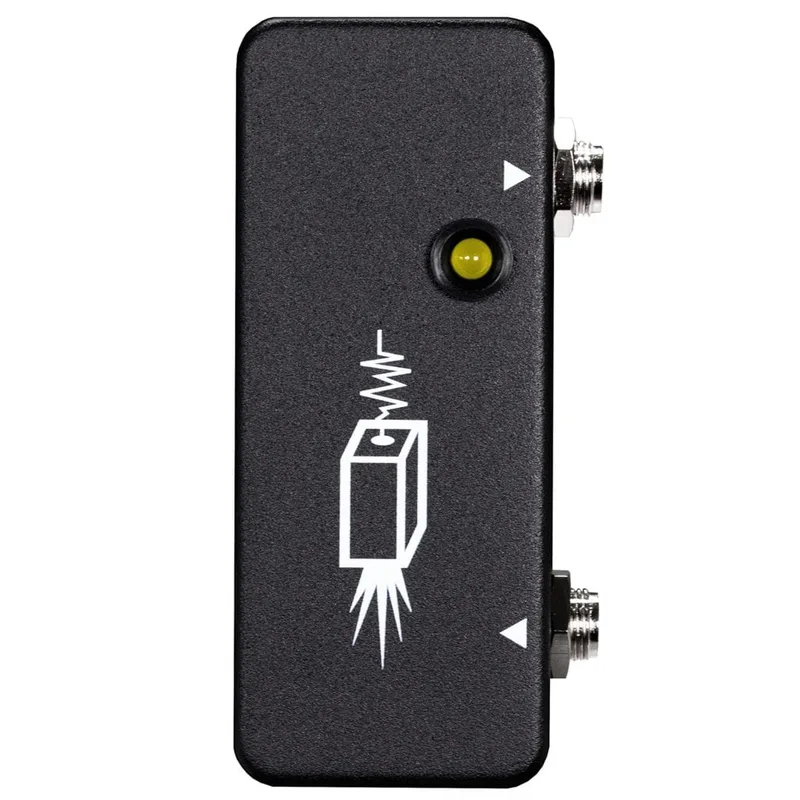
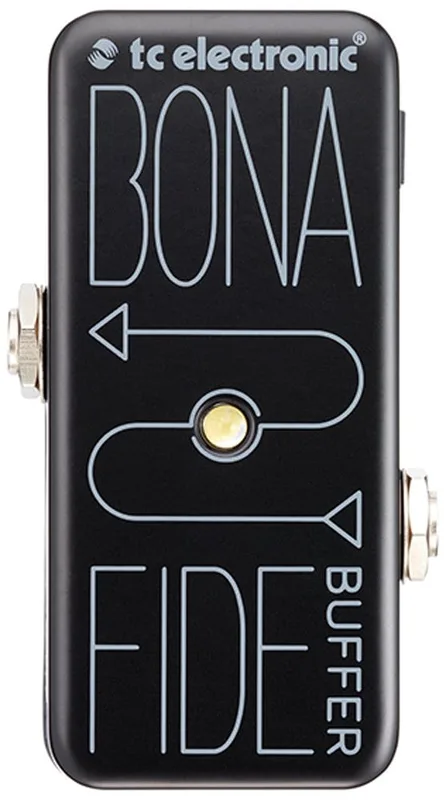
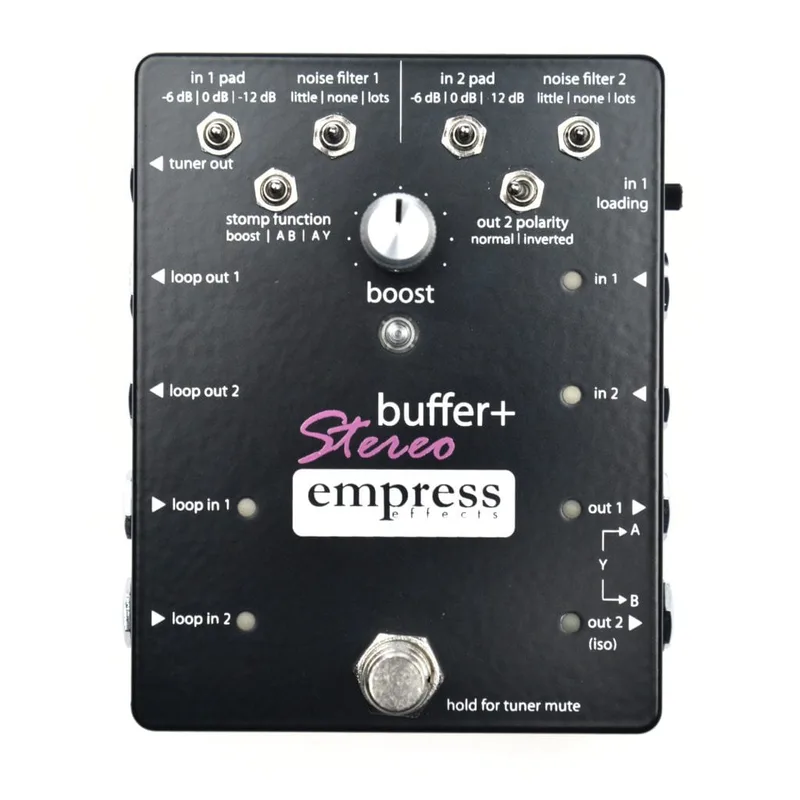
The buffer market is crowded, and the Oxygen Buffer's combination of four modes in an ultra-compact enclosure is what sets it apart from single-purpose units such as the JHS Pedals Little Black Buffer or the TC Electronic Bonafide Buffer, and from stereo and splitting units such as the Empress Effects Buffer Plus Stereo or the EarthQuaker Devices Buffer/Splitter. Players who want a buffer at both ends of a board normally use two units; the Oxygen Buffer's Dual mode does that job with one1.
Videos
Saturno Pedais
Saturno Pedais
Andy Ferreira
Questions
Is the Saturno Oxygen Buffer analog?
Yes. Saturno lists the Oxygen Buffer as an analog circuit. It is described as an ultra-compact analog utility pedal, built to convert a guitar's high-impedance signal to low impedance without digitizing it, so the signal keeps the character of a guitar plugged straight into an amplifier with a short cable.
What power supply does the Saturno Oxygen Buffer use?
The Oxygen Buffer runs on a 9V DC supply with a center negative plug, the same standard used by most compact pedals. Saturno publishes the pedal as a 9V DC center negative unit on its product page.
What does Dual mode do on the Saturno Oxygen Buffer?
Dual mode allows simultaneous buffering at both the start and the end of a pedalboard. In practice that means one unit can serve as an input buffer before the chain and an output buffer after it, protecting the signal across the whole board.
Where is the Saturno Oxygen Buffer made?
The Saturno Oxygen Buffer is made in Brazil. Saturno describes it as an ultra-compact analog utility pedal from Brazil, built with maximum space efficiency and road-ready durability for professional rigs.
Can the Saturno Oxygen Buffer split a signal?
Yes. Alongside Mono and Stereo operation, the Oxygen Buffer supports a Splitter mode, so it can send the buffered signal to two outputs, and a Dual mode for buffering at both ends of a pedalboard.
Sources (2)
- Oxygen Buffer by Saturno, RockBoard (PedalPedia), 2026
- Oxygen Buffer by Saturn Pedals, RockBoard PedalPedia, 2026