

The Seamoon Fresh Fuzz is a vintage fuzz pedal released in 1973 by Seamoon Inc., a company founded that year by effects designer Craig Anderton, who also invented the Funk Machine envelope filter, and John Lang. It was the brand's flagship pedal, and each early unit was hand-built1. What makes it notable among distortion and fuzz designs is its circuit: where most fuzzes of the era were driven by transistors, the Fresh Fuzz used an operational amplifier, an op-amp, instead2.
Who made it, and when
Craig Anderton and John Lang launched Seamoon Inc. in 1973 and released the Fresh Fuzz, their flagship fuzz pedal, the same year1. Guitar.com's news coverage of the JHS replica calls it "the ultra-rare Seamoon Inc. Fresh Fuzz from 1973"5. Despite its rarity, the pedal gained a following: JHS notes that it "has been used extensively by artists like Tom Scholz (Boston) and guitar virtuoso Eric Johnson"1.
The circuit: an op-amp instead of transistors
The Fresh Fuzz stands out for its topology. Paolo De Gregorio, writing on Delicious Audio, calls it "one of the first distortion units to substitute an operational amplifier (op-amp) for the typical transistor-driven" fuzz circuit2, and in a later piece describes it as "the first gain pedal to use an op-amp instead of a transistor"4. For a player, that places it apart from the transistor fuzzes that dominated the early 1970s.
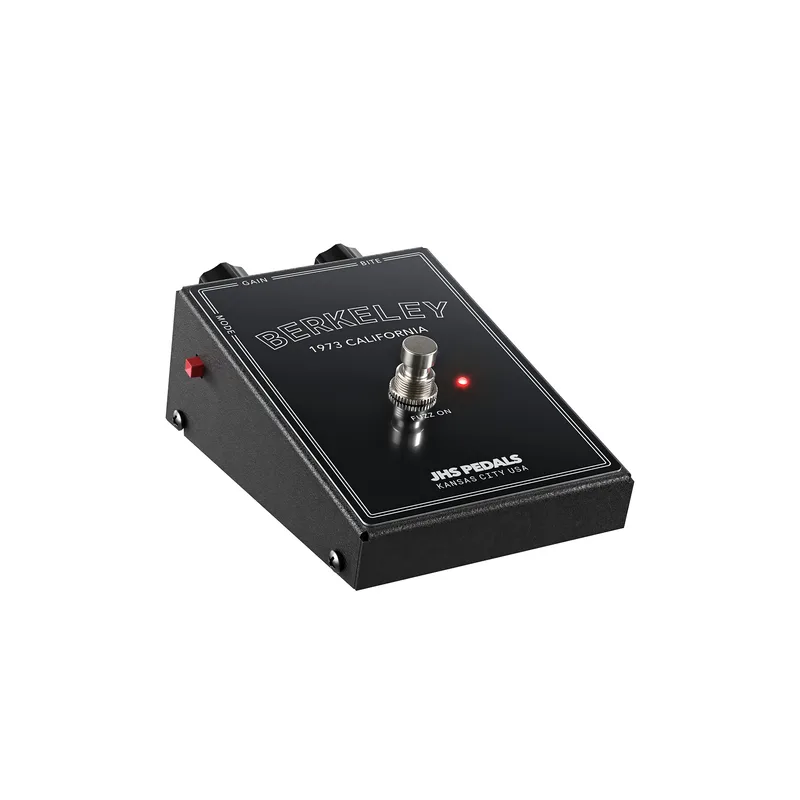
Two versions of the pedal exist. Version 1 is the rarer single op-amp 741 version, which JHS chose as the basis for its Berkeley replica in the Legends of Fuzz line1.
What it sounds like
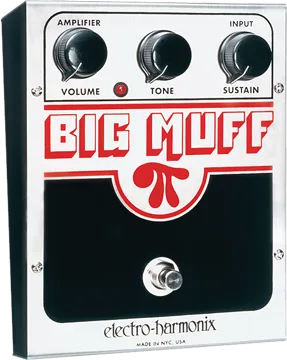
De Gregorio places the Fresh Fuzz on the spectrum of fuzzes available at the time, between the Maestro Fuzz Tone on one end and the Electro-Harmonix Big Muff on the other, and says it lies closer to the Big Muff side while keeping some characteristics of earlier boxes2. GuitarPlayer's writers, including Art Thompson, Chris Gill and Rod Brakes, describe it as "a crunchy-sounding distortion device"3.
Some period reviews called the Fresh Fuzz "thin sounding," a verdict De Gregorio calls inaccurate; he notes that despite those reviews the pedal gained popularity4.
"It's one of the most elusive and misunderstood fuzz pedals of the 1970s."
The Bakelite enclosure problem
The first Fresh Fuzz units were housed in plastic Bakelite enclosures. According to JHS Pedals, "a faulty enclosure design caused these plastic Bakelite pedals to shatter when guitarists stomped on them," so within a few months of release the pedals were recased in metal enclosures1. That makes early plastic-cased examples especially scarce, which fits the pedal's reputation as an elusive vintage find2.
The JHS Berkeley replica
In June 2023, JHS Pedals announced the Berkeley, a Legends of Fuzz pedal that recreates the Fresh Fuzz Version 1, the rarer single op-amp 741 version. JHS describes it as "our tribute to the rarer single op amp 741 version (Version 1)"14, and Delicious Audio reported the release as a replica of the 1973 original15.
Videos
jack's workshop
Farmer Factory
Questions
Who made the Seamoon Fresh Fuzz?
The Fresh Fuzz was made by Seamoon Inc., a company founded in 1973 by Craig Anderton, who also invented the Funk Machine, and John Lang. The Fresh Fuzz was the company's flagship fuzz pedal, released the same year the company launched. According to Delicious Audio, each unit was hand-built in the brand's early days.
Was the Seamoon Fresh Fuzz the first op-amp gain pedal?
Delicious Audio's Paolo De Gregorio describes the Fresh Fuzz as the first gain pedal to use an op-amp instead of a transistor. It was one of the first distortion units to substitute an operational amplifier for the typical transistor-driven fuzz circuit, a notable departure at a time when fuzzes were transistor-based.
Does the Seamoon Fresh Fuzz sound like a Big Muff?
Paolo De Gregorio places the Fresh Fuzz closer to the Electro-Harmonix Big Muff side of the fuzz spectrum, though with some characteristics of earlier boxes such as the Maestro Fuzz Tone. GuitarPlayer's writers described it as a crunchy-sounding distortion device. Some early reviews called it thin sounding, which De Gregorio calls inaccurate.
Why were the original Fresh Fuzz enclosures changed to metal?
The first Fresh Fuzz units came in plastic Bakelite enclosures. According to JHS Pedals, a faulty enclosure design caused these plastic pedals to shatter when guitarists stomped on them, so within a few months the pedals were recased in metal enclosures.
Sources (5)
- BERKELEY, JHS Pedals
- Seminal, Vintage Pedals: The Seamoon Fresh Fuzz, Delicious Audio, 2016-07-08
- Six Pioneering Effects Builders of the 1970s, GuitarPlayer, 2022-05-26
- New Pedal: JHS Berkeley (Legends Of Fuzz Fresh Fuzz Replica), Delicious Audio, 2023-06-06
- JHS gets fuzztastic with three new pedals to its Legends of Fuzz lineup, guitar.com, 2023-02-27
 Tom Scholz