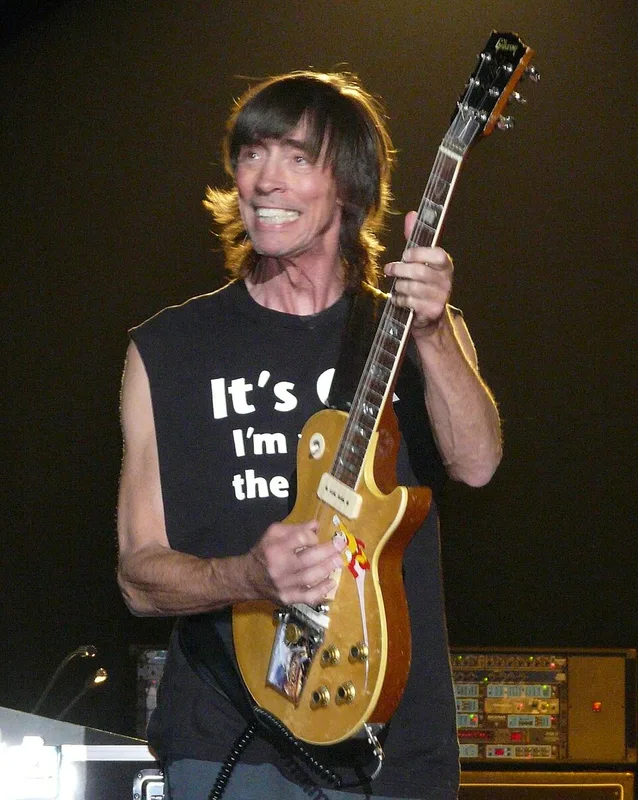
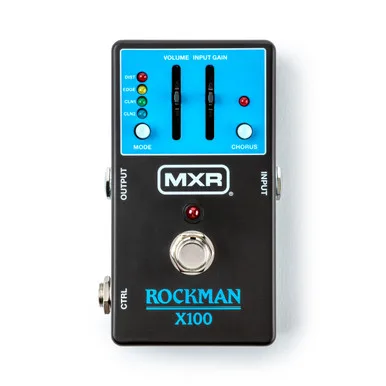
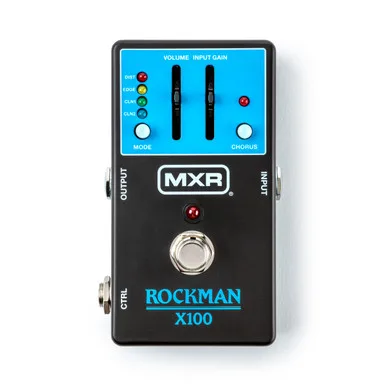
Tom Scholz is the founding guitarist of the hard rock band Boston, the writer behind hits like "More Than A Feeling," "Don't Look Back" and "Amanda," and, away from the band, a design engineer with more than 30 patents to his name12. He is as well known among gear builders as among players: in 1982 he designed and released the Rockman X100 headphone amp through his own electronics company, Scholz Research & Development (SR&D), a device that changed how guitarists could practice and record3.
His motivation was practical. In a 2020 Facebook post, quoted by Guitar Player, he explained that in 1982 there was no way to practice high-power rock guitar quietly, and that is what drove him to build the Rockman4.
The Boston guitar sound
Boston's first two albums were made with what one history describes as "the cumbersome collection of Marshall stacks, custom electronic boxes and mechanical inventions that had been Boston's daily environment for the two first albums"5. Scholz built and modified his own equipment rather than buying off the shelf. When no commercial EQ met his requirements, SR&D tried modifying existing units, gave up, and designed their own so they would have what they needed, as Scholz told Guitar World6.
His approach to overdrive was unconventional for the time. Speaking to Guitar World, Scholz said he does not use tubes or transistors as overdrive elements, he uses LEDs, and that it does not matter which device it is if you do the right thing with it7. That view carried into the records. On Third Stage, he said he started off using tube amps for several of the songs, then went back later and changed some of the parts so that some songs had pieces of tubes and Rockman, adding that nobody can tell which is which7.
His gear from the period includes:
- Custom electronic boxes of his own design, used on Boston's first two albums5
- A custom SR&D EQ, built after commercial units proved unsuitable6
- LED-based overdrive circuits in place of tube or transistor clipping stages7
- The Seamoon Fresh Fuzz, a pedal JHS Pedals notes was used extensively by artists including Scholz and Eric Johnson8
The Rockman and SR&D
Scholz founded Scholz Research & Development Inc. to market his inventions, which included the Rockman headphone guitar amplifier, designed to simulate the roar of his old Marshall heads at much quieter levels1. The original Rockman was hailed for its unique sonic character, with crystal cleans, harmonics, nuanced modulation and gritty crunch tones, and it revolutionized the process of recording guitars directly into a mixing board94. Scholz claimed it could replace $10,000 worth of studio gear and fit in the palm of your hand2. After the original's release he kept developing the product, spawning a whole line10. One notable validation came early: he received a Rockman warranty card in the mail from Jeff Beck2.
Scholz's four roles, musician, design engineer, sound engineer and producer, are what made the Rockman possible, according to a Rockman.fr history of the product5.
Dunlop now makes an MXR Rockman X100 pedal inspired by Scholz's original design, bringing the 1982 headphone amp's character to a stompbox format113.
Questions
Did Tom Scholz invent the Rockman?
Yes. In 1982 Tom Scholz designed and released the Rockman X100 headphone amp through his electronics company, Scholz Research & Development. He built it to get his maxed-out overdrive sound in headphones, because in 1982 there was no way to practice high-power rock guitar quietly. He went on to develop a whole line of Rockman products.
How many patents does Tom Scholz hold?
Tom Scholz registered more than 30 patents over the course of his career, and most of the revenue from them was donated to charity.
What did Tom Scholz study at MIT?
Tom Scholz was trained at MIT as a sound engineer. That background, along with his work as a musician, design engineer and producer, is what made the Rockman possible.
Did Tom Scholz use tube amps or Rockman on Third Stage?
Both. He told Guitar World in February 1990 that he started Third Stage using tube amps for several songs, then went back later and changed some of the parts so that some songs had pieces of tubes and Rockman. He added that nobody can tell which is which.
Who produced the Boston albums?
Tom Scholz played four roles on the Boston records: musician, design engineer, sound engineer and producer. He also built much of his own gear, including the custom electronic boxes used on Boston's first two albums.
Sources (11)
- MXR Rockman X100 Analog Tone Processor Pedal review, Guitar World, 2025-03-24
- How the Rockman revolutionised guitar tone and changed recording forever, Guitar.com, 2025-07-01
- MXR® ROCKMAN® X100™ ANALOG TONE PROCESSOR, Jim Dunlop (jimdunlop.com), 1982
- MXR Rockman pedal: the sound of '80s rock returns, Guitar World, 2025-01-08
- Rockman.fr, Rockman.fr, 2007
- Rockman.fr, Rockman.fr, 2008
- Rockman.fr, Rockman.fr, 2007
- BERKELEY, JHS Pedals
- MXR revives the Rockman amp as a pedal, Guitar World, 2025-01-23
- The Essential '80s Sound: MXR Rockman X100 Review, Premier Guitar, 2025-04-10
- MXR Unleashes The Rockman X100, gearnews.com, 2025-01-23