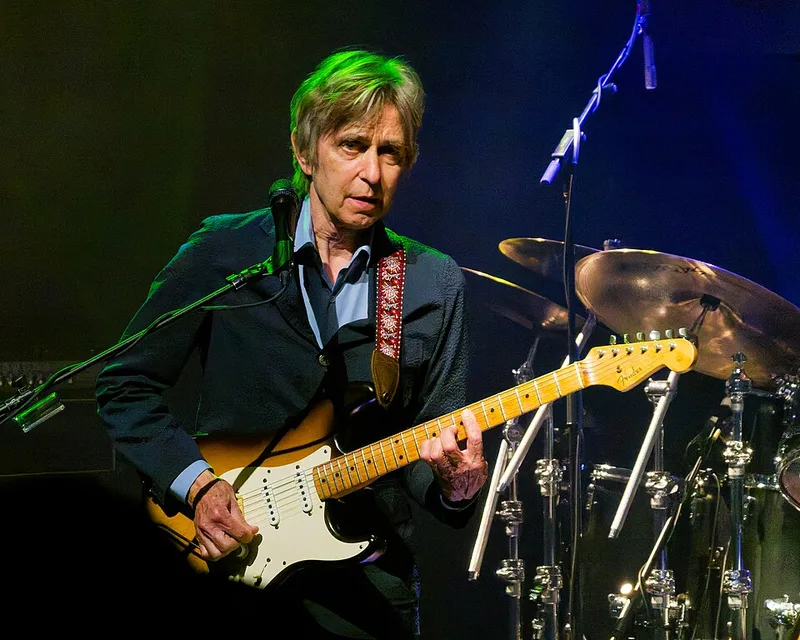
Eric Johnson is a Grammy-winning guitarist from Austin, Texas, who took the music world by storm with his 1986 album Tones and the 1990 follow-up Ah Via Musicom1. Guitar World calls him "famous for his refined tonal palette and discerning selection of effects," and notes that he relied on vintage Fuzz Faces for years2. Radial Engineering's artist page credits him as a Grammy award winner and a five-time Guitar Player "Best Guitarist" winner3. For a player building a board, his rig is interesting less for its size than for its logic: a small set of effects, each chosen for one specific job, spread across three separate amp setups.
Known for a refined tonal palette
Johnson's reputation as a tone chaser is not just press shorthand. Dunlop's own history desk calls him "arguably the biggest tone chaser of all time" and notes that he keeps an MXR Digital Time Delay on his pedalboard to this day8. His approach to amps makes the point clearly: he prefers tube amps over digital modelers and runs three distinct amp setups, each selected for one of three tones7.
"I have three distinct setups, and I've never found one amp that would do all three just how I like them."
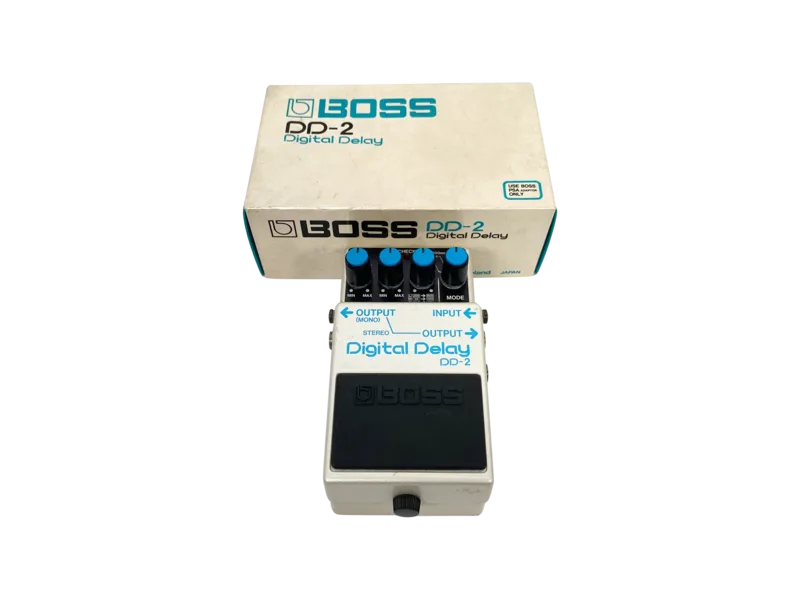
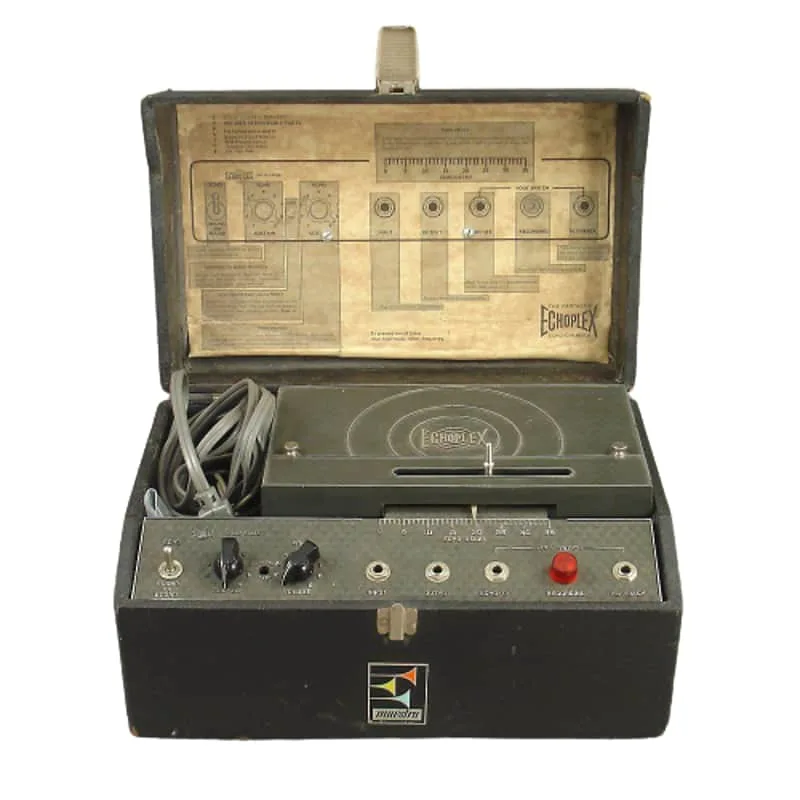
His delay placement follows the same one-job-per-piece thinking. In a 2012 Guitar World interview he laid out the split:
| Delay | Where it goes |
|---|---|
| Boss DD-2 | His Twins, for rhythm |
| MXR Digital Delay | His dirty rhythm Marshall |
| Maestro Echoplex | His lead1 |
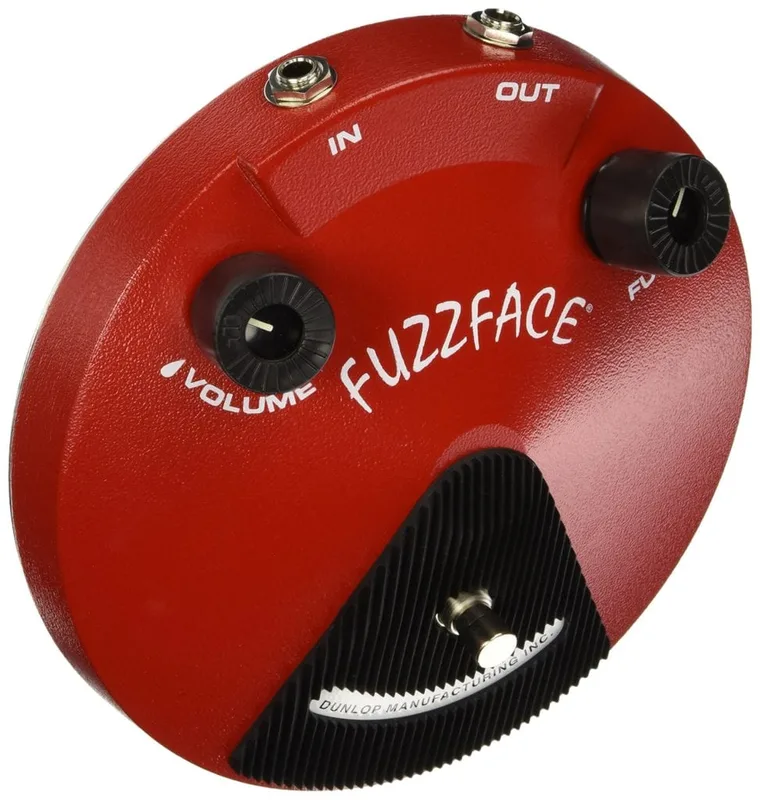
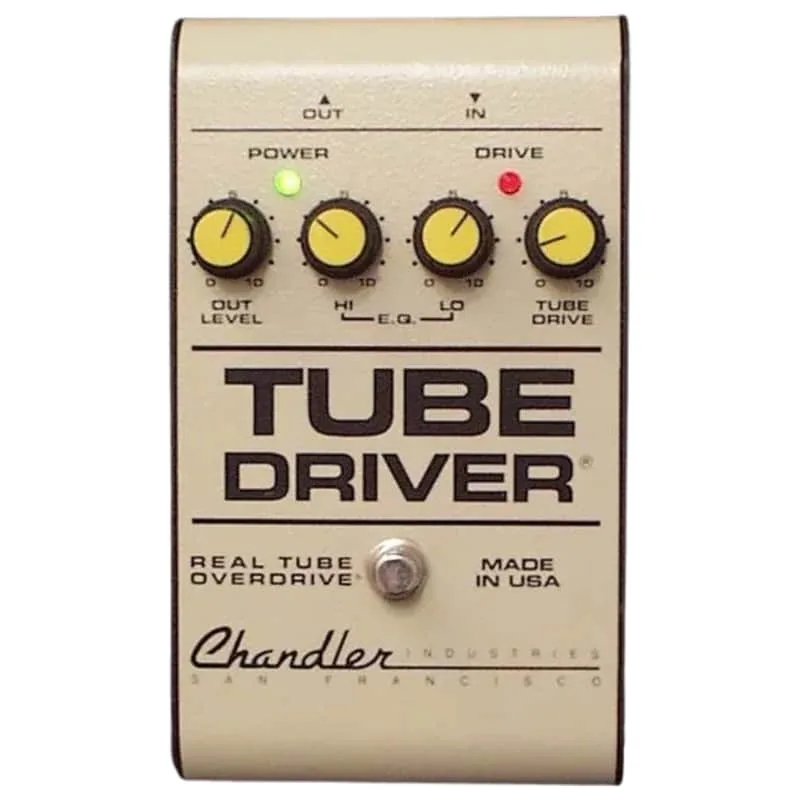
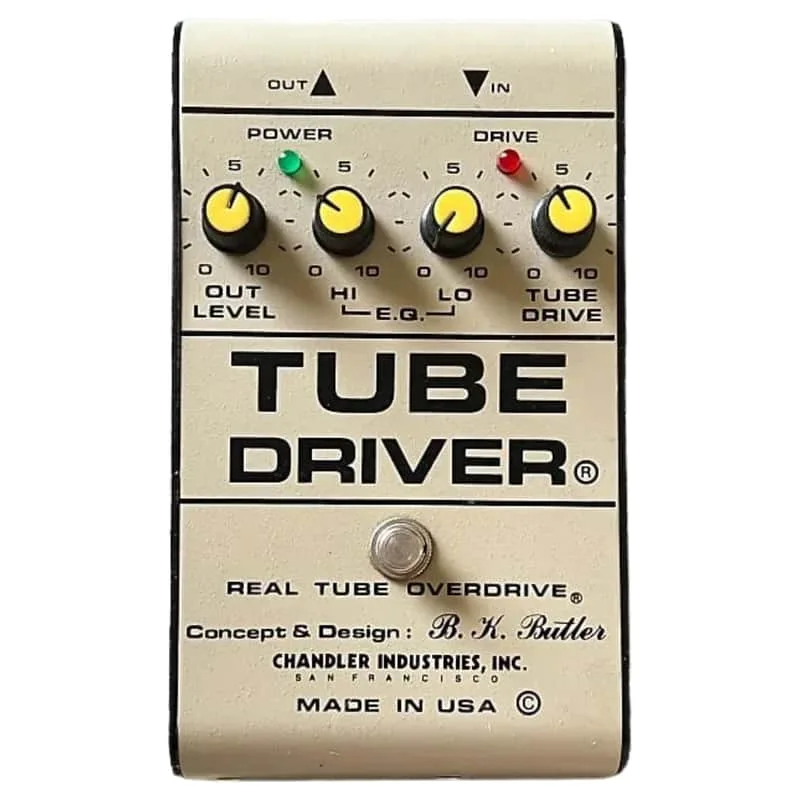
Beyond the delays, he described the rest of the board in the same interview plainly: "it's a chorus, a tube drive and the Fuzz Face"1. The tube drive is the AC-powered Chandler tube driver, a pedal Analog Man spent years trying to find good versions of on Johnson's behalf9. On the Experience Hendrix tour in 2008, his normal board carried the big Tube Driver, an Echoplex and an old Fuzz Face10.
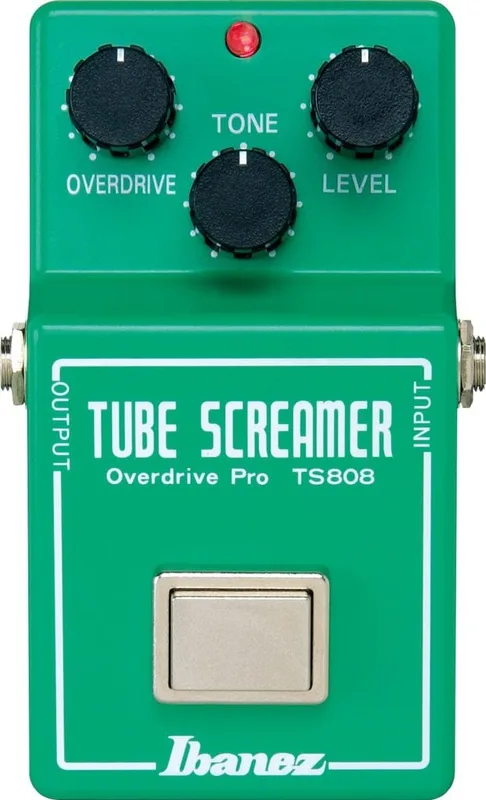
His pickiness extends to individual units of the same pedal. Analog Man's Tube Screamer page recounts that, per Guitar Player's October 1992 distortion issue, Johnson went through about 15 original TS-9s before he found a couple that he liked11. He has also used tape echo preamps alone, without the echo, as a dirty boost to overload amps and make them saturate12, and Catalinbread notes he ran his Echoplex before his BK Butler Tube Driver, preferring the sound of a saturated echo13. Boss's own article site names him among players who use delay pedals for fingerstyle acoustic guitar14.
The Fuzz Face and the Dunlop signature model
Where it started
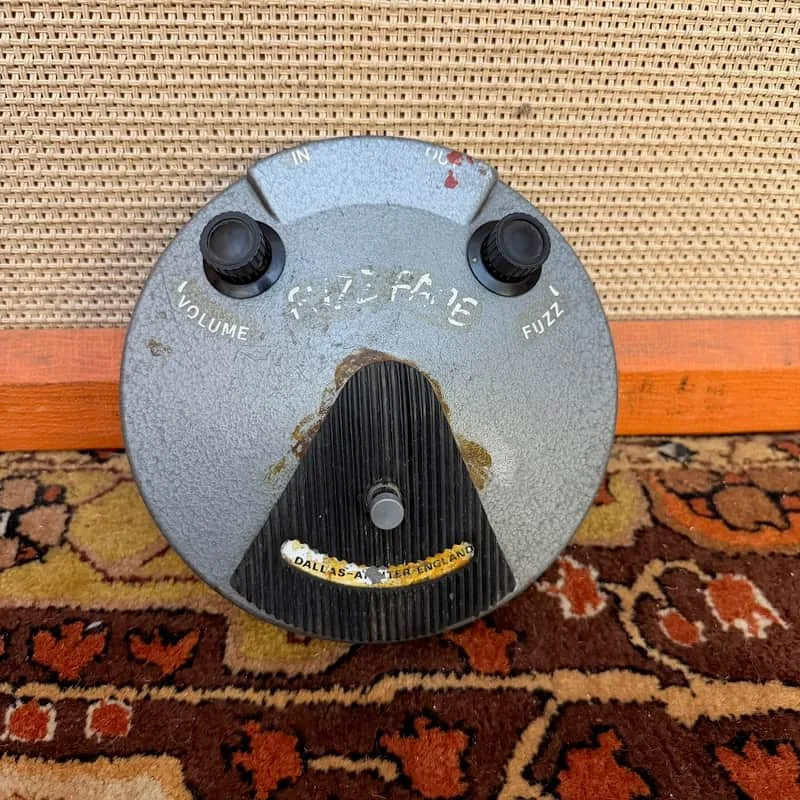
Johnson's connection to the Fuzz Face goes back to childhood. He first heard one while listening to Jimi Hendrix at about age twelve and bought one as soon as he could5.
"No one cares more about tone than Eric Johnson, and his choice for getting sweet, singing lead tones is the Eric Johnson Signature Fuzz Face."
Dunlop's artist page carries the same endorsement, with Johnson calling the Fuzz Face Distortion and the Jazz III pick "indispensable elements of his signature sound"5. General Guitar Gadgets notes he is known to use a silicon transistor version of the Fuzz Face with excellent tone results15, and a 2001 ToneQuest Report interview republished by Analog Man confirms the silicon Fuzz Face as one of the pedals Analog Mike hunted good examples of for him9.
One detail of his vintage sound has become part of the lore: Delicious Audio reports that his signature sound came from running his Fuzz Face off a partially-drained 9-volt battery16. There is also a service history behind the scenes. Dave Fox, in a history piece on Analog Man's site, says Johnson later sent him a post card thanking him for helping him get his FF to sound good17.
The Eric Johnson Signature Fuzz Face
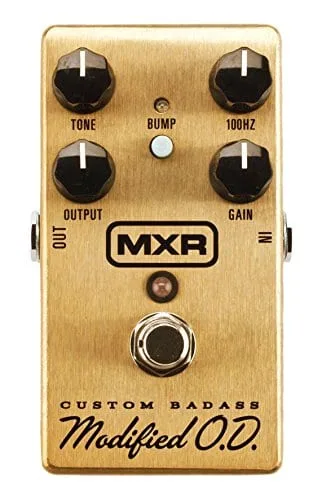
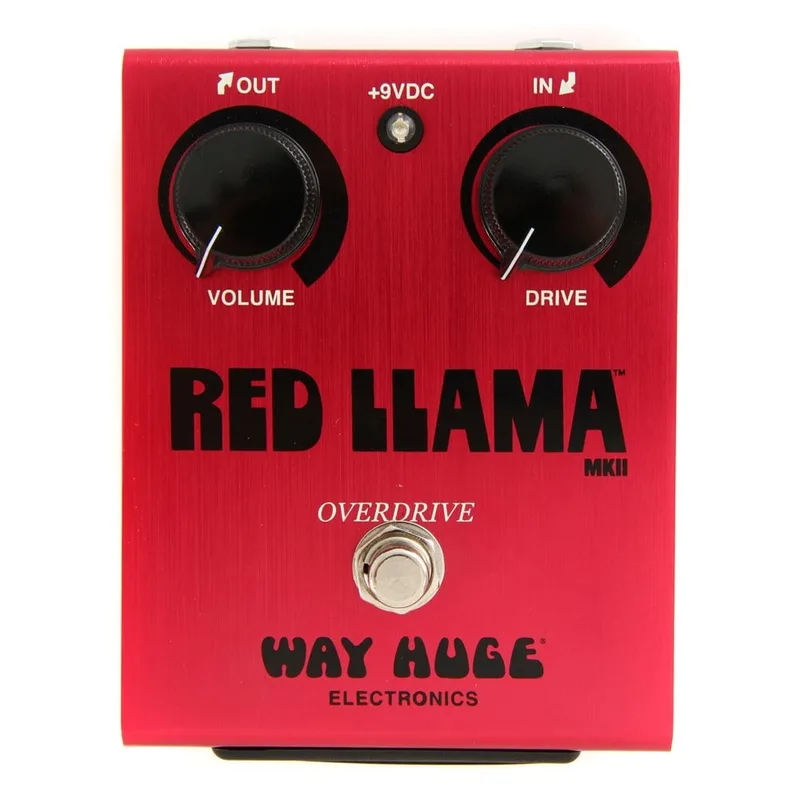
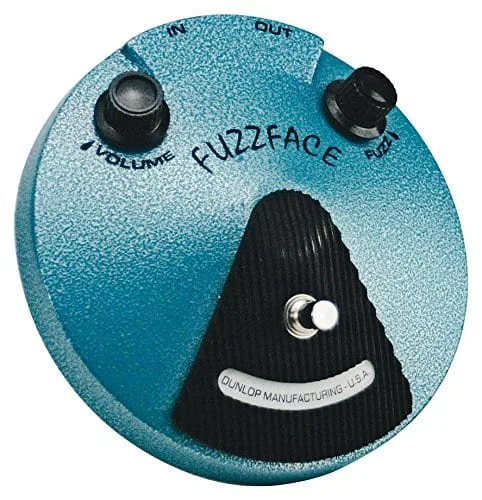
By 2012, Johnson wanted his signature sound available on a consistent basis regardless of the venue, and Dunlop released the Eric Johnson Signature Fuzz Face to answer that1. The pedal was first shown at Winter NAMM in January 20122, announced alongside the MXR M77 Custom Badass Modified OD and the Way Huge Red Llama Overdrive18. Its release was celebrated with a giveaway Dunlop ran with Fender4.
Johnson worked closely with Fuzz Face designer Jeorge Tripps to create the pedal194. What came out of that collaboration:
- Hand-selected BC183 silicon transistors, chosen for higher gain419
- Custom reproduction '68-'69 knobs19
- A vintage-style hammertone finish19
- A circuit inspired by Johnson's prized personal Fuzz Faces, built to his specifications420
Guitar World reported that Dunlop set out to create a Fuzz Face that recreated the vintage sounds of Johnson's pedals while delivering modern consistency2. Both Guitar World and Guitar Interactive described the result as "a beautifully dynamic, expressive, and powerful pedal"419.
How it differs from a stock Fuzz Face
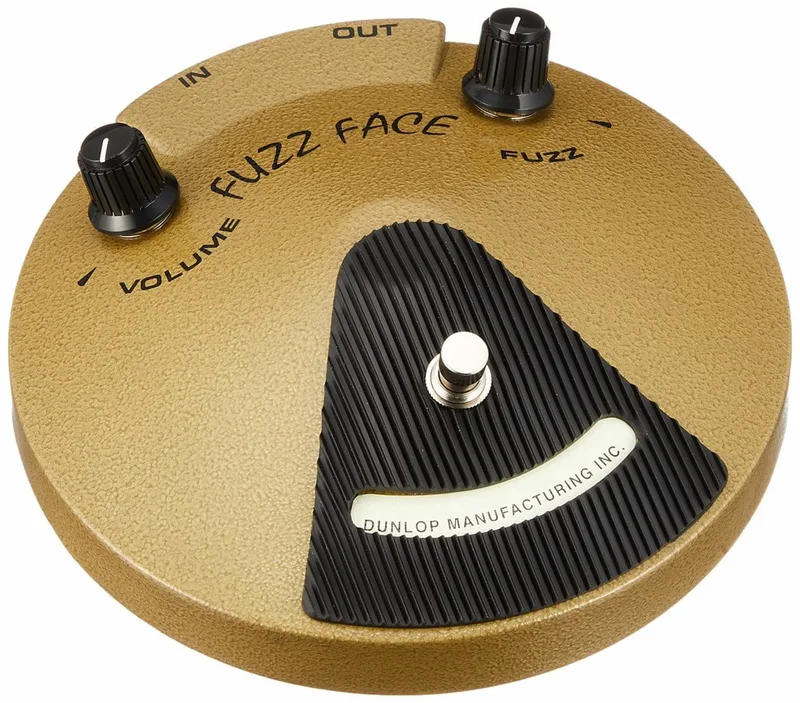
The differences are in the parts and the intent. Where the standard Dunlop Jimi Hendrix Fuzz Face Distortion recreates the Dallas Arbiter unit Hendrix used in the late '60s with modern features such as a status LED, true-bypass switching, a 9-volt power jack and a pedalboard-friendly housing21, the Johnson model is voiced from Johnson's own late-'60s units rather than a general vintage benchmark219. The BC183 silicon transistors are the headline spec, selected by hand for higher gain4. A technical analysis at GuitarPCB adds that Johnson seems to prefer a 100KΩ level resistor over the stock 500KΩ, which cuts more lows (f c = 160Hz) and results in a brighter sound22.
The pedal has since taken on a life of its own in the DIY world. Madbean Pedals' Violenzz project is closely based on the EJF1, and its documentation points to "the highly compressed fuzz sound for which EJ is so famous"23. That same page passes along a playing tip straight from the source: rolling off the volume on the guitar yields another tonal variety, and EJ does this constantly in his playing23.
Johnson himself has settled the question of which one he uses now. In the 2012 Guitar World interview he said: "I've sold all my original Fuzz Faces except one I don't use. I use the new Fuzz Face"1.
Stereo chorus from Analog Man
Johnson's chorus story runs through Analog Man, the vintage effects operation Mike Piera began under that name in 1993. Piera says he had been working with Johnson for many years10, and the stereo version of the Analog Man Chorus exists because of him:
"The stereo version was suggested to me by Eric Johnson who likes to use his choruses in stereo. I made a prototype (#1 stereo pedal) for Eric and he likes it a lot."
The Analog Man Chorus is based on the Electro-Harmonix Small Clone, which the company's manual calls "one of the best chorus pedals ever made, with lush, bright, shimmering tones"24. It is offered in a true stereo version and a mini version24. On the standard pedal you plug the guitar in on the right (IN) and the amp on the left (OUT)24; on the stereo version it is true stereo, and either output can be used in mono, though the top output is the normal one24. The stereo option costs $50 extra on a new standard chorus or Bichorus pedal6.
Johnson's chorus tastes also connect him to rack history. Premier Guitar's review of the TC Electronic Stereo Chorus Flanger notes that the pedal, with architecture dating to 1976, "has consistently satisfied persnickety tone hounds like Eric Johnson"25.
Picks, boosts and the rest of the board
The Jazz III pick is the other half of Johnson's signature pairing with Dunlop. Of his signature version he says:
"The shape is right, and the material on my signature version produces the tone I need."
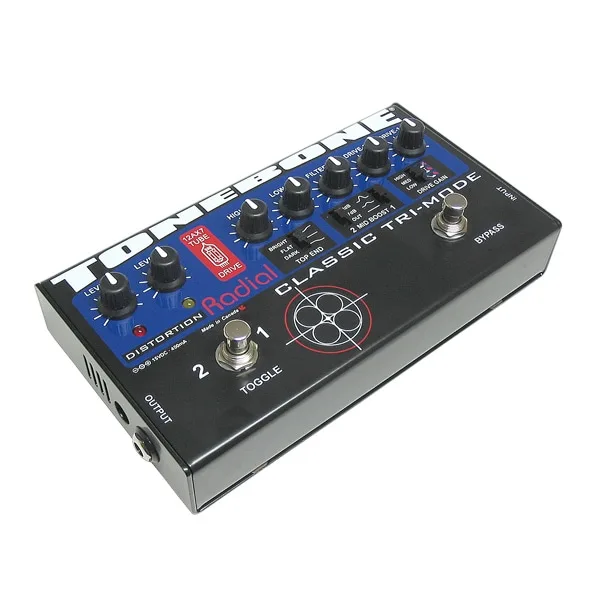
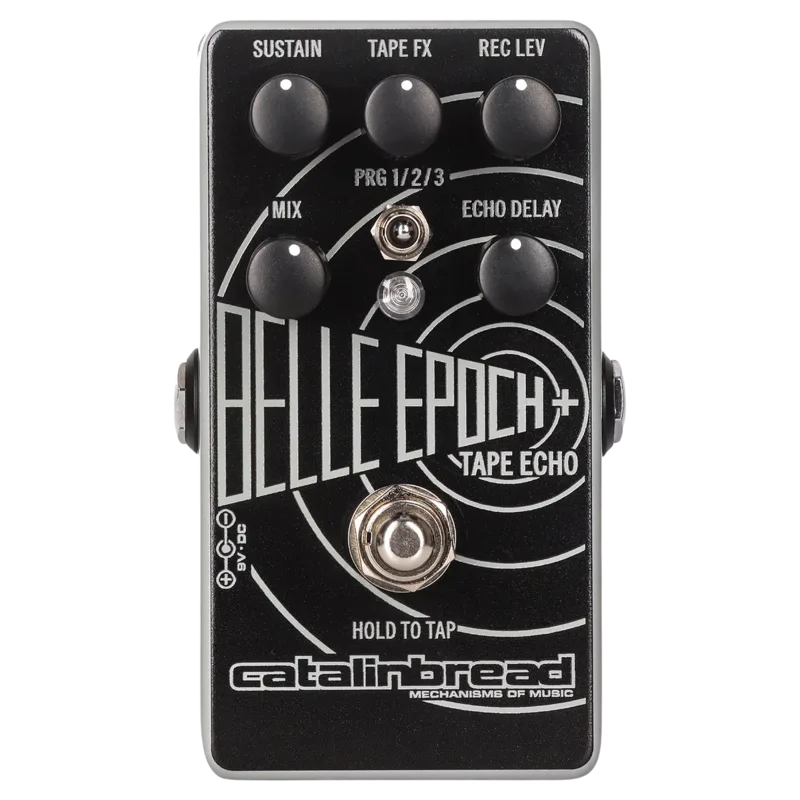
His lead tone has other pieces. Radial Engineering quotes him on the Tonebone Classic: "As soon as I plugged the Tonebone Classic in, I could not believe how quiet it was"3. For echo, Guitar.com's review of the Catalinbread Belle Epoch reports that Johnson regards it as the closest alternative to a real Maestro Echoplex EP3 that money can currently buy26. And in a 2024 guitar.com interview he mentioned a custom-made pedal by Bill Webb of Austin Vintage Guitars, designed together with him7.
At the time of that 2012 interview he was touring as a trio with Chris Maresh on bass and Wayne Salzmann on drums1, in support of his 2010 album Up Close1. The board he described then, a chorus, a tube drive, the Fuzz Face and three delays across three amps, is a working example of his whole philosophy: every piece earns its place for one sound, and nothing else makes the trip.
Questions
What fuzz pedal does Eric Johnson use?
He uses the Dunlop Eric Johnson Signature Fuzz Face, a silicon fuzz he developed with Dunlop and Fuzz Face designer Jeorge Tripps. He had relied on vintage Fuzz Faces for years, but by a 2012 Guitar World interview he had sold all his originals except one he does not use, and said he plays the new signature model instead.
How is the Eric Johnson Fuzz Face different from a stock Fuzz Face?
It is built to Johnson's specifications around hand-selected BC183 silicon transistors chosen for higher gain, with custom reproduction 1968 to 1969 style knobs and a vintage-style hammertone finish. The circuit is modeled on his own prized late '60s Fuzz Faces, aiming to recreate their vintage sound with modern consistency.
Does Eric Johnson run his chorus in stereo?
Yes. Analog Man says Johnson suggested the stereo version of the Analog Man Chorus to him because he likes to use his choruses in stereo, and that the first stereo prototype was built for Johnson, who liked it a lot. The stereo option is true stereo, with either output usable in mono.
What pick does Eric Johnson use?
The Dunlop Jazz III, in a signature version. He says the shape is right and the material on his signature version produces the tone he needs. Dunlop describes both the Jazz III and the Fuzz Face as indispensable elements of his signature sound.
When did Eric Johnson first hear a Fuzz Face?
Around age twelve, while listening to Jimi Hendrix, one of his greatest influences. He says he picked one up as soon as he could and loved playing through it, calling it the classic Hendrix tone and the pinnacle of psychedelic fuzz.
Sources (26)
- Interview: Eric Johnson Discusses His Dunlop Signature Fuzz Face Pedal, Guitar World, 2012-08-27
- Dunlop Introduces Eric Johnson Signature Fuzz Face Pedal, Guitar World, 2012-04-09
- Eric Johnson, Radial Engineering
- New Eric Johnson Signature Fuzz Face, Guitar Interactive Magazine, 2012-04-03
- Eric Johnson is a Dunlop Artist., Jim Dunlop (www.jimdunlop.com)
- Analog Man Chorus Pedals, aNaLoG.MaN (analogman.com), 2026
- Eric Johnson on the custom G3 pedal he might "actually put out on the market", guitar.com, 2024-02-07
- MXR: Rackmount Era, Dunlop (lifestyle.jimdunlop.com), 2014-03-28
- ToneQuest Report interview, ToneQuest Report (republished on analogman.com), 2001-11
- Experience Hendrix tour, analogman.com, 2008-10
- Ibanez TS9 and TS808 Tube Screamers, Maxon OD9 and similar effects pedals and mods, Analog Man (analogman.com), 1992-10
- Tape Preamp, Anasounds, 2023-04-27
- Epoch Set (B-Stock), Catalinbread Effects
- Using a Delay Pedal with Other Instruments, BOSS (articles.boss.info), 2023-10-10
- Fuzz Face™ Clone Kit: Germanium or Silicon, Five Versions, General Guitar Gadgets, 2014-05-14
- Pedal Update: SolidGoldFX If 6 Was 9 MKII, Delicious Audio, 2022-05-31
- Analog Man Fuzz Face Story, analogman.com, 2015
- NAMM 2012 VIDEO: four new Dunlop/MXR pedals get the demo treatment, MusicRadar, 2012-01-21
- NAMM 2012: Dunlop Eric Johnson Fuzz Face Video Demo, Guitar World, 2012-01-20
- Dunlop Offers Eric Johnson Signature Fuzz Face, Vintage Guitar magazine, 2012-04-02
- JIMI HENDRIX FUZZ FACE DISTORTION by Dunlop, RockBoard PedalPedia, 2026
- Fuzz Face Analysis, GuitarPCB
- Violenzz.pdf, madbeanpedals.com, 2020
- chorus.docx, Analog Man, 2024-04
- TC Electronic SCF Gold Review, Premier Guitar, 2022-01-25
- Catalinbread Topanga & Belle Epoch review, Guitar.com, 2015-06-29