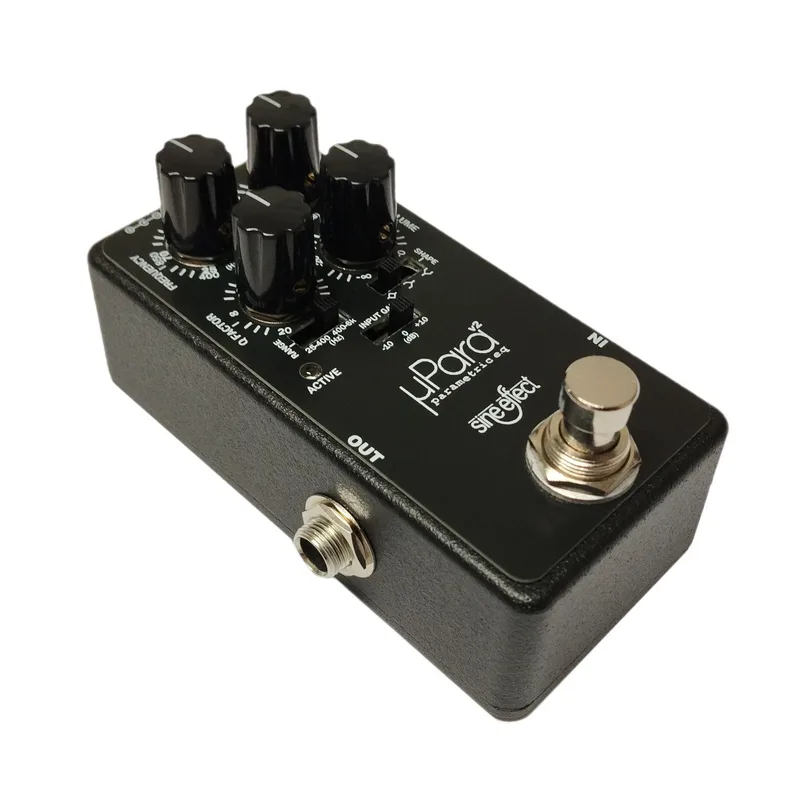
The Sine Effect microPara (μPara) is a small, fully-featured one-band parametric EQ pedal from Sine Effect Electronics, a builder that has been hand-building pedals for musicians and producers throughout the world since 20141. It is the v2 of the design, and it is based on the older and larger miniPara pedal, but with more features and a smaller size1.
A parametric EQ lets you choose the center frequency you want to affect, how wide a band of frequencies around it gets affected, and how much to cut or boost. The microPara offers a parametric bell-curve filter or a shelving filter, input padding, and a range switch for fine-tuning, with up to 15dB of cut or boost available1. That is enough range to pull out a problem frequency entirely or push a solo forward.
Peak and shelf modes
The microPara is switchable between three EQ modes: Peak, Low Shelf and High Shelf, with +/-15dB gain in both mode types1. The difference matters for how you use it:
| Mode | What it does | Typical use |
|---|---|---|
| Peak | Bell-curve boost or cut around a chosen center frequency | Removing a muddy low-mid hump or adding upper-mid bite |
| Low Shelf | Boosts or cuts everything below the set frequency | Tightening a boomy bass or warming a thin guitar |
| High Shelf | Boosts or cuts everything above the set frequency | Rolling off harshness or adding air |
A peak filter affects a band around the frequency you set, while a shelf affects everything beyond it in one direction. Having all three in one small pedal means the microPara can work as a surgical problem-solver or as a broad tone shaper.
The controls and the range switch
The frequency range is adjustable between 25 to 400Hz or 400 to 6,400Hz (6.4KHz), selected by the range switch1. The low band covers the fundamentals of bass and the low end of guitar; the high band covers the mids and low treble where most of a guitar's character lives.
The pedal also provides switchable +10dB recovery gain or -10dB input padding1. Input padding reduces the level entering the filter, which is useful with hot pickups or an already-boosted signal; recovery gain brings the level back up after heavy cutting, so a deep cut does not leave your signal quieter than it went in.
Power and impedance
The microPara runs on a 9 to 18V DC mains adaptor and draws about 15mA1. There is no battery option in the maker's specification, so it needs a pedalboard power supply or a wall adaptor. The higher voltage option is there if your supply offers it.
Input impedance is 1 Megaohm and output impedance is 100 ohms1. The high input impedance preserves high end when the pedal sees a passive pickup signal, and the low output impedance lets it drive long cable runs or the next pedal in the chain without tone loss.
The maker states this product was available for sale in the EU prior to December 13th 2024, and gives no current EU availability1. Players in the EU should check the maker's store for the current status.
Hand-built in Scotland
Sine Effect Electronics makes its pedals by hand in Scotland, and the microPara is no exception1. The maker notes that because the products are made by hand, there may be some slight visual imperfections that you would not get from factory production1. All pedals come with a 2-year warranty1.
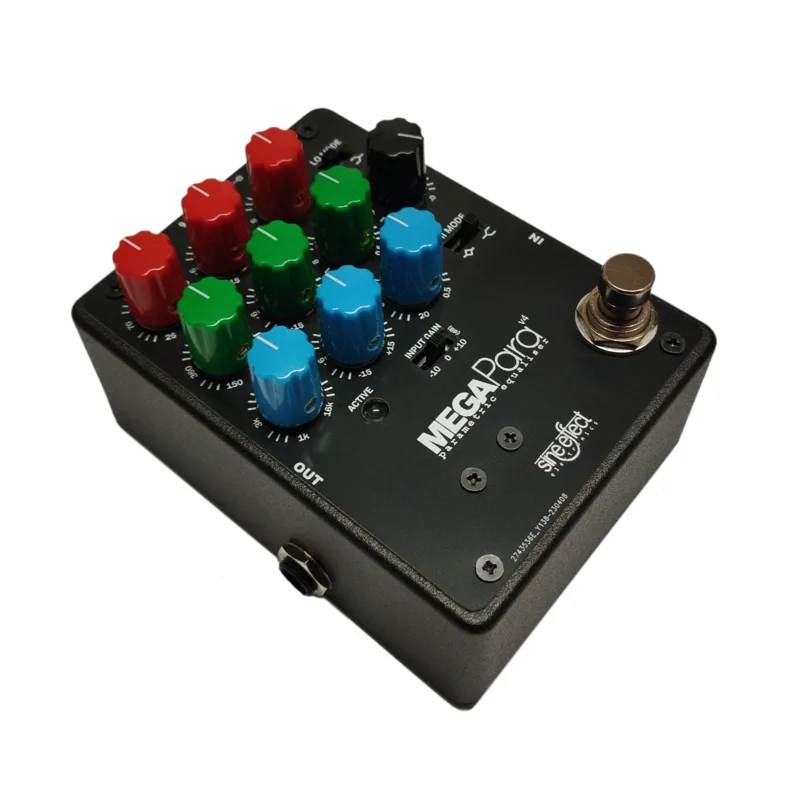
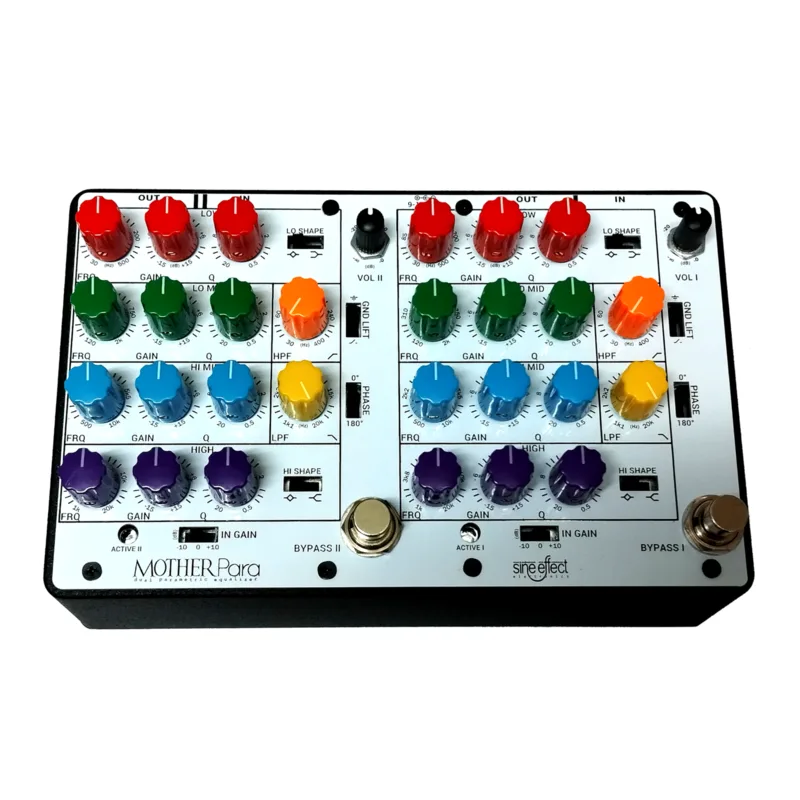
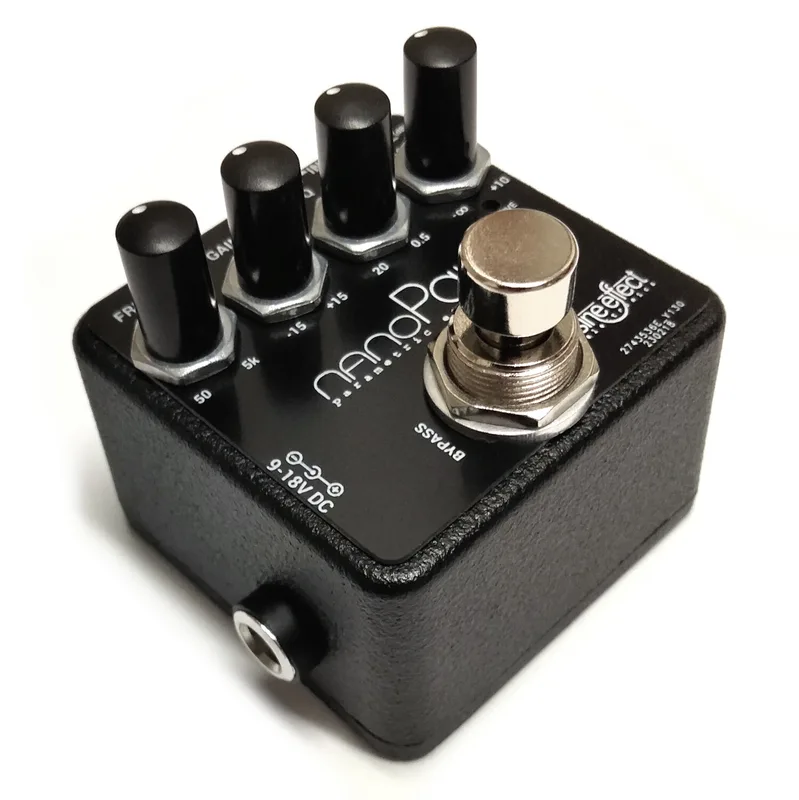
The microPara sits in a family of Sine Effect parametric EQ pedals that also includes the MegaPara v4, the MotherPara and the nanoPara, giving players a choice of sizes and band counts within the same design approach1.
Questions
What frequency ranges does the Sine Effect microPara cover?
A range switch selects between two bands. The low position covers 25 to 400Hz, and the high position covers 400 to 6,400Hz. Together they span the fundamentals and lower harmonics of both guitar and bass, letting you target anything from a muddy low-mid hump to a harsh upper-mid peak.
What is the difference between the microPara and the miniPara?
The microPara is based on the older and larger miniPara pedal, but Sine Effect describes it as having more features in a smaller enclosure. It measures roughly 10 x 6.5 x 5cm including sockets and knobs, so it takes up less pedalboard space than the pedal it was developed from.
Does the Sine Effect microPara run on a battery?
No. The maker specifies a 9 to 18V DC mains adaptor as the operating voltage, with no battery option listed. It draws about 15mA, so it is light on a power supply and easy to run from a standard pedalboard supply.
How much current does the Sine Effect microPara draw?
The maker lists a current draw of about 15mA. That is low enough that it places very little demand on a typical isolated pedalboard power supply, and it can share headroom with far hungrier digital pedals.
Where is the Sine Effect microPara made?
It is hand-made in Scotland by Sine Effect Electronics, a builder that has been hand-building pedals for musicians and producers since 2014. Because the pedals are made by hand rather than by factory robots, the maker notes there may be slight visual imperfections in the finish.
Is the Sine Effect microPara still sold in the EU?
The maker states the product was available for sale in the EU prior to December 13th 2024, and gives no current EU availability.
Sources (1)
- microPara (μPara) 1-band parametric EQ, Sine Effect Store (sineeffect.com), 2024-12-13