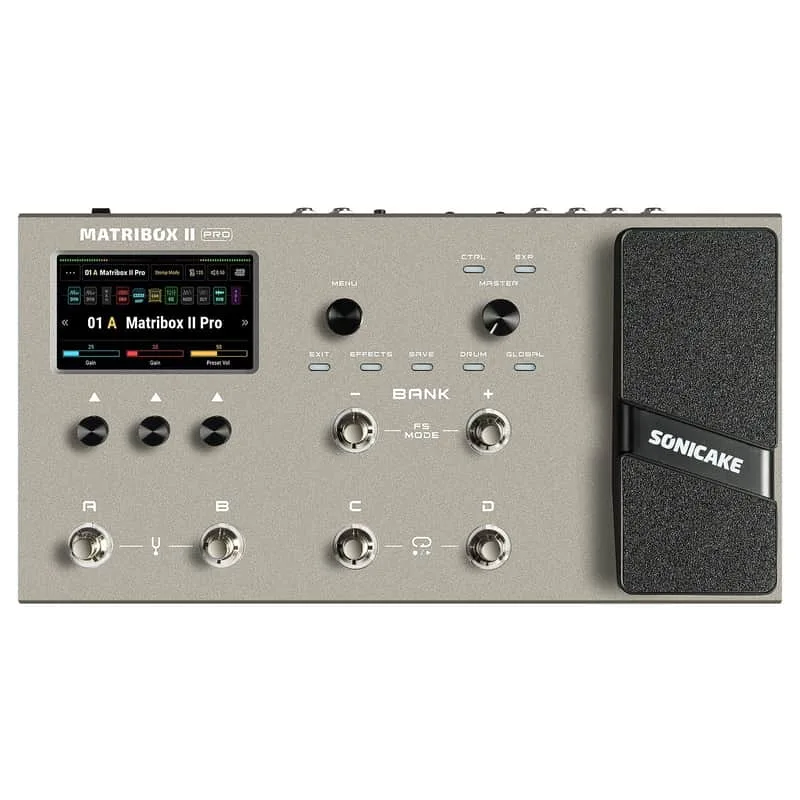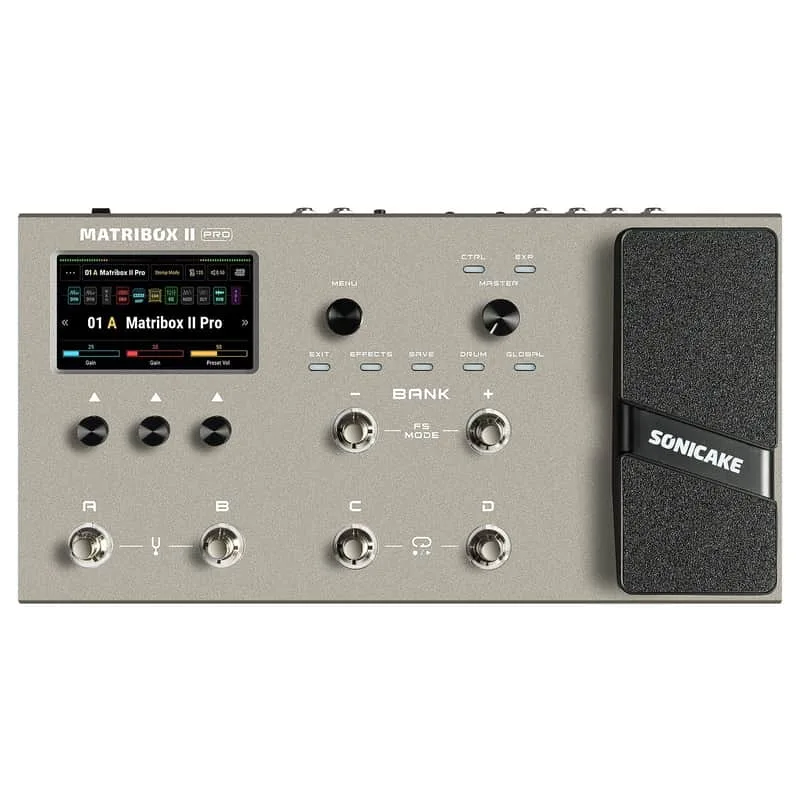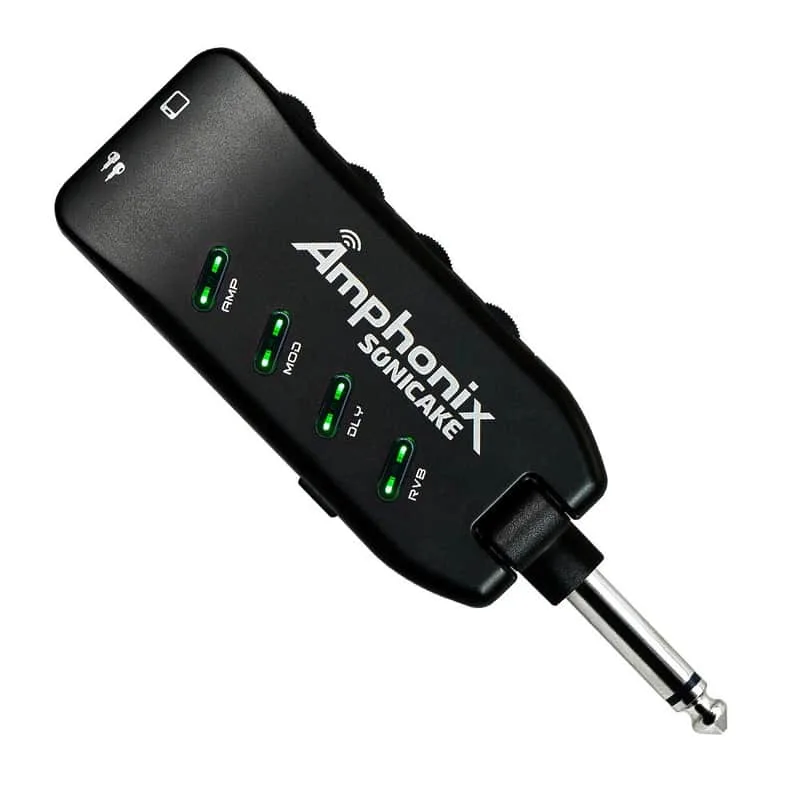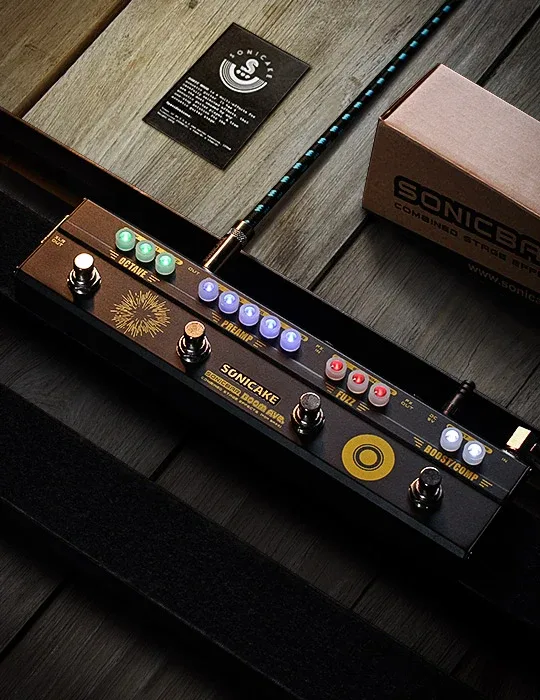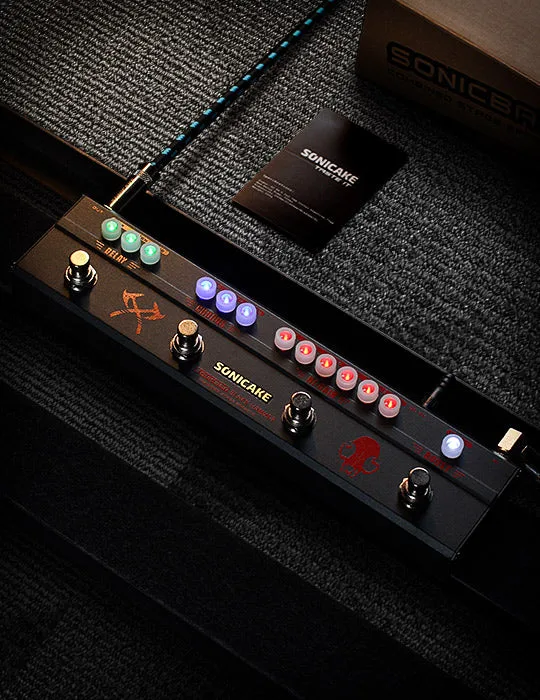


The Sonicake Black Hammer is a multi-effects pedal from Sonicake aimed at metal and hard rock players, described by the maker as a "One-Stop Gig Solution for Metalheads with Main Effects needed." It combines an analog hi-gain distortion section with a 3-band EQ and a smart noise gate, alongside a chorus, a delay, and a pre-gain boost1. At a list price of $99.99 USD2, it sits in the affordable range of multi-effects pedals, a different approach from Sonicake's larger modeling units such as the Matribox II or Matribox II Pro.
The effects and how they fit together
The core of the pedal is the distortion. Sonicake describes it as an "Analog Hi-Gain Distortion with 3-Band EQ and Smart Noise Gate," meaning the gain stage is analog circuitry rather than a model, with bass, mid and treble controls for shaping heavy tones and a gate to keep quiet passages clean between riffs1. On the German-language product page, Sonicake suggests the EQ section "can get you any heavy tone you want from Black Sabbath to Van Halen, to Pantera, to Slipknot"4.
Around that core sit three supporting effects:
- Pre-gain boost: a boost placed before the distortion that, in Sonicake's words, "can Push Up more Gain and Volume of the Distortion, perfect for some Heavy Riffs or Loud Solos"1.
- Chorus: a BBD-style chorus, which Sonicake says "Brings Classic Ambient Tone"1.
- Delay: an analog-voiced delay with a maximum delay time of 500ms1.
The chorus and the delay, in the maker's words
The chorus is where Sonicake makes its lineage explicit. The product page states: "First thing first, it's a BBD-style chorus. Think about those Boss CE chorus"4. BBD stands for bucket-brigade device, the analog delay-line chip technology behind the classic chorus pedals of the 1980s, and Sonicake is positioning this section as a nod to that sound rather than a modern digital emulation of it14.
The delay is a different case. Sonicake is direct about the technology: "The delay is analog-voicing. It runs on digital algorithms, but they sound analog"1. In other words, the processing is digital, but it is tuned to behave like an analog delay rather than a clean, repeating digital one. With a 500ms maximum, it covers the shorter delay ranges that suit distorted rhythm and lead work1.
Power, size and practicalities
The Black Hammer runs on 9V DC center negative, and Sonicake includes the power supply with the pedal1. Current consumption is listed at 75mA1, which is within reach of most pedalboard power supplies, though a daisy chain shared with several other pedals is worth a second look.
The included supply is 9V DC center negative1. If you replace it, match that polarity and voltage, and give the pedal an output rated for at least its 75mA draw1.
The pedal measures 262mm deep by 64mm wide by 44mm high and weighs 500g, in a heavy-duty metal casing1. That is a long, narrow footprint, closer to a compact multi-effects bar than a box-style unit, which keeps it manageable on a crowded board.
Where it sits in Sonicake's range
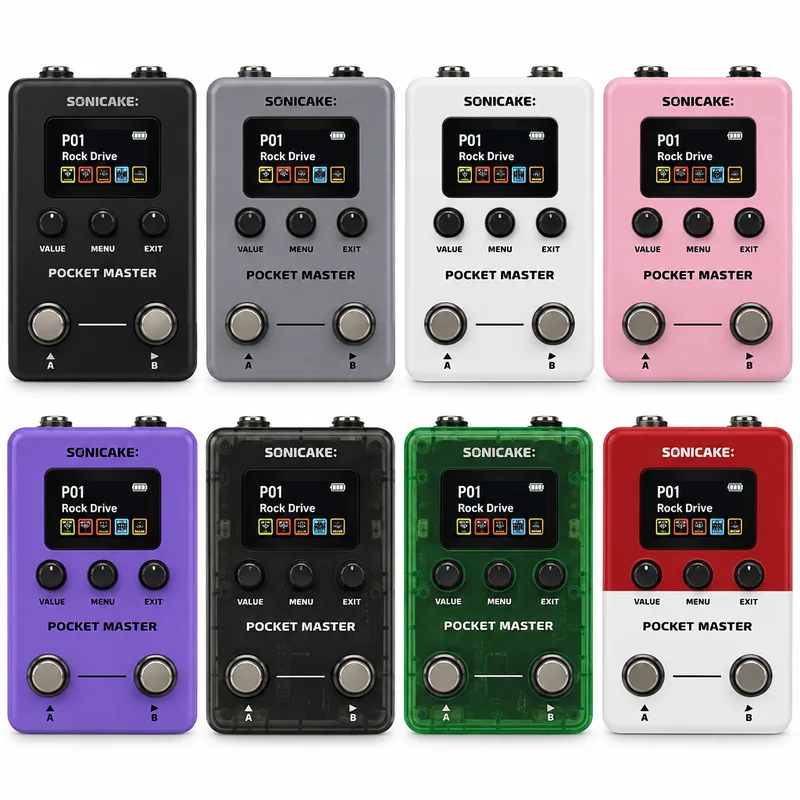
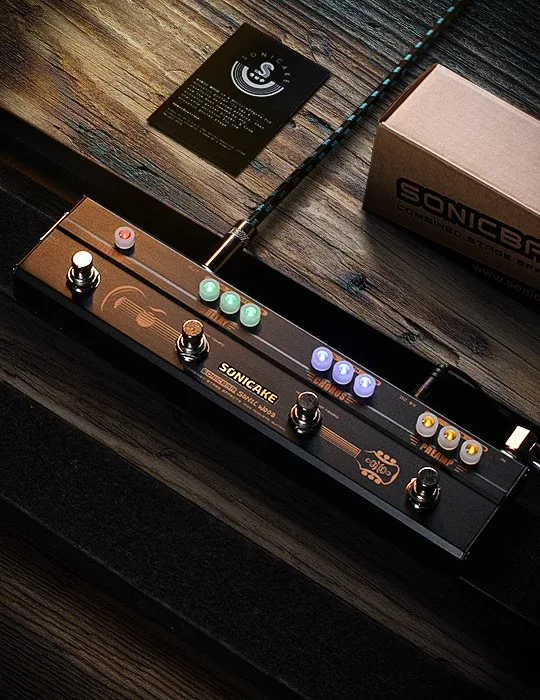
Sonicake's multi-effects line spans from small bars like this to full modeling floor units. The Black Hammer is the focused, analog-front-end option: distortion, chorus, delay, boost and gate, with no amp models or drum machine. Players wanting amp modeling and a wider effect palette in the same brand would look instead at the Matribox II, the Matribox II Pro or the compact Pocket Master, while the Sonic Wood is the company's take on a similar compact bar format2.
Videos
SONICAKE
Guitar MAX
Brett Kingman
Questions
Does the Sonicake Black Hammer come with a power supply?
Yes. Sonicake lists the power requirement as 9V DC center negative and states that the supply is included with the pedal. The pedal draws 75mA, so a standard 9V center-negative supply handles it, but it is worth checking the current budget if you plan to share a daisy-chain supply with other pedals.
How much current does the Black Hammer draw?
Sonicake lists the current consumption at 75mA. That is modest by multi-effects standards, but if you power it from a shared pedalboard supply, make sure the output you use can deliver at least that much current.
Is the Black Hammer's delay analog or digital?
Sonicake describes the delay as analog-voicing: it runs on digital algorithms, but the company says those algorithms are voiced to sound like an analog delay. So the circuitry is digital, but the character is meant to sit in analog delay territory.
How long can the Black Hammer's delay time go?
Sonicake lists the maximum delay time at 500ms. That covers the shorter, rhythmic and ambient delay ranges most players use with distortion-based tones, though it will not reach long, self-oscillating delay lengths.
How does the Black Hammer's chorus compare to a Boss CE?
Sonicake's own product page makes the comparison directly, calling the chorus section a BBD-style chorus and telling readers to think of the classic Boss CE chorus. BBD refers to bucket-brigade device chips, the short-delay analog technology behind that classic chorus sound.