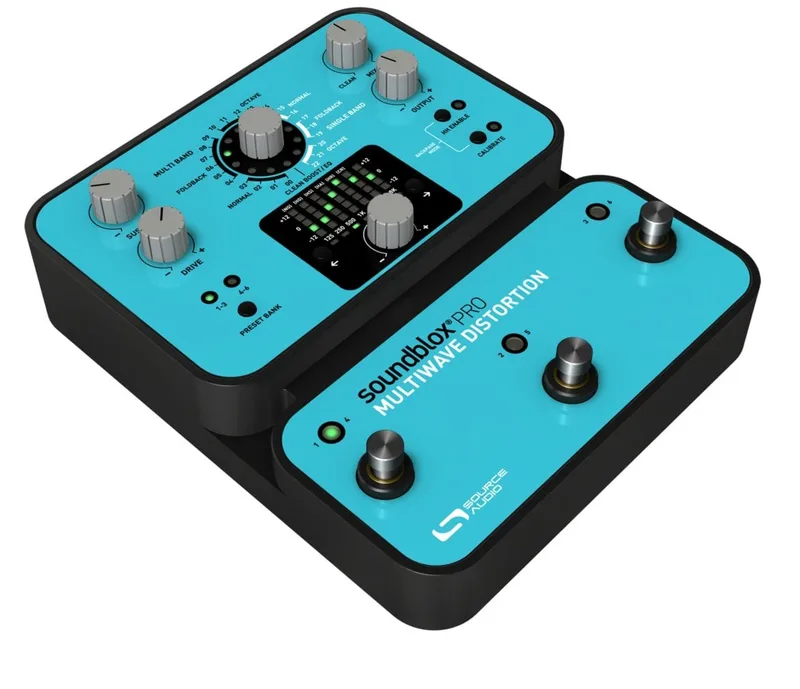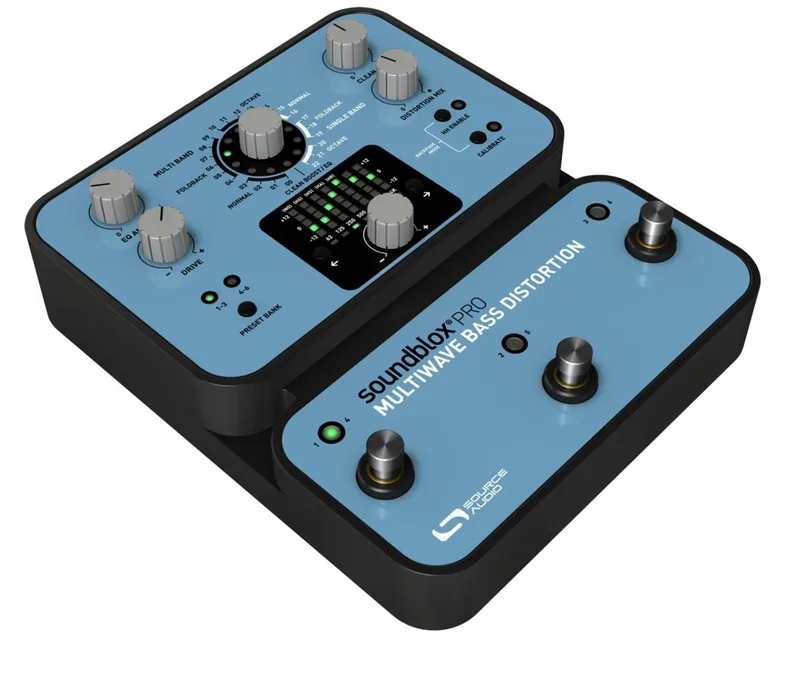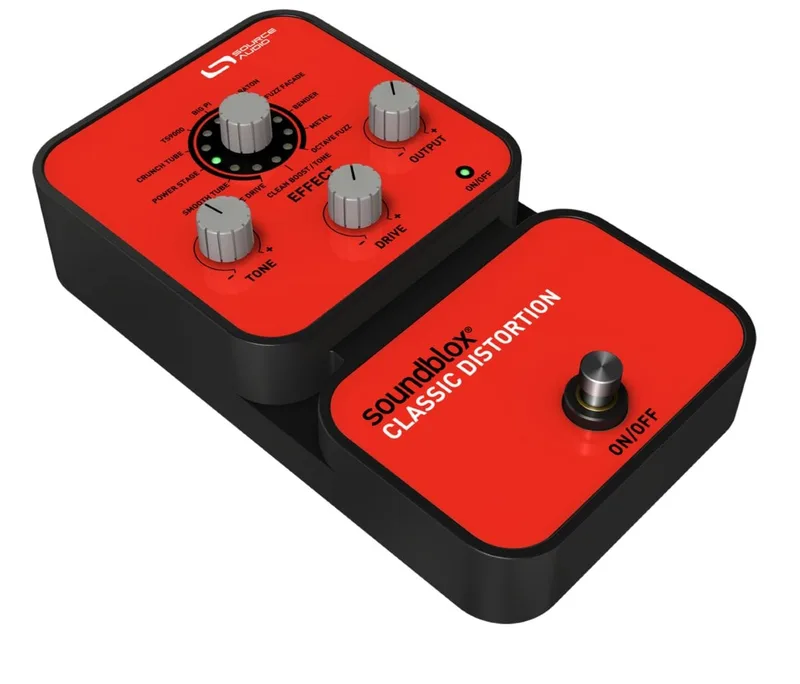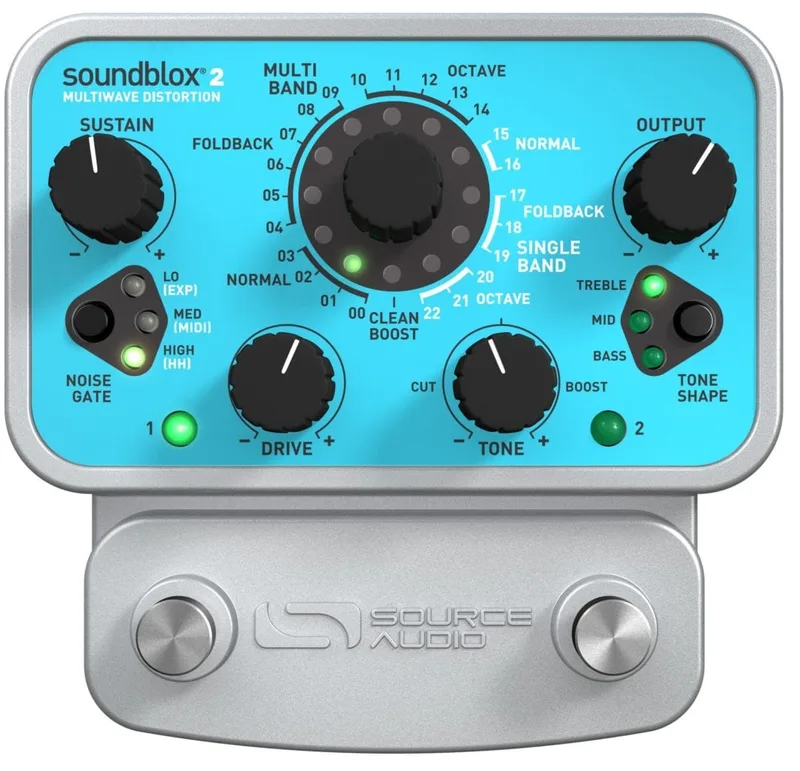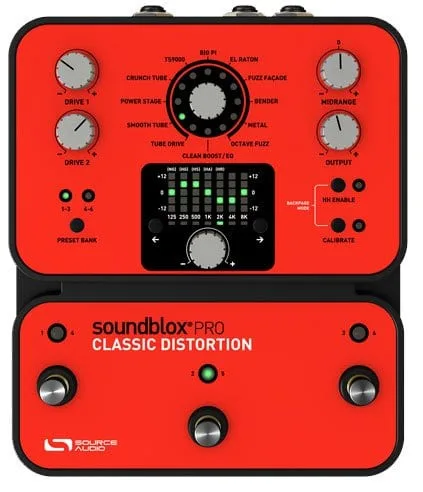


The Source Audio Soundblox Pro Classic Distortion is a digital distortion pedal from Source Audio, built around the company's 56-bit SA601 digital signal processor with 24-bit converters1. Rather than modeling one vintage circuit, it offers distorted tones based on, but not exact copies of, more than 40 classic pedals: four tube-amp tones and eight fuzz-box/overdrive tones, plus a Clean Boost/EQ mode12. It was announced at NAMM in January 2010 alongside the Soundblox Pro Multiwave Distortion, with an MSRP of $299 and a street price of $2192.
Amp and fuzz tones from more than 40 classic pedals
The Pro Classic is not a clone of any single pedal. Source Audio described it as the result of a five-year listening study and an iterative algorithm design process involving more than 40 classic pedals and extensive artist evaluation, rather than digital cloning or modeling of vintage gear2. The outcome is 11 selectable distortion types: four tube-amp tones and eight fuzz-box/overdrive tones, plus a Clean Boost/EQ setting12.
For a player, that distinction matters. A modeling pedal sets out to reproduce a specific vintage unit, circuit for circuit. The Pro Classic instead treats those more than 40 classic pedals as reference points: Source Audio listened to them, then wrote algorithms that capture the character the study identified, which leaves room for tones that are based on the classics without being locked to any one of them2.
The press release at launch described the sounds as "organic and enormously customizable via pre and post mid control drives and the EQ"2. In Premier Guitar's review, the Tube Drive setting stood out as "similar to a Marshall sound, offering a nice, overdriven tube-amp effect"1.
"With every guitar, pickup, or amp I used, the distortion was rich, thick, and clear on each setting."
The controls: distortion types, EQ and presets
The front panel is built around three footswitches and an Effect knob. The Effect knob selects between the 11 distortion types and the Clean Boost/EQ setting1. Each type can then be shaped with a seven-band graphic EQ12.
Six user presets can be saved and recalled later via the three footswitches, which allows quick switching between customized sounds on a gig1. That is more preset storage than a typical three-knob distortion pedal offers, and it is what makes the seven-band EQ practical: each saved preset can carry its own EQ curve, so a player can keep a scooped-mid setting for one song and a mid-forward setting for the next without rebuilding the tone from scratch.
| Control | What it does |
|---|---|
| Effect knob | Selects between 11 distortion types and a Clean Boost/EQ setting1 |
| Seven-band graphic EQ | Customizes each distortion type12 |
| Three footswitches | Save and recall six user presets1 |
Power and connections: MIDI and expression
The back panel holds the connections: mono ¼" input and output jacks, a MIDI input for automation and parameter control, an Expression Input for morphing between presets, and a 9-volt DC power jack1.
The MIDI input gives external access to the pedal's presets and parameters, a feature Source Audio built across the Soundblox Pro line at launch2. For a player with a MIDI controller or a larger rig, that means preset changes can be sent from one place rather than tapped out on the pedal itself. The Expression Input takes a different approach to real-time control: it lets a player sweep between two presets with an expression pedal, rather than switching between them in steps1.
The pedal runs from a 9-volt DC power jack, so plan on a power supply for a pedalboard build.
Where it came from and how it differs from the alternatives
The Pro Classic arrived at NAMM in January 2010 as part of Source Audio's new Soundblox Pro line, announced together with the Soundblox Pro Multiwave Distortion and the Soundblox Pro Multiwave Bass Distortion2. The two distortion pedals take different approaches to the same DSP platform: the Soundblox Pro Multiwave Distortion splits the signal into multiple bands and distorts them separately, while the Pro Classic aims at the classic tube-amp and fuzz-box palette in a single path2.
The line launched as a pair. The Soundblox Pro Classic and Multiwave Distortion carried the same $299 MSRP, with a street price of $2192. Where the two differ is in the drive architecture: the Pro Classic works from single-band classic tones, including a Tube Drive setting the maker describes as similar to a Marshall sound, a nice overdriven tube-amp effect1, while the Multiwave takes the multiband approach. Both pedals share the same control layout, with three footswitches for preset recall and a 9-volt DC power jack on the back panel1.
Videos
sourceaudioeffects
sourceaudioeffects
sourceaudioeffects
Questions
Is the Soundblox Pro Classic Distortion analog or digital?
It is digital. The pedal uses Source Audio's 56-bit proprietary SA601 digital signal processor with 24-bit converters. The tones are not digital clones of vintage gear; they come from a five-year listening study and iterative algorithm design involving more than 40 classic pedals.
Is the Soundblox Pro Classic Distortion true bypass?
No. It uses an active analog bypass that is fully routed around the DSP, so the signal path avoids the digital circuitry when the effect is off, while the input stays active.
How many presets does the Soundblox Pro Classic Distortion store?
Six. You can save six of the pedal's settings as user presets and recall them later from the three footswitches on the front of the pedal.
Can I control the Soundblox Pro Classic Distortion with MIDI?
Yes. The back panel has a MIDI input for automation and parameter control, giving external access to the pedal's presets and parameters from a MIDI controller.
Sources (2)
- Source Audio Soundblox Pro Distortion Pedal Review, Premier Guitar, 2010-05-18
- Source Audio Unveils Soundblox Pro Pedals at NAMM 2010, Premier Guitar, 2010-01-06