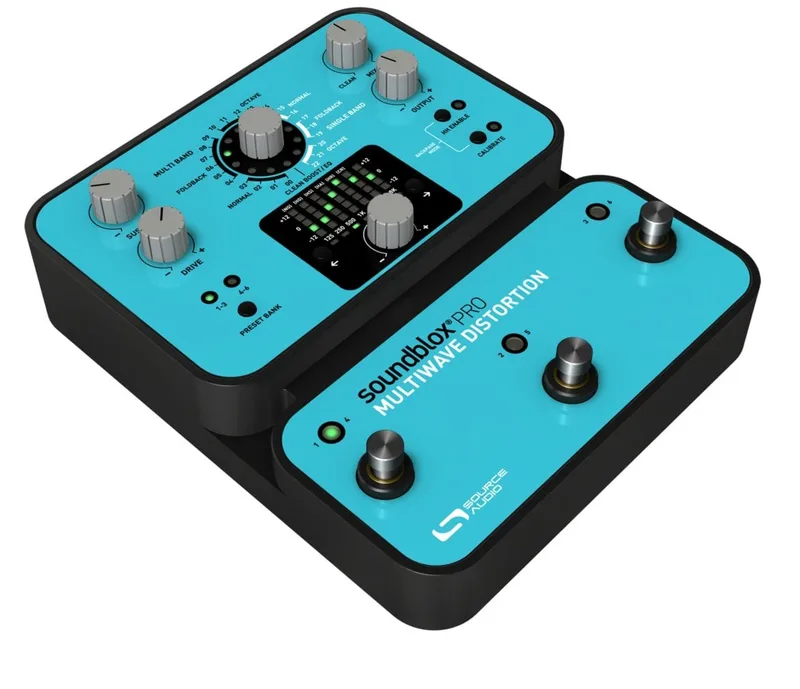


The Source Audio Soundblox Pro Multiwave Distortion is a digital distortion pedal introduced by Source Audio and announced for the January 2010 NAMM show. What sets it apart from a conventional distortion box is multiband processing: instead of clipping the whole guitar signal at once, it splits the signal into multiple frequency bands and distorts each band individually, which Source Audio said gives a clear distortion with strong note articulation1.
The pedal offers 23 effect types, and Source Audio described the range as running from basic tones to aggressive synth-like, octave heavy, and extreme foldback effects that go beyond traditional distortion1. Alongside the distortion types there is a clean boost/EQ mode, so the pedal can also serve as a straight boost and tone-shaping tool1.
Multiband distortion with 23 effect types
Multiband processing is the core idea behind the Multiwave. As No Treble explained when covering the pedal line, the technique "breaks a signal into multiple band and distorts them individually," which gives more clarity and articulation than distorting everything together2. For a player, that means chords stay defined under high gain, because the low, mid and high content of the signal is handled separately rather than piled into one clipping stage.
The 23 effect types cover a wide spread of sounds. Source Audio's announcement said the sounds "range from basic tones to aggressive synth-like, octave heavy, and extreme foldback effects that go far beyond traditional distortion"1. Foldback effects, where the waveform folds back on itself rather than simply clipping, push toward synth-like textures that a standard distortion circuit does not produce.
"Sounds range from basic tones to aggressive synth-like, octave heavy, and extreme foldback effects that go far beyond traditional distortions."
The Soundblox Pro line is digital. The pedals use 56-bit digital signal processing with 24-bit converters, which No Treble reported as delivering clean output at the end of the processing chain2.
The controls and presets
Each of the 23 effect types can be shaped by the player. Source Audio described each distortion type as "highly customizable via the extremely intuitive interface and 7 band graphic EQ"1. The graphic EQ gives you tone control at seven fixed frequency points, so you can cut or boost around the distortion character rather than only trimming highs with a single tone knob.
Six user presets can be saved and recalled quickly using three footswitches, which Source Audio said allows "speedy recall of any custom tailored sound"1. That gives you six complete distortion sounds, each with its own effect type and EQ settings, available at the stomp of a foot.
| Control or connection | What it does |
|---|---|
| Effect type selection | 23 distortion types plus a clean boost/EQ mode1 |
| 7-band graphic EQ | Customizes the tone of each effect type1 |
| Three footswitches | Save and recall six user presets1 |
| MIDI input | External access to presets and parameters1 |
| Expression input | Morphs smoothly between user presets1 |
MIDI, expression control and the Hot Hand
The back panel carries the connectivity that separates the Pro series from simpler pedals. Each Soundblox Pro pedal has a MIDI input allowing external access to presets and parameters, so the Multiwave can be switched and automated from a MIDI controller as part of a larger rig1. A 2014 technical article on MIDI pedalboards by Molten Voltage listed the Soundblox Pro Multiwave Distortion alongside the TC Electronic Nova Drive as examples of MIDI-enabled distortion pedals4.
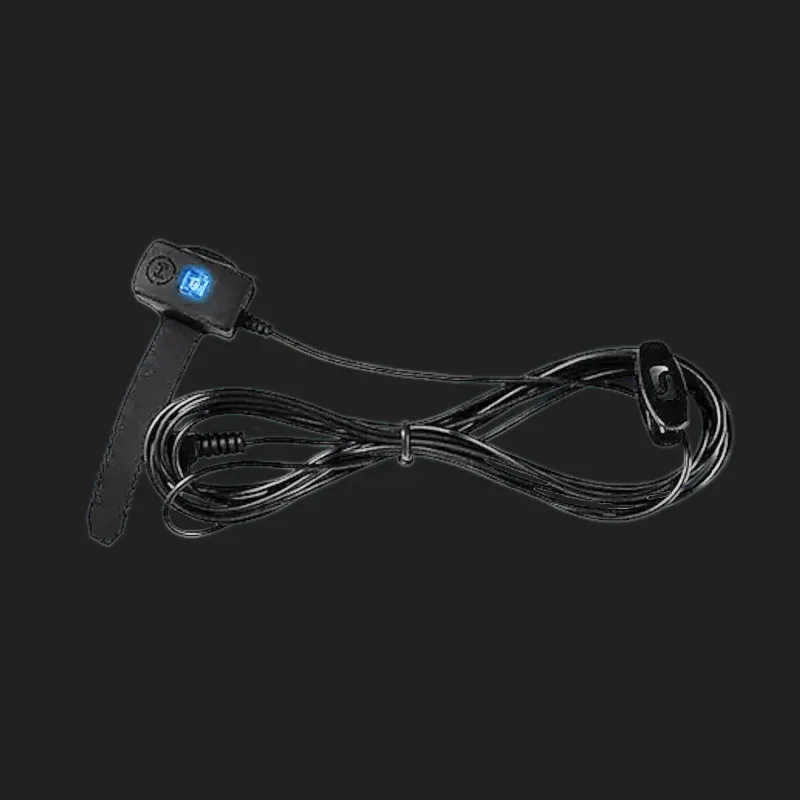
There is also a traditional expression pedal input, which Source Audio said "facilitates the seamless morphing from one user preset to another"1. Rather than switching abruptly between presets, you can sweep between them with your foot. As with all Soundblox products, the pedal is compatible with the Hot Hand ring controller, Source Audio's motion-controlled device1.
The bass version and related pedals
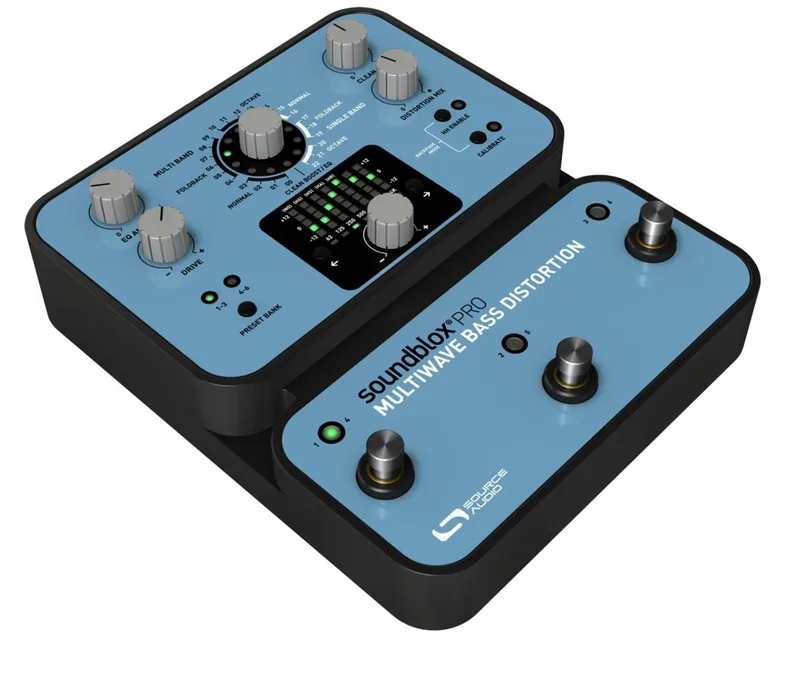
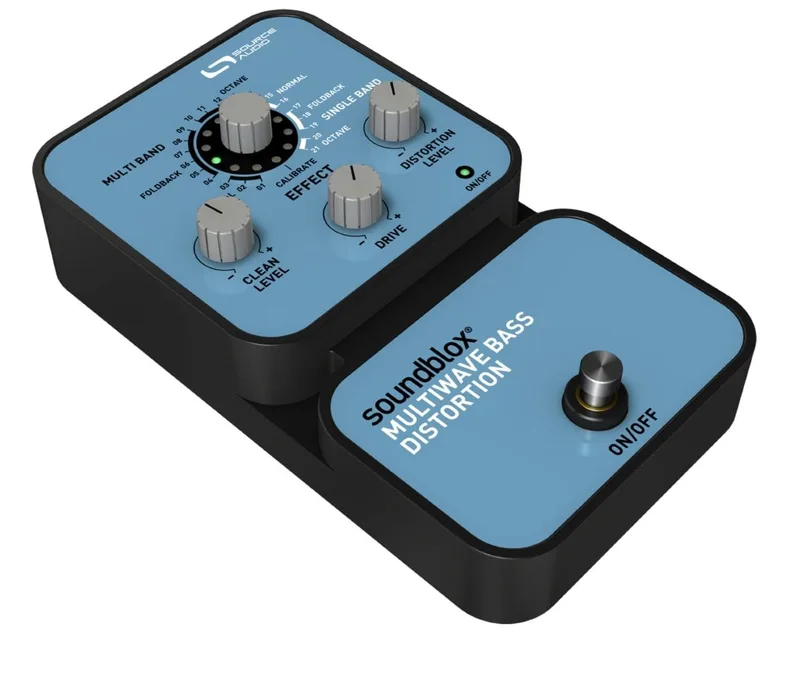
Source Audio built a sibling pedal for bass players, the Soundblox Pro Multiwave Bass Distortion, which the company said "delivers the advantages of multiband processing to bass players"1. It shares the same platform: 23 presets plus a clean boost/EQ mode, the 7-band graphic EQ, a drive control, and six user presets on three footswitches12.
The detail that matters most to bassists is the mix section. No Treble noted the pedal has "separate mix knobs for clean and dirty signals, which will allow you to keep your low end, unlike with many distortion" pedals2. Blending an untouched clean signal under the distorted one preserves the fundamental low frequencies that a full-range distortion circuit can lose.
MusicPlayers.com's reviewer, John Montalbano, described the Multiwave Bass Distortion Pro as an enhanced version of the Multiwave Bass Distortion, adding six memory presets via three footswitches, a seven-band graphic EQ, and MIDI control over parameters5.
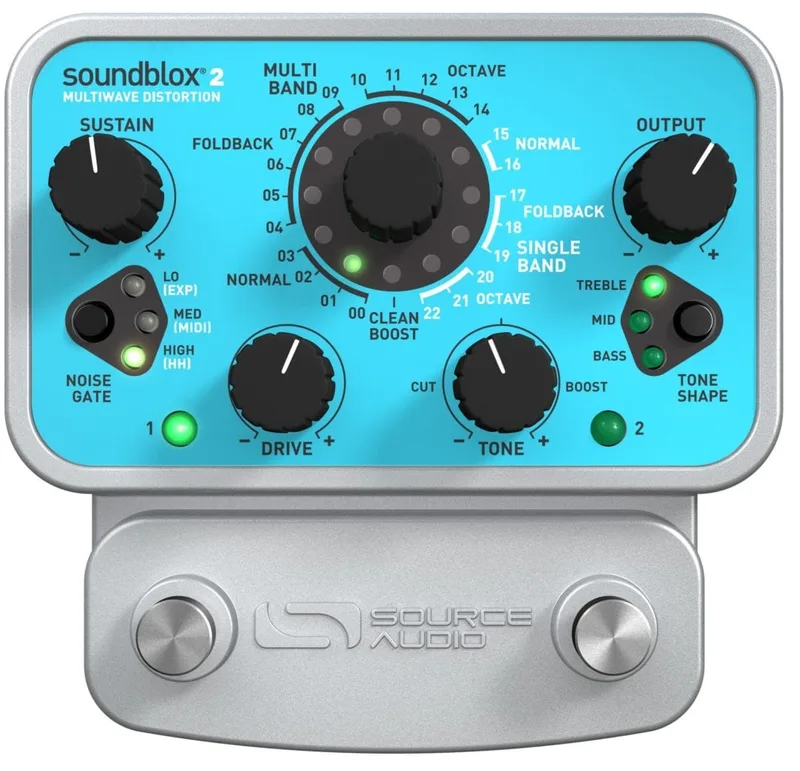
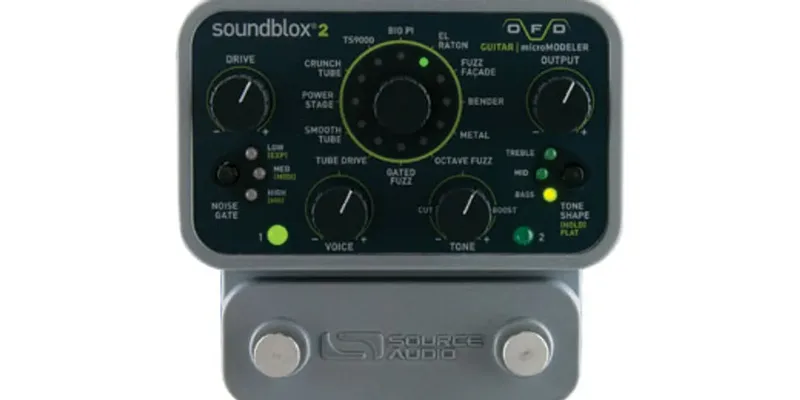
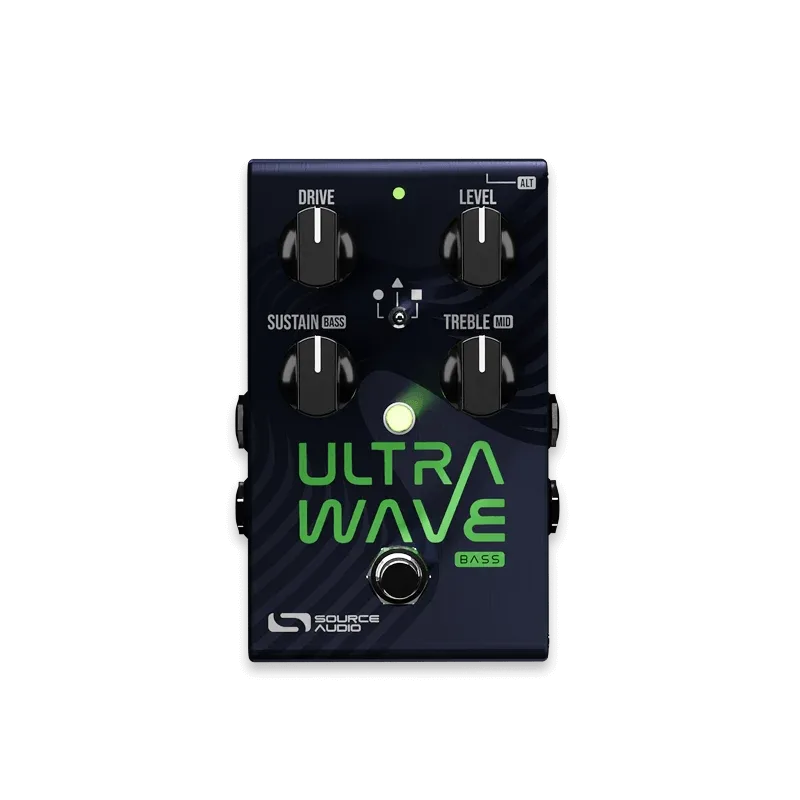
The Multiwave line continued after the Pro series. Source Audio later released the Soundblox2 Multiwave Distortion, the Soundblox 2 OFD microModelers, and eventually the Ultrawave Multiband Processor, which carried the multiband idea further. The Pro Classic Distortion, a companion pedal announced at the same time, is covered on its own page at Source Audio Soundblox Pro Classic Distortion3.
Players using it
Source Audio's announcement said the pedal is used on tour by artists ranging from Brad Whitford of Aerosmith to Reeve Gabrels to Chuck Garvey of moe.1.
Videos
Pete Thorn
sourceaudioeffects
Leon Todd
Questions
What is multiband distortion?
Multiband distortion breaks your signal into multiple frequency bands and distorts each band separately, instead of distorting the whole signal at once. Source Audio used this technique so the pedal produces a clearer distortion with better note articulation, since the bands do not smear each other the way a single distortion stage can.
Does the Soundblox Pro Multiwave Distortion have MIDI?
Yes. Each Soundblox Pro pedal is equipped with a MIDI input that allows external access to presets and parameters, so you can switch sounds and automate control from a MIDI controller. A 2014 technical article by Molten Voltage also listed the Soundblox Pro Multiwave Distortion among MIDI-enabled distortion pedals.
Can I use an expression pedal with the Multiwave Distortion?
Yes. The pedal has a traditional expression pedal input that lets you morph smoothly from one user preset to another. As with all Soundblox products, it is also compatible with the Hot Hand ring controller, Source Audio's motion-sensing controller worn on the hand.
Does the Multiwave Distortion work on bass?
Source Audio made a dedicated bass version, the Soundblox Pro Multiwave Bass Distortion, which brings the same multiband processing to bass. It adds separate mix knobs for clean and dirty signals so you can keep your low end, something many distortion pedals lose.
Sources (5)
- Source Audio Unveils Soundblox Pro Pedals at NAMM 2010, Premier Guitar, 2010-01-06
- Gear Watch: Soundblox Pro Multiwave Bass Distortion Pedal, No Treble, 2010-01-12
- Source Audio Soundblox Pro Distortion Pedal Review, Premier Guitar, 2010-05-18
- MIDI PedalBoard Devices: MIDI PedalBoard and Guitar Effect Essentials, Molten Voltage (blog.moltenvoltage.com), 2014-08-15
- Source Audio Soundblox Multiwave Bass Distortion Pedal, MusicPlayers.com, 2011-08-11
 Brad Whitford