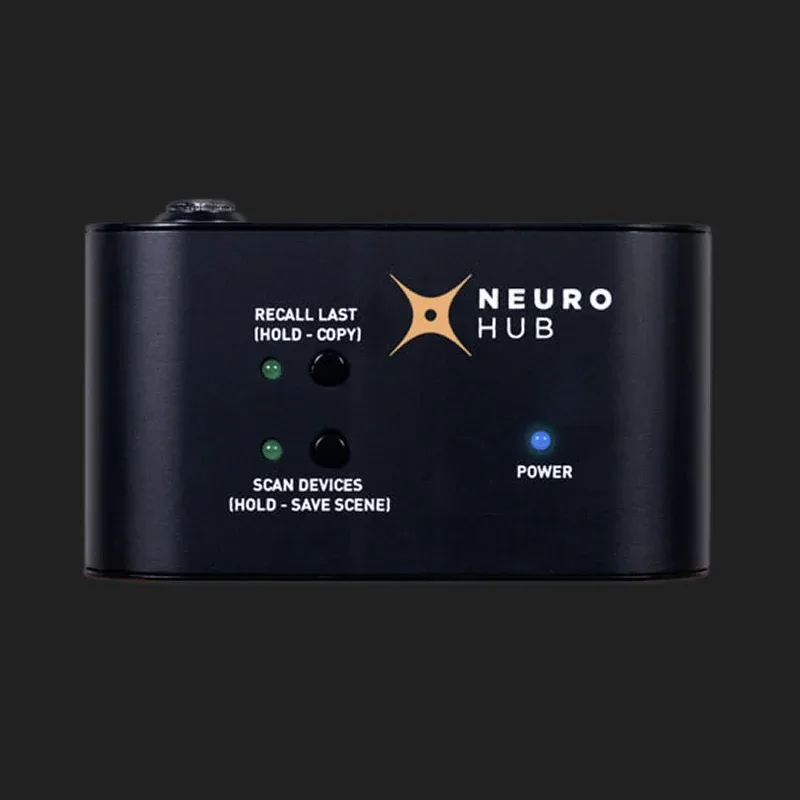
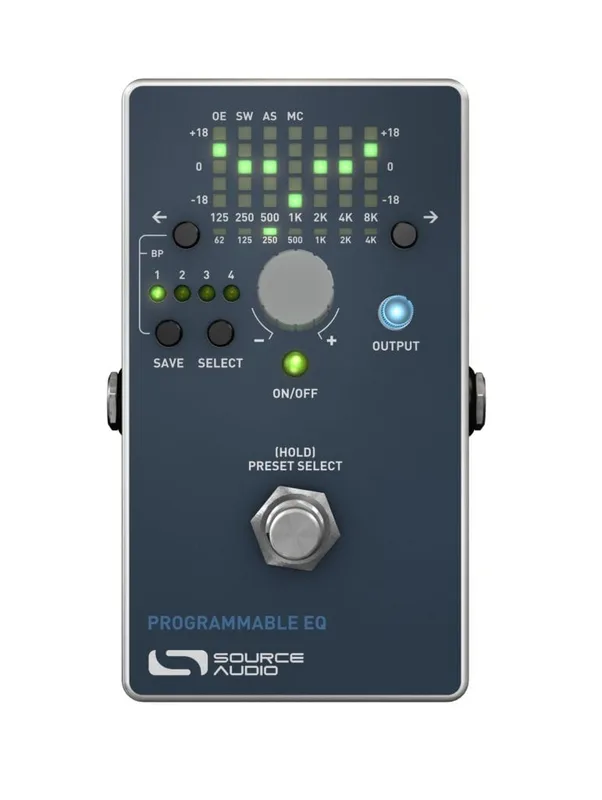
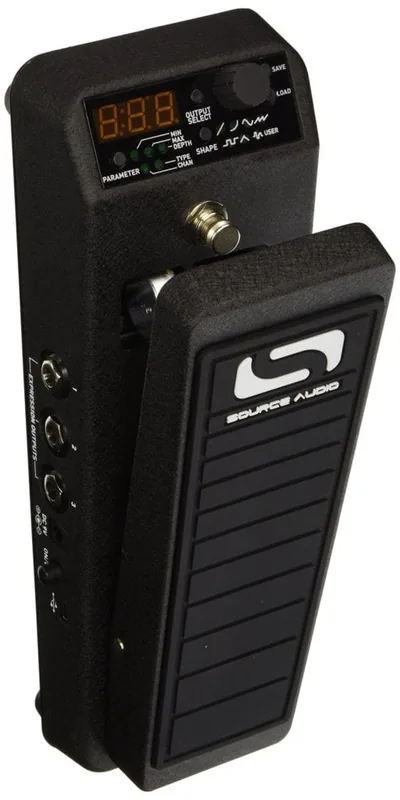
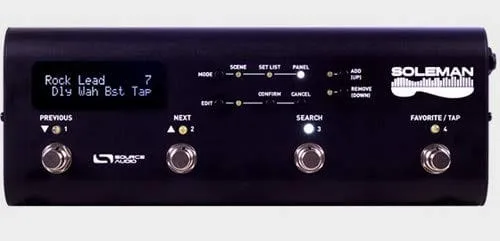
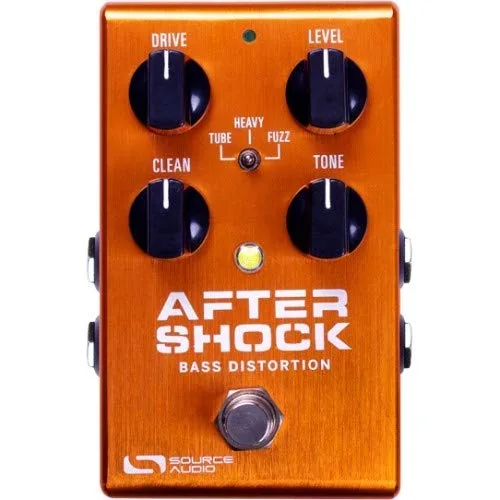
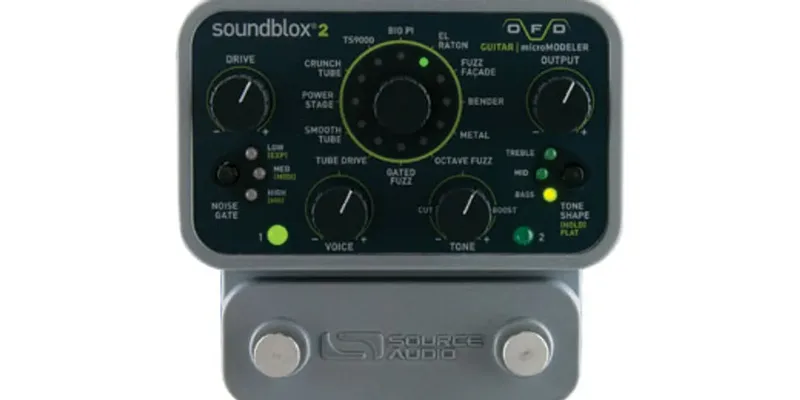
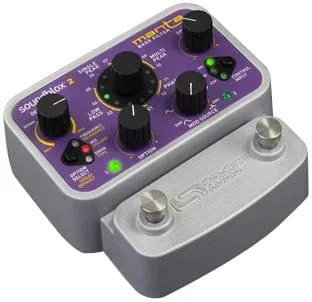
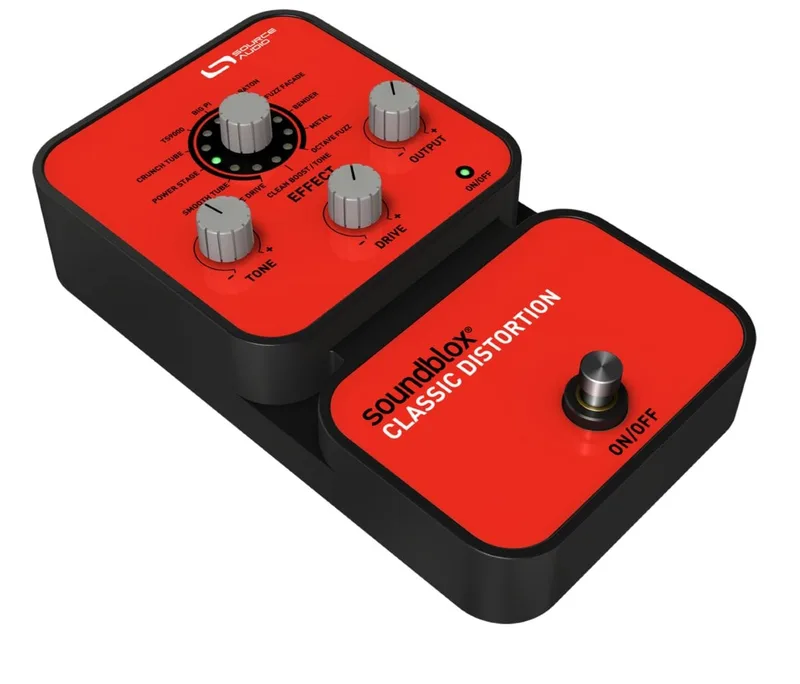
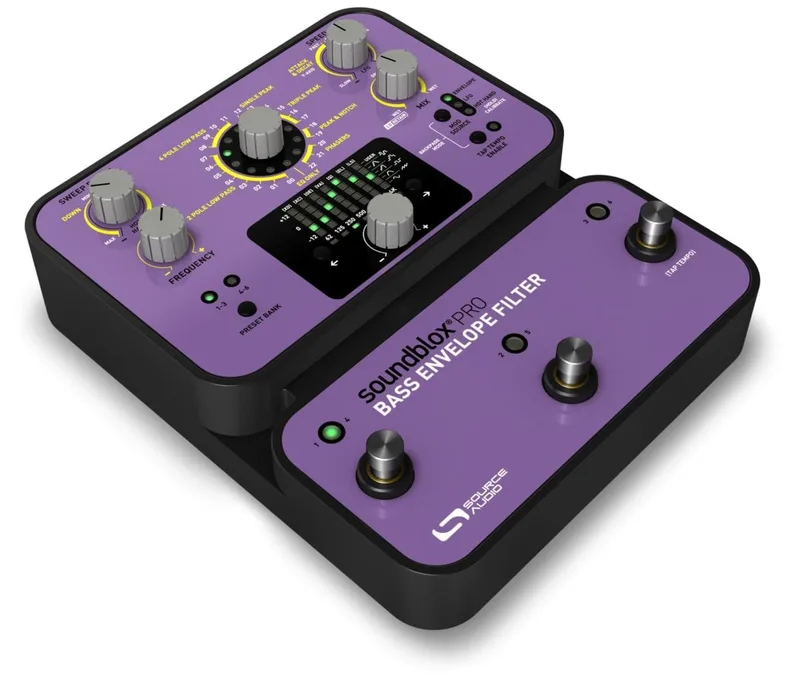
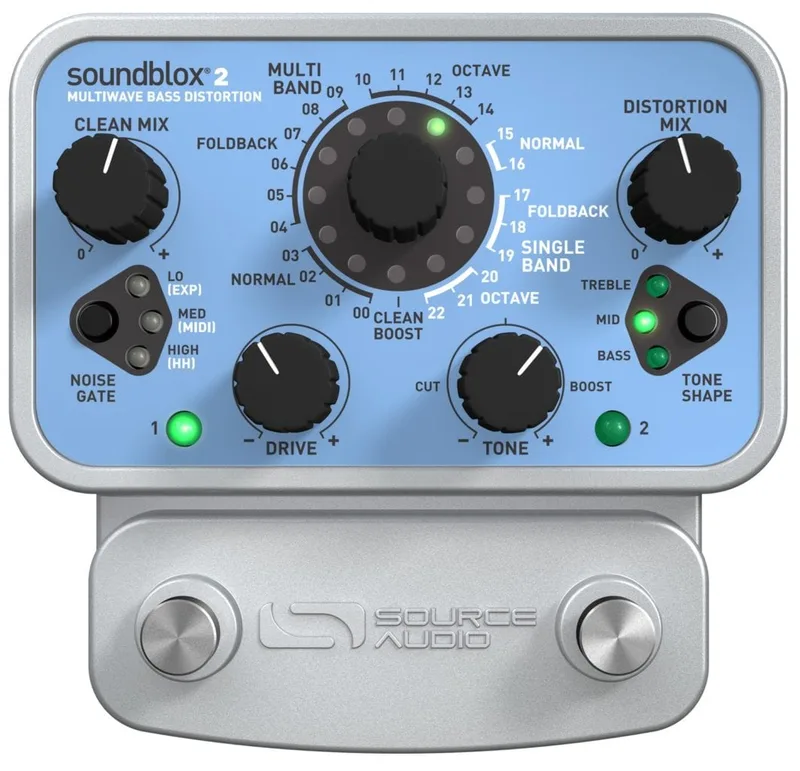
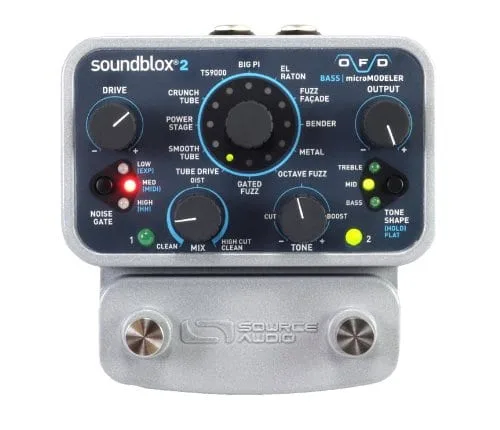
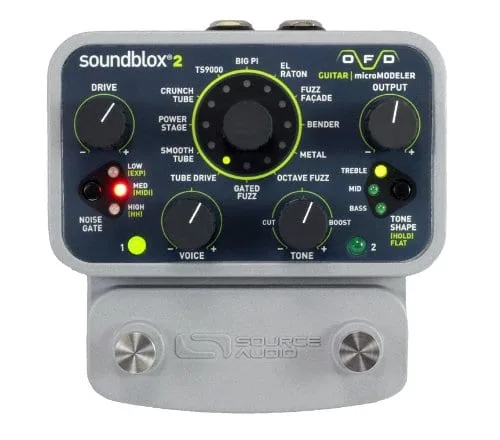
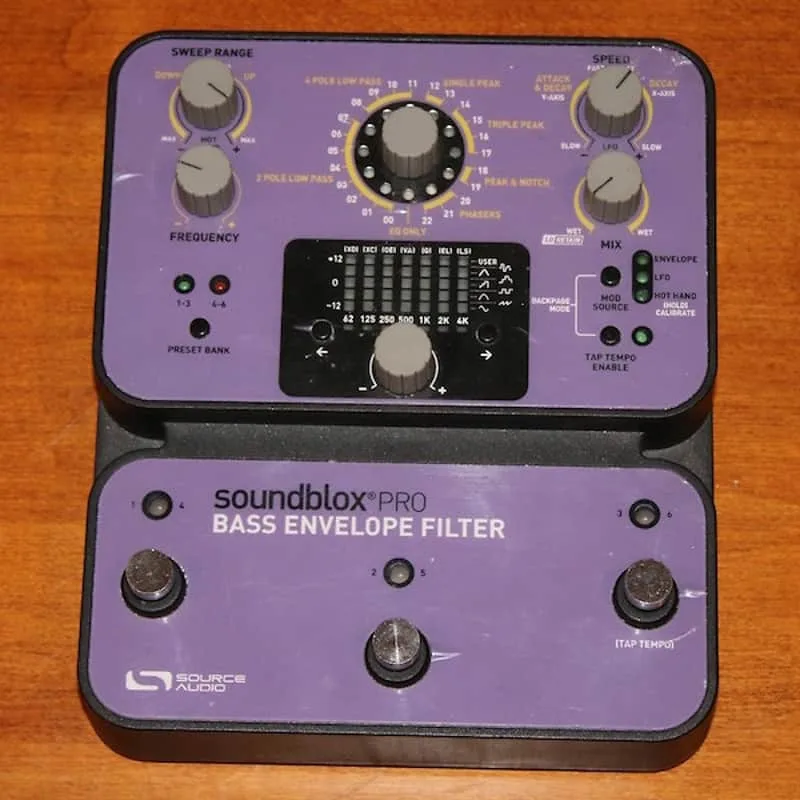
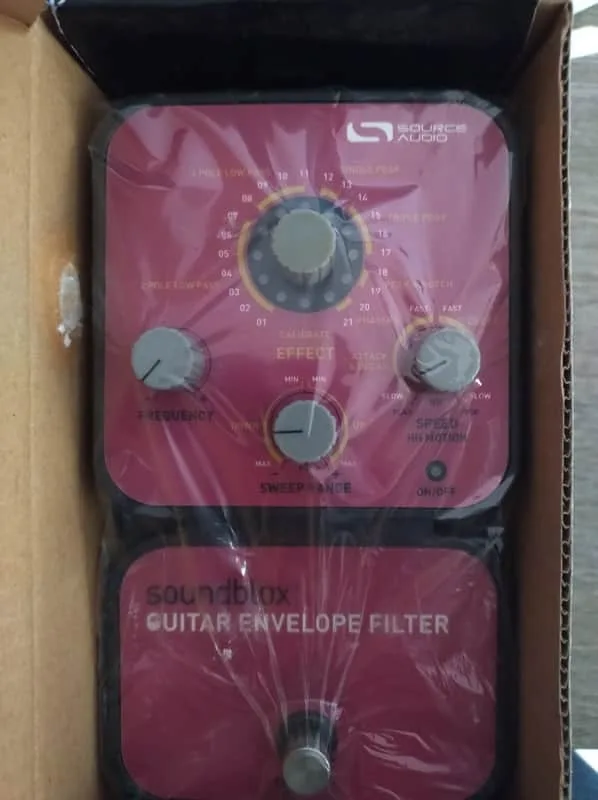
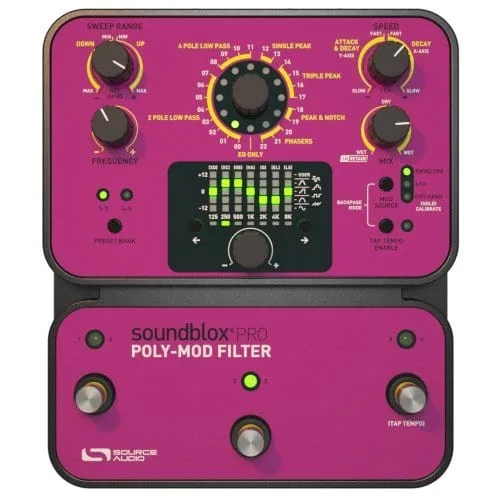
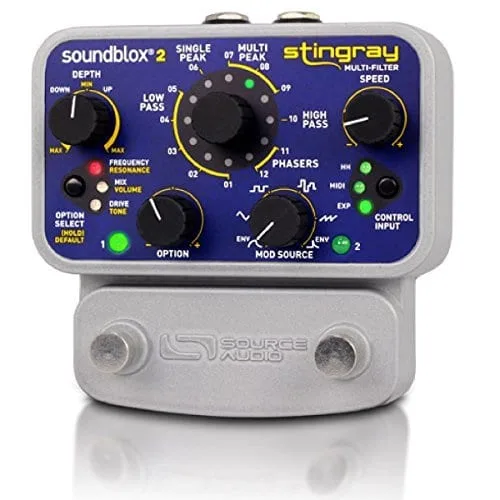
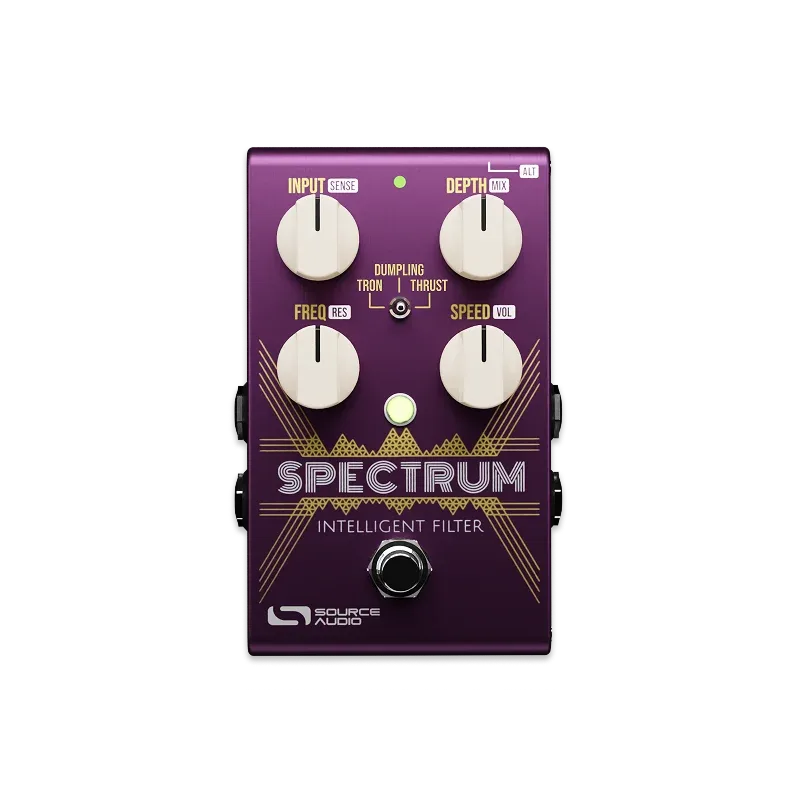
The company's identity centers on digital pedals with deep editing: nearly every current pedal connects to the free Neuro software (Mac and Windows) or Neuro Mobile App (iOS and Android) to download, customize, and share effects, and to the Neuro Hub or a MIDI Adapter for MIDI control of parameters and preset recall678.
Acquired by Ernie Ball
In 2026, Ernie Ball acquired Source Audio. The pedal maker continues to operate under its own brand name, so the product lines, the Neuro ecosystem, and the One Series naming all carry on under the same labels players already know. Ernie Ball itself is a long-established name in guitar accessories; its volume pedal dates to 1975, designed by Ernie Ball with employee Ron Saul using an original pulley and string system9.
The story: from the Hot Hand ring to the One Series
Source Audio's first claim to fame was the Hot Hand. Premier Guitar's review of the Soundblox line described it plainly1011:
"The innovative Hot Hand is a sensor ring that you place on your picking hand or various parts of the body11."
The ring is a motion-sensing expression controller, worn on the picking-hand pinky, and the wireless version works with a small RF receiver module that plugs into the pedal11. Source Audio released the Hot Hand Motion-Sensing Ring in 2006 as its flagship product10.
The Soundblox pedals followed, and Premier Guitar found them strong products in their own right11:
"The Source Audio Soundblox pedals are incredible and powerful enough as standalone effects. They are of high quality, ve..11."
The One Series is the later generation of the same idea: pedals that look simple on the surface but, as Pedal of the Day put it, "house some secret functions and sounds that really make them stand out from the crowd"1. Current One Series pedals include the Nemesis Delay, the Ventris Dual Reverb, the Collider Delay + Reverb, the Encounter, the Atlas Compressor, the EQ2 Programmable Equalizer, and the Artifakt Lo-Fi Elements.
What Source Audio is known for
Beyond the Hot Hand and its digital pedal lines, Source Audio is known for a few specific things:
- Deep digital effects. The One Series covers delay, reverb, modulation, filter, compression, EQ, and lo-fi effects, each with multiple algorithms and presets.
- The Neuro ecosystem. Every current pedal connects to the free Neuro software or mobile app for editing, effect downloads, and preset sharing687.
- An all-analog entry. The ZIO Analog Front End + Boost is Source Audio's first all-analog effects pedal12, a departure from its otherwise digital catalog.
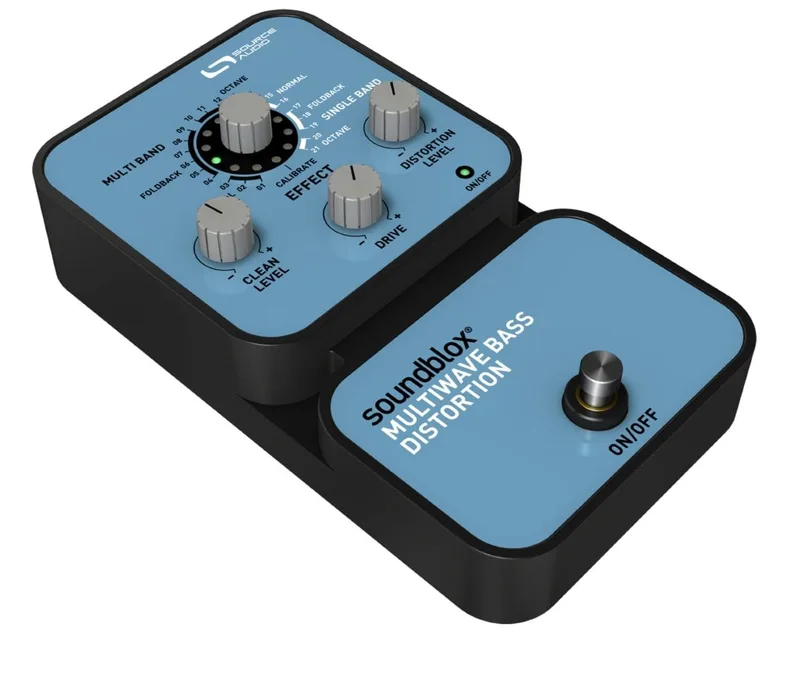
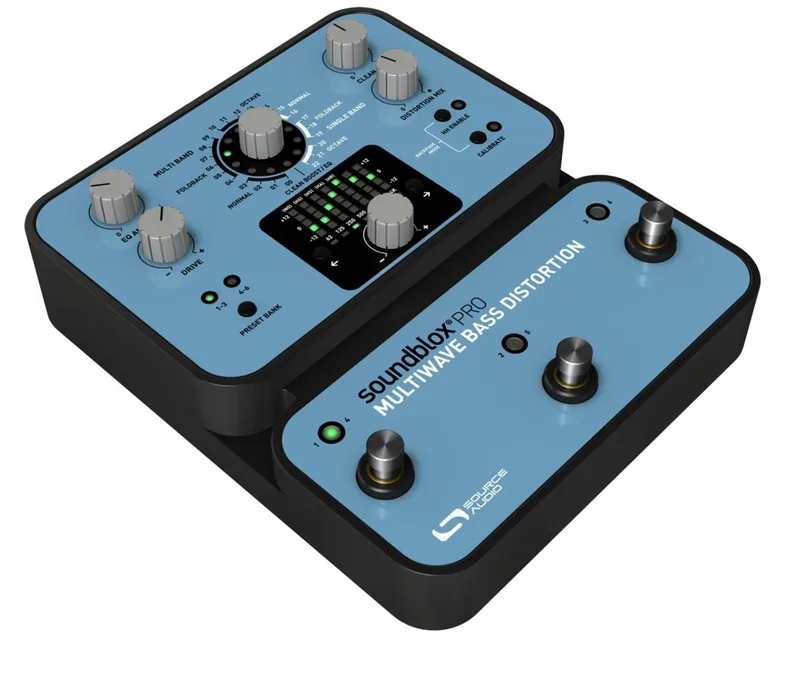
- Bass-specific designs. The company makes guitar and bass effects alike, including bass distortion and filter pedals in the Soundblox and One Series families.
The Encounter Ambient Delay + Reverb shows where the line has headed. Guitar.com's reviewer, Jason Mays, called it "one of the most sonically adventurous pedals I've ever played"13.
Neuro App and MIDI control
The Neuro Hub is the center of the MIDI system. Source Audio describes it as bringing "full MIDI functionality to all of Source Audio's One Series and Soundblox 2 pedals," and it connects up to 5 One Series and Soundblox 2 pedals through its Multi-Function ports14.
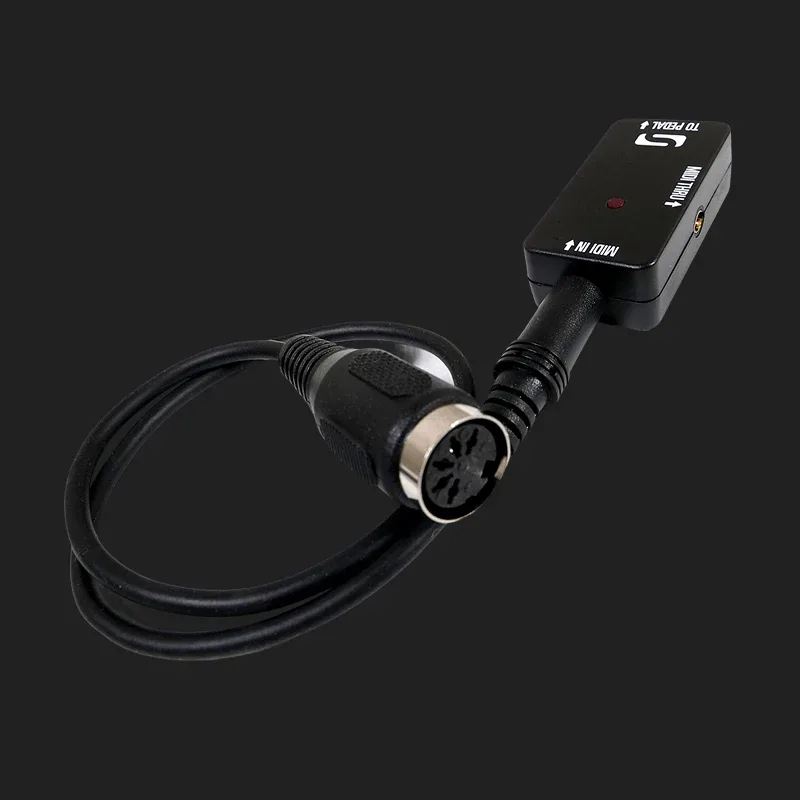
For single-footswitch One Series pedals, the MIDI Adapter does a similar job15:
| What it does | Details |
|---|---|
| Compatibility | Works with all Source Audio One Series pedals |
| Connections | Connects MIDI devices (DIN or TRS) to a Source Audio pedal |
| Included | 1 TRRS cable, connecting the adapter to the pedal's Control Input |
| MIDI input | Any standard MIDI controller with a 5-pin MIDI DIN output |
| Presets | MIDI PC messages access effects stored in each pedal's six toggle switch positions |
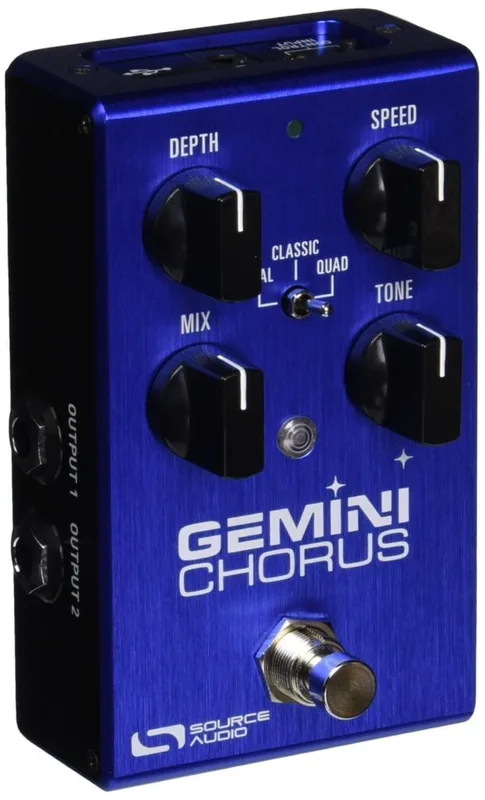
On earlier One Series releases like the Vertigo Tremolo, Aftershock Bass Distortion, and Gemini Chorus, the MIDI Adapter reaches the effects stored in the pedal's six toggle switch positions with MIDI PC messages15.
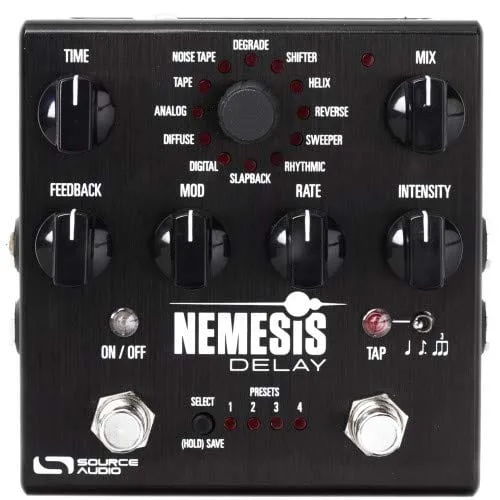
By default, all Source Audio pedals are set to MIDI Channel 1 and respond to MIDI program change messages for preset recall15. On the Nemesis Delay, the default receive channel is also MIDI channel 1, and it can be changed via the Neuro app16. The newer Neuro 3 smartphone app, as reviewed with the Encounter, enables deep effect editing, MIDI control, interchangeable algorithms, and preset sharing13.
The Tap Tempo Switch rounds out the control accessories, with a 1/8" TRRS output that connects with any Source Audio One Series pedal17.
One Series pedals are MIDI compatible, but only when coupled with the Neuro Hub, sold separately1. If MIDI control matters to your board, factor the Hub or the MIDI Adapter into the plan.
Roger Smith and the people behind Source Audio
Roger Smith is President of Source Audio2. He is the company's named public voice in its press announcements, including the 2026 announcement of the Encounter Ambient Delay + Reverb2.
Support and contact
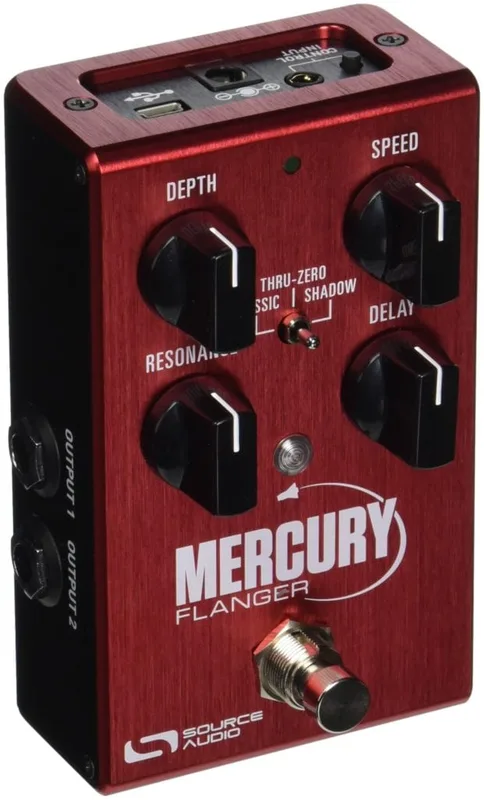
Source Audio can be reached directly at 781.932.8080, extension 20618. The company also publishes product pages with quick reference cards and included-accessory lists; the Mercury Flanger box, for example, includes the pedal, a Mini USB to USB-A cable, a USB-A to USB-C adapter, and a quick reference card19.
Some Source Audio products are listed as sold out on the maker's own site, including the Mercury Flanger, a stereo flanger pedal from the One Series19, and the Pathways multi-mode tremolo/reverb pedal. A sold-out listing is not the same as a discontinuation, but players hunting for these models may need to look at second-hand stock or contact the company.
The range (50)
News
Questions
Who owns Source Audio now?
Ernie Ball acquired Source Audio in 2026. The company continues to operate under its own brand, making its guitar and bass effects pedals, with Roger Smith serving as President of Source Audio.
Where is Source Audio located?
Source Audio is a Massachusetts based effects pedal company. Players who want to reach the company directly can call 781.932.8080, extension 206.
What MIDI channel are Source Audio pedals set to by default?
By default, all Source Audio pedals are set to MIDI Channel 1 and respond to MIDI program change messages for preset recall. On the Nemesis Delay, the default receive channel is also MIDI channel 1, and it can be changed through the Neuro app.
What is the Source Audio Hot Hand?
The Hot Hand is a sensor ring that you place on your picking hand or other parts of the body. It picks up hand and body movement and modulates the effect based on that motion, giving you expression control without touching a knob or pedal.
What is the difference between Soundblox and One Series pedals?
Soundblox was Source Audio's earlier line of digital effects pedals, built around a 56-bit digital signal processor with 24-bit converters. The One Series is the later line; both work with the Neuro Hub, which connects up to 5 One Series and Soundblox 2 pedals for MIDI control.
Does the Source Audio MIDI Adapter work with every One Series pedal?
Yes. Source Audio states the MIDI Adapter works with all One Series pedals, providing full MIDI functionality to single-footswitch models. It connects MIDI devices with DIN or TRS outputs to a pedal's Control Input using the included TRRS cable.
Is the Source Audio Mercury Flanger discontinued?
The Mercury Flanger, a stereo flanger pedal from the One Series, is listed as sold out on Source Audio's product page. The page does not state whether it will return, so players interested in one may want to contact the company directly.
Sources (19)
- Source Audio Mercury Flanger, Pedal of the Day, 2016-01-26
- Source Audio Unveils Encounter Delay+Reverb, Premier Guitar, 2025-09-16
- The Soundblox 2OFD Micromodelers from Source Audio Now Available, Guitar Interactive Magazine, 2013-10-03
- Source Audio EQ2 Programable Equalizer, Delicious Audio, 2025-05-09
- Source Audio Introduces the C4 Synth, A Eurorack Modular Synth in a Pedal for Guitar and Bass, Bass Gear Magazine, 2019-07-16
- L.A.Lady Overdrive, Source Audio
- Spectrum Intelligent Filter, Source Audio (sourceaudio.net)
- Encounter Delay + Reverb, Source Audio
- WHO WAS ERNIE BALL?, JHS Pedals
- Introducing the C4 Synth, A Eurorack Modular Synth in a Pedal for Guitar and Bass from Source Audio, MusicPlayers.com, 2019-07-16
- Review: Source Audio Soundblox Tri-Mod Effects, Premier Guitar, 2008-09-02
- ZIO Analog Front End + Boost, Source Audio
- Source Audio Encounter review: “sonically adventurous”, Guitar.com, 2026-01-12
- NEURO Hub, Source Audio
- One Series MIDI Adapter, Source Audio
- Source Audio Nemesis & MC6 Midi Controller, Morningstar, 2018-07-29
- Source Audio Tap Tempo Switch, Source Audio
- Source Audio Introduces the EQ2 Programmable Equalizer, Premier Guitar, 2020-01-18
- Mercury Flanger, Source Audio