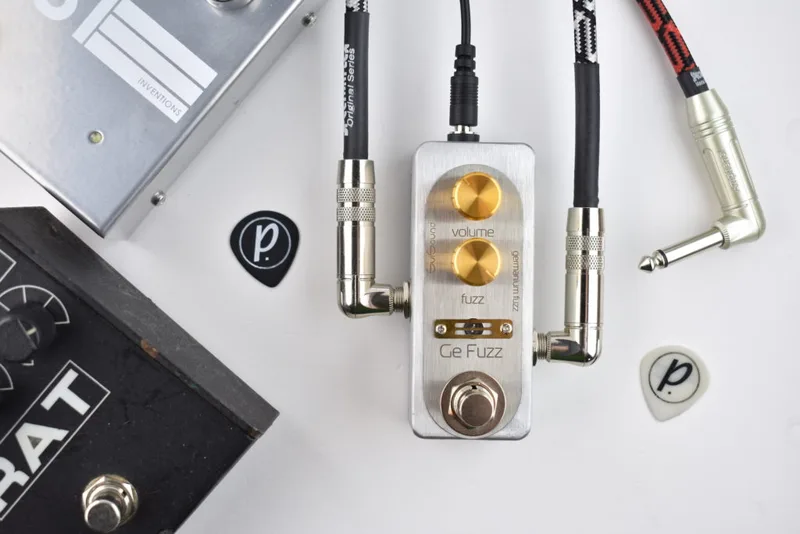


The SviSound Germanium Fuzz Mini is a small fuzz pedal built around germanium transistors, in the vintage-leaning tradition of the effect. What makes it unusual is where its parts come from: the pedal houses rare ex-USSR military transistors, according to the Pedal of the Day review that covered it, inside a full metal enclosure1. It is a two-knob design, running on ordinary 9V power with true bypass, aimed squarely at the player who wants a germanium fuzz voice without giving up much board space.
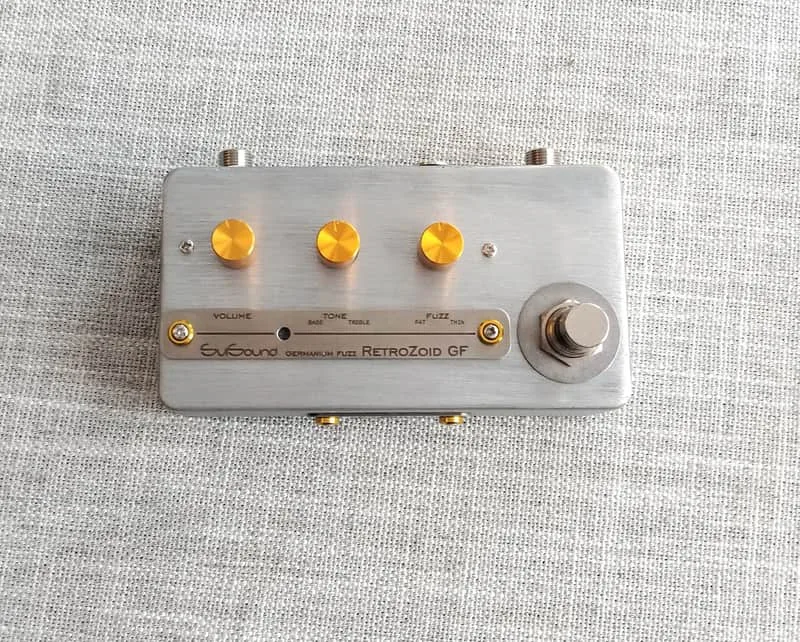
SviSound is a small maker whose designs and enclosures the same reviewer described as distinctive enough to be worth waiting for1. The Germanium Fuzz Mini sits alongside the company's other fuzzes, including the SviSound RetroZoid Germanium Fuzz, which Premier Guitar reviewed in 20212.
A germanium fuzz in a mini enclosure
Germanium transistors are the older of the two transistor families used in fuzz circuits, and pedals built with them tend to be discussed in terms of vintage fuzz character. The Germanium Fuzz Mini's ex-USSR military parts are its distinguishing feature: Soviet-era germanium transistors were produced in large quantities for military equipment, and small builders have drawn on that surplus stock for fuzz builds where the parts' quirks are part of the appeal1.
The enclosure is full metal, and the reviewer noted that SviSound's designs and enclosures are distinctive in themselves1. The mini format is the point of the pedal: the reviewer described it as able to squeeze onto any pedalboard while still delivering what they called blistering fuzz tones1.
Mini pedals in general face a skepticism the review addressed directly. As the reviewer put it:
"Mini pedals sometimes seem like they take a hit from pedal purists"
the Pedal of the Day reviewer wrote, before adding that "the Germanium Fuzz Mini from SviSound absolutely proves those claims to be false"1. In other words, in that reviewer's judgment the small box did not cost anything sonically.
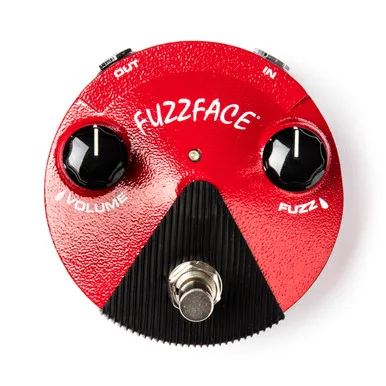
For context, the mini fuzz field the pedal competes in is broad. Dunlop's Fuzz Face Mini Germanium, a scaled-down take on a classic design, was described as offering "the classic warm-fuzz sound with a moderate amount of gain and a nice percussive pick attack"3. The SviSound Germanium Fuzz Mini sets itself apart with its full metal enclosure housing rare ex-USSR military transistors1, and a reviewer noted that the maker's "designs and enclosures are so unique, it's always worth the wait"1. Against that spread, the SviSound's two knobs place it at the simple, vintage end.
The controls
The Germanium Fuzz Mini has two knobs, and their jobs are straightforward1:
| Control | What it does |
|---|---|
| Fuzz | Controls the amount of distortion that gets dialed in1 |
| Volume | Sets your output1 |
That is the classic two-control fuzz layout: a Volume knob that controls overall effect volume and a Fuzz knob that controls the amount of fuzz. With no extra shaping options in the coverage, the pedal's character is set by its transistors and circuit rather than by additional controls4.
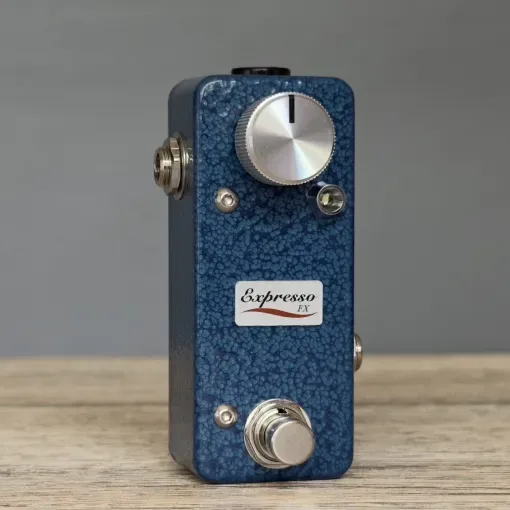
Players who want more control over a germanium fuzz have alternatives. SviSound's own RetroZoid Germanium Fuzz also keeps things simple, but its Fuzz knob works interactively with volume to determine the amount of what Premier Guitar's reviewer called "nasty," while on its own it governs the character of the effect2. The Dunlop Fuzz Face Mini FFM2 Germanium is a two-knob mini germanium fuzz, with a FUZZ knob controlling the amount of fuzz and a VOLUME knob controlling overall effect volume, per Dunlop's manual4. And the Expresso FX Germanium Fuzz "Mini" is a mini version of that maker's Germanium Fuzz with, in the maker's words, "exactly the same components and same tone," built with hand-selected NOS germanium transistors in a genuine Hammond aluminum enclosure with Switchcraft jacks56.
What the reviewer said
"Able to squeeze onto any pedalboard, as well as deliver blistering fuzz tones, this is a powerful little monster"1
the Pedal of the Day reviewer wrote1. Beyond the overall impression, the review made two specific points: that the pedal delivers powerful fuzz tones despite its small size, and that it disproves the claim that mini pedals cannot keep up sonically with larger ones1. The reviewer also found the full metal enclosure a notable part of the package, housing the rare ex-USSR military transistors1.
The maker's wider reputation drew a comment in the same review: SviSound's designs and enclosures are, in the reviewer's words, "so unique, it's always worth the wait"1. Premier Guitar's later look at the RetroZoid Germanium Fuzz found "a fantastic range of vintage fuzz flavors" via a remarkably simple control array and called it an excellent deal, which suggests the company's simple-control, vintage-voiced approach held up in that outlet's judgment too2.
How it compares with the Dunlop alternative
The most obvious comparison for any mini germanium fuzz is Dunlop's Fuzz Face Mini Germanium, the FFM2. Where the SviSound uses ex-USSR military germanium transistors178, the Dunlop uses slightly mismatched germanium transistors, which MusicRadar's reviewer described as delivering "warm vintage fuzz"7. The FFM2 is based on 1966 to 1968 era pre-silicon Fuzz Faces, and Premier Guitar's reviewer found that none of a half-dozen boutique and homemade germanium Fuzz Faces they compared it against sounded better9. Both pedals share the two-knob, true-bypass, 9V formula14, so the practical difference for a player comes down to the transistor stock and the maker's build, not the control layout.
Videos
Pedal of the Day
Matt Foy
Questions
Is the SviSound Germanium Fuzz Mini true bypass?
Yes. The Pedal of the Day review that covered the pedal notes it has true bypass circuitry, so your clean signal passes through untouched when the pedal is switched off. That is worth knowing on a small board, where a buffered or partially bypassed fuzz could color the rest of your chain.
What voltage does the Germanium Fuzz Mini take?
It runs on regular 9V power, the same supply most pedalboards already carry. No special or higher-voltage supply is needed, and there is nothing in the review coverage to suggest it draws unusual current, so a standard 9V output on your existing power supply should serve it.
What transistors does the Germanium Fuzz Mini use?
It houses rare ex-USSR military transistors, according to the Pedal of the Day review. These are germanium parts, which is what gives the pedal its name and places it in the same vintage-leaning family as classic germanium fuzz circuits rather than the brighter, higher-gain silicon designs.
How many knobs does the Germanium Fuzz Mini have?
Two: Fuzz and Volume. Fuzz controls the amount of distortion that gets dialed in, and Volume sets your output level. That is the same basic two-control layout as a vintage-style fuzz face circuit, with no tone, bias or gate controls to adjust.
Sources (9)
- SviSound Germanium Fuzz Mini, Pedal of the Day (pedal-of-the-day.com), 2019-03-20
- Quick Hit: SviSound RetroZoid Germanium Fuzz Review, Premier Guitar, 2018-10-19
- Dunlop Fuzz Face Mini Distortion Pedals, Vintage Guitar magazine, 2015-01-07
- FFM2.pdf, Dunlop Manufacturing, Inc., 2019
- Germanium Fuzz “Mini”, Expresso FX, 2023-12-31
- Germanium Fuzz “Mini”, Expresso FX, 2023-12-31
- Dunlop Fuzz Face Mini FFM2 Germanium review, MusicRadar, 2013-07-08
- Stompbox icons: Fuzz Face, MusicRadar, 2021-11-01
- Dunlop Fuzz Face Mini Germanium FFM2 Review, Premier Guitar, 2013-08-25