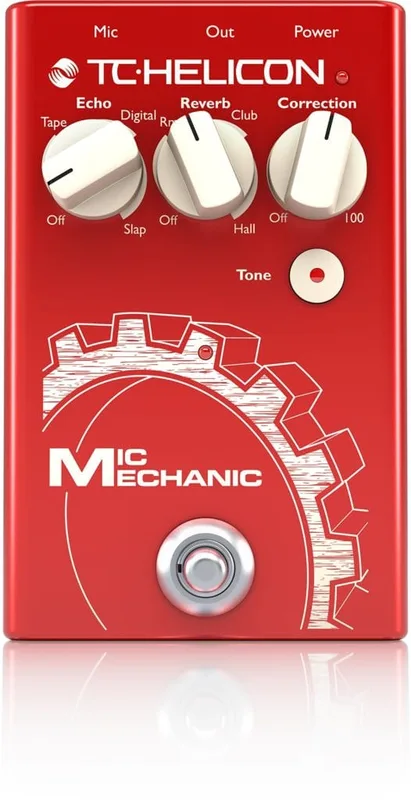


The TC Helicon Mic Mechanic 2 is a vocal pedal from TC Helicon, built as a stompbox for singers rather than guitarists. TC Helicon calls it an "Ultra-Simple Battery-Powered Vocal Effects Stompbox with Reverb, Echo and Pitch Correction"1. It sits in a signal chain like any other pedal, but carries a microphone signal instead of a guitar signal, cleaning it up and finishing it with studio-style ambience.
The idea is one box doing the whole vocal job. According to TC Helicon, it "removes hum, sibilance, and rumble, applies gentle pitch correction so every note lands in tune, and finishes with studio-grade reverb and echo presets that sound great straight out of the box"1.
What it does: reverb, echo and pitch correction
The signal path runs in a fixed order. First the pedal cleans the signal, removing hum, sibilance and rumble. Then it applies gentle pitch correction, which nudges off-target notes toward the nearest in-tune pitch rather than producing an obvious corrected effect. Last come the reverb and echo presets, which TC Helicon describes as studio-grade and ready to use without tweaking1.
A second layer of processing runs underneath. TC Helicon says the on-board Adaptive Tone engine "analyses your voice in real time and adjusts EQ, compression, gating, and de-essing to suit the mic you are using and the room you are in"1. In practice that means the pedal sets its own tone shaping rather than asking you to dial in compression or EQ by hand, which is what keeps the control surface down to a single footswitch.
"The on-board Adaptive Tone engine analyses your voice in real time and adjusts EQ, compression, gating, and de-essing to suit the mic you are using and the room you are in."
Controls and connections
Operation is deliberately minimal. Per TC Helicon: "Hit one footswitch to activate, hold it to bank through effects"1. That single switch is the entire interface, so preset selection happens by holding the switch and stepping through the banks until the right reverb or echo setting comes up.
The connections are equally simple: one XLR input, one XLR output, true bypass, and 48V phantom power for condenser microphones1. The phantom power means a condenser mic can be plugged straight in without a separate supply, and true bypass means the mic signal passes untouched when the pedal is off.
The Mic Mechanic 2 runs on batteries, so it can be used without a power supply, and its 48V phantom power lets you run a condenser microphone directly into the pedal1.
Where it came from
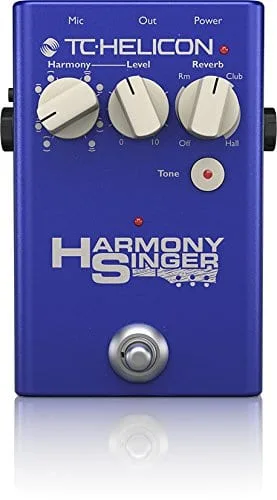
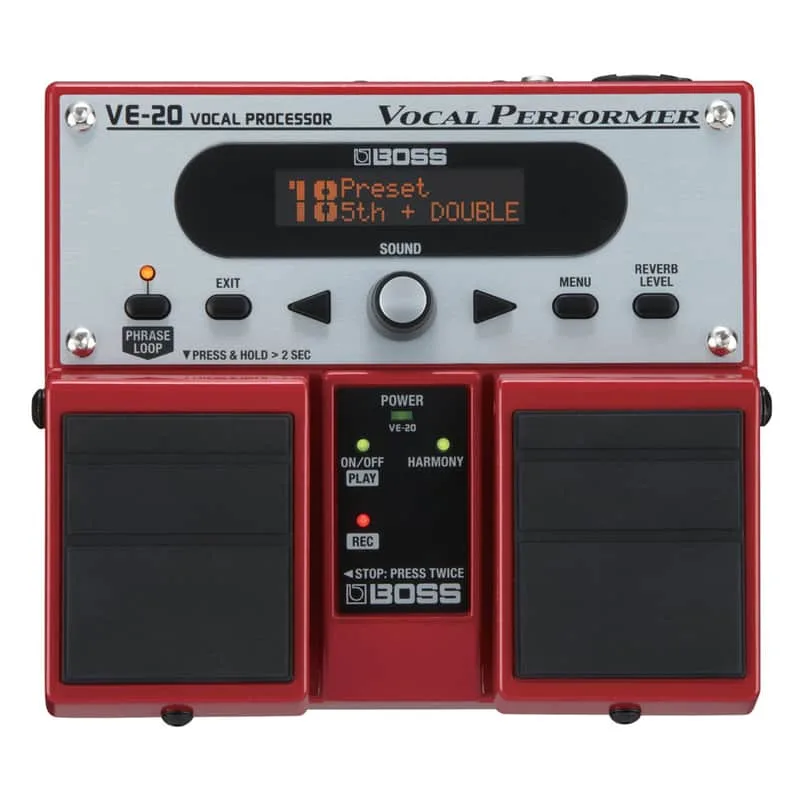
The Mic Mechanic 2 continues a line of TC-Helicon vocal stompboxes aimed at singing guitarists, a category that now includes pedals like the TC Helicon Harmony Singer 2 and the Boss VE-20 Vocal Performer. Its single-footswitch design carries over the maker's approach of keeping vocal effects simple to trigger on stage: hit one footswitch to activate, hold it to bank through effects1.
Videos
Sweetwater
TC Helicon
TC Helicon
Questions
Does the Mic Mechanic 2 run on batteries?
Yes. TC Helicon describes the Mic Mechanic 2 as an ultra-simple battery-powered vocal effects stompbox, so it can run without a wall supply, which suits players who sing through a pedalboard at gigs or open mics.
Is the TC Helicon Mic Mechanic 2 true bypass?
Yes. TC Helicon lists true bypass among the pedal's connections, alongside one XLR input, one XLR output and 48V phantom power for condenser microphones.
How do you change effects on the Mic Mechanic 2?
There is one footswitch. Tap it to activate the effect, and hold it down to bank through the available reverb and echo presets until you reach the sound you want.
Does the Mic Mechanic 2 remove hum and sibilance?
Yes. TC Helicon says the pedal removes hum, sibilance and rumble from your vocal signal, and its Adaptive Tone engine also applies de-essing, EQ, compression and gating automatically.
Sources (1)
- MIC MECHANIC 2, TC Helicon