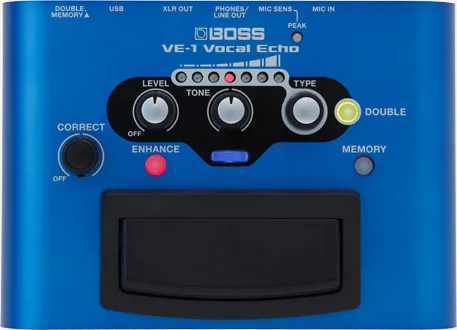
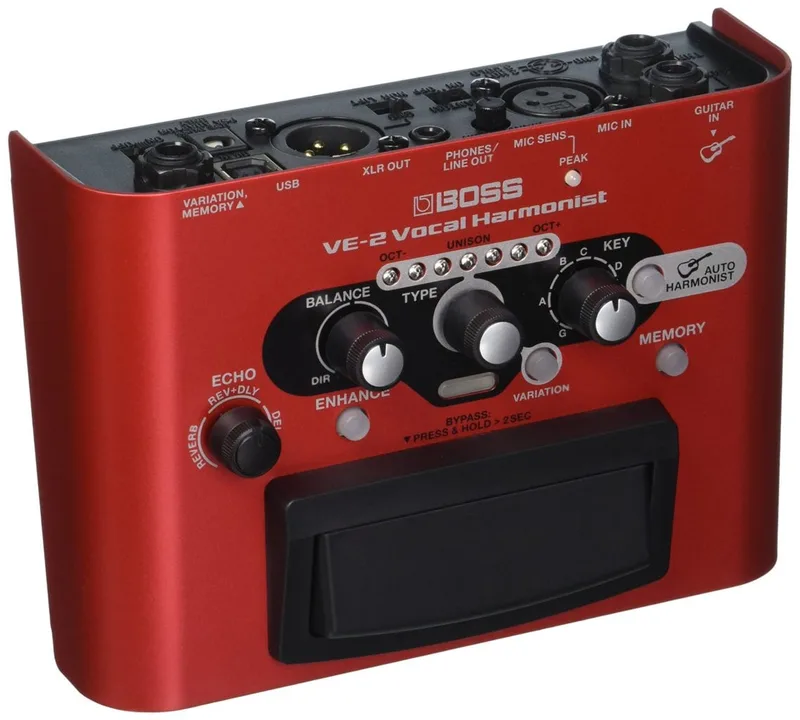
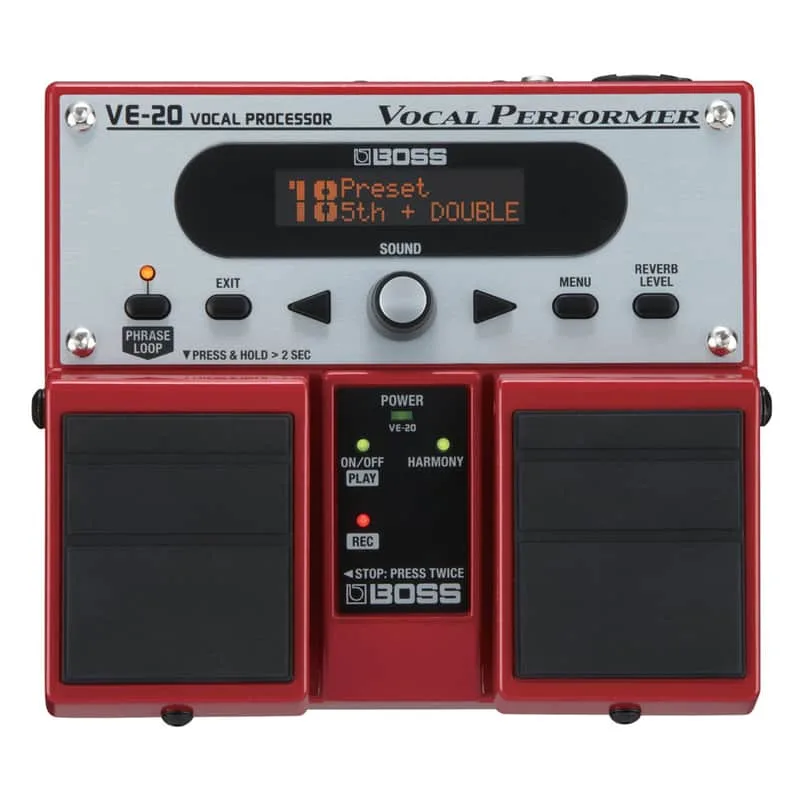
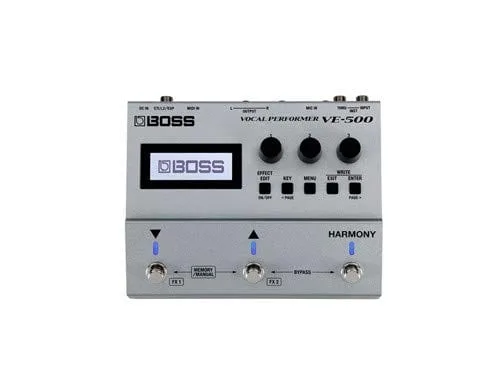
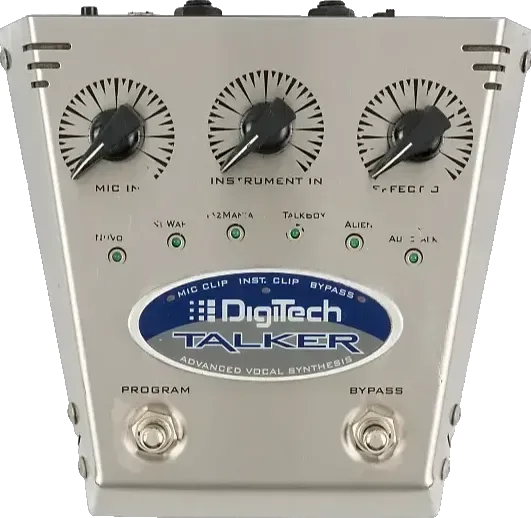
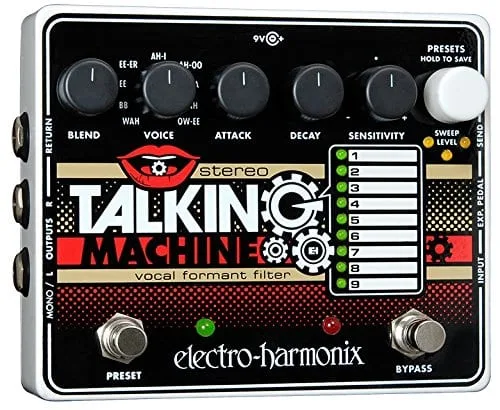
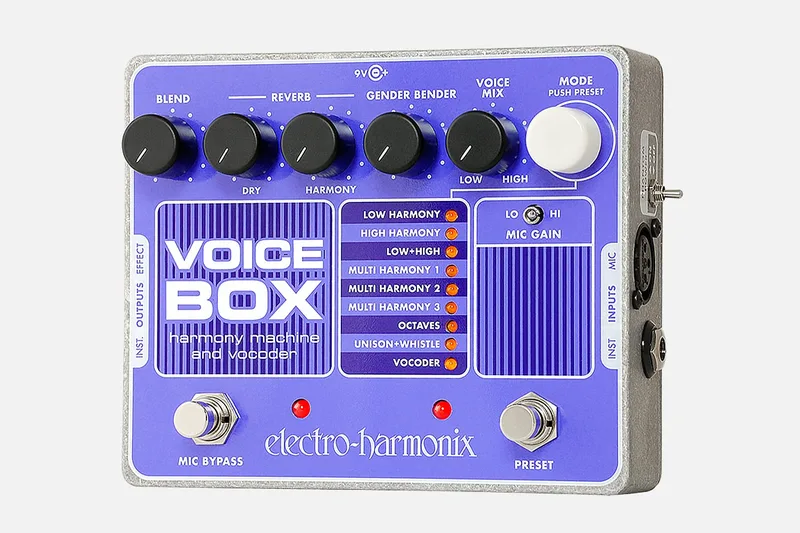
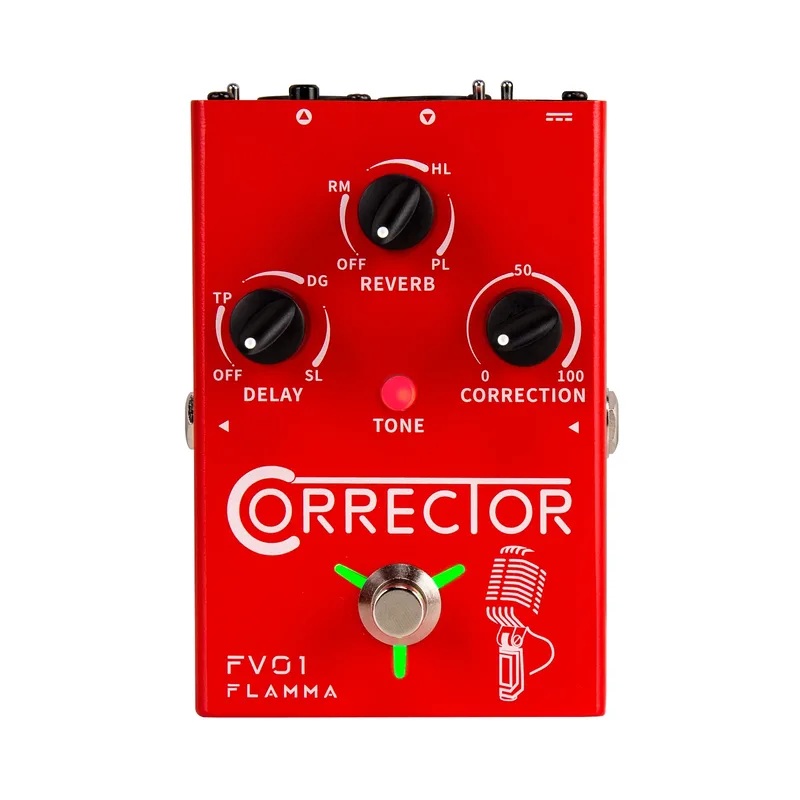
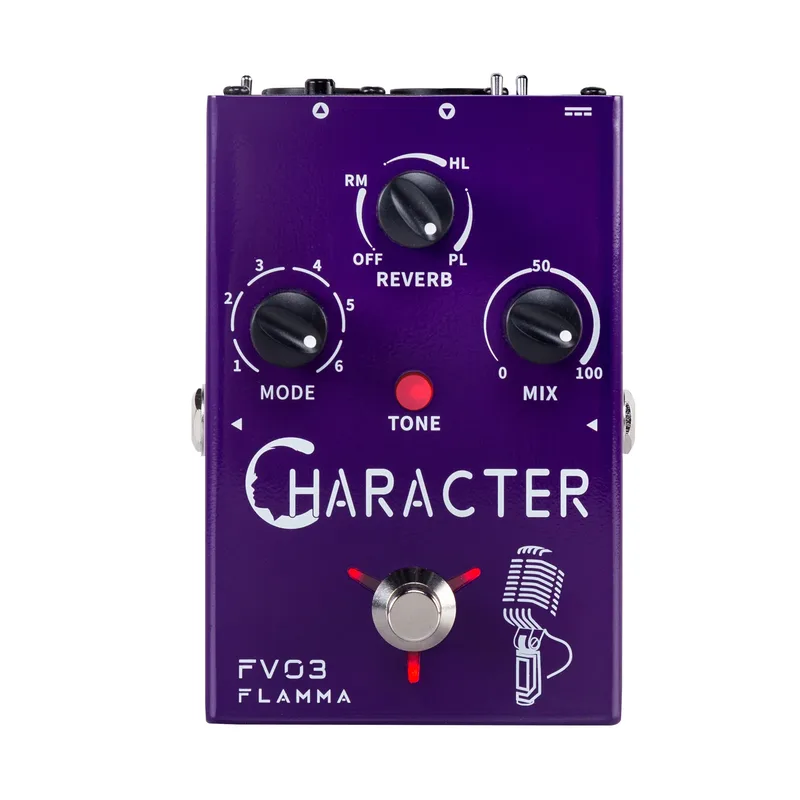
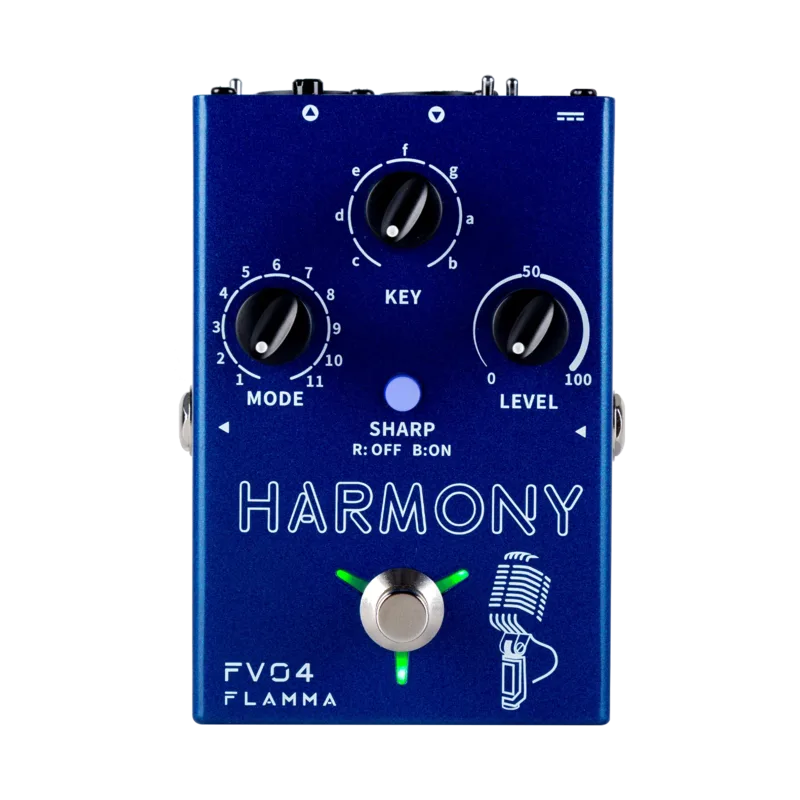
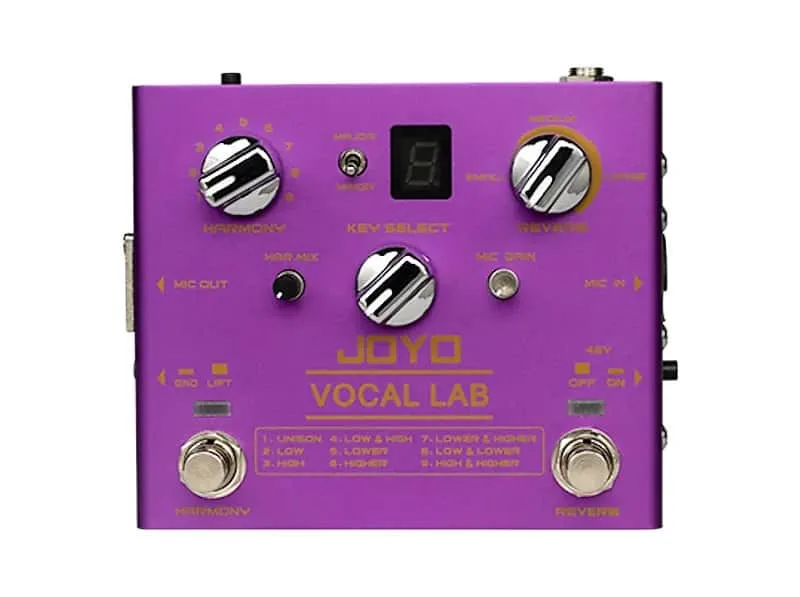
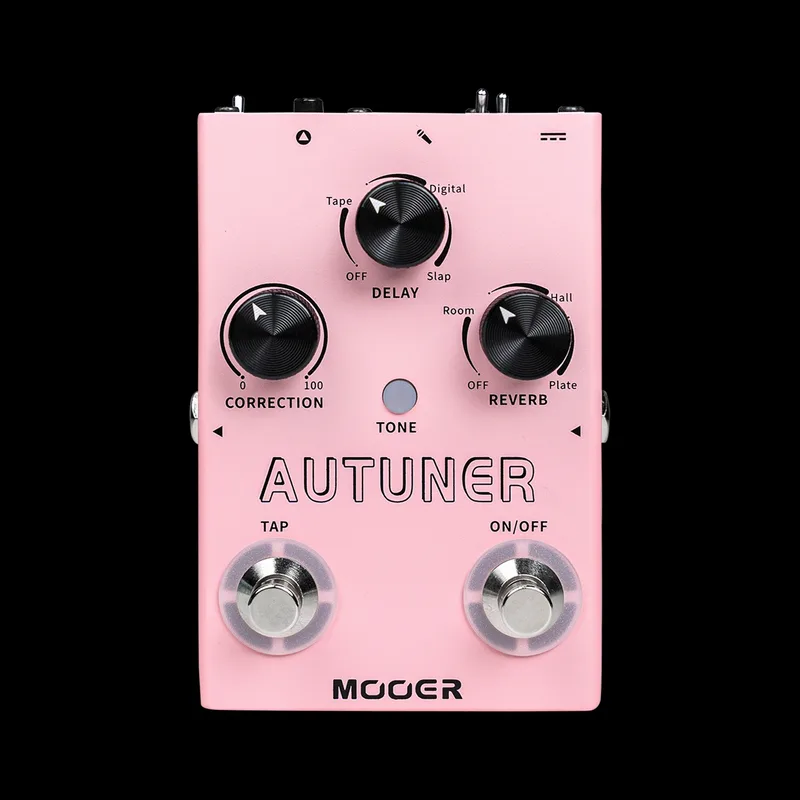
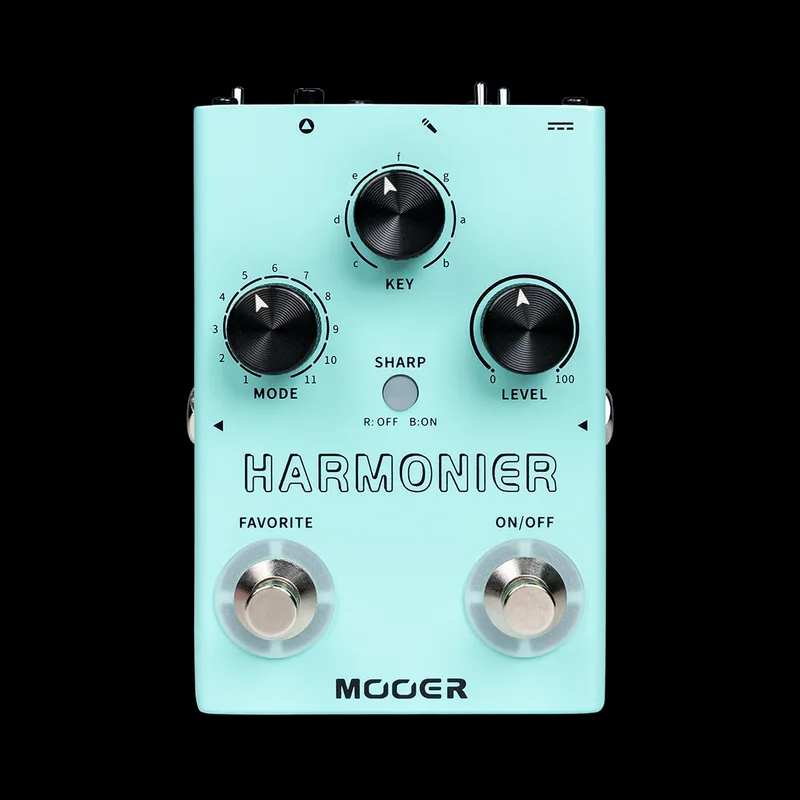
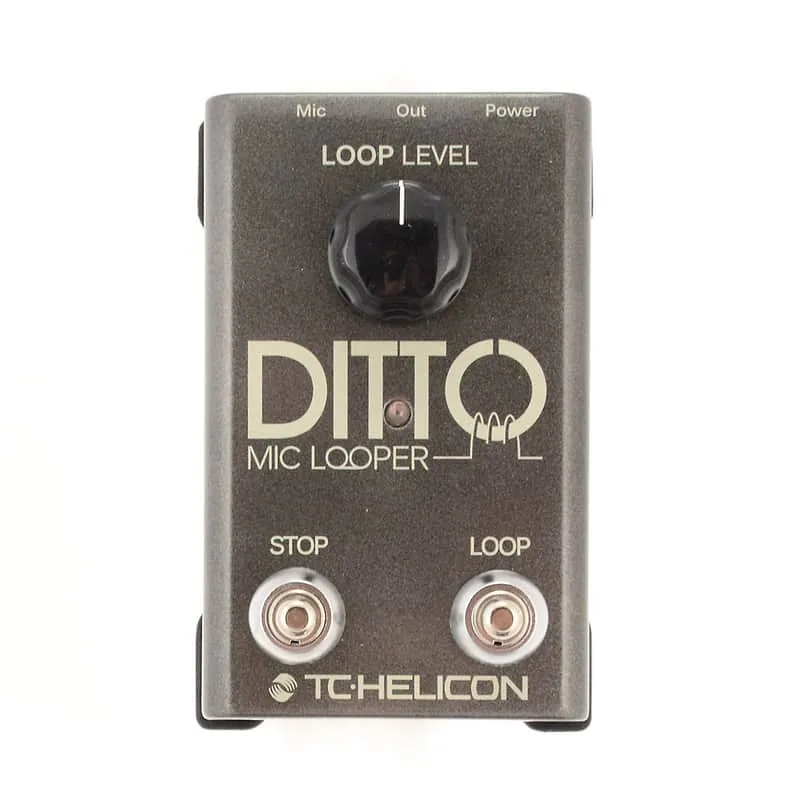
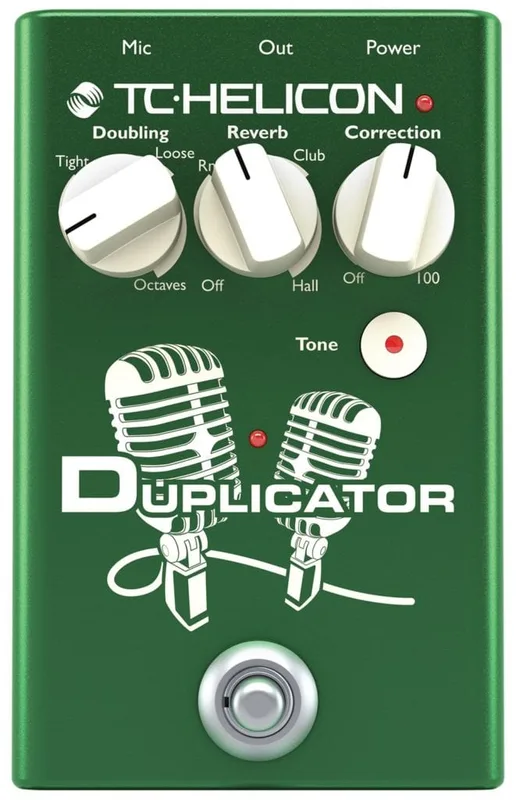
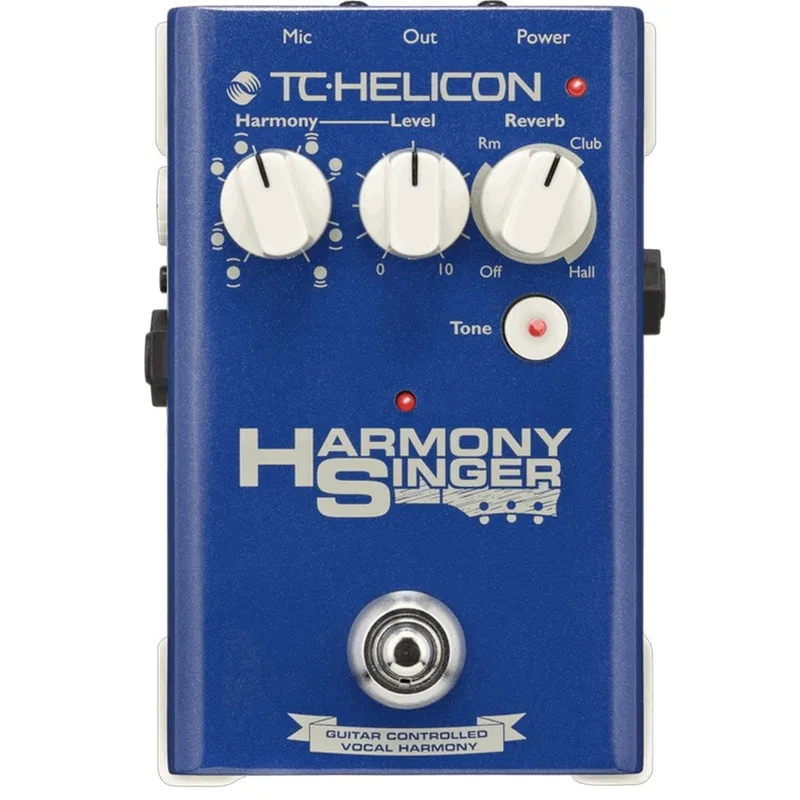
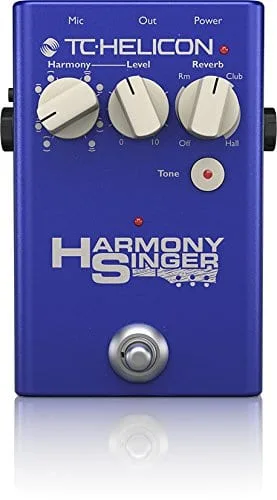
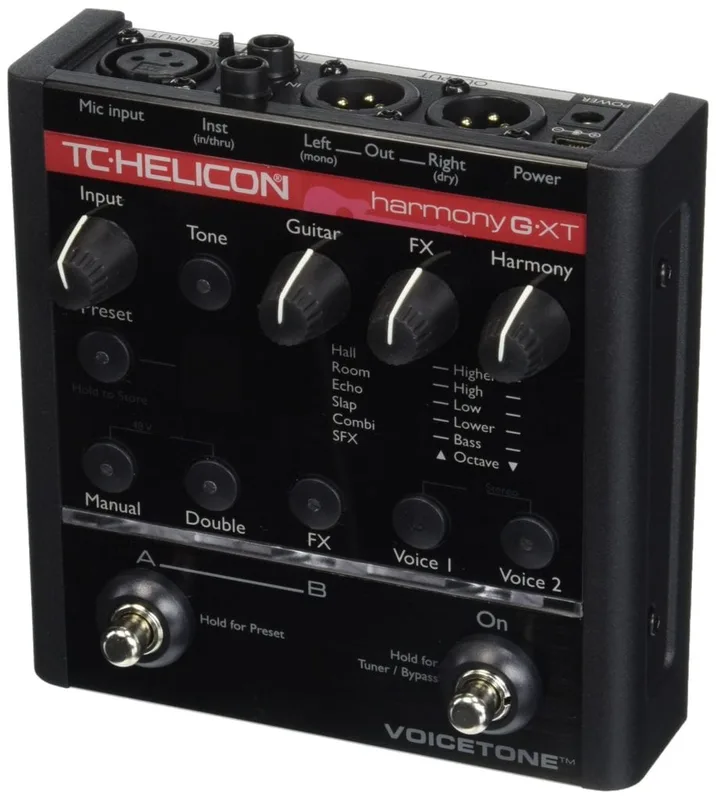
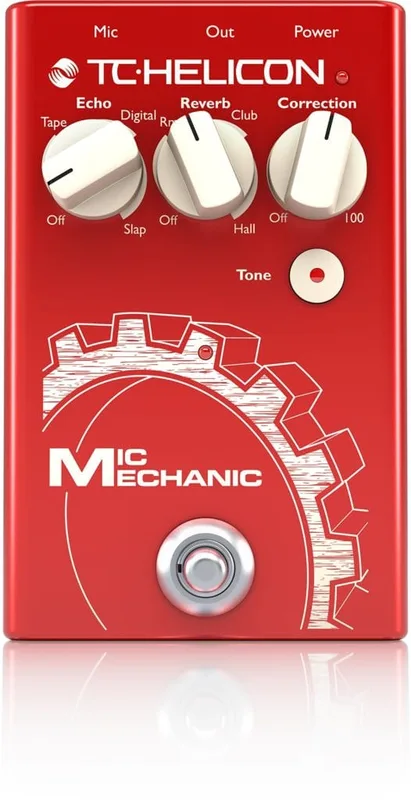
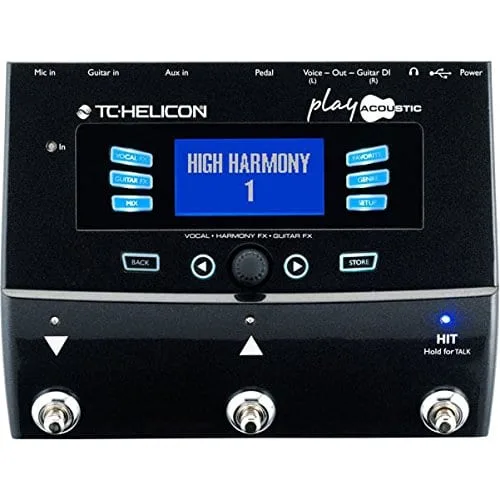
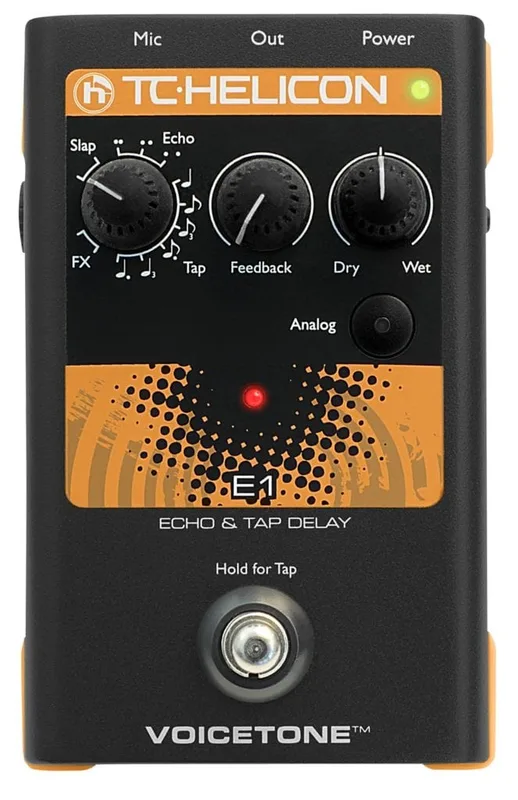
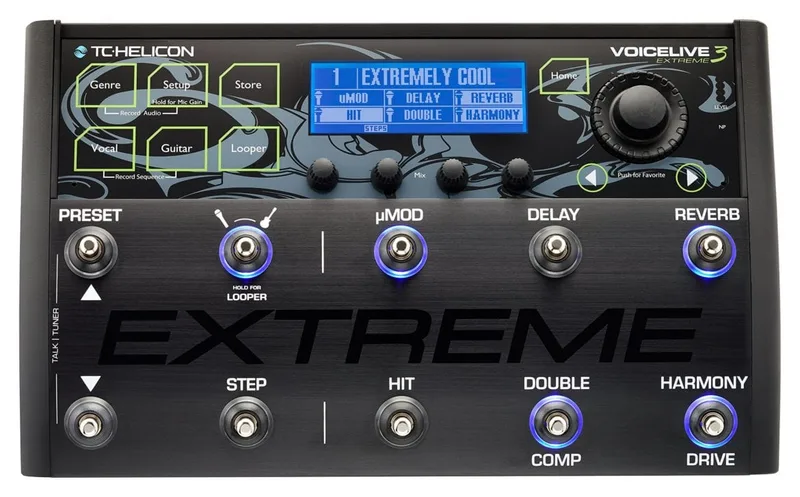
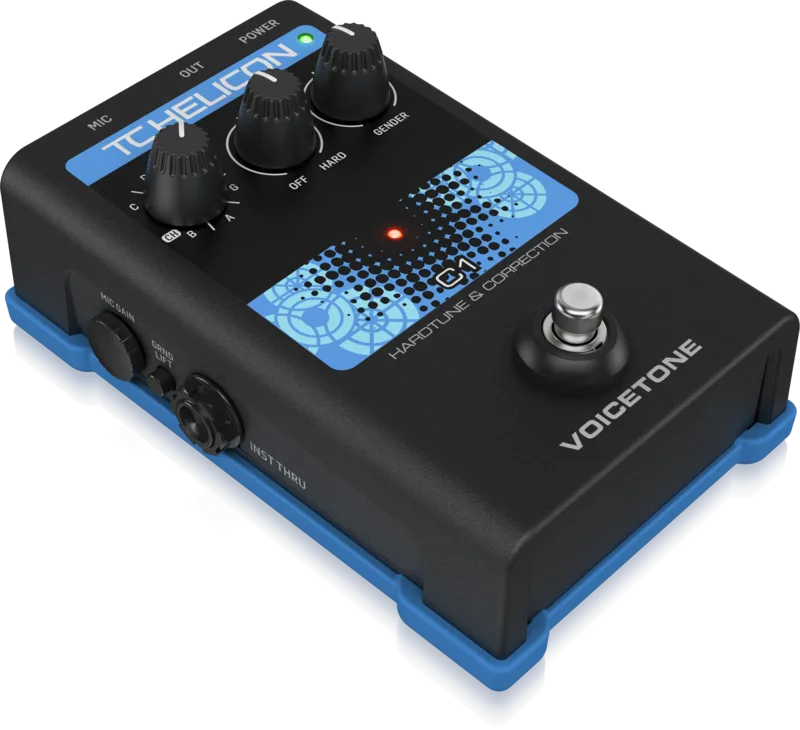
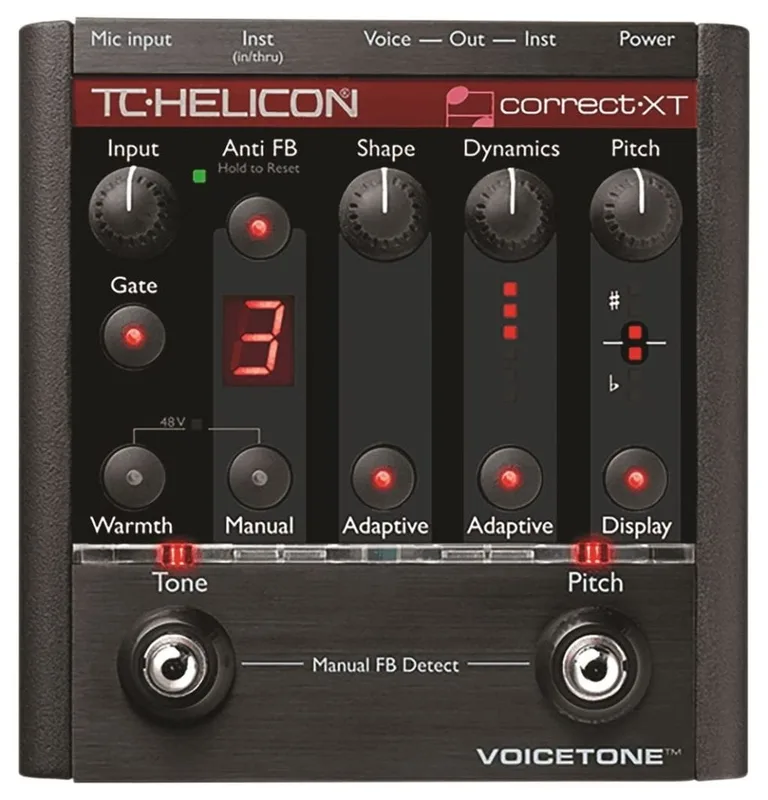
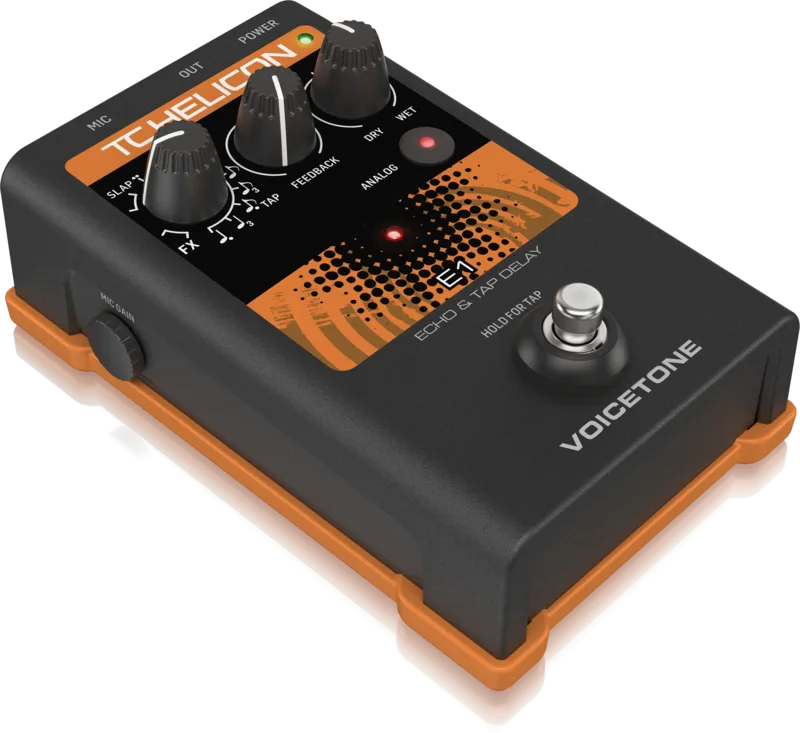
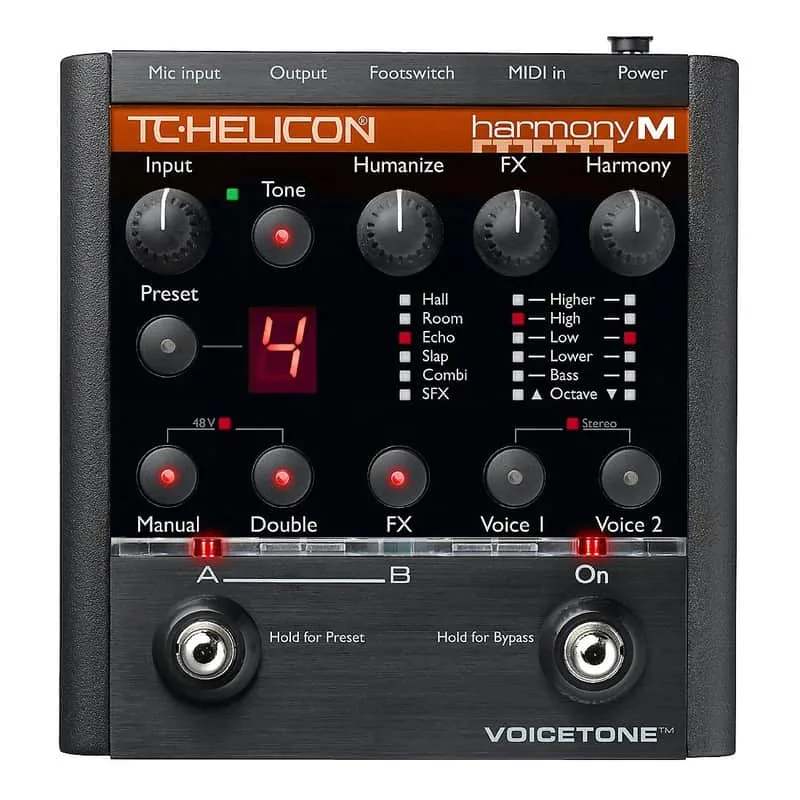
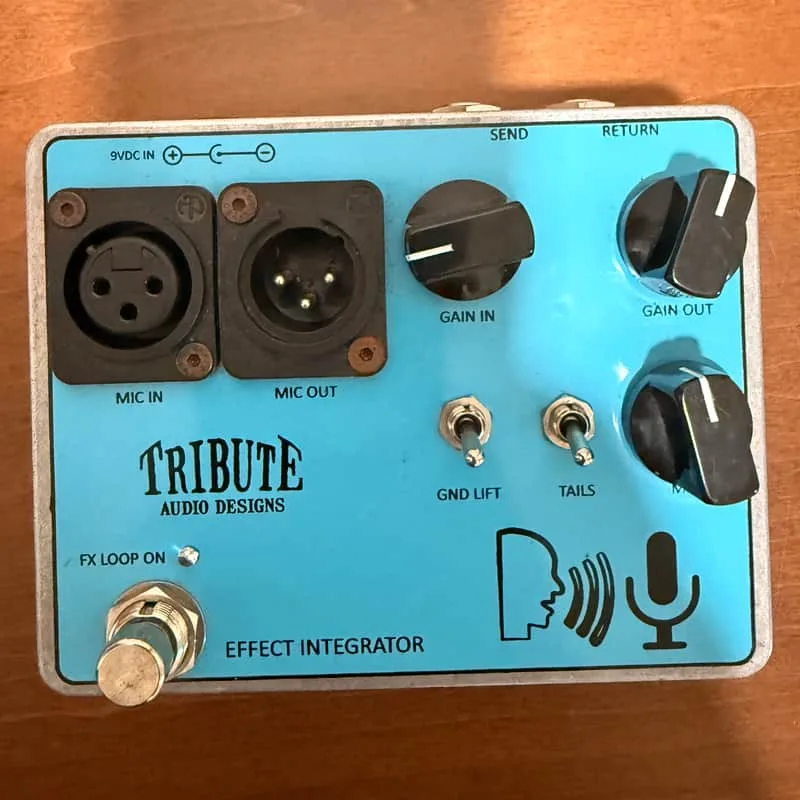
A vocal pedal is a floor unit built to process a singing or speaking voice rather than a guitar signal. Where a distortion pedal shapes the sound of your guitar, a vocal pedal takes the signal from a microphone and adds harmony parts, doubling, choir textures, pitch correction, reverb, echo, vocoder effects or talk box sounds, then passes the result on to the PA. Some go further and handle guitar and voice in the same box, which is why they sit at the edge of the guitar pedal world and get used by singing guitarists every night.
The category grew out of two needs. Singers who also play wanted the same foot-controlled effects guitarists had enjoyed for decades, and guitarists wanted the expressive vocal sounds of records, from stacked harmonies to robot voices, available live. The result is a family of pedals that ranges from simple doubling boxes to multi-effects processors with guitar inputs, and a set of interface devices that let you run an ordinary mic through ordinary guitar pedals.
How vocal harmony pedals work: pitch detection from a guitar
The trick that defines most modern vocal harmony pedals is chord tracking. The pedal listens not only to your microphone but to your guitar, works out the chords and key you are playing, and then generates harmony notes that fit what you are singing.
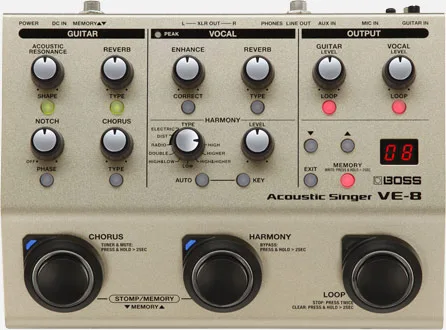
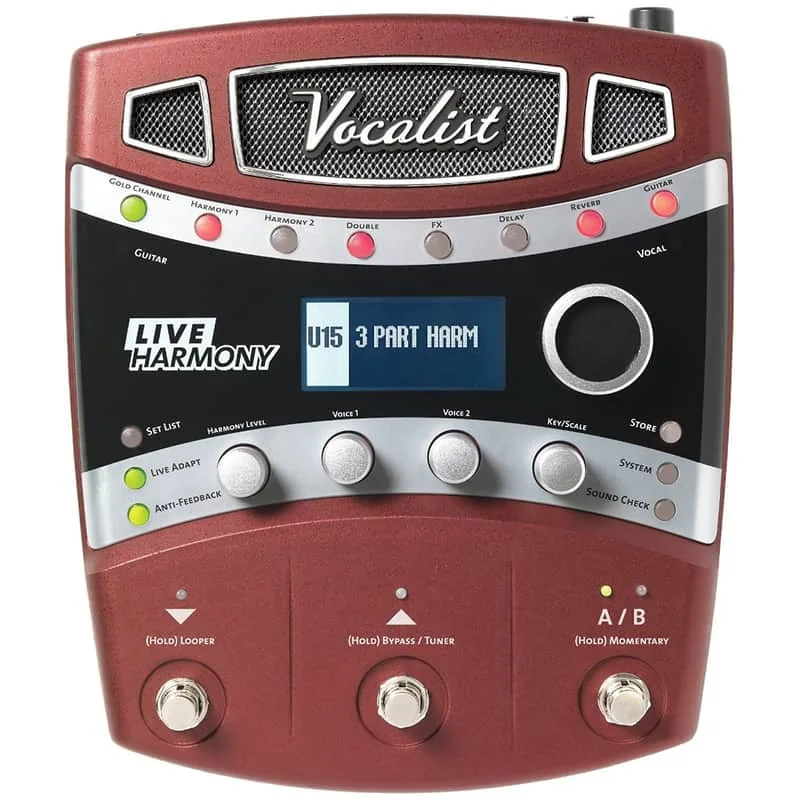
Boss describes the Boss VE-8 exactly this way: its automatic harmony function detects the chords and key you play with your guitar, and then generates the correct harmony as you sing1. DigiTech makes the same claim for the DigiTech Live Harmony, which senses the chords you are playing on guitar and adds correct natural vocal harmonies to your vocals2. For a singing guitarist, this means the harmonies follow the song rather than sitting on a fixed interval that clashes with a chord change.
Guitar-tracking harmony pedals need your guitar plugged into the pedal, not just into your amp. The pedal has to hear the chords to pick the right harmony notes.
The guitar side of this has a parallel in how pitch pedals are placed in a guitar chain. In BOSS's effects ordering guide, Henry Yates explains that pitch-altering effects work by transposing the guitar signal up or down, and that it is far easier for them to track a clean signal, which is why they belong early in the chain, close to the guitar3. The same logic applies inside a vocal pedal: the cleaner the guitar signal the harmony engine hears, the more accurate the harmonies it produces.
Styles: harmony, doubling and choir, vocoder and talk box
Vocal pedals divide into a few working styles, and knowing which one you want narrows the choice quickly.
| Style | What it does | Examples from this history |
|---|---|---|
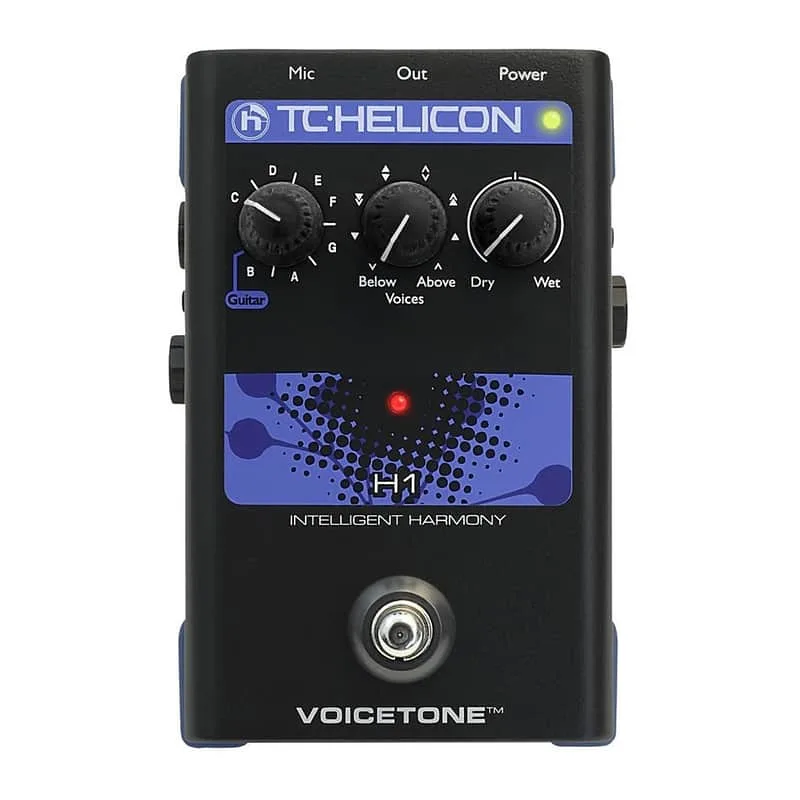
| Harmony | Generates harmony notes that follow your singing, guided by the chords your guitar plays | Boss VE-8, DigiTech Live Harmony, TC-Helicon Harmony Singer, VoiceTone H1 |
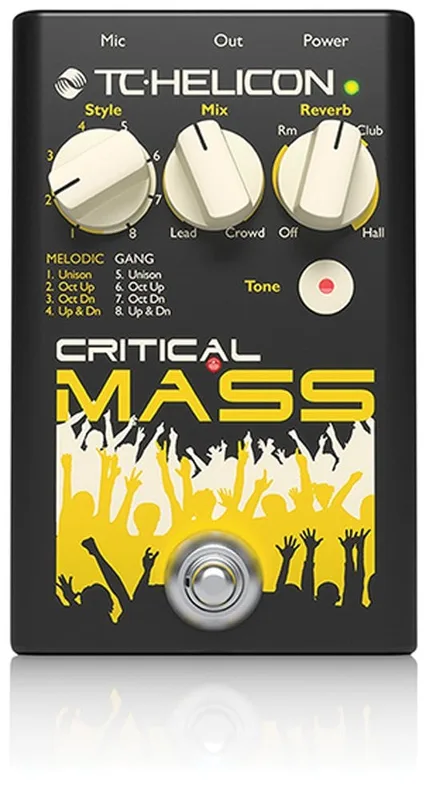
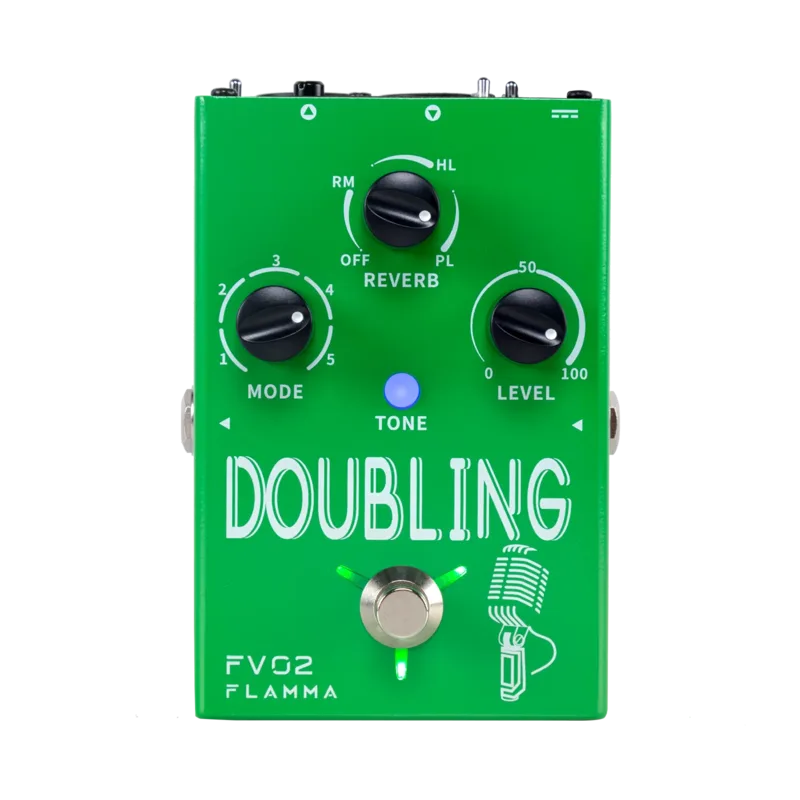
| Doubling and choir | Thickens the voice with doubled parts or gang-vocal and choir textures | Flamma FV02, TC-Helicon Critical Mass |
| Vocoder | Merges an instrument's sound and pitch with your voice's intonations | Electro-Harmonix Voice Box, Behringer VC340 |
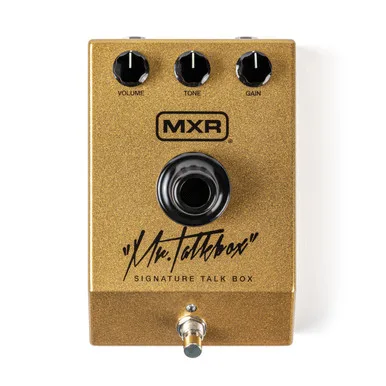
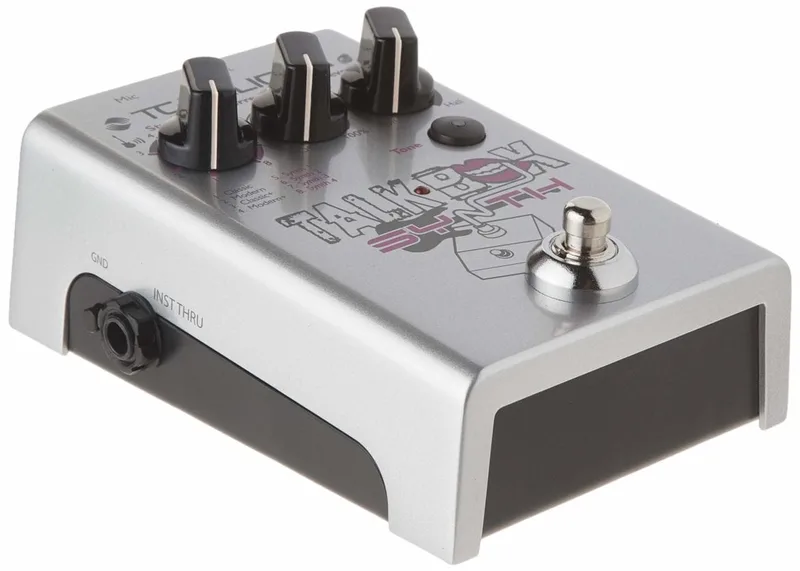
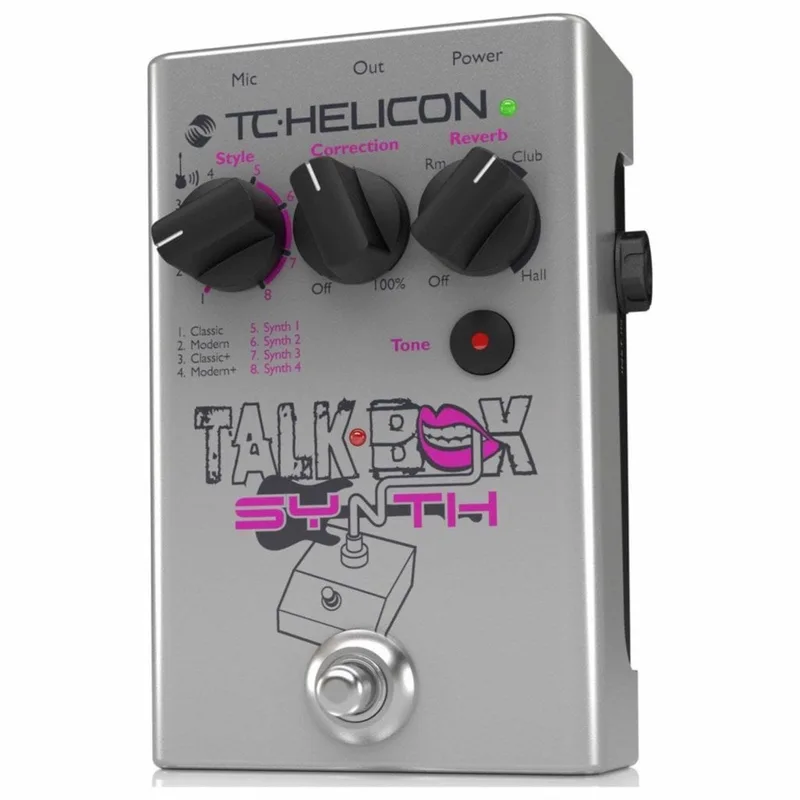
| Talk box | Drives the guitar signal through a tube into your mouth so you shape it with your lips | MXR Mr. TalkBox, Harley Benton Talk Box, TC-Helicon TalkBox Synth |
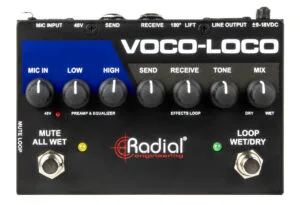
| Mic through guitar pedals | Runs a vocal mic through ordinary guitar effects via an interface | Radial Voco-Loco, Tribute Audio Effect Integrator |
Doubling and choir effects are the simplest entry point. The Flamma FV02 is a doubling vocal effects pedal with a guitar input that includes optional guitar reverb effects, a line-in that supports a signal from an external microphone amplifier or FV series pedals, and a microphone input, with two output modes for a mixed signal or individual signals from guitar and microphone12. The TC-Helicon Critical Mass covered the gang-vocal end of the same idea8.
Vocoder versus talk box
These two get confused because both make an instrument appear to talk, but they work completely differently.
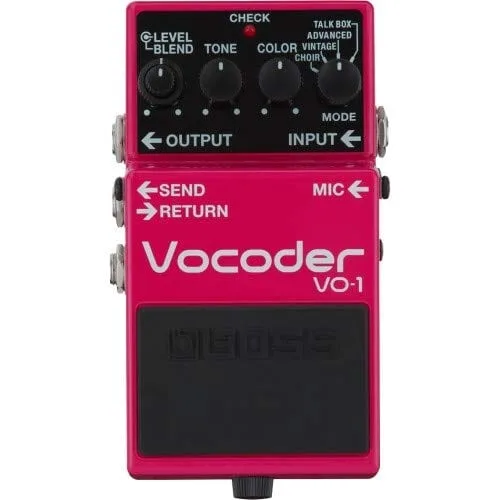
A vocoder is an electronic device with two inputs: an electronic musical instrument that provides the basic sound and pitch, and a microphone input for your voice that provides the vocal intonations13. Your voice imposes its shape on the instrument's tone. Behringer notes that the vocoder has become a singular staple of major motion pictures and video games for its ability to create robot voices14, and its VC340 offers vocoder hold and pitch pedal inputs for control14.
A talk box is acoustic rather than synthetic. Your guitar signal is driven through a tube that ends in your mouth, and you shape the sound with your lips and mouth movements; as JD Sleep explains at General Guitar Gadgets, even though you are using an amp to drive the thing, the end result sound is no louder than a normal speaking voice and all the sound is coming straight out of your mouth13. Because the sound leaves your mouth, you need a microphone to amplify it, which is why talk boxes and vocal rigs go together.
"Even though you are using an amp to drive this thing, the end result sound is no louder than a normal speaking voice and all the sound is coming straight out of your mouth."
What the usual controls do
Across the category, a few control types recur, whatever the style of pedal:
- Harmony voice controls select how many harmony parts and at what interval, or let the pedal choose intervals from the detected chords, as on the VE-8 and Live Harmony12.
- Tone and effect controls set reverb, echo or doubling amount; on the Flamma FV02 the guitar side has its own optional reverb12.
- Guitar and mic level controls balance the two inputs on dual-path pedals like the VE-8 and FV02112.
- Footswitches toggle effects in and out mid-song, the way a loop pedal or any guitar pedal would.
- Expression connections appear on some units: the Behringer VC340 has vocoder hold and pitch pedal inputs14, and larger processors like the Line 6 Helix LT have a built-in expression pedal that controls volume, wah, or any parameter or combination of parameters15.
Signal chain, XLR connections and power
Getting a voice through pedals and out to a PA cleanly is the practical heart of using vocal pedals, and it is where the category differs most from guitar pedals.
Running a mic through guitar pedals
Whether a microphone can go straight into a guitar pedal comes down to what sits between the two, and the interfaces built for that job are the place to start.
Radial's EXTC-SA extends the idea in the other direction: it is an interface for connecting guitar pedals to the inputs and outputs of pro audio equipment such as recording interfaces or mixing consoles, and on the receive path it boosts the pedal output up to a balanced line level so you can connect directly to the input of a recording interface16.
Balanced connections to the PA
Once the voice is processed, the output should reach the mixer without noise. The Line 6 Helix LT provides XLR outs for connecting to gear with balanced inputs, such as PA mixers, powered FRFR or PA speakers, and professional studio gear, using the Left/Mono XLR jack in mono15. This is the same principle BOSS's guide describes for amp and cabinet simulator pedals, which are most commonly placed at the end of the chain, where the signal is then routed to a PA system, audio interface, or headphones3.
A vocal pedal sits between the microphone and the PA mixer, not in your guitar amp's effects loop. Use the balanced XLR output where the pedal has one, and a mic input on the mixer, not a line input meant for instruments.
Vocals and looping
Some players fold vocals into a guitar looping rig. As Lee Glynn notes in BOSS's looping guide, a loop pedal records, layers and triggers sounds, and is used by electric guitarists, acoustic guitarists, beatboxers and vocalists alike; you can even capture vocal hooks if you have a loop pedal with an XLR mic input17.
Questions to ask when choosing a vocal pedal
- Do you sing and play at the same time? A dual-path pedal such as the Boss VE-8 or Flamma FV02 processes guitar and voice in one box, with separate or mixed outputs112.
- Do you want harmonies that follow the song? Look for chord tracking from a guitar input, as on the VE-8 and the DigiTech Live Harmony12.
- Do you want thickness rather than harmony? Doubling and choir pedals, from the FV02 to the TC-Helicon Critical Mass, add width without new notes128.
- Robot voice or mouth-shaped sound? A vocoder merges instrument and voice electronically1314; a talk box shapes the actual sound in your mouth13.
- Do you already own guitar pedals you love? An interface such as the Voco-Loco or Effect Integrator runs your mic through them instead of buying a dedicated vocal unit1819.
- How will you reach the PA? Check for balanced XLR outputs, as on the Helix LT, and for whether the unit needs its own power supply rather than a 9V daisy chain15.
One placement note carries over from the guitar world. In the Lehle volume pedal guide, Joki Schaller explains that an active VCA (Voltage Controlled Amplifier) changes the volume but not the sound, and that a volume pedal placed straight after the effects send of an amp acts as a master volume without changing the distortion20. The same reasoning, keeping level control separate from tone shaping, is worth applying to a vocal chain: control loudness at the mixer or with a clean level control, and let the vocal pedal handle the effects.
Questions
Can you plug a microphone into a guitar pedal?
Not directly in most cases, because mic level and impedance do not match guitar pedal inputs. An interface such as the Radial Voco-Loco acts as a foot-controlled microphone preamp and effects loop switcher, feeding your mic through guitar pedals for echo, reverb or distortion and back to the PA. Some loop pedals also have an XLR mic input for capturing vocal hooks.
What is the difference between a vocoder and a talk box?
A vocoder is an electronic device with two inputs: an instrument that provides the basic sound and pitch, and a microphone that provides the vocal intonations. A talk box drives your guitar signal through a tube into your mouth, and you shape the sound with your lips; the result is no louder than a normal speaking voice and comes straight out of your mouth.
Do vocal harmony pedals need a guitar plugged in?
The guitar-tracking kind do. The Boss VE-8's automatic harmony function detects the chords and key you play on your guitar and generates the correct harmony as you sing, and the DigiTech Live Harmony senses the chords you are playing and adds correct natural vocal harmonies. Check a specific pedal's page for whether it also offers a key-based mode.
Where does a vocal pedal go between the mic and the PA?
The mic feeds the vocal pedal's mic input, and the pedal's output goes to the PA mixer, ideally over a balanced XLR connection where the pedal offers one. Devices like the Line 6 Helix LT provide XLR outs for gear with balanced inputs such as PA mixers, powered FRFR or PA speakers, and professional studio gear.
Can one pedal process both vocals and guitar?
Yes. The Boss VE-8 handles vocals and guitar together, and the Flamma FV02 Doubling Vocal Effects Pedal has a guitar input with optional guitar reverb effects plus a microphone input, with two output modes for a mixed signal or individual signals from guitar and microphone.
Sources (20)
- BOSS - VE-8 | Acoustic Singer, BOSS (www.boss.info)
- Live Harmony, DigiTech, 2023-12-20
- The Ultimate Guide to Guitar Effects Pedal Order and Signal Chain, BOSS (articles.boss.info), 2023-03-01
- HOW TO USE A VOLUME PEDAL, JHS Pedals
- Voice Box, Electro-Harmonix
- NAMM 2011: Electro-Harmonix Stereo Talking Machine unveiled, musicradar.com, 2011-01-20
- Musikmesse 2011: TC-Helicon introduces new VoiceTone Single pedals, musicradar.com, 2011-04-05
- TC-Helicon reaches Critical Mass with Gang Vocal and Choir FX pedal, musicradar.com, 2017-04-24
- TC-Helicon revolutionises the talk box with hoseless TalkBox Synth pedal, musicradar.com, 2017-05-31
- What could the new Headrush Core offer that the multi-effects pedal competition doesn't?, musicradar.com, 2023-09-20
- The Eventide H9000 gets a Major Update, gearnews.com, 2024-10-08
- FLAMMA FV02 Doubling Vocal Effects Pedal, Flamma Innovation (www.flamma.shop)
- Talkbox Fundamentals: How a Talk Box Works, General Guitar Gadgets, 2014-06-29
- VOCODER VC340, Behringer
- Line 6 | Helix LT | Guitar Multi-Effects Processor, Line 6
- EXTC-SA - Radial Engineering, Radial Engineering, 2025-07-04
- The Complete Guide to Loop Pedals for Electric Guitarists, BOSS (articles.boss.info), 2025-04-04
- Voco-Loco, Radial Engineering, 2026-02-11
- Tribute Audio's Effect Integrator, Delicious Audio, 2015-07-17
- Where should I place my volume pedal?, blog.lehle.com, 2017-09-12