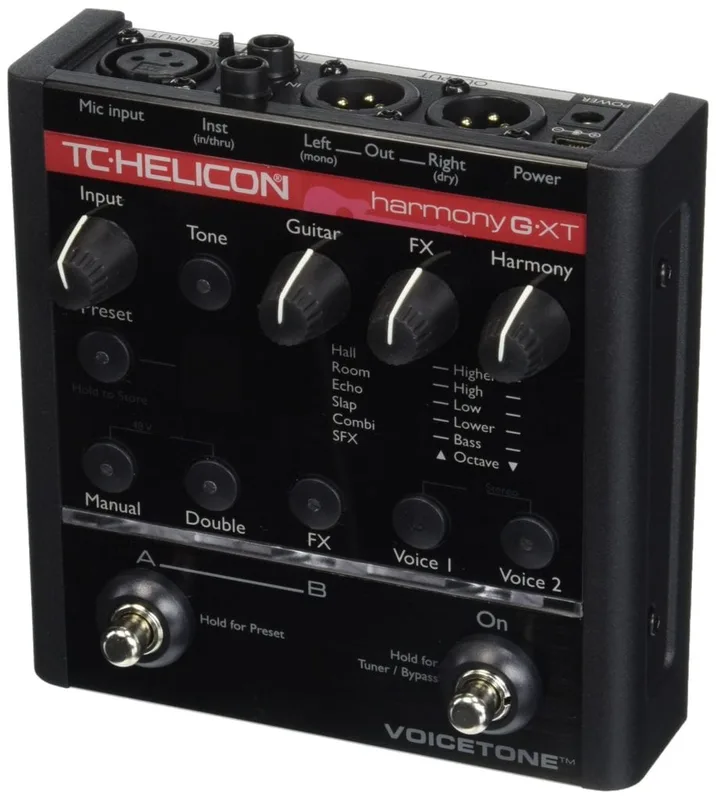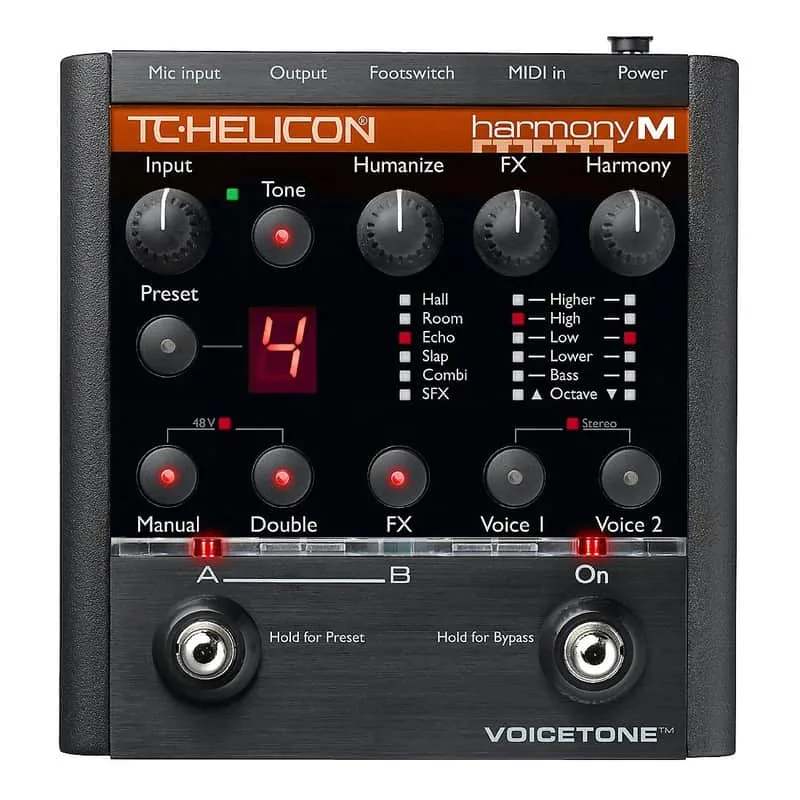


The TC-Helicon VoiceTone Harmony-M is a vocal harmony pedal in a die-cast steel design1. Where TC-Helicon's VoiceTone Harmony-G is built for guitar players, the Harmony-M is the keyboard player's counterpart in the VoiceTone line.
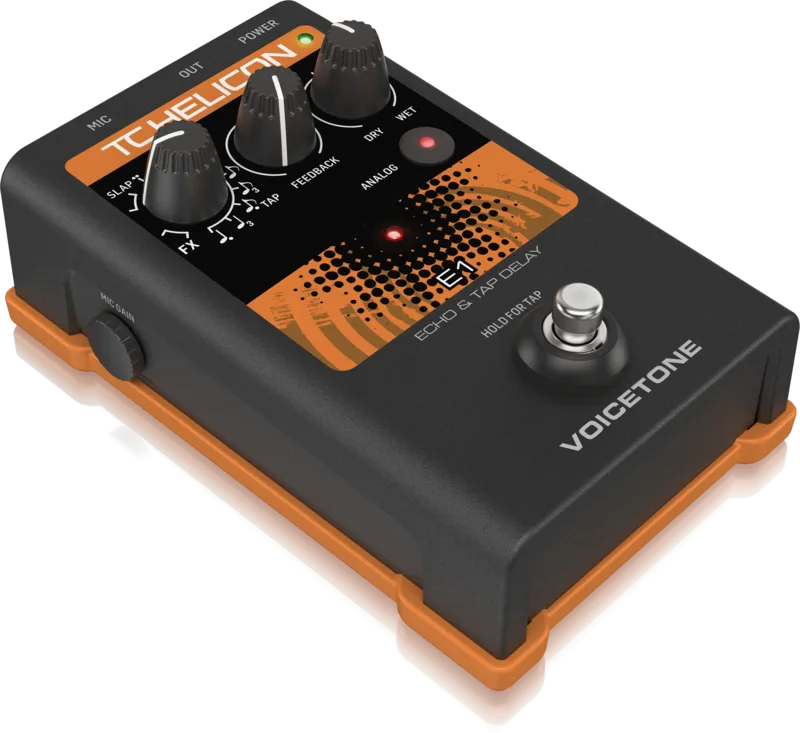
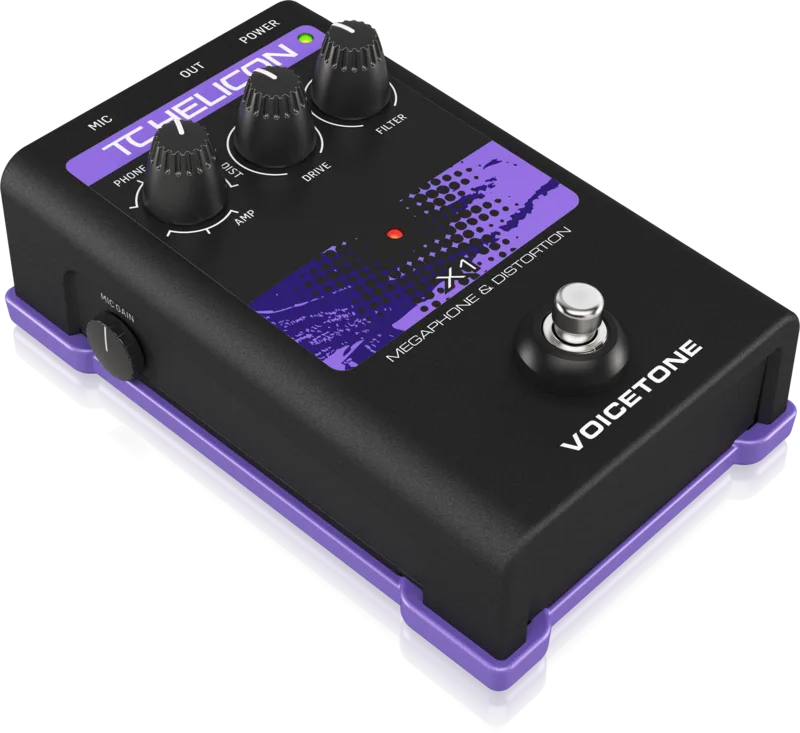
The pedal sits in TC-Helicon's wider family of vocal gear, which by 2011 had grown into the VoiceTone Singles line of one-button stompboxes, including the VoiceTone H1, C1, D1, E1, X1 and R12. The Harmony-M predates that line and takes a different approach: instead of a single stompbox effect, it is a harmony engine tied to a MIDI keyboard.
How the harmony follows your playing
The pedal includes classic "notes" and "chord" harmony control modes1. In practice, that means it can either build harmony against the notes you play or follow the full chords coming over MIDI, so the two generated voices sit inside the harmony of the song rather than fighting it. Because the MIDI connection carries the chord information and nothing else, the keyboard's own audio path is untouched1.
A tone switch engages what TC-Helicon calls its adaptive live engineer effects, which dynamically polish vocal tone1. In other words, the same switch that brings in the harmony processing also brings a layer of automatic vocal treatment, the kind of correction and shaping TC-Helicon builds into its larger vocal processors.
Presets and performing with it
The Harmony-M carries ten presets with A/B settings, so you can arrange voicing and effects changes in your songs by stepping through the presets as you perform1. Each preset holds a harmony arrangement, and the A/B setting gives you two variations of it to flip between within a song.
The pedal has an input for an optional footswitch, so it can be placed on the keyboard itself for easy access while you play, with the footswitch on the floor for stepping through presets1.
Connections
The back panel carries 1/4-inch TRS mic level I/O rather than the XLR connections TC-Helicon used on its later Singles pedals, whose spec sheets list XLR in, XLR out, 48V phantom power, true bypass and a standard 9V supply341. The TRS mic level jacks match the pedal's intended home next to a keyboard rather than on a microphone pedalboard.
Where it came from
TC-Helicon announced the Harmony-M at Musikmesse 2008, alongside coverage of the guitar-controlled VoiceTone Harmony-G and the VoiceTone Create multi-effects pedal for singers1. The company said the pedal would be available that June1. MusicRadar's impression at launch was positive on the build:
"solid metal construction and fastidiously detailed audio design from input to output"
MusicRadar, 20081
The same report closed with the verdict:
"All in all, it looks like it does the job to us"
MusicRadar, 20081
How it differs from other TC-Helicon harmony pedals
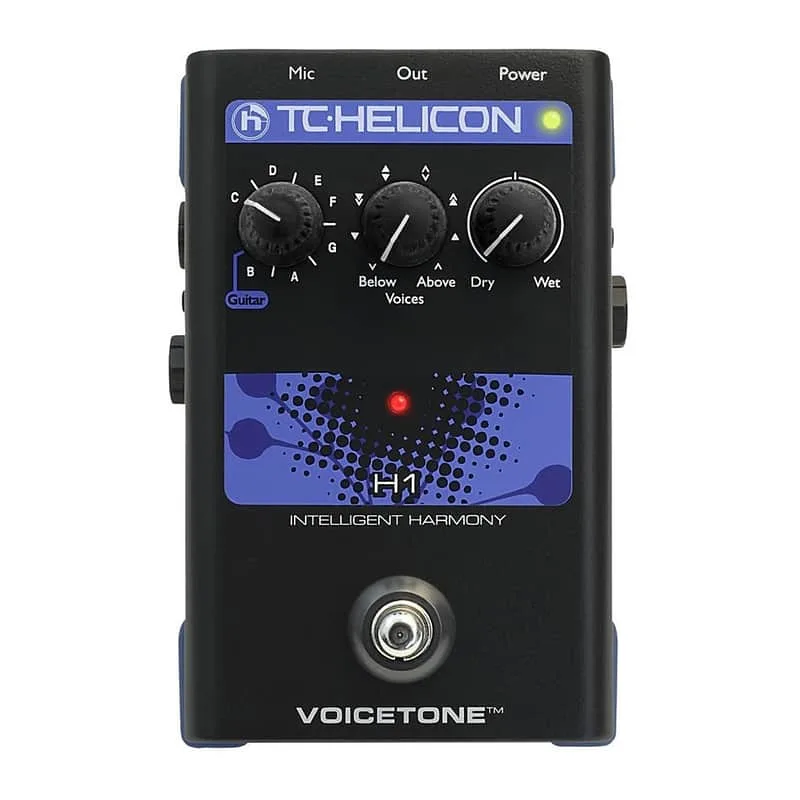
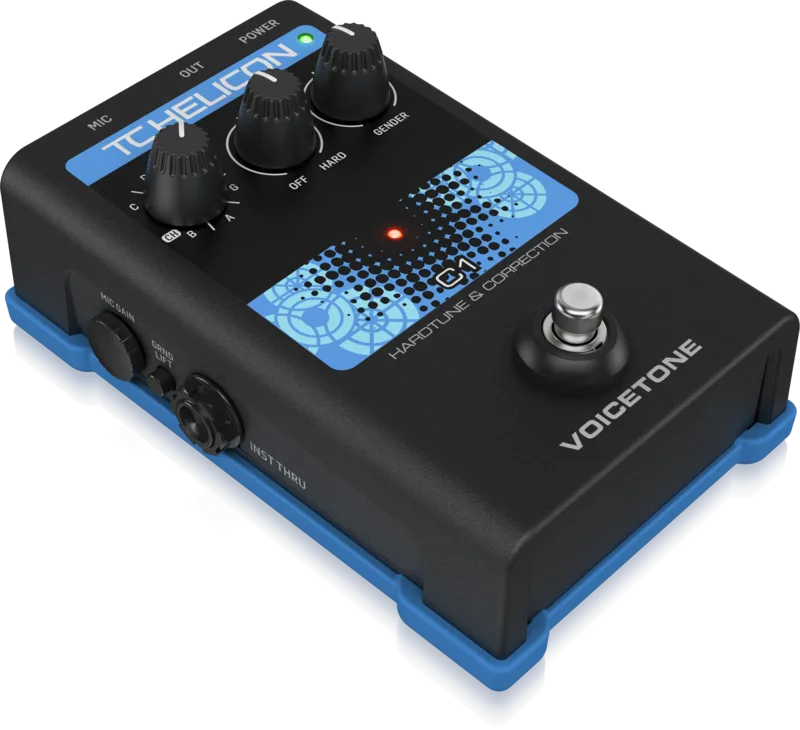
The Harmony-M's keyboard control is what separates it from the rest of the family. The VoiceTone H1, announced in 2011, is a single-button stompbox for guitar-controlled vocal harmony, with eight pre-authored harmony voicings and high, low and high-plus-low voicings switched from the front panel25. The C1 adds hard-tuned correction and inherits the chromatic and scale-based tuning technology from TC-Helicon's flagship VoiceLive processors4, while the D1 is a dedicated doubling pedal and the E1 a delay and echo pedal voiced for the human voice4.
TC-Helicon's Product Manager Tom Lang described the appeal of the smaller single pedals in 2011, and the sentiment applies to the harmony line as a whole2:
"There is something addictive and fun about using such a small pedal to instantly produce pro sounding background vocals"2
Tom Lang, TC-Helicon Product Manager, 20112
The Harmony-M takes a different route to the same goal: instead of a stompbox reading a guitar, it is a MIDI-fed harmony box for the singer at the keys. For players comparing options today, TC-Helicon's later harmony pedals such as the Harmony Singer 2 and Boss's VE-2 Vocal Harmonist cover similar ground with different control schemes1.
Videos
TC Helicon
TC Helicon
tcheliconsupport
Questions
What does the TC-Helicon VoiceTone Harmony-M do?
It is a vocal harmony pedal built for keyboard players. It produces two simultaneous harmony singers or doubling tracks from your voice, controlled through a MIDI connection from the keyboard without affecting the keyboard's own signal. A tone switch also engages adaptive live engineer effects that dynamically polish vocal tone.
How many presets does the Harmony-M have?
It has ten presets with A/B settings. You can arrange voicing and effects changes in your songs by stepping through the presets as you perform, and an optional footswitch lets you move through them while the pedal sits on the keyboard.
Can the Harmony-M be controlled by MIDI?
Yes. The harmony voices are controlled through a MIDI connection to the keyboard, and the keyboard's signal is not affected. This is what lets the pedal follow the chords you play to generate the harmony parts.
Is the Harmony-M only for keyboard players?
It was designed for keyboard players, which is what sets it apart from TC-Helicon's guitar-controlled harmony pedals like the VoiceTone Harmony-G. Any singer who can feed it MIDI chord information can use it, but the keyboard player is who it was built around.
Sources (5)
- Musikmesse 08: TC Helicon VoiceTone Harmony M pedal, MusicRadar, 2008-03-13
- Musikmesse 2011: TC-Helicon introduces new VoiceTone Single pedals, MusicRadar, 2011-04-05
- VOICETONE H1, TC Helicon
- VOICETONE C1, TC Helicon
- VOICETONE D1, TC Helicon