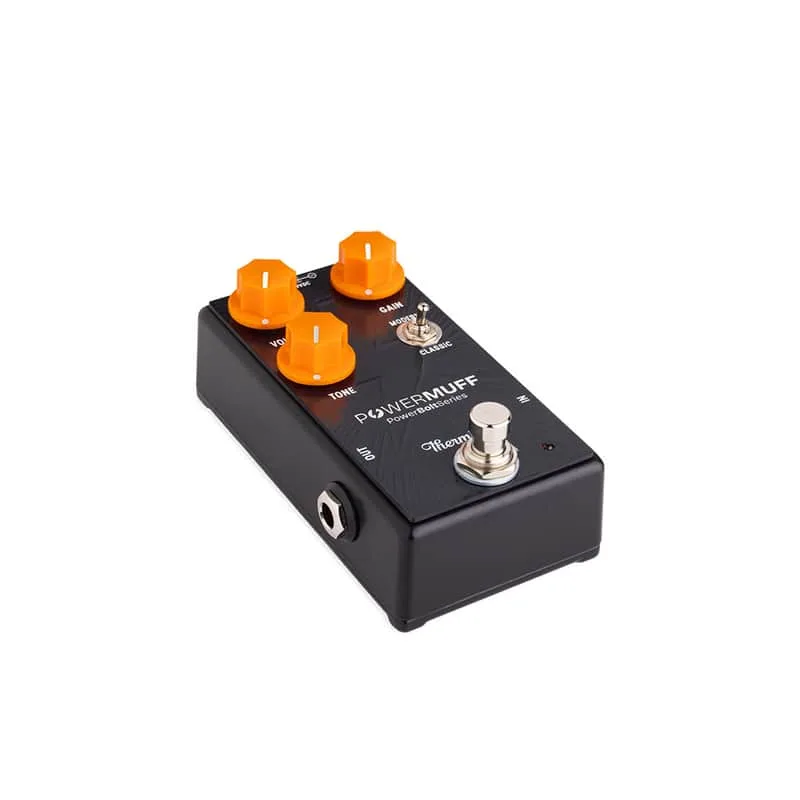
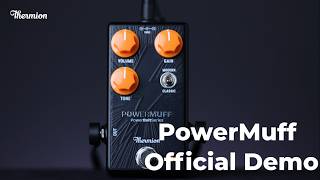


The Thermion PowerMuff is a compact fuzz pedal inspired by the classic Muff style sound, but with a Thermion redesigned gain structure and tone control. It is a 100% analog circuit with two voicings, Classic and Modern, selected by a switch, and it goes from a traditional fuzz with long sustain and an enveloping texture to a tighter, more dynamic take on the same idea1. Guitar Pedal X, covering the pedal's release, described it as "Initially inspired by Triangle Muff, but massively evolved"2.
The Thermion PowerMuff is a fuzz pedal that the maker describes as "a wide, dense distortion with the signature wall of sound effect, but with more mids, more control, and a more defined response, keeping an aggressive character that works well in a band context"1. It sits in the wider family of fuzz pedals, and Thermion lists it at €125 EUR on its webstore2.
What it sounds like
Thermion describes the result as "a wide, dense distortion with the signature wall of sound effect, but with more mids, more control, and a more defined response, keeping an aggressive character that works well in a band context"1. In other words, the maker positions it as a Muff-style wall of fuzz that keeps enough midrange to sit in a mix.
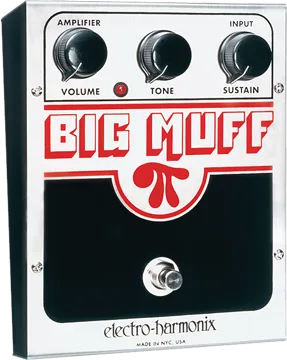
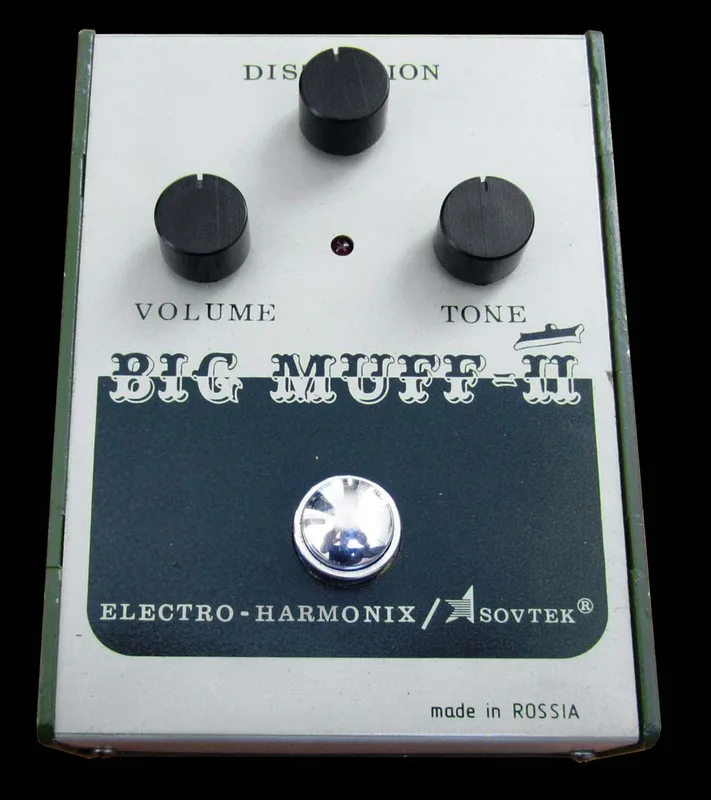
Stefan Karlsson's review at Guitar Pedal X placed the voicing within the Big Muff lineage: "PowerMuff is a Big Muff-style fuzz/distortion, closer to Core Sovtek, especially Green Russian, than Ram's Head"2. For players who know the Muff family, that puts it nearer the scooped, thick Green Russian character than the mid-forward Ram's Head voicing.
Controls
The top panel is deliberately simple, with the deeper adjustments tucked inside the enclosure1.
| Control | Location | What it does |
|---|---|---|
| Gain | Top panel | Sets the amount of fuzz and distortion1 |
| Mode switch | Top panel | Selects Classic or Modern voicing1 |
| Bass | Internal | Shapes the low end, affects both modes1 |
| Starve | Internal | Adjusts Modern mode behavior1 |
| Cut | Internal | Adjusts Modern mode behavior1 |
The internal trimmers are the pedal's fine-tuning layer. Thermion says the PowerMuff "includes internal adjustments to fine tune Modern mode behavior and the amount of low end, adapting precisely" to your setup1. The Starve control takes its name from starving the circuit of voltage, a common way to alter how a fuzz compresses and decays.
The Starve and Cut trimmers only shape Modern mode. The internal Bass control is the one that affects both voicings, so set the low end first and then dial in Modern1.
Classic and Modern modes
The two modes divide the pedal's personality. Classic is the traditional side: long sustain and an enveloping texture, in the manner of the Muff circuits that inspired it1. Modern tightens things up. Thermion describes it as a mode where "the signal reacts more strongly to pick dynamics, creating a choking effect and a gated character that" shortens note tails1. That gated, dynamic response is a different animal from the sustained wash of Classic, and the internal trimmers exist largely to shape how far that behavior goes.
Power and specifications
The PowerMuff uses standard pedal power: a 9V center negative 2.1mm DC jack, with a maximum current consumption of 10mA1. That draw is low enough for any conventional isolated power supply output. The enclosure is a compact format the maker describes as ideal for any pedalboard, measuring 7 x 11 x 5 cm and weighing 235 g1.
Price and availability
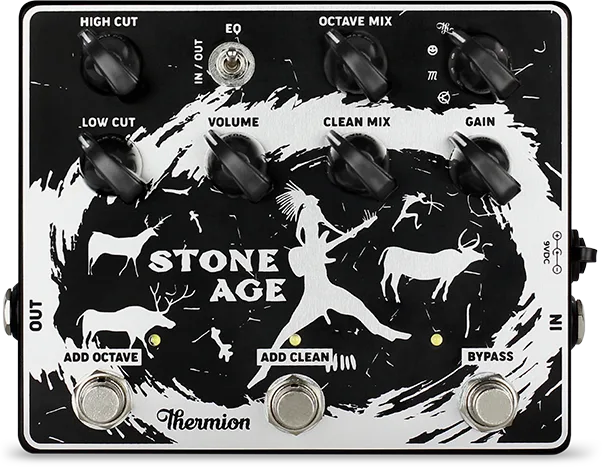
Guitar Pedal X listed the PowerMuff at €125 on the Thermion webstore at the time of its June 2026 review, calling it "excellent value"2. Thermion also builds the related Thermion Stone Age Fuzz Tone Engine, a multi-engine fuzz from the same maker.
Videos
Thermion
Thermion
BUZZBEE TV
Questions
Is the Thermion PowerMuff true bypass?
Yes. Thermion lists the PowerMuff as true bypass, so when the pedal is off, your guitar's signal passes through without loading the front of your amp or other pedals. Combined with its greater than 100kΩ input impedance and less than 1kΩ output impedance, the pedal is designed to sit on a pedalboard without noticeably changing your clean tone when switched out.
What is the difference between Classic and Modern mode on the PowerMuff?
The mode switch selects between two voicings. Classic is described by Thermion as a traditional fuzz with long sustain and an enveloping texture. Modern reacts more strongly to pick dynamics, creating a choking effect and a gated character that shortens note tails. The internal Starve and Cut trimmers adjust Modern mode behavior, while the internal Bass control affects both modes.
What power supply does the Thermion PowerMuff use?
The PowerMuff runs on standard pedal power: a 9V center negative 2.1mm DC jack, with a maximum current consumption of 10mA. That low draw means it will run comfortably from almost any pedalboard power supply output.
Is the Thermion PowerMuff analog?
Yes. Thermion describes the PowerMuff as having a 100% analog circuit, with main controls that make adjustment simple and effective. Guitar Pedal X also refers to it as an analog fuzz/distortion in its coverage of the PowerBolt series.
Where is the Thermion PowerMuff made?
The PowerMuff is hand built in Spain as part of Thermion's PowerBolt series, according to the maker's product page.
Sources (2)
- PowerMuff, Thermion
- Guitar Pedal X, Guitar Pedal X, 2026-06-16