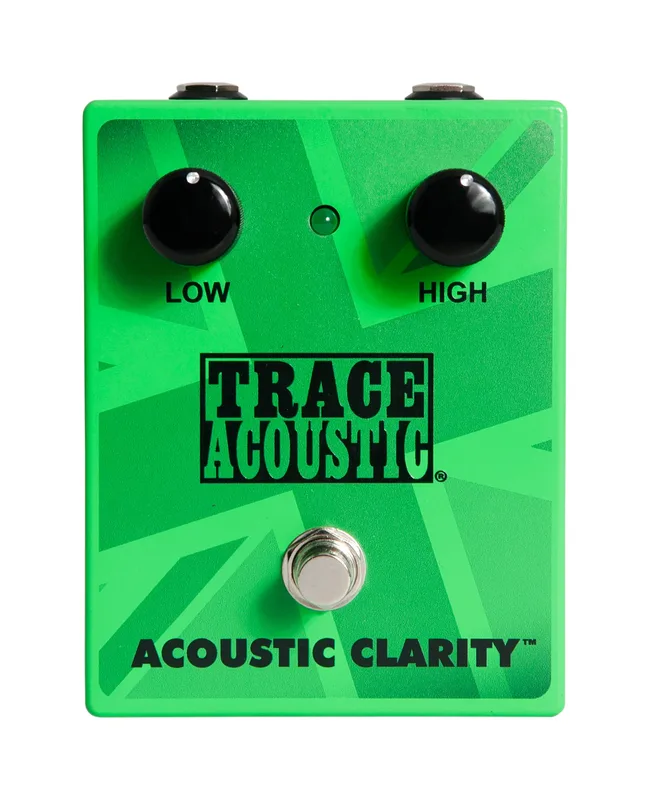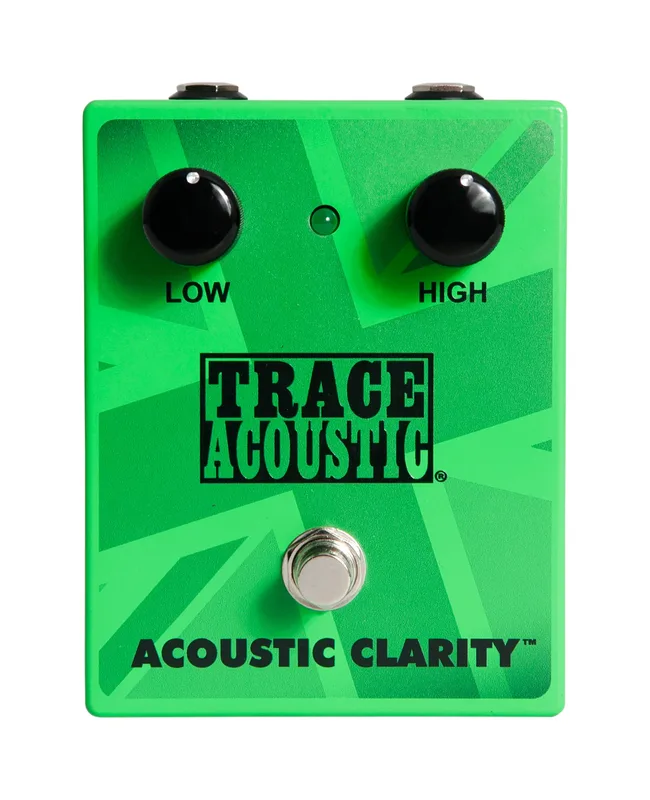


The Trace Acoustic Clarity is a compact effects pedal from Trace Elliot that the maker describes as "a unique and innovative frequency expansion device designed for use with most acoustic-electric instruments"1. Where most pedals in the acoustic pedals family are preamps, EQs or simulators that reshape your amplified tone, the Clarity takes a different approach: it enhances the undertones already present at the extremes of your instrument's frequency spectrum, adding depth, richness and dimension while leaving the core voice of the instrument alone1.
Trace Elliot announced the pedal in November 2025, and it is available worldwide through online and local retailers2. Peavey, Trace Elliot's parent company, lists it at £152.003.
What it does to your sound
The Clarity is built around two proprietary variable filters, one for each end of the frequency spectrum. According to Peavey, these "enhance the natural undertones at both ends of the spectrum, adding depth, richness, and dimension" without changing the core voice of the instrument1. The input and output gains are fixed at unity, so the pedal is not a boost: it does not raise or lower your volume, it works on the harmonic content sitting at the frequency extremes.
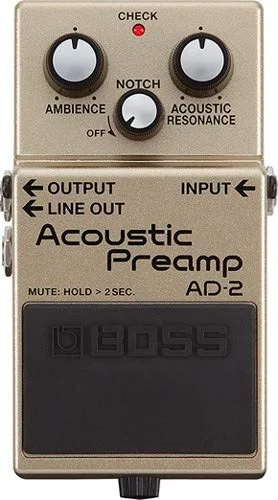
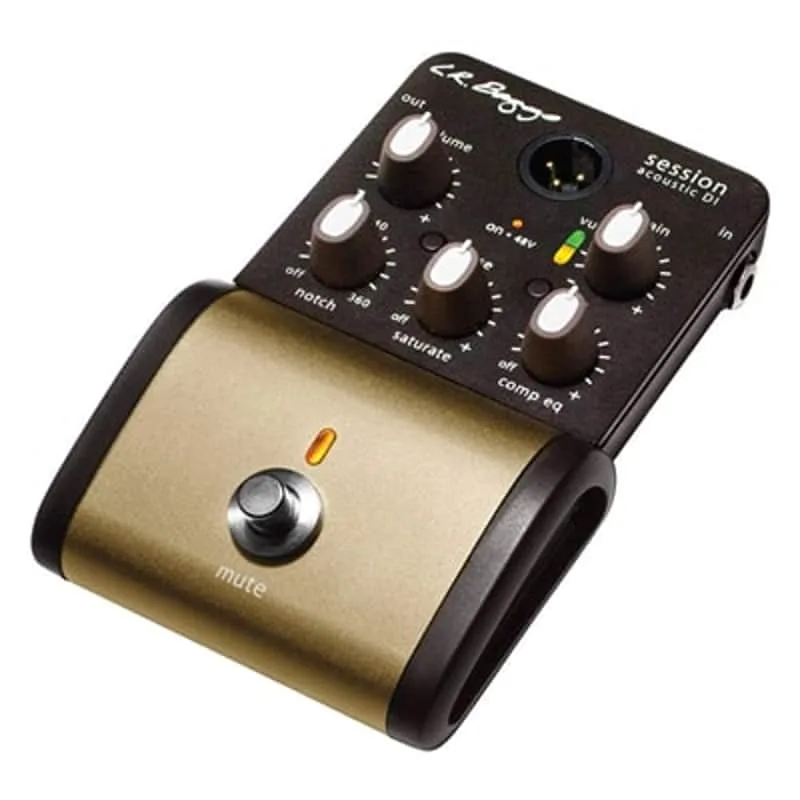
That design puts it in a different category from pedals like the Boss AD-2 Acoustic Preamp or the LR Baggs Session DI, which model or EQ the amplified sound of an acoustic instrument. The Clarity instead takes what your pickup already captures and emphasizes the undertones at the bottom and top of the spectrum. Premier Guitar described it simply as "a frequency expansion device" designed to enhance the acoustic sound qualities of an instrument when amplified4.
The Low and High controls
The pedal has two controls, and they map directly onto the two filters324:
| Control | What it does |
|---|---|
| LOW | Controls the low-frequency variable filter, enhancing undertones at the low end of the spectrum4 |
| HIGH | Controls the high-frequency variable filter, enhancing undertones at the high end of the spectrum4 |
Each pot governs its own filter independently, so you can add depth at the bottom without touching the top end, or vice versa. Because the filters enhance what is already in the signal rather than generating new content, the effect stays tied to the instrument's own character1.
Power: 9V with 18V internal rails
The Clarity runs from a standard 9V DC supply or a battery4. Inside the pedal, that 9V source feeds a bipolar 18V internal supply, which puts plus and minus 9V rails on the active devices1. Peavey says this arrangement gives the circuit a wide dynamic range and prevents input clipping, since the internal voltage is well above what a single 9V supply would allow1.
For a player, the practical point is that you get the headroom of an 18V circuit from the same 9V power as the rest of a pedalboard, and a battery remains an option for playing away from a power supply4.
Built on Peavey's Kosmos technology
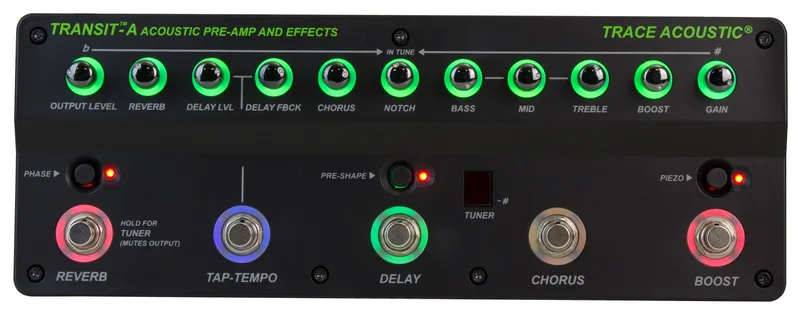
The frequency expansion is achieved through Peavey's proprietary Kosmos technology1. Kosmos is Peavey's own processing approach, and the Clarity is its application in pedal form for acoustic-electric instruments. Trace Elliot has been part of Peavey's operations for years, and the Clarity follows earlier Trace Elliot acoustic pedals such as the Trace Elliot Transit A preamp.
Peavey also emphasizes the physical build, saying "rugged construction and premium components mean you can hit the stage with confidence"1.
Connections and support
The pedal uses 1/4" TRS audio input and output jacks, with a 2.2M input impedance and a 1k output impedance1. The high input impedance suits piezo pickups, which is what most acoustic-electric instruments carry. Peavey offers phone support for the product at 877-732-8391, toll free in the US3.
Videos
Matt Dunn
No Fear Guitar Gear
Questions
Does the Trace Elliot Acoustic Clarity take a battery?
Yes. The pedal runs from a standard 9V DC supply or a battery, and internally it generates a bipolar 18V supply from that source. That means you can power it either way without changing how the circuit behaves.
Is the Acoustic Clarity true bypass?
Yes. Peavey's product page lists true bypass operation for the pedal, so when it is switched off your signal passes through without the circuit in the path.
Does the Acoustic Clarity change my volume level?
No. The input and output gains are fixed at unity, so the pedal does not boost or cut your level. What the LOW and HIGH filters do is enhance the natural undertones at both ends of the spectrum, adding depth and dimension rather than volume.
Can the Acoustic Clarity be used with an acoustic bass?
The pedal is described as a frequency expansion device designed for use with most acoustic-electric instruments, not only acoustic guitar. That wording covers acoustic-electric instruments generally, which includes acoustic basses with a pickup.
Sources (4)
- Trace Elliot Acoustic® Clarity™ Pedal, Peavey (peavey.com)
- Gear News: Trace Acoustic® Clarity™ Pedal, Bass Musician Magazine, 2025-11-10
- Trace Elliot Acoustic® Clarity™ Pedal, Peavey (peavey.com)
- Trace Acoustic Debuts New Clarity Pedal, Premier Guitar, 2025-11-04