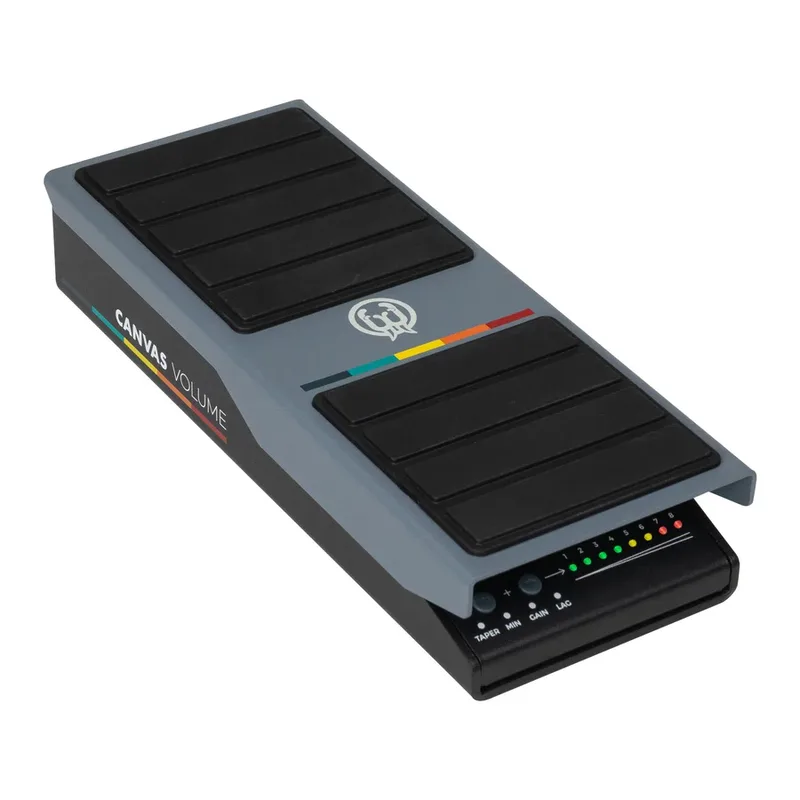


The Canvas Volume is Walrus Audio's take on the volume pedal, launched in early 20261. Where a traditional volume pedal runs the signal through a string-and-potentiometer mechanism, the Canvas Volume uses a contactless position sensor and analog VCAs (Voltage Controlled Amplifiers) to control level, so there is nothing mechanical to wear out or go scratchy2. It is a powered, full stereo volume controller with eight selectable taper curves, a dedicated tuner output and up to a 9dB boost, at a list price of $299.9923.
Walrus Audio describes the result as "the feel and tone players expect from a classic volume pedal, paired with modern consistency and control"2. Guitar Pedal X positioned it as a utility for the start or end of the chain, the two places most players put a volume pedal4.
What the Canvas Volume does
A volume pedal sits in your signal chain and lets you raise and lower your level with your foot, for swells, fade-outs or quick silencing between songs. The Canvas Volume covers that job in three routing modes2:
- Mono In / Mono Out with a dedicated Tuner Out for silent tuning
- Stereo In / Stereo Out for stereo rigs
- Mono In / Dual Mono Out, feeding two destinations from one input
It is housed in a rugged steel and aluminum chassis that Walrus Audio says balances durability with pedalboard-friendly weight2, measuring 1.9" high by 3.6" wide by 8.9" deep (48 by 91 by 225mm) and weighing 2.2 lbs23. Guitar World's reviewer found the look utilitarian, an understated gray-and-black colorway with a rainbow strip marking the Canvas series3. All Walrus Audio products carry a limited lifetime warranty2.
How it works: a position sensor and analog VCAs
The core of the pedal is a precision position sensor that tracks the rocker's movement and translates it into volume changes through high-quality analog VCAs25. The signal path itself is all-analog; the digital side is the control layer that reads the sensor and drives the amplifiers2.
Guitar World's reviewer put it plainly:
"the Canvas Volume ditches the old-school string-and-pot setup for a cutting-edge position sensor and pro-grade VCAs"3
The practical benefit is reliability. As Walrus Audio puts it, "No strings. No pots. No gears. Nothing to wear out, get scratchy, or fail mid-set"2. String-and-pot pedals like the Ernie Ball VPJR depend on a physical cord and potentiometer that eventually need replacement; the Canvas Volume removes those parts entirely.
The controls: Taper, Min, Gain and Lag
The pedal has four knobs, Taper, Min, Gain and Lag4, with the taper curve itself selected through smart front-panel controls4.
| Control | What it does |
|---|---|
| Taper | Selects which of the eight volume curves the pedal follows across its sweep2 |
| Min | Sets the volume level at the heel-down end of the sweep4 |
| Gain | Sets the toe-down output level, from unity gain up to +9dB in 3dB steps3 |
| Lag | Controls how quickly the volume responds to pedal movement4 |
The Gain control is what lets the Canvas Volume double as a boost: set the toe-down level above unity and the full sweep ends in up to 9dB of clean level3. Guitar World lists the "up to a 9dB boost" among the pedal's features3.
Eight tapers modeled on classic volume pedals
The taper defines how volume changes across the pedal's sweep, and Walrus Audio calls it "the key to dialing in the perfect feel"2. Rather than one fixed curve, the Canvas Volume offers eight: a custom Canvas taper plus seven modeled from classic volume pedals2. Guitar World's review counted seven models of popular volume pedals including Ernie Ball, Boss and Lehle among the eight available tapers in testing3.
The tapers break down into three groups2:
- Taper One: the custom Canvas taper
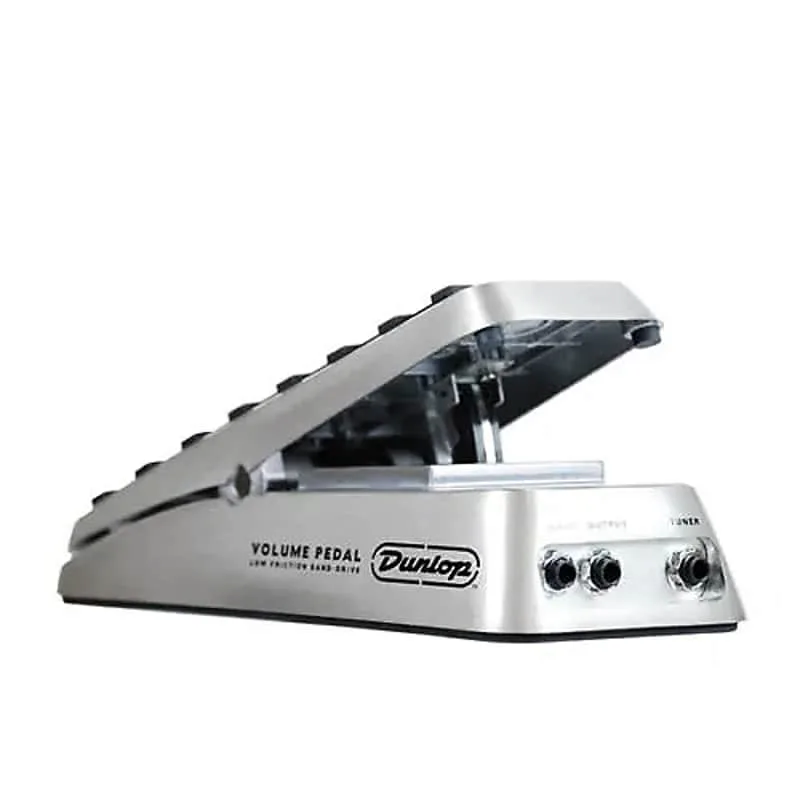
- Tapers 2 to 6: traditional audio tapers modeled after popular volume pedals, including Taper Four (Dunlop model)
- Tapers 7 and 8: models from pedals with a more linear response favored by pedal steel players, including Taper Seven (Hilton model) and Taper Eight (Goodrich model)
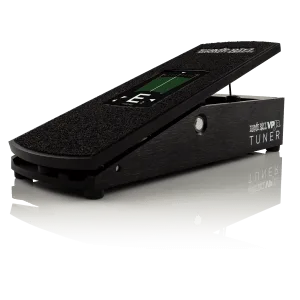
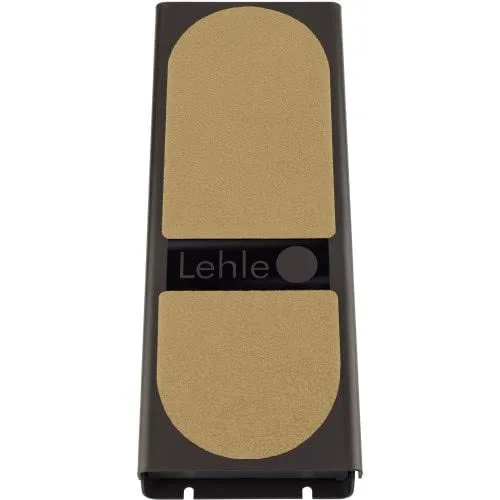
That last group matters for pedal steel players, who generally prefer a more linear response so the volume rises evenly across the sweep. Players coming from a Dunlop DVP1 or a Lehle Mono Volume can pick the taper that matches the feel they already know, and the modeled lineup also includes Ernie Ball and Boss pedals23.
Power and connections
The rear panel carries In Left, In Right, Out Left, Out Right, Tuner, a 9V DC power input and a USB-C port4. Input impedance is 1M Ω, output impedance is 330 Ω, and frequency response is 20Hz to 20kHz2.
The Canvas Volume requires an isolated 9V DC, center-negative supply delivering 300mA minimum2. That draw is high for a volume pedal, and Guitar Pedal X attributed it to the digital controls4. There is no battery option, and the isolated requirement means it should not share a daisy chain with other pedals.
The USB-C port is for firmware updates via walrusaudio.io2, not for power or audio.
What reviewers said
Guitar World's review rated the build quality at four stars out of five, finding the chassis "reassuringly solid in hand and underfoot" with smooth, precise action and no play in the mechanism3. The one criticism was the side-mounted jacks, which the reviewer found made cable management awkward, preferring top-mounted jacks3.
Pedal of the Day built a demo pedalboard around the Canvas Volume and reported on how it fit into a working chain5:
"I love the way it fits right in with the rest of my gear, and the dual outs really work well with my modulation, delay and reverb pedals"5
Guitar Pedal X called the pedal "somewhat uniquely innovative, but relatively pricey @ $300" at launch4. Walrus Audio has also sold blemished units at a discount, described as cosmetic-only scratches or dents in the finish; that listing was sold out as of October 20266.
Videos
walrusaudioeffects
Mad Steex
John Nathan Cordy
Questions
Is the Walrus Audio Canvas Volume true bypass or buffered?
It is buffered, not true bypass. Guitar World's review lists the bypass type as buffered. Because the pedal is powered and always in the signal path, the buffer is part of how it maintains a consistent signal through the analog VCAs.
Does the Canvas Volume have a tuner output?
Yes. In Mono In / Mono Out mode it has a dedicated Tuner Out for silent tuning between songs. The tuner jack is one of the pedal's rear ports alongside the left and right inputs and outputs, the 9V DC power input and the USB-C port.
How much current does the Walrus Canvas Volume draw?
Walrus Audio specifies an isolated 9V DC, center-negative supply delivering 300mA minimum. That is high for a volume pedal, and Guitar Pedal X noted it is a consequence of the digital controls that manage the taper curves and position sensing.
Can the Canvas Volume boost the signal?
Yes. The Gain control lets you set the toe-down output at unity or up to a 9dB boost, and Guitar World lists the boost capability among its features. It works as a clean volume pedal at unity or as a lead boost at the toe-down end of the sweep.
What is the USB-C port on the Canvas Volume for?
The USB-C port is for firmware updates via walrusaudio.io. Walrus Audio says it is not a power input or an audio connection; it exists so the pedal's internal software can be updated as new features or taper models are released.
Does the Canvas Volume use a potentiometer?
No. It uses a contactless precision position sensor to track pedal movement, which is then translated into volume changes by analog VCAs. There are no strings, pots or gears inside, so there is nothing to wear out or become scratchy over time.
Sources (6)
- Walrus Audio Canvas Expression Pedal: The Most Control ever?, gearnews.com, 2026-08-18
- Canvas Volume Pedal, Walrus Audio
- Walrus Audio Canvas Volume review, Guitar World, 2026-03-19
- Guitar Pedal X, Guitar Pedal X, 2026-01-19
- Walrus Audio Canvas Volume Pedal, Pedal of the Day, 2026-01-29
- Canvas Volume Pedal, Walrus Audio