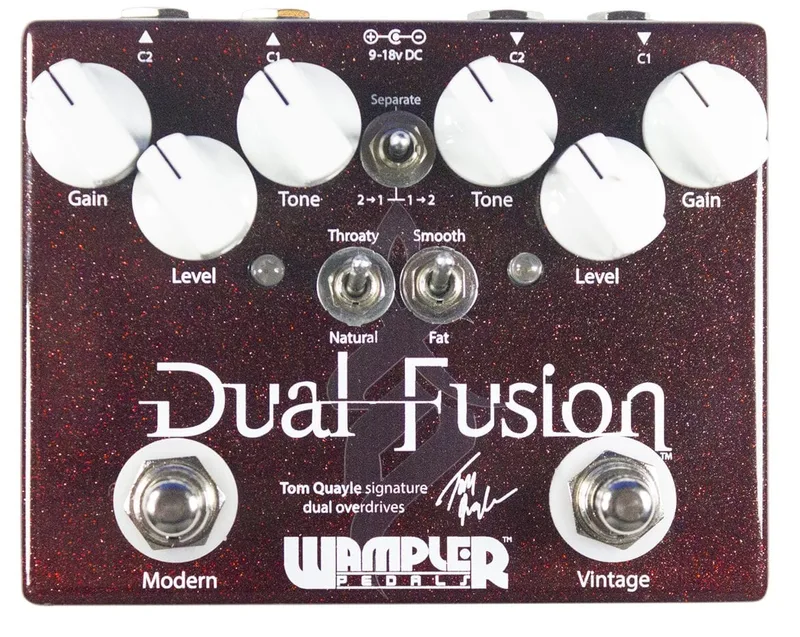


The Wampler Dual Fusion is a dual-channel analog overdrive pedal from Wampler, developed with British fusion guitarist Tom Quayle. It puts two independent drive circuits in one box, each with its own gain structure, and lets you stack them in either order or run them as two separate pedals. Wampler calls it the first overdrive pedal specifically voiced for the new breed of fusion guitarists, while adding that it is versatile enough to find a place on any board in any genre1.
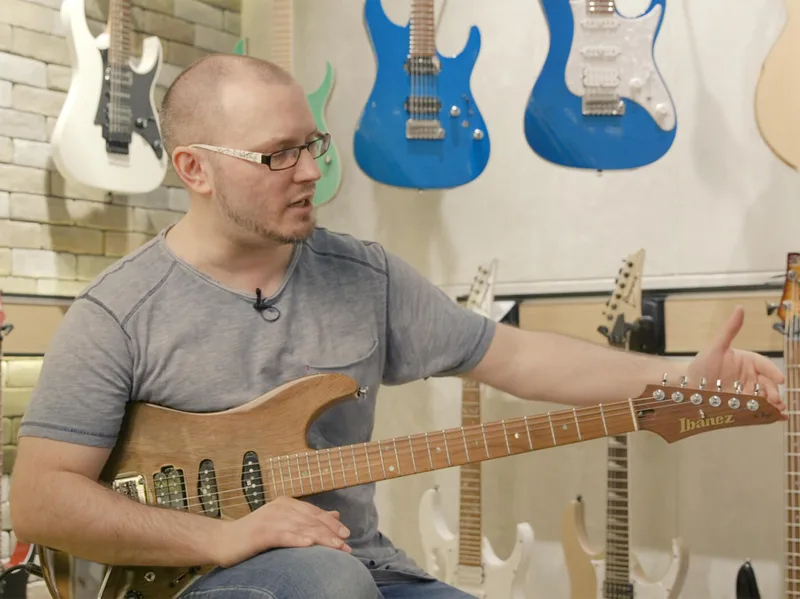
The two channels are labeled Vintage and Modern. Channel one, the Vintage channel, carries a warm, amp-like overdrive character, while channel two, the Modern channel, is darker and thicker with more gain on tap2. Tom Quayle uses the pedal live and in the studio1.
The controls and voicing switches
Each channel works as a pedal in its own right, with volume, tone and gain controls, and each circuit has two voicing options1. On top of that sit the routing options that set the Dual Fusion apart from most two-in-one drives.
| Control or switch | What it does |
|---|---|
| Volume, tone, gain (per channel) | Standard gain structure for each of the two circuits1 |
| Voicing switch, channel one | Down or fat position, used by Pete Thorn for a mid-gain drive setting2 |
| Voicing switch, channel two | Normal and throaty positions; throaty adds a mid-range boost to cut through2 |
| Stacking order switch | Channel 1 into 2, channel 2 into 1, or the two circuits completely separate1 |
In Pete Thorn's demo video for Wampler, the throaty position on channel two gave "more like a mid mid-range boost type thing in order to to cut" compared with the normal voicing2. Thorn also demonstrated the two channels stacked, Vintage into Modern, describing the result as a big singing lead tone where high notes above the 12th fret stayed fat rather than screechy2.
"you end up with this great big singing sustaining searing lead tone I love it"
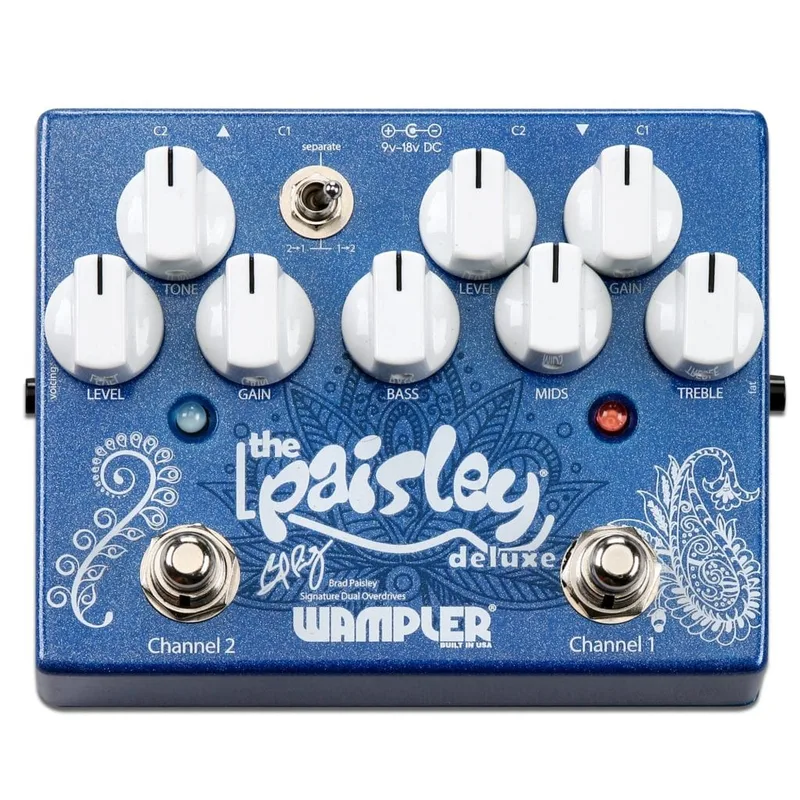
The switchable stacking order is the pedal's headline feature for pedalboard builders. Because the two circuits can be completely separated, each side can sit at a different point in a switching rig, and Wampler says this routing later inspired the signal routing on the Paisley Deluxe13.
History: Euphoria and Paisley Drive circuits, developed with Tom Quayle
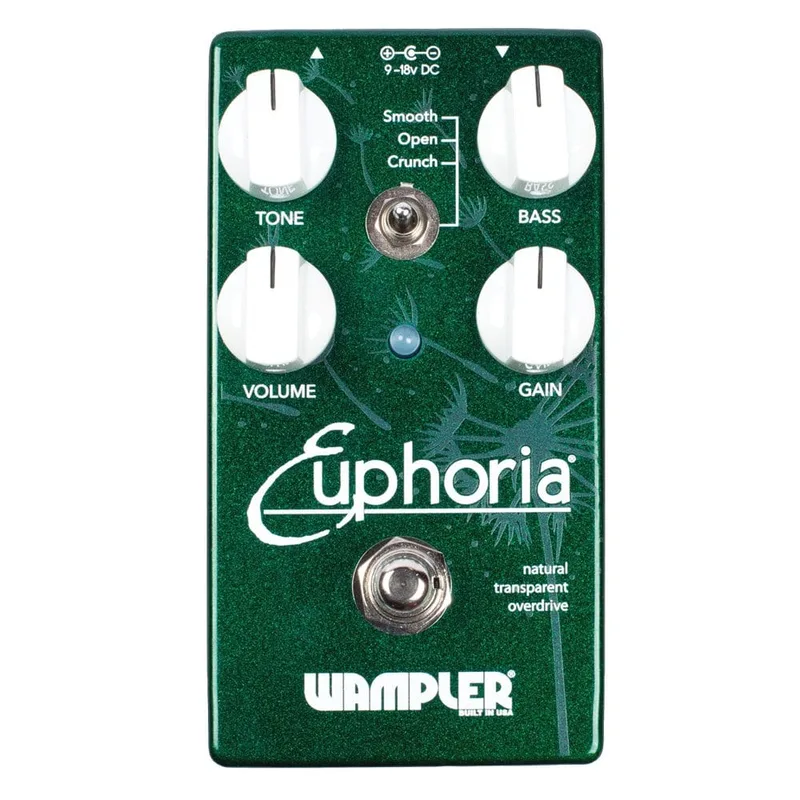
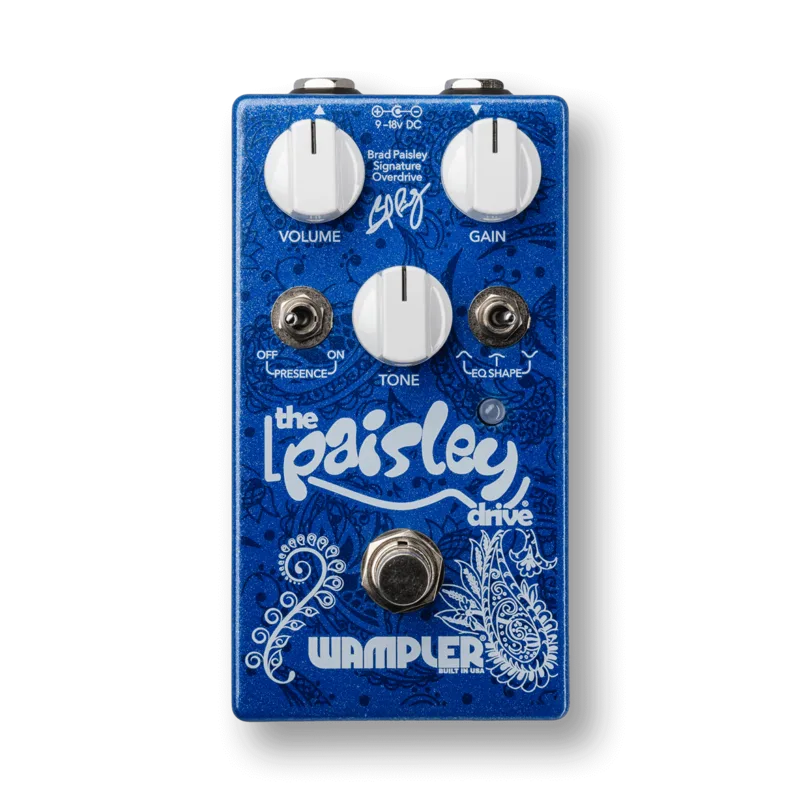
The Dual Fusion began at NAMM, where a concept was born that took just over 12 months to realize45. When Wampler first met Tom Quayle in early 2012, he was already stacking the Wampler Euphoria and Paisley Drive together to get the tones he needed1. The Dual Fusion took those two circuits, highlighted their most usable tones, and modified them extensively so they would stack perfectly in one box14.
The parent circuits have their own reputations. The Euphoria, designed by Brian Wampler, uses completely original circuitry rather than a clone of an existing design, and is listed by the maker with relay true bypass678. The Dual Fusion itself uses buffered bypass instead1.
MusicRadar announced the Tom Quayle Signature Dual Fusion at NAMM 2013 as a two-channel distortion pedal with dual inputs, allowing players to dial in two distinct tones and switch between them4. Premier Guitar also reported it as coming soon from Wampler Pedals9.
What reviewers said
MusicRadar's reviewer Trevor Curwen, reviewing a pedal designed for modern fusion player Tom Quayle, found the Modern channel offered "a more aggressive vibe with loads of gain" that supports legato playing10. His overall verdict was that it is a "Useful dual overdrive that's not just for fusion players."10
"The major improvement is just how amp-like the response is. In that department I have never played a pedal that is as good as this."
Pete Thorn, who used the pedal for the guitar tracks and solo in his demo video, called it "just a fantastic pedal and uh I recommend it highly"2.
Thorn's demo walks through both channels separately and stacked: channel one set with its voicing switch in the fat position for a mid-gain drive, channel two as the darker modern voice, and the two together for lead work2.
Power and practical details
The Dual Fusion runs from a 9v power jack or an internal battery, drawing between 16mA at 9v and 24mA at 18v1. The LED flashes three times when battery power is getting low, giving a warning before the battery dies1. Jacks are top mounted, which suits tight pedalboards1.
Videos
Wampler Pedals
Wampler Pedals
Questions
Is the Wampler Dual Fusion true bypass?
No. The Dual Fusion uses buffered bypass rather than true bypass. That differs from the Wampler Euphoria, which the maker lists as relay true bypass. A buffered bypass keeps the signal path active when the pedal is off, which some players prefer on long cable runs.
Does the Wampler Dual Fusion take a battery?
Yes. It has both a battery connection and a 9v power jack. Power draw is between 16mA at 9v and 24mA at 18v, and the LED flashes three times when battery power is running low, so you get a warning before the battery dies mid-gig.
Is the Dual Fusion only for fusion players?
No. Wampler describes it as the first overdrive pedal specifically voiced for the new breed of fusion guitarists, but says it is versatile enough to find a place on any board of any genre. MusicRadar's reviewer called it a useful dual overdrive that's not just for fusion players.
What does the throaty switch do on the Dual Fusion?
The throaty switch is a voicing option on channel two, the Modern channel, alongside the normal position. In Pete Thorn's demo for Wampler, the throaty setting added a mid-range boost type effect, helping the sound cut through, while the normal position left the channel's darker, thicker character alone.
Can the Dual Fusion change which channel comes first?
Yes. The stacking order is switchable: channel 1 into channel 2, channel 2 into channel 1, or the two circuits can be run completely separate. That routing flexibility later inspired the signal routing on Wampler's Paisley Deluxe.
Which Wampler pedals is the Dual Fusion based on?
Its two circuits are based on, but completely modified from, the Wampler Euphoria and Paisley Drive overdrives. Tom Quayle was already stacking those two pedals together when he met Wampler in early 2012, and the Dual Fusion put heavily modified versions of both circuits in one box.
Sources (10)
- Tom Quayle: Dual Fusion, Wampler Pedals, 2026-10-15
- Wampler Dual Fusion Overdrive, demo by Pete Thorn, youtube.com, 2013-04-16
- Brad Paisley: Paisley Deluxe, Wampler Pedals, 2026-08-16
- NAMM 2013: Wampler launches Tom Quayle Signature Dual Fusion, MusicRadar, 2013-01-24
- NAMM 2013: Wampler Tom Quayle Signature Pedal Demo (VIDEO), Guitar Interactive Magazine, 2013-01-31
- Wampler Euphoria Overdrive, Pedal of the Day (www.pedal-of-the-day.com), 2015-03-25
- 6 Best Dumble Style Pedals For 2026 (Includes Budget Options), Tone Island (toneisland.com), 2026
- Euphoria Overdrive, Wampler Pedals, 2026-08-18
- Wampler Launches Tom Quayle Dual Fusion Pedal, Premier Guitar, 2013-01-23
- Wampler Dual Fusion review, MusicRadar, 2014-02-13
 Brad Paisley
 Tom Quayle