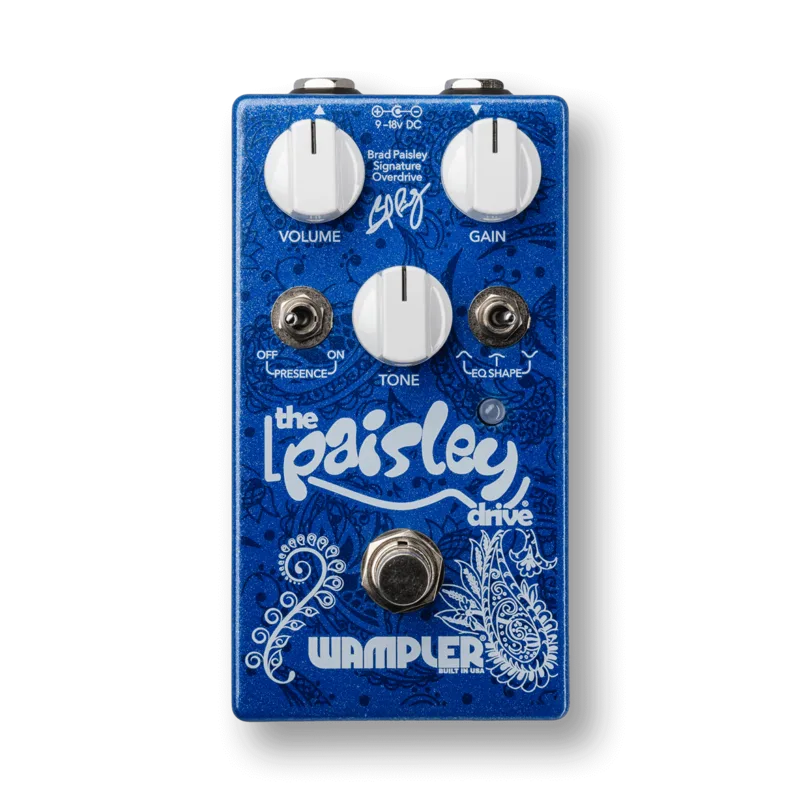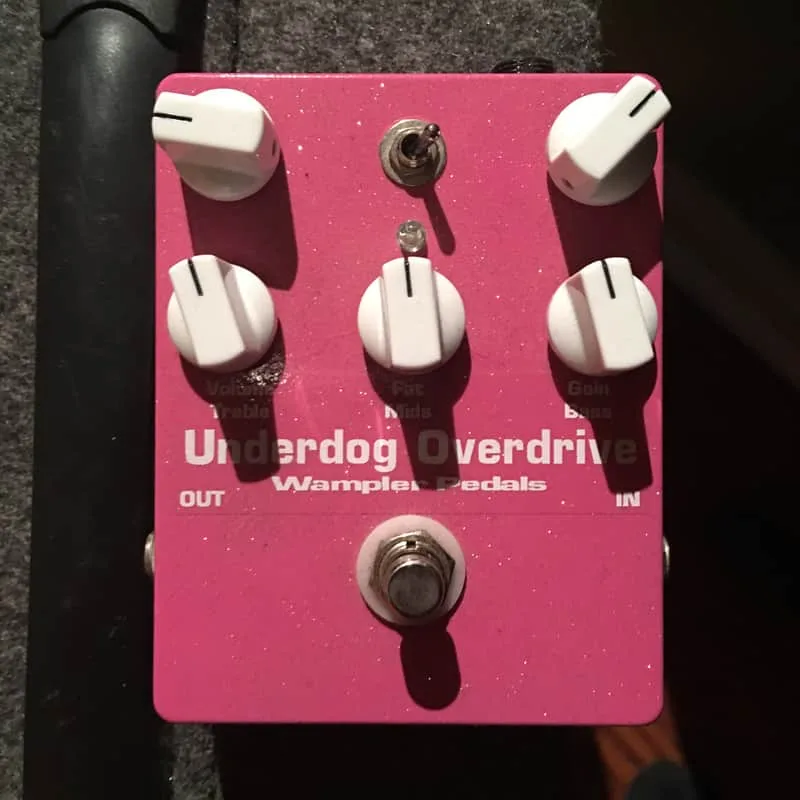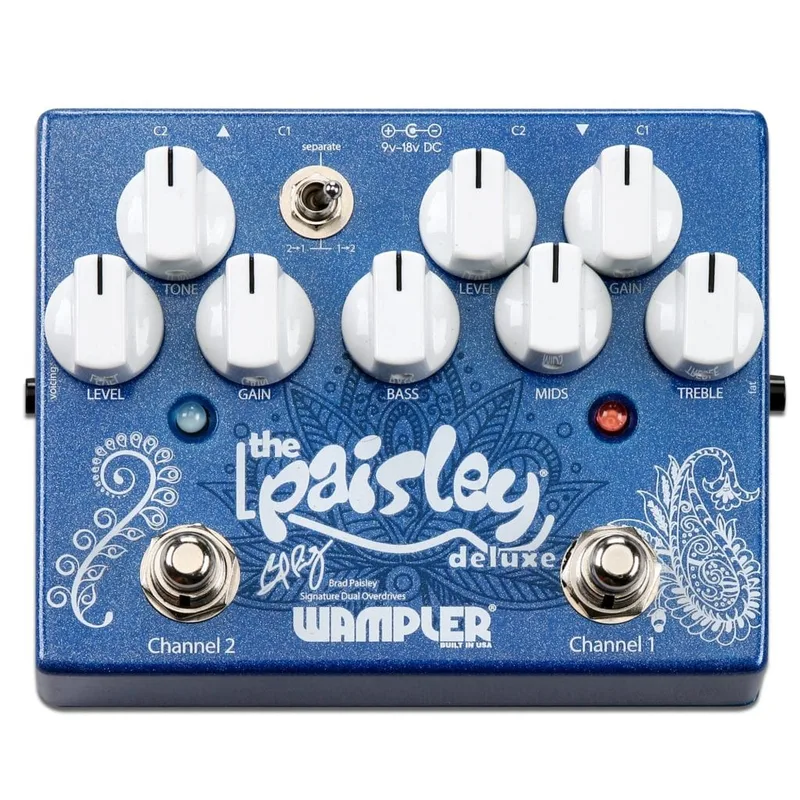


The Wampler Paisley Deluxe is a dual overdrive pedal that puts two of Brad Paisley's favorite Wampler circuits in one enclosure: the Paisley Drive, his signature overdrive, and the Underdog, a pedal Wampler discontinued years ago12. Channel 1 recreates the Underdog, while Channel 2 is the same versatile, amp-like drive as the Paisley Drive3. Each channel can be used on its own, or the two can be stacked in either order for what Wampler describes as "an extra dimension of gain"41.
Wampler built the pedal around Paisley's own tones, and Paisley himself collaborated with Brian Wampler on it45. He uses the Underdog side for heavier parts, the Paisley Drive side on its own, and both together2.
A Paisley Drive and an Underdog in one pedal
The two sides of the pedal have distinct jobs. Channel 1 is a faithful recreation of the Underdog, the discontinued Wampler overdrive Paisley keeps several examples of5. Delicious Audio characterized its sound as the Underdog's "Nobels-like grit"3. Channel 2 is a refined Paisley Drive, the amp-like drive Wampler developed as Paisley's signature pedal56.
The Paisley Drive itself is not only a country pedal. Wampler notes it is based on Brad's favorite amps and pedals and can cover blues and rock, and when scooped and pushed, metal7. In a Sweetwater demo, Paisley described how he splits the work between the two sides:
"I use that for the heavier stuff and The Paisley Drive"
He and Mitch Gallagher also noted that both circuits stay tight at high gain, suiting the bright, British-flavored Dr. Z amps Paisley plays, since the pedals feel like a natural overdriven amp rather than adding fizz2.
The controls
Each channel has its own footswitch6, and the two control sets are quite different:
| Channel | Controls | Extra switches |
|---|---|---|
| Channel 1 (Underdog) | Bass, middle and treble (full 3-band active EQ), level and gain81 | Fat switch on the side9 |
| Channel 2 (Paisley Drive) | Level, Gain and Tone5 | Side voicing switch for mid-scoop and elevation9 |
The Fat switch on Channel 1 gives the signal a slight gain boost along with more low-mid content, for what Wampler calls a much fatter and fuller tone1. A Voicing switch on the left side of the pedal adds a mid boost5. On That Pedal Show, the hosts also spotted that the pedal can be switched between true bypass and buffered operation, which they found notable for a dual drive8.
Routing: 2>1, Separate or 1>2
A three-way toggle between the two channels sets the routing, labeled 2>1, 1>2 and Separate35. Each channel has its own input and output jack, labeled C1 and C2, with the channel inputs on the right side of the pedal and the outputs on the left35.
- 1>2: with both channels on, the guitar is routed into channel 1, then channel 2. The guitar cable goes to the C1 input jack and the output cable to the C2 output jack3.
- 2>1: with both channels on, the guitar is routed into channel 2, then channel 1. The guitar cable goes to the C2 input jack and the output cable to the C1 output jack3.
- Separate: the pedal works as two individual pedals, each with its respective input and output jack3.
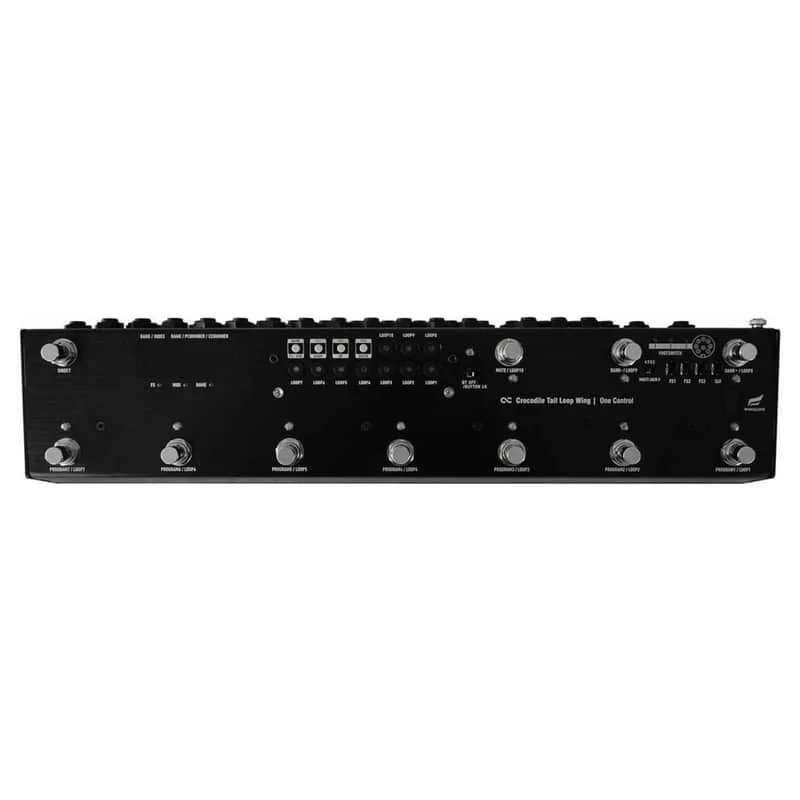
Because the channels are individually selectable via pedal switchers, the Separate mode makes the pedal straightforward to integrate into switcher-based rigs3. MusicPlayers' reviewer found the 2>1 setting was their favorite sound of the pedal, giving a more aggressive yet still controllable and articulate Channel 1 sound they enjoyed mostly for lead tones5.
History: Brad Paisley and the return of the Underdog
Wampler's relationship with Brad Paisley goes back well before the Paisley Drive14. Paisley had been using Wampler's Ego, Underdog and Faux AnalogEcho pedals when his tech at the time, Chad, told Brian Wampler that Brad was not entirely content with his tone and suggested working together on the perfect overdrive for him to record and tour with7. The Paisley Drive that came out of that collaboration launched in November 2010 at $219.97, with a $179.97 introductory price for the first week10.
The Underdog, one of Paisley's earlier Wampler pedals, was later discontinued5. The Paisley Deluxe brought its circuit back: as Sweetwater's demo put it, "Wampler's long-since-discontinued Underdog Overdrive" is the reason "Wampler is bringing back the Underdog circuit in the great-sounding and flexible Paisley Drive Deluxe"2. Paisley himself nicknamed the pedal "PaisleyDog", which Gearnews observed fits, since it is "a bit of a mongrel of an overdrive"9.
What reviewers said
MusicPlayers reviewed the pedal in October 2018 and gave it 3.1 stars overall5. The reviewer liked the stacking, calling the 2>1 mode their favorite sound of the pedal for its aggressive but controllable lead tones5, and praised the relay-style switching and solid metal construction5. The main criticism was the lack of MIDI: the reviewer wished the Paisley Deluxe had some basic MIDI functionality for easy integration into big rigs5.
The single Paisley Drive has its own review history. MusicRadar praised its "great range of features" and "superb TS-derived sounds"11, and the full review appeared in Guitarist issue 338, February 201112.
Videos
Wampler Pedals
Rabea Massaad
Questions
Is the Wampler Paisley Drive Deluxe true bypass?
Yes. Wampler lists the Paisley Deluxe as Relay True Bypass, and on That Pedal Show the hosts found it can be switched between true bypass and buffered operation. The single Paisley Drive pedal uses 3PDT true bypass instead, so the two pedals differ slightly in how their switching is implemented.
What is the difference between the Paisley Drive and the Paisley Drive Deluxe?
The Paisley Drive is a single overdrive with Volume, Gain and Tone controls plus Presence and Mid Contour switches. The Deluxe is a dual overdrive: Channel 2 is a refined Paisley Drive with Level, Gain and Tone, while Channel 1 recreates the discontinued Underdog circuit with a full three-band EQ and a Fat switch. The Deluxe also lets you stack the two channels in either order.
Can I use the Paisley Drive Deluxe as two separate pedals?
Yes. Each channel has its own input and output jack, labeled C1 and C2, and each channel is footswitchable. With the routing toggle set to Separate, the pedal works as two individual overdrives, which also makes it easy to integrate into pedal switcher-based rigs.
What does the fat switch do on the Underdog side?
According to Wampler, the Fat switch on Channel 1 gives the signal a slight gain boost along with more low-mid content, producing a much fatter and fuller tone. It sits on the side of the pedal next to the Underdog channel's three-band EQ, volume and gain controls.
How much does the Paisley Drive Deluxe cost?
Wampler lists the Paisley Deluxe at $259.97. At launch in November 2017 it was also $259.97, which Gearnews noted was only 40 USD more than the single Paisley Drive, listed at $219.97. The UK launch price was £249.
Can the Wampler Paisley Deluxe run on a battery?
Yes. The pedal includes a battery connection alongside its 9V power jack, and the LED flashes three times when battery power is running low. It can also run up to 18V from a power supply for more clean headroom, drawing 32.8 mA at 9V and 39.8 mA at 18V.
Sources (12)
- Brad Paisley: Paisley Deluxe, Wampler Pedals, 2026-08-16
- Wampler Paisley Drive Deluxe Demo with Brad Paisley, Sweetwater, 2019-02-20
- Wampler Paisley Drive Deluxe, Delicious Audio, 2017-10-05
- Brad Paisley & Wampler Pedals, Wampler Pedals, 2026-08-11
- Wampler Tumnus, Ethereal and The Paisley Deluxe, MusicPlayers.com, 2018-10-31
- Wampler's Paisley Deluxe is “the ultimate Brad Paisley pedal”, MusicRadar, 2017-11-14
- Brad Paisley: Paisley Drive, Wampler Pedals, 2026-07-06
- TPS Pick'N'Mix, That Pedal Show (YouTube), 2017-10-23
- Wampler Paisley Drive Deluxe: Brad Paisley, The Underdog and the Paisley Drive, gearnews.com, 2017-11-15
- Wampler Pedals Releases Paisley Drive, Premier Guitar, 2010-11-01
- Wampler Paisley Drive review, MusicRadar, 2011-02-23
- Wampler Paisley Drive: Demo, MusicRadar, 2011-01-14
 Brad Paisley
 Tom Quayle