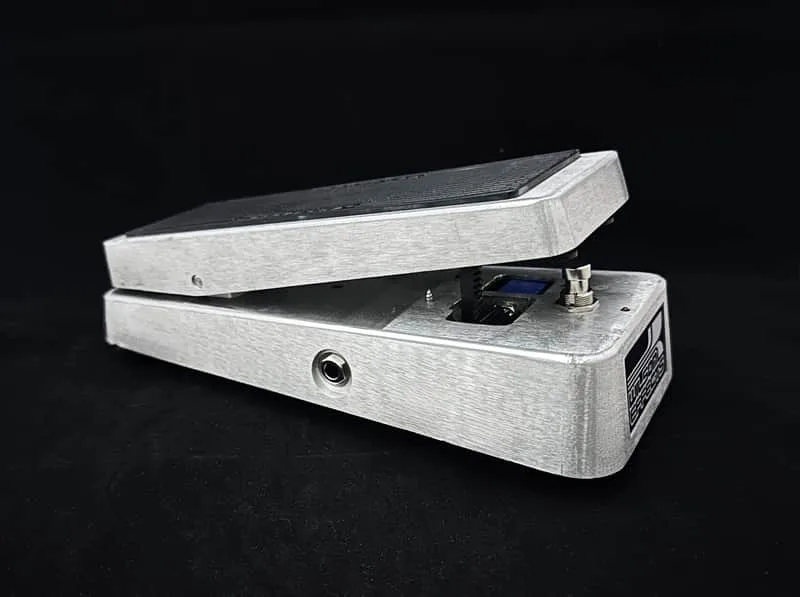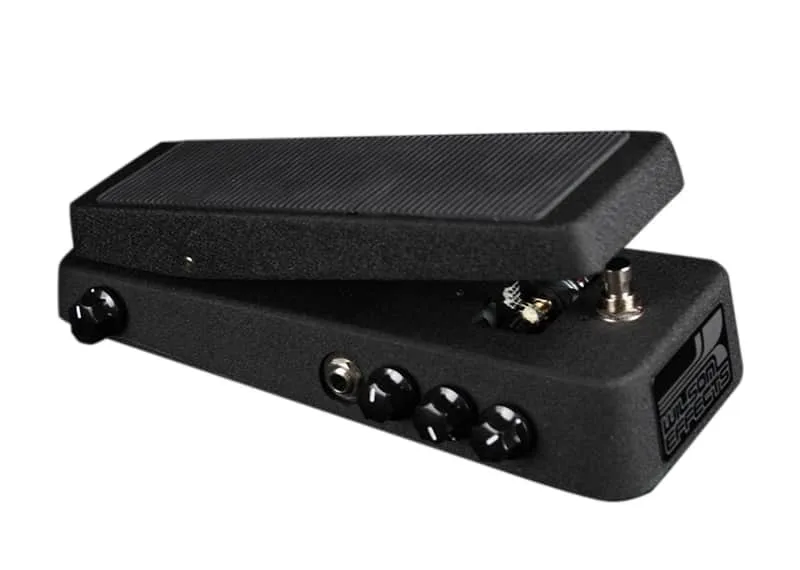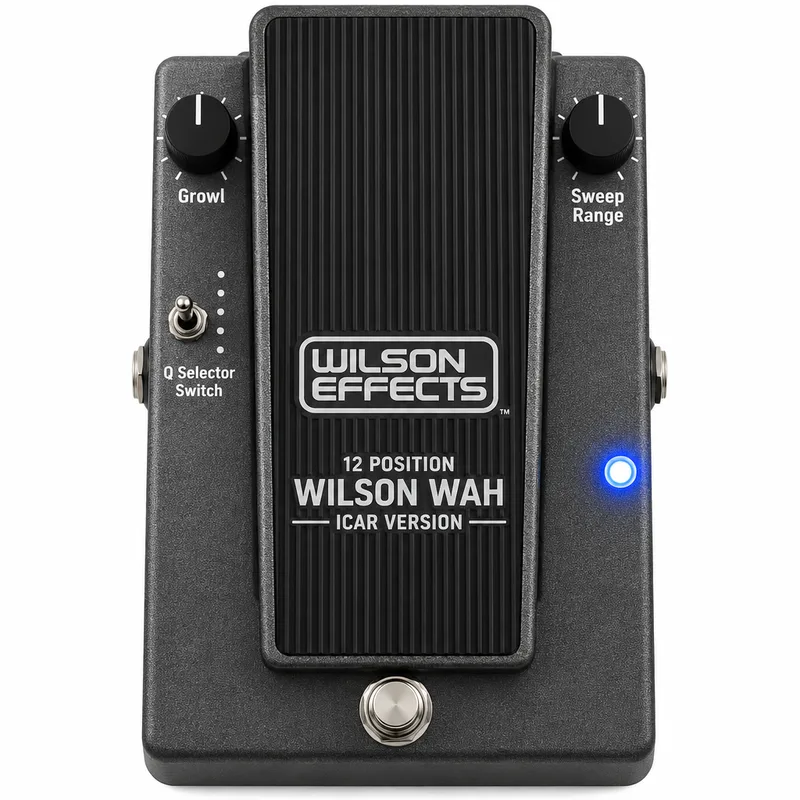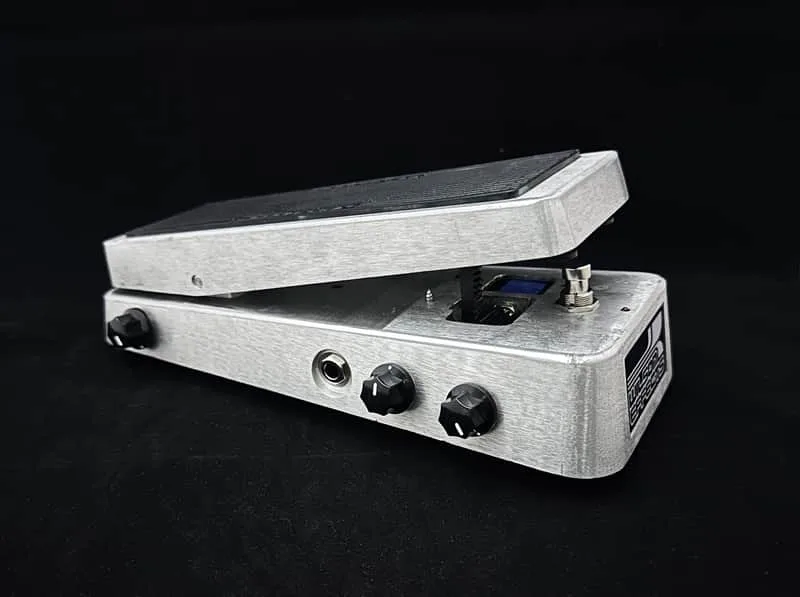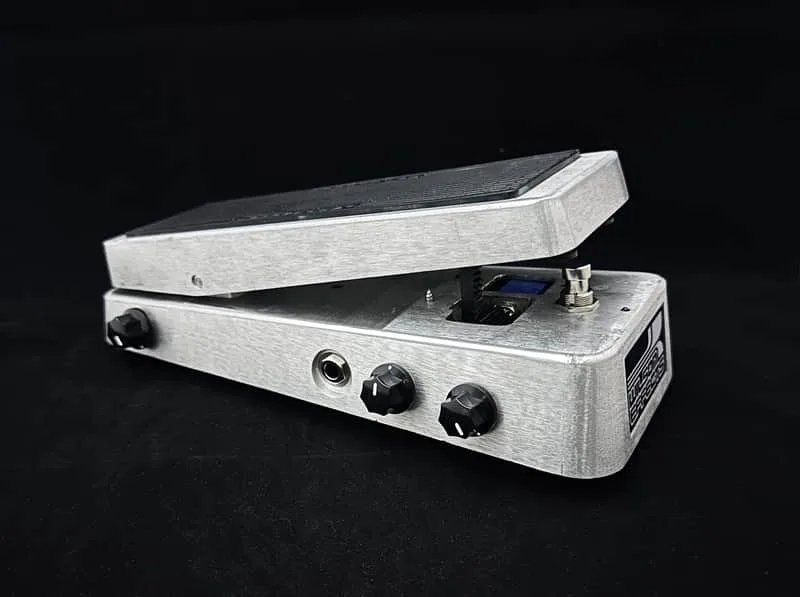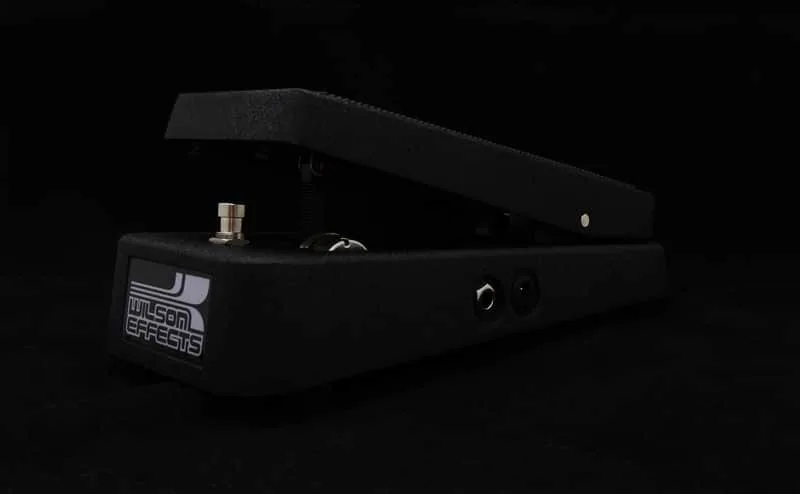
The Wilson Effects Clyde Signature Wah is a wah pedal built as, in the maker's words, "an ode to the vintage Clyde McCoy Signature Wah Pedal." Wilson Effects says the circuit is meticulously crafted to the authentic vintage specifications of the original Clyde McCoy Wah using NOS (new old stock) components, and describes its character as "Fuzz Friendly and full of Mojo."1
The Clyde McCoy name goes back to the beginning of the wah itself. The first wah made available commercially came out of a collaboration between Vox and Clyde McCoy, a noted jazz trumpeter who approached the company wanting something that mimicked the tone of a muted brass instrument and could be used with a keyboard.2 Guitar World's Nick Wells described McCoy as "a trumpet player, well known for his use of the mute to create wah'd effects."3
Circuit and controls
Wilson Effects specifies the parts behind the pedal's voicing:
- BC109B transistors for classic wah response1
- NOS Italian ARG 250v capacitors for rich, warm tone1
- Fuzz-friendly output buffer to deal with impedance issues caused by some fuzz pedals and overdrives1
- Input gain/level control to tailor the output to your needs1
The input gain/level control is the practical addition here: it lets you set how hard the wah drives whatever comes after it, which matters when the next pedal is a fuzz or an overdrive. The output buffer addresses a known problem in wah-and-fuzz chains, where impedance mismatches between the two circuits can make fuzz pedals behave badly.1
Versions
Wilson Effects offers the Clyde Signature Wah in two finishes: a Black Version and a Brushed Aluminum Version, sold as the Wilson Effects Clyde Signature Brushed Aluminum.14
Power, build and warranty
The pedal runs on a standard 2.1mm center-negative power supply or a high-quality alkaline battery, so it fits a standard pedalboard power setup without adapters.1 Wilson Effects states that each pedal is hand-built in the U.S.A. and comes with a one-year warranty on parts and labor.1
Videos
Wilson Effects
Questions
Is the Wilson Clyde Signature Wah true bypass?
Yes. Wilson Effects states the Clyde Signature Wah uses true bypass switching, which the maker describes as delivering uncompromised tone when the pedal is off. True bypass means the wah's circuit is removed from the signal path entirely when disengaged, so it will not load down your signal chain, though the pedal also includes a fuzz-friendly output buffer that comes into play when the effect is engaged.
Does the Wilson Clyde Signature Wah work well with fuzz pedals?
Wilson Effects describes the pedal as fuzz friendly. Some fuzz pedals and overdrives cause impedance problems when placed after a wah, so the Clyde Signature Wah includes a fuzz-friendly output buffer specifically to deal with those impedance issues. Wilson also describes the pedal's overall character as fuzz friendly and full of mojo.
Does the Clyde Signature Wah take a battery?
Yes. According to Wilson Effects, the Clyde Signature Wah operates on a standard 2.1mm center-negative power supply or a high-quality alkaline battery, so it can run either way depending on how your board is set up.
Where is the Wilson Clyde Signature Wah made?
Wilson Effects states that each pedal is hand-built in the U.S.A. The company also backs the Clyde Signature Wah with a one-year warranty on parts and labor.
What warranty does the Wilson Clyde Signature Wah have?
The Clyde Signature Wah comes with a one-year warranty on parts and labor, according to Wilson Effects. The company notes that each pedal is hand-built in the U.S.A., and the warranty applies to the pedal as sold by the maker.
Sources (4)
- Clyde Signature Wah, Wilson Effects
- Xotic Wah XW-1 review, Guitar.com, 2016-09-05
- Dunlop Cry Baby Bass Wah: the most recognizable effects pedal ever made?, Guitar World, 2023-04-05
- Clyde Signature Brushed Aluminum, Wilson Effects