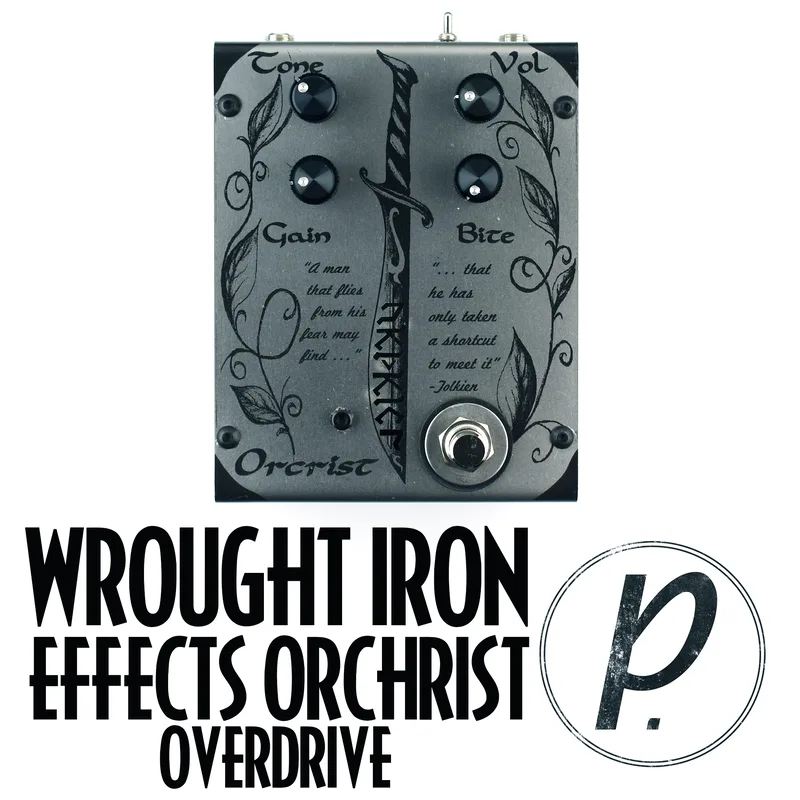


The Orcrist Overdrive is a guitar effects pedal from Wrought Iron Effects, named after the Elven sword in The Hobbit. It is a bipolar transistor overdrive, a design that uses transistors rather than the op-amp chips found in many overdrive pedals. Pedal of the Day, reviewing it in August 2017, described it as voiced for lots of low-mids, lows and low harmonics while retaining warmth and presence throughout, and noted that unlike a lot of op-amp overdrives, it gives lots of break-up without the high-gain sizzle that can sometimes occur1.
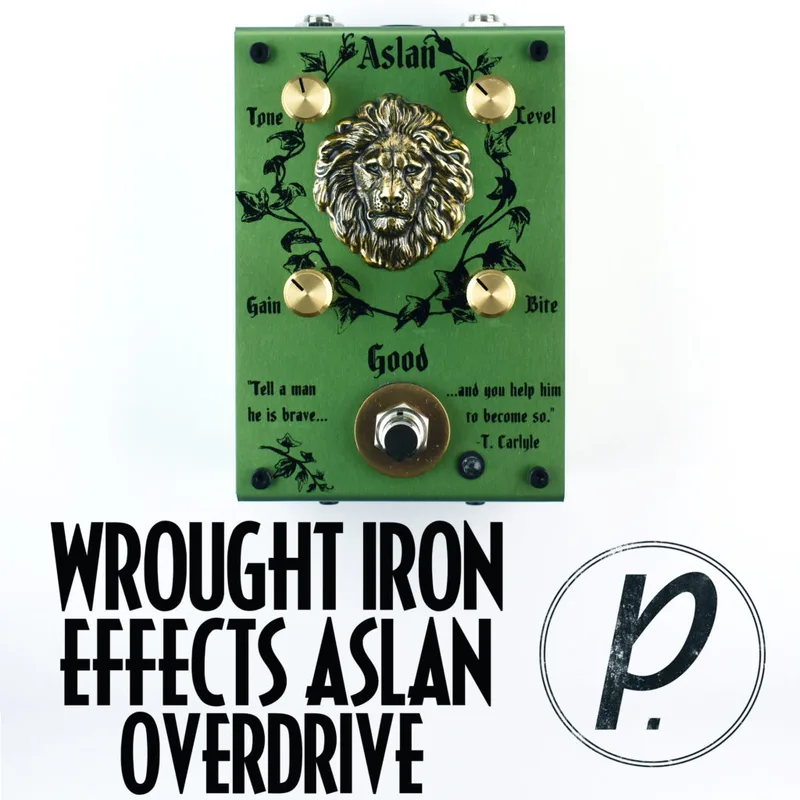
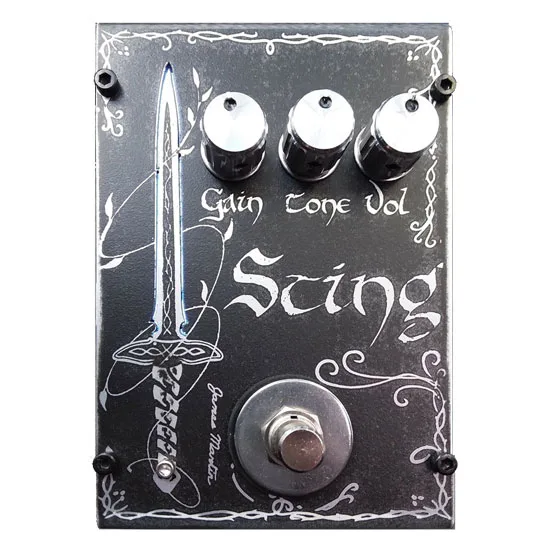
It continues the fantasy world theme Wrought Iron Effects began with the Wrought Iron Effects Aslan (Good) Overdrive, and the maker's range also includes the Wrought Iron Effects Sting Overdrive and the Wrought Iron Effects Skipjack1.
Controls and the two power modes
The control section is Volume, Tone and Gain, which Pedal of the Day calls standard fare, allowing for much sonic flexibility, alongside a Bite control1. The Volume control allows sonic flexibility in its range1.
The Orcrist's distinguishing feature is a rear toggle switch that selects between two power modes1:
- Biter: the regular 9V mode, running the pedal at its normal supply voltage
- Goblin Cleaver: 18V Charge Pump mode, where an internal charge pump raises the supply to 18V
Running a pedal's internal supply higher is a common way designers change how a circuit clips and how much headroom it has, and here the choice is built into the pedal itself rather than requiring an external 18V supply.
The 18V Goblin Cleaver mode comes from the pedal's own charge pump, so the Orcrist runs from a regular 9V supply in either mode; the toggle does the switching1.
Sound and character
Pedal of the Day's reviewer found the Orcrist voiced for lots of low-mids, lows and low harmonics, while retaining warmth and presence throughout, with lots of break-up available but without the high-gain sizzle that can sometimes occur in op-amp overdrives1. Players comparing transistor-based overdrives with the more common op-amp designs, such as those covered in Boss SD-1 vs Ibanez TS9 Tube Screamer, will find the Orcrist sits on the transistor side of that divide1. For where it fits among related designs, see Overdrive Pedals.
The blue LED and the theme
The bypass LED glows blue, like the Elven-fogged sword in The Hobbit that the effect is named after, part of the fantasy world theme Pedal of the Day highlighted in its review1.
"Unlike a lot of op-amp overdrives, it also gives you lots of break-up without the high-gain sizzle that can sometimes occur."
Videos
60 Cycle Hum
Sean Pierce Johnson
Pedal of the Day
Questions
What is the difference between Biter and Goblin Cleaver mode?
A rear toggle switch chooses between the two. Biter is the regular 9V mode, running the pedal at its normal supply voltage. Goblin Cleaver flips it into 18V Charge Pump mode, where an internal charge pump raises the supply to 18V. Pedal of the Day describes the switch as letting you choose between the two modes on the fly.
Why does the Orcrist LED glow blue?
The bypass LED glows blue as a nod to the pedal's namesake: the Elven sword Orcrist in The Hobbit, which glows blue when Orcs are near. Pedal of the Day points this out as part of the fantasy world theme Wrought Iron Effects carried over from the Aslan Overdrive.
Is the Orcrist based on an op-amp circuit?
No. Pedal of the Day describes the Orcrist as a bipolar transistor overdrive, not an op-amp design. The reviewer noted that, unlike a lot of op-amp overdrives, it gives lots of break-up without the high-gain sizzle that can sometimes occur.
Who designed the Wrought Iron Effects Orcrist?
Pedal of the Day credits Ed Chew and all at Wrought Iron Effects with the Orcrist in its 2017 review, in the same feature that describes the pedal's bipolar transistor circuit and its 9V and 18V modes.
Sources (2)
- Wrought Iron Effects Orcrist Overdrive, Pedal of the Day, 2017-08-23
- Wrought Iron Effects Orchrist Overdrive, Pedal of the Day, 2017-08-01