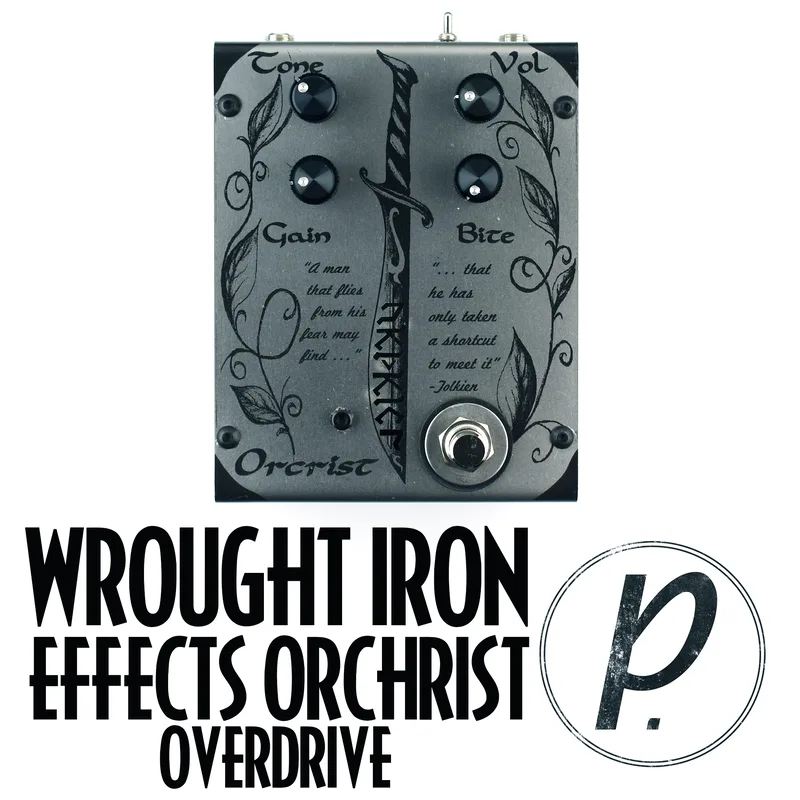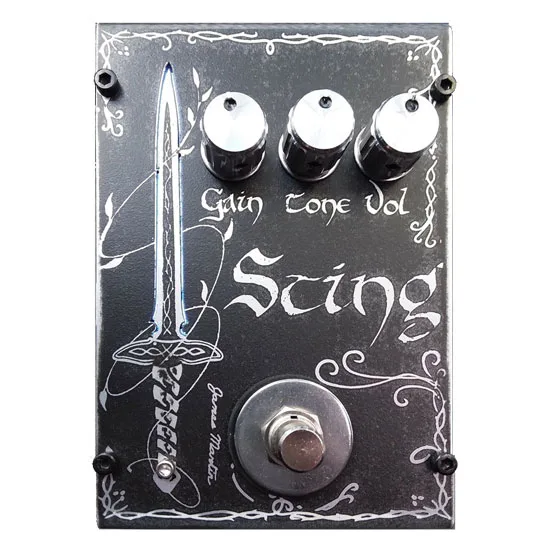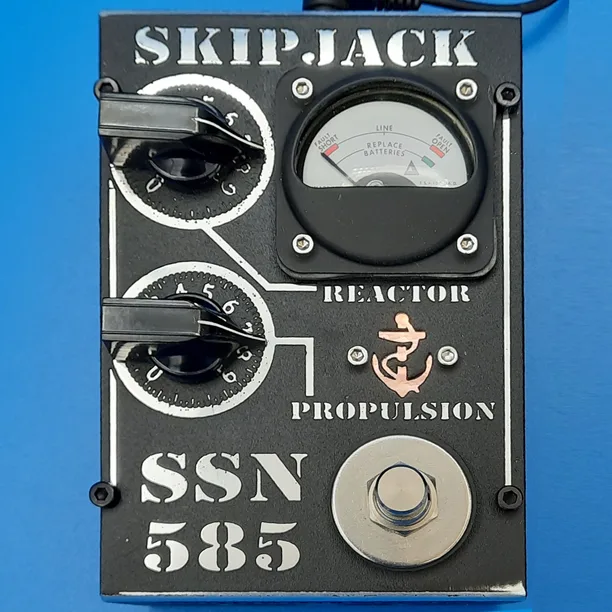

The Wrought Iron Effects Skipjack is a low to medium-gain overdrive built by Wrought Iron Effects, a Wisconsin-based company. Delicious Audio's Paolo De Gregorio describes it as extremely responsive to the player's dynamics and to the guitar's controls, and the pedal is part of the maker's Cold War Series, alongside the Orcrist Overdrive, the Sting Overdrive and the Aslan (Good) Overdrive.1
How the circuit works
The Skipjack's circuit is built around a power transistor stage. Wrought Iron Effects' designer said he was able to source NOS Westinghouse power transistors to serve as the power plant for the pedal, a nod to the Westinghouse reactor that powers the pedal's namesake submarine.1
The two knobs, Reactor and Propulsion, set the two gain stages:
| Control | What it does |
|---|---|
| Reactor | Takes the amplified signal from the power transistor and sends it to the JFET output stage (gain)1 |
| Propulsion | The output stage of the circuit, using a NOS military spec JFET transistor; adds tube-like breakup and sets the output stage level1 |
Reactor amplifies the signal coming from the power transistors, while Propulsion sets the level of the output stage.1
Cleaning up with the guitar volume
The Skipjack is designed as what the maker calls a reactive overdrive. Delicious Audio describes it this way1:
"Like its namesake, the Skipjack Reactive Overdrive is an attack-based device: it responds to your guitar volume knob with sensitivity reminiscent of a germanium transistor but without the temperature sensitivity1."
Paolo De Gregorio, Delicious Audio1
In other words, the pedal cleans up as you back off the guitar's volume control, in the way players associate with germanium-equipped circuits, but without germanium's well-known sensitivity to temperature. The Propulsion stage is tuned so the pedal can be run with the guitar volume between 8 and 10, with volume knob clean-up.1 For players who like to set an overdrive at the edge of breakup and ride it from the guitar, that is the core of the design. If you are weighing this style of pedal against the more familiar mid-humped overdrives, see Boss SD-1 vs Ibanez TS9 Tube Screamer, or browse the wider field in Overdrive Pedals.
The Cold War Series and the USS Skipjack
The Skipjack is part of Wrought Iron Effects' Cold War Series, a line of pedals with military and submarine themes. The pedal is named after the USS Skipjack (SSN 585), a nuclear-powered Cold War attack submarine launched in May of 1958, the first in a new class of fast attack nuclear submarines using the Westinghouse S5W nuclear reactor. That Westinghouse connection carries through to the pedal's circuit, which uses a NOS Westinghouse power transistor.1
The enclosure follows the theme: it is a laser cut custom enclosure, folded in the Wrought Iron Shop, giving the pedal the military-grade look Delicious Audio describes.1
Videos
Demos In The Dark
Questions
What transistors are in the Wrought Iron Effects Skipjack?
The Skipjack uses a NOS (new old stock) Westinghouse power transistor as the power transistor stage of the circuit, and the output stage uses a NOS military spec JFET transistor. The Reactor control sends the amplified signal from the power transistor to that JFET output stage, while Propulsion sets the output stage level.
Does the Skipjack clean up with the guitar volume knob?
Yes. Delicious Audio describes the Skipjack as an attack-based device that responds to the guitar volume knob with sensitivity reminiscent of a germanium transistor, but without the temperature sensitivity. The Propulsion stage is tuned so the pedal can be run with the guitar volume between 8 and 10, with volume knob clean-up.
Is the Skipjack a germanium pedal?
No. While its response to the guitar volume knob is described as reminiscent of a germanium transistor, the Skipjack does not have that temperature sensitivity. Its circuit is built around a NOS Westinghouse power transistor and a NOS military spec JFET in the output stage.
Sources (1)
- Wrought Iron Effects Skipjack Overdrive, Delicious Audio, 2022-11-11