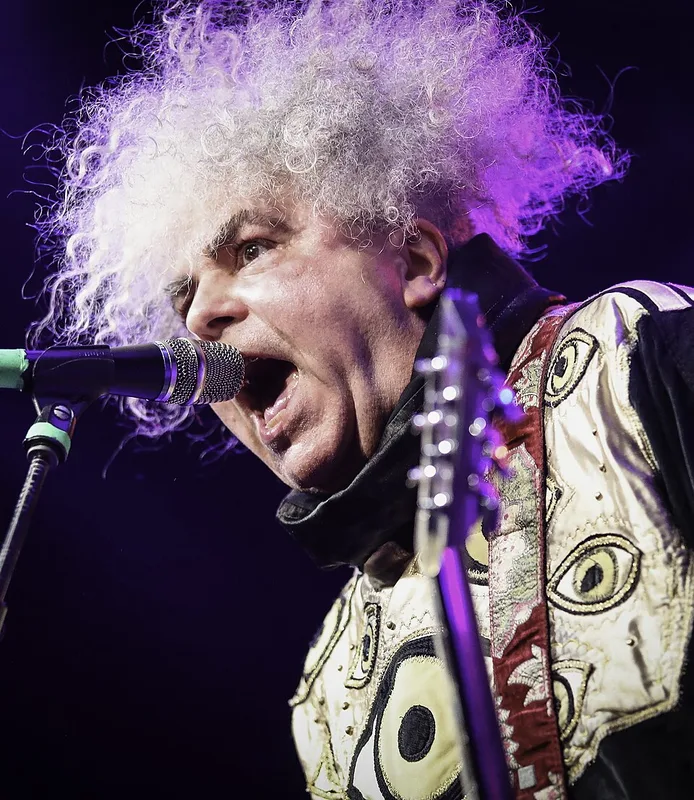
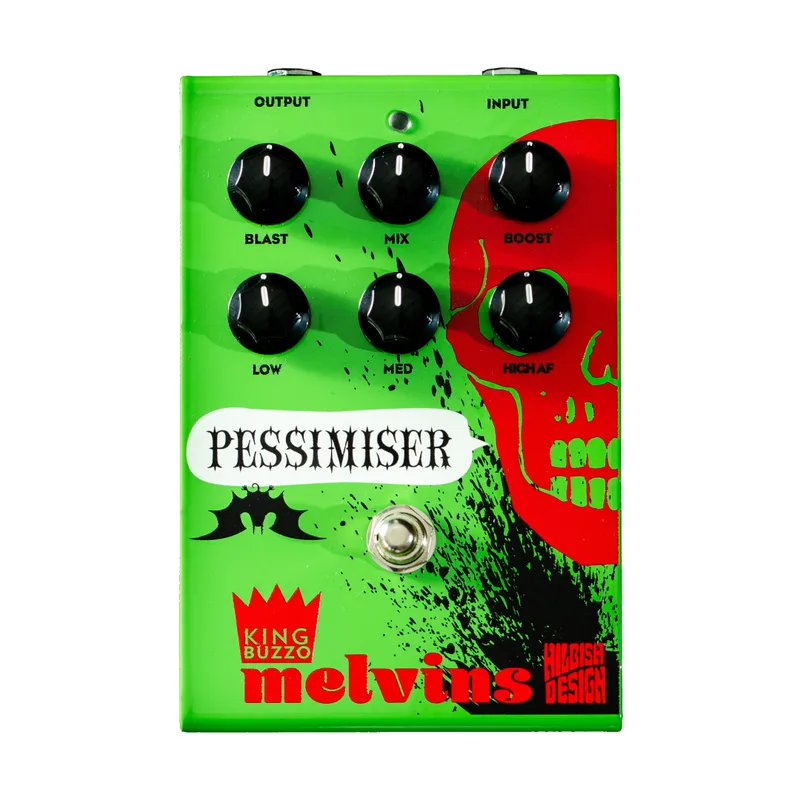
Buzz Osborne, the Melvins frontman and guitarist known as King Buzzo, has carried a deliberately simple pedalboard for decades. His setup is a small PedalTrain board1 with a fixed signal order, a Voodoo Labs power supply1, and a pair of Hilbish preamps driving stereo power amps1. He is also a pedal designer: the Hilbish Design Pessimiser distortion pedal was developed and designed with him2, and he now uses it as his own distortion1.
Premier Guitar's 2015 Rig Rundown with Osborne, by Perry Bean, described his "love for aluminum guitars and solid-state amps"3.
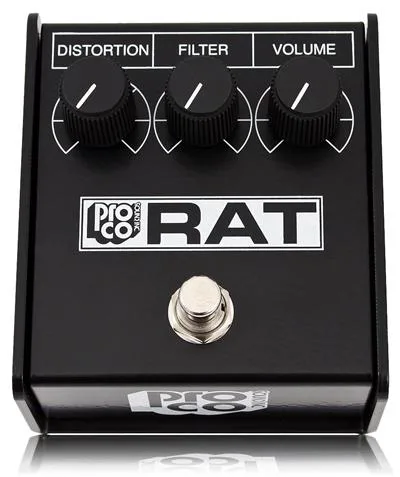
Starting out on a Rat
Osborne's first distortion pedal was a Rat. "I started out thirty-some years ago using a Rat distortion box, and then a Boss bass distortion."1 The Rat set the pattern his board still follows: one distortion pedal, early in the chain, doing the heavy lifting.
Pedal order: tuner, distortion, compressor, special effects, delay
Osborne keeps a fixed order on his board, and he is specific about why each pedal sits where it does.
| Position | Pedal | Why it sits there |
|---|---|---|
| 1 | Tuner | First, so nothing is "screwing with the signal before it gets tuned"1 |
| 2 | Distortion | "Next in line after the tuner is the distortion box"1 |
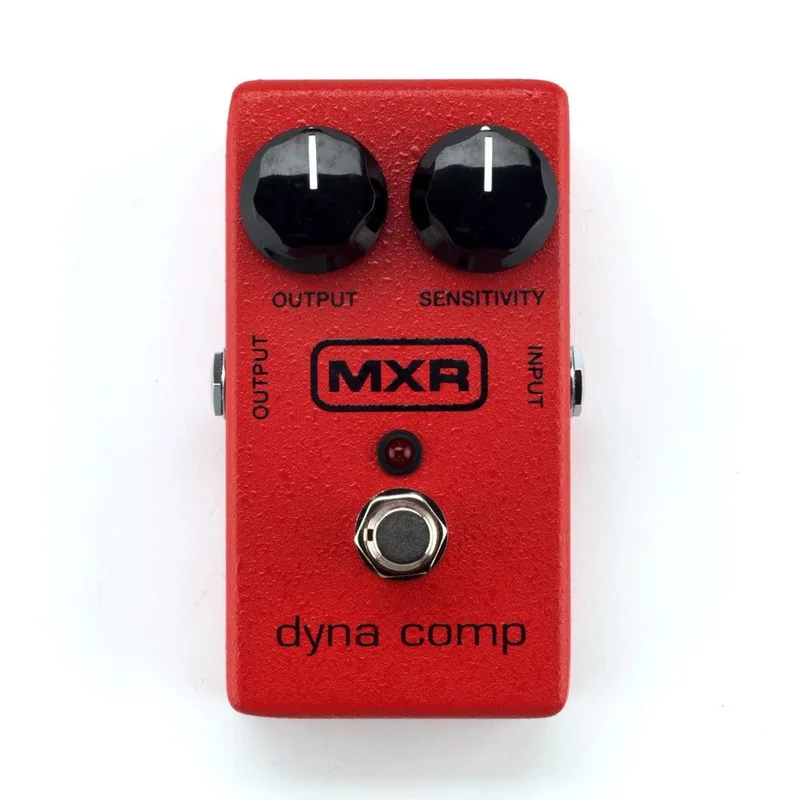
| 3 | MXR compressor | "One of the most underrated effects out there," used here and there throughout the set1 |
| 4 | Special effects slot | Swapped out all the time1 |
| 5 | Delay | Last in line, so all effects go through it1 |
The compressor is an MXR unit he rates highly: "Next, I run an MXR compressor, which I think is one of the most underrated effects out there."1
The fourth slot is deliberately unstable. He keeps a swappable "special effects" pedal that he switches out all the time, and his standard for what earns the slot is simple: "It could be anything that makes the guitar sound like World War III. I switch them out all the time."1
At the end of the chain sits a delay pedal, currently a Boss. "I've been using a Boss delay lately, but I'm looking for something a little wilder."1
He connects it all with Fender cables, which he says he has had pretty good luck with for the last couple of years1.
Straight into the front end
Osborne does not use an effects loop. "Straight into the front end. I've never used an effects loop."1
The question of where a distortion pedal belongs relative to a delay once caused friction on tour. "We toured once a long time ago in Australia with Tool, and I had a run in with Adam's guitar tech about that very issue."1 He had wanted to wire his Boss distortion pedal in before Adam Jones's delay when using Adam's entire setup, including his pedalboard1.
Amps: Hilbish preamps into stereo power amps
His amplification runs Hilbish preamps into stereo power amps, powering two cabinets with different speaker loads1:
- One cabinet with a fifteen-inch and two ten-inch speakers1
- One cabinet with a fifteen-inch and a twelve-inch speaker1
The Pessimiser: his signature distortion
Osborne's distortion slot is now filled by his own design. "Lately, I've started using one of my own designs called the Melvins Pessimiser."1
Hilbish Design describes the Pessimiser as "developed and designed with the Melvin's King Buzzo, to capture his unique distortion tones spanning his entire career"2. Guitar World reported it as the second collaboration between Hilbish Design and Osborne4, and Guitar.com noted that "The pedal's gain stage has been based on Melvins' diverse guitar tones, spanning King Buzzo's entire career"5.
For a player building a board along the same lines, Osborne's rig reduces to a short chain: tune first, distort second, compress third, leave one slot open for whatever sounds like World War III, and delay last, all straight into the amp.
Questions
What distortion pedal does Buzz Osborne use?
He started out on a Pro Co Rat distortion box thirty-some years ago, followed by a Boss bass distortion. Lately he has been using the Melvins Pessimiser, a distortion pedal he developed with Hilbish Design, whose gain stage was based on Melvins guitar tones spanning his entire career.
Does Buzz Osborne use an effects loop?
No. He runs his pedalboard straight into the front end of the amp and says he has never used an effects loop. On a tour of Australia with Tool he wanted to wire his Boss distortion in before Adam Jones's delay, which led to a run in with Adam's guitar tech over that same issue.
What pedalboard does King Buzzo use?
A PedalTrain, which he describes as pretty small. It carries his tuner, distortion, MXR compressor, a swappable special effects pedal, and a Boss delay, powered by a Voodoo Labs supply that he says fits perfectly on the board.
What power supply does Buzz Osborne use?
A Voodoo Labs power supply. He says it fits perfectly on his PedalTrain board.
What amps does the Melvins guitarist use?
He uses Hilbish preamps into stereo power amps. The amps power two cabinets: one loaded with a fifteen-inch and two ten-inch speakers, the other with a fifteen-inch and a twelve-inch speaker. A 2015 Premier Guitar rig rundown also noted his preference for solid-state amps.
Does Buzz Osborne have a signature pedal?
Yes. The Hilbish Design Pessimiser is a collaboration pedal developed and designed with King Buzzo to capture his distortion tones spanning his entire career. Guitar World reported it as his second collaboration with Hilbish Design, and he has lately been using it as his distortion.
Sources (5)
- Buzz Osborne, Stompbox Book (stompboxbook.com), 2019-09-01
- Pessimiser, Hilbish Design
- Rig Rundown: Melvins' Buzz Osborne 2015, Premier Guitar, 2015-07-29
- Melvins' King Buzzo and Hilbish Design bring the noise with new Pessimiser distortion pedal, Guitar World, 2020-03-04
- Hilbish Design unveils King Buzzo’s signature distortion, the Pessimiser, Guitar.com, 2020-02-26