
Roy Mitchell-Cárdenas plays bass for Mutemath, a band that, in the words of JHS founder Josh Scott, "focuses heavily on the feeling and movement of the drum and bass rhythm section"1. In a JHS Pedals interview about using guitar pedals for bass, he walked through his approach: a 1978 Fender P-Bass with flatwound strings, a small always-on pedalboard, and on at least one occasion no bass amp at all, with a JHS Colour Box preamp pedal standing in for it1.
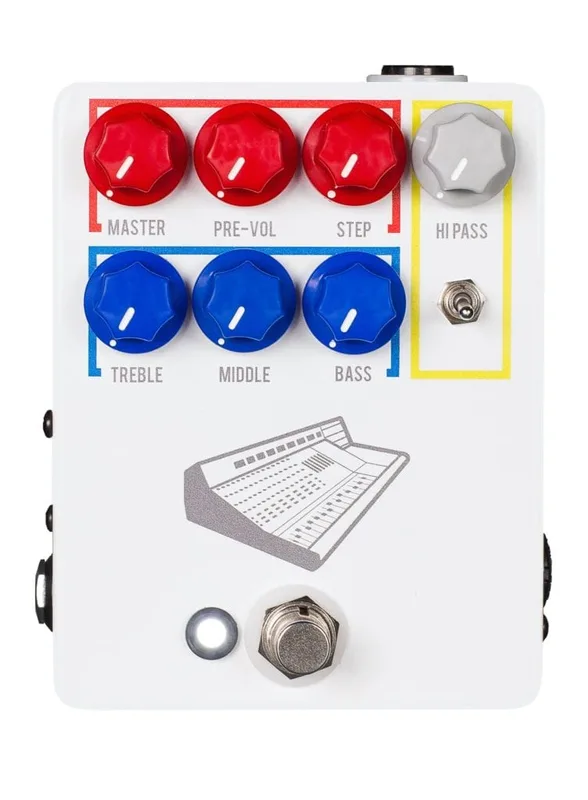
A JHS Colour Box in place of an amp
The most striking part of Mitchell-Cárdenas's setup is what is missing: the amplifier. As he put it in the JHS interview, "No amp. We're going to use the Colour Box [instead]"1.
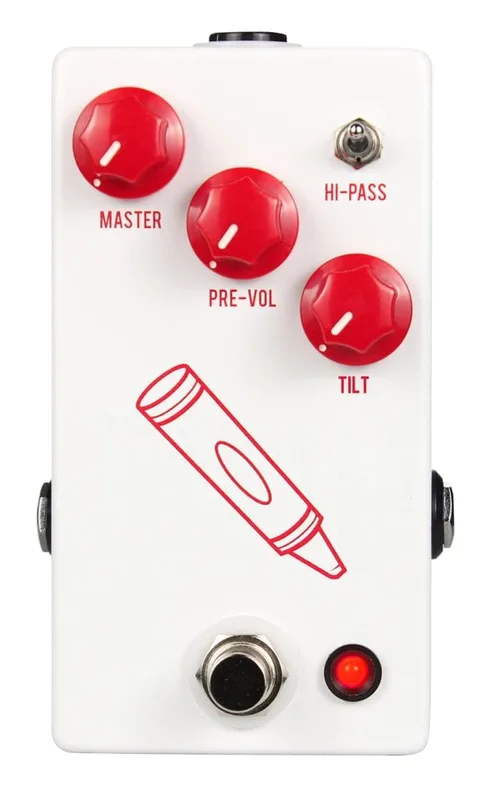
The JHS Colour Box, released in 2013, is a guitar pedal built to re-create guitar "direct-to-console" tones, using dual Neve 1073 style studio preamp topologies and a tuned Baxandall EQ23. Guitar World described it as a pedal "designed to replicate studio desk tones," and "more comprehensive and advanced for those looking for something a little extra"4. Designer Josh Scott traced its origin to 2012, when he had "a crazy idea for a tone shaping device that had never been done before in the world of guitar pedals," an idea that grew into a full-blown Neve 1073 style studio-grade preamp in a pedal56. It carries a bypass footswitch like any stompbox7, and its red-knob EQ section is where its distortion, fuzz and overdrive sounds live, the part JHS later simplified into the Crayon8.
For a bass player, the appeal of running a preamp pedal like this straight to the desk is the same one studio engineers have used for decades: a direct signal with real EQ and gain shaping, no cabinet, no microphone. Mitchell-Cárdenas's studio history points the same direction. As he described it, "We've used the Vox AC30 and other guitar amps for bass to get the grit and mix in with a clean DI"1. The Colour Box setup takes that clean-and-dirty idea and puts the whole thing in one box on the floor.
His pedalboard
In the interview, Mitchell-Cárdenas named the pedals he normally keeps on, plus a few he reached for in a Mutemath-flavored jam1.
| Pedal | Type | Role in his setup |
|---|---|---|
| JHS Pulp N Peel | Compressor | Always on1 |
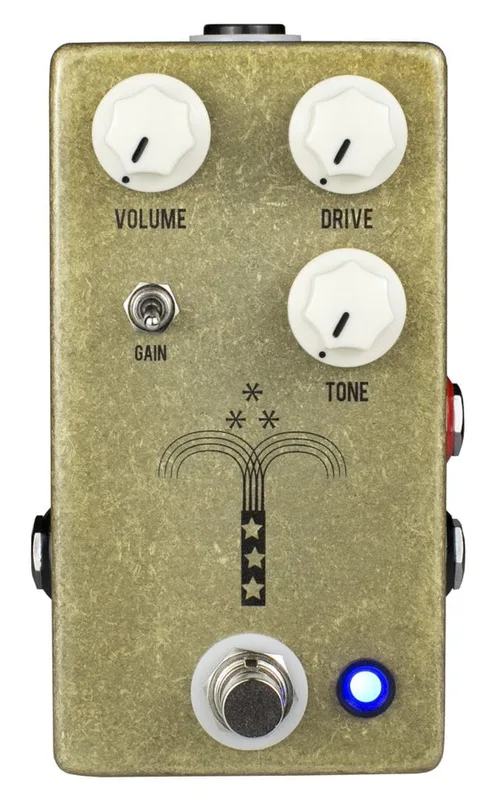
| JHS Morning Glory | Overdrive | Always on1 |
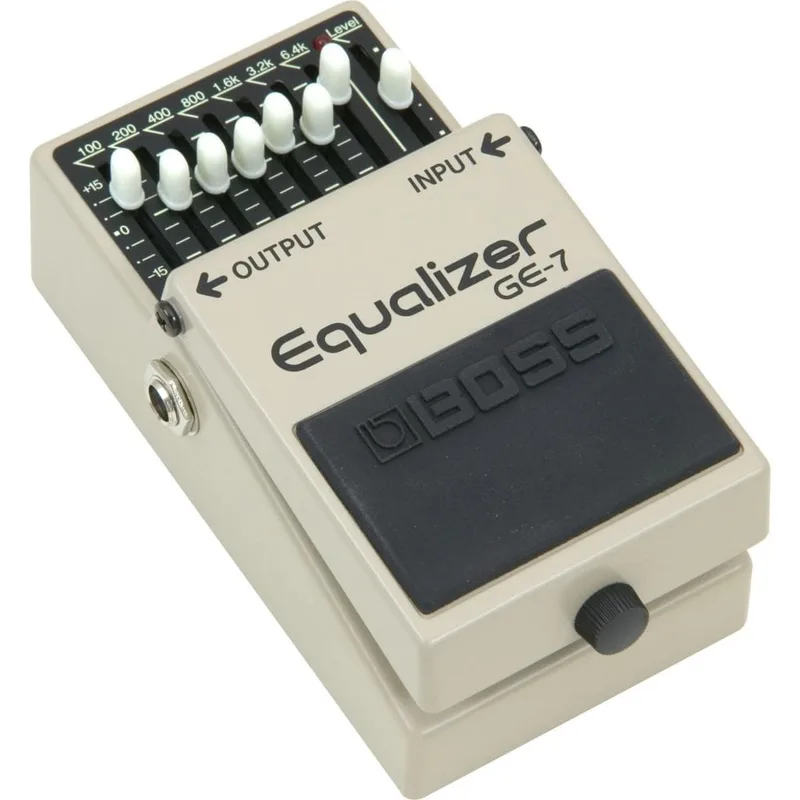
| BOSS GE-7 Equalizer | EQ | Always on, low-end recovery at the end of the chain1 |
| JHS Unicorn | Univibe | Lead bass parts1 |
| BOSS OC-2 | Octave | Paired with the Morning Glory, set one octave up1 |
| JHS Lucky Cat | Delay | "That was a Mutemath thing"1 |
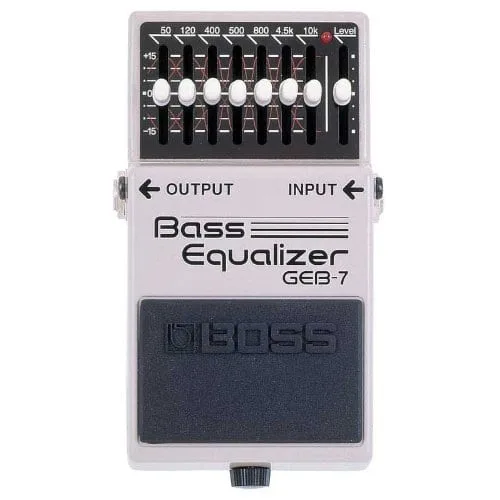
One pedal he does not use, despite it being a bass-specific EQ: the BOSS GEB-7. Asked about it in the interview, he answered simply, "I just don't use it"1.
Keeping low end under drive and fuzz
Mitchell-Cárdenas's core problem as a bass player using dirt pedals is one every bassist hits: drive and fuzz pedals thin out the low end. His fix is placement. "To compensate for that, I started adding EQ at the end to boost back the low end. That solved it"1. In the session his GE-7 boost sat around 100 to 200 hertz, a few dB1.
His other fix is blending. "We always combined a clean bass sound with something dirty, whether it was a pedal or a guitar amp"1. A pedal with a parallel clean blend does the same job in one box: JHS points to the Morning Glory on bass, where "that parallel clean allows you to keep a lot of your low end and add just a little bit of that subtle fizz underneath your bass playing so that you can cut through the mix"9.
"We always combined a clean bass sound with something dirty, whether it was a pedal or a guitar amp."
For players building a bass pedalboard on the same pattern, the pieces are: dirt pedals that sound good but eat low end, a parallel clean blend or a second clean path, and an EQ last in the chain to restore what the dirt took away.
Questions
What does Roy Mitchell-Cárdenas use instead of a bass amp?
He has gone without an amp entirely, running his bass through a JHS Colour Box preamp pedal in its place. The Colour Box is a studio-grade preamp in a pedal, built around Neve 1073 style preamp topologies with a Baxandall EQ, designed to re-create direct-to-console tones. In the JHS interview he described the setup plainly: no amp, the Colour Box instead.
What band does Roy Mitchell-Cárdenas play bass in?
He plays bass for Mutemath, a band that, as JHS founder Josh Scott put it in the interview, focuses heavily on the feeling and movement of the drum and bass rhythm section. In that same conversation Scott named him alongside Pino Palladino and Carol Kaye when listing the greatest bass players in history.
How does Roy Mitchell-Cárdenas keep low end with fuzz pedals?
Drive and fuzz pedals cut low end, so he adds EQ at the end of his chain to boost that low end back. In practice he keeps a BOSS GE-7 Equalizer always on and boosts around 100 to 200 hertz by a few dB. That end-of-chain EQ boost, he said, solved the problem for him.
Where does Roy Mitchell-Cárdenas put the EQ on his pedalboard?
At the end of the chain, after his drive and fuzz pedals. The point is compensation: the dirt pedals earlier in the chain shave off low end, and the EQ at the end boosts it back. His always-on pedals are the JHS Pulp N Peel compressor, the JHS Morning Glory overdrive and the BOSS GE-7 Equalizer.
How do you blend a clean and distorted bass sound?
Mitchell-Cárdenas combines a clean bass signal with a dirty one, whether the dirt comes from a pedal or from a guitar amp mixed against a clean DI. A pedal with a parallel clean blend helps here: JHS points to the Morning Glory on bass, where the clean blend keeps your low end while a little drive sits underneath so the bass cuts through the mix.
Sources (9)
- HOW TO USE GUITAR PEDALS FOR BASS (W/ ROY MITCHELL CARDENAS, JHS Pedals
- COLOUR BOX 500, JHS Pedals
- JHS Pedals Offers Colour Box, Vintage Guitar magazine, 2014-06-06
- JHS Pedals 424 Gain Stage review, Guitar World, 2025-10-02
- JHS Colour Box V2, Delicious Audio, 2024-11-25
- JHS Colour Box: A 1073 You Can Take Anywhere, JHS Pedals (youtube.com), 2024-10-28
- JHS Colour Box review, guitar.com, 2015-09-15
- The JHS Crayon Sucks, youtube.com, 2022-04-18
- What is the JHS Pedals Morning Glory Clean in 7 Mins, JHS Pedals (YouTube), 2026-01-30