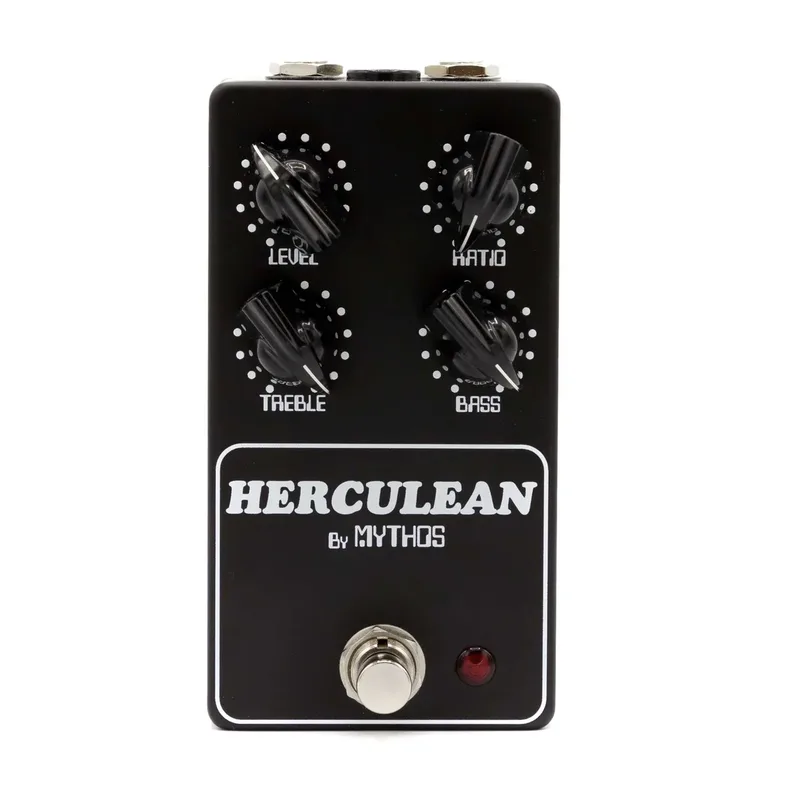
| Type | Overdrive circuit, dual pedal (Runestone side of the Herculean Deluxe)1 |
| Maker | Mythos Pedals1 |
| Circuit base | Heavily tweaked classic Blues Breaker circuit1 |
| Voicing | "D"-Style amp like overdrive1 |
| Clipping | Soft and Hard Clipping options on the Runestone side1 |
| Bypass | True Bypass Switching1 |
| Controls | Level (adjusts output of the Runestone side)1 |
The Runestone is an overdrive circuit from Mythos Pedals, built as a heavily tweaked version of the classic Marshall Blues Breaker circuit. Mythos voices it as a "D"-Style amp like overdrive, meaning it is aimed at the saturated, touch-responsive character associated with D-style amplifiers rather than at a straight reproduction of the original pedal1.
The circuit is currently available inside the Mythos Herculean Deluxe, a dual overdrive that combines updated versions of two Mythos drives: the Herculean and the Runestone1. The Runestone side keeps its own output control and its own clipping options, so within one enclosure a player gets two distinct gain stages that can be stacked or used on their own.
Where the Runestone circuit came from
The Runestone belongs to the long line of pedals descended from the Marshall Bluesbreaker, the 1990s overdrive whose circuit has become one of the most copied overdrive designs in the pedal world. Mythos is direct about the lineage: the Herculean Deluxe combines the Herculean and Runestone overdrives and delivers "a 'D'-Style amp like overdrive with a heavily tweaked classic Blues Breaker circuit"1. So the Runestone is not a clone. It takes the Blues Breaker topology as a starting point and modifies it toward a different amp-like target.
The Blues Breaker family is large, and the Runestone sits in it alongside several well-known relatives:
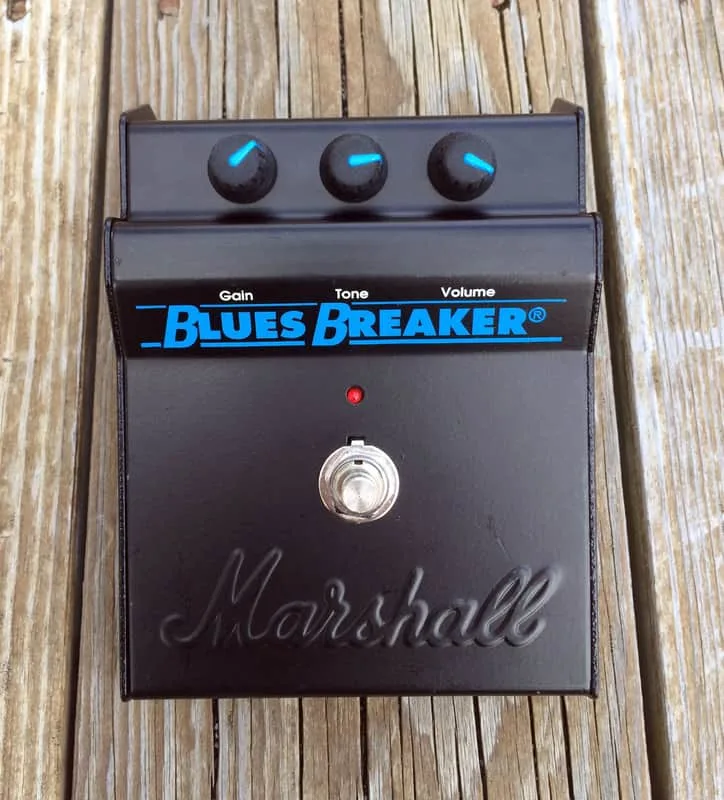
| Pedal | Maker | Relationship to the Blues Breaker circuit |
|---|---|---|
| Runestone (Herculean Deluxe) | Mythos Pedals | Heavily tweaked Blues Breaker circuit, voiced like a D-style amp1 |
| Morning Star (Ace of Tone) | NUX | Based on the "legendary Bluesbreaker circuit: very transparent, low gain drive"2 |
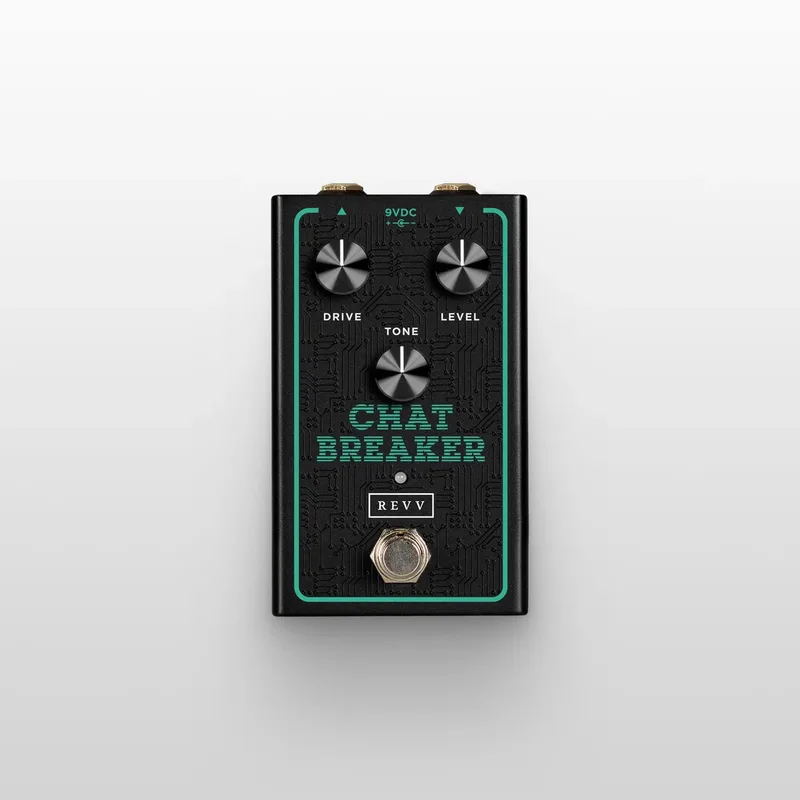
| Chatbreaker | Revv Amplification | "Operating on a modified classic 'Bluesbreaker' topology"3 |
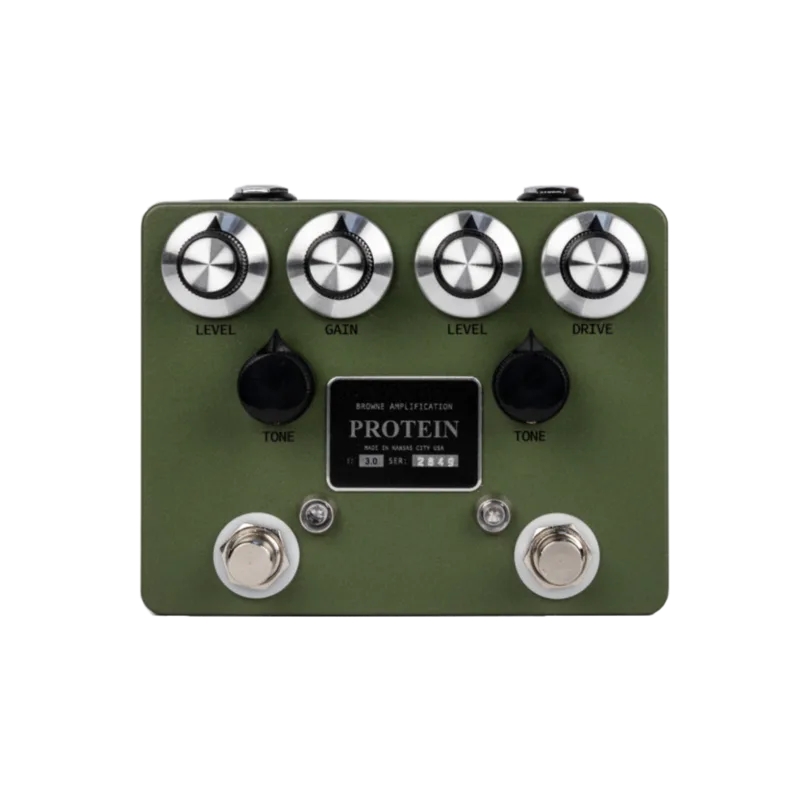
| Protein (blue side) | Browne Amplification | "A Bluesbreaker circuit with modifications and an added output section"4 |
| Jailbreaker | Volta Custom | Not a clone; focuses on power-amp saturation and tube-rectifier compression of the original amplifier5 |
| John Mayer Tribute (one side) | GuitarPCB | Blues Breaker circuit paired with a Klon-style section6 |
That spread shows the range of the family. Some makers, like NUX with the Morning Star, stay close to the original's transparent low-gain character27. Others, like Browne with the Protein's blue side, keep the circuit but add an output section4. Revv's Chatbreaker modifies the topology for its own high-gain purposes3, and Volta's Jailbreaker steps away from the pedal circuit entirely to chase the behavior of the amplifier the pedal was named after5. The Runestone takes the modification route, keeping the Blues Breaker foundation while re-voicing it toward D-style amp saturation8910.
How it works: output, tone and clipping
Overdrives in this family are built around an op-amp gain stage whose output is clipped by diodes. GuitarPCB describes the general shape of such a circuit in its Rock Candy build document: "A transistor input stage feeds a high-gain op-amp section, with symmetrical diode clipping adding natural compression"11. The diodes conduct once the signal exceeds their threshold, which shaves off the peaks of the waveform and produces the harmonic content and sustain players hear as overdrive.
The Runestone side of the Herculean Deluxe gives the player a choice of how that clipping is arranged, with both Soft and Hard Clipping options1. The distinction matters to how the pedal feels:
- Soft clipping places the diodes in the feedback path of the gain stage. The waveform is rounded off gradually, which tends toward a smoother, more compressed, amp-like breakup.
- Hard clipping places the diodes so they shunt signal to ground after the gain stage. The waveform tops are cut more abruptly, which tends toward a harder-edged, more distorted character.
Because the choice is a switch on the pedal, a player can move between the two characters without opening the enclosure, and can set one side of the Herculean Deluxe for each1.
The behavior of diode clipping also explains what players sometimes describe as the "cleanup" or dynamics of a drive. LunaStone's Steen Grøntved describes the underlying mechanism: as a note rings out and the signal weakens, "the amplitude decreases to a point where the diodes simply shut down"12. Below the diodes' threshold the circuit stops clipping and the note cleans up, which is why a Blues Breaker-style drive responds to picking dynamics and the guitar's volume knob. LunaStone's own cascaded-gain TrueOverDrive 1 was designed specifically to avoid that threshold behavior12, which is one way makers have departed from the diode-clipping approach the Runestone embraces.
The controls
The Runestone side of the Herculean Deluxe keeps its control set compact. Mythos lists the controls for that side as follows10:
| Control | What it does |
|---|---|
| Level | Adjusts the output of the Runestone side1 |
| Clipping switch | Selects between Soft and Hard Clipping options1 |
The Level control sets how hard the Runestone side hits whatever follows it, whether that is the amp, the Herculean side of the same pedal, or another drive further down the board. Because the two sides of the Herculean Deluxe are independent overdrives, the Runestone's Level can be set low to push the Herculean side gently, or high to use the Runestone on its own as the main gain source1.
The pedal uses True Bypass Switching1, so when the Herculean Deluxe is disengaged the guitar signal does not pass through the Runestone's circuitry.
How it differs from the original Blues Breaker
The original Marshall Bluesbreaker pedal is a low-gain, transparent overdrive, a character NUX sums up in describing its own Bluesbreaker-based Morning Star circuit2. The Runestone starts from that circuit but heads somewhere else. Mythos describes the result as a "D"-Style amp like overdrive, meaning the tweaks push the circuit toward the saturated, compressed feel of a D-style amplifier rather than the clean-boosting transparency of the stock design1.
Among the family members listed above, that puts the Runestone closer in spirit to the modified designs than to the faithful ones. Browne's Protein blue side modifies the circuit and adds an output section4; Revv's Chatbreaker modifies the topology outright3; Volta's Jailbreaker abandons the pedal circuit for the amp's power-section behavior4133. The Runestone's move is a heavy tweak aimed at a specific amp character1.
The Runestone in the Mythos Pedals range
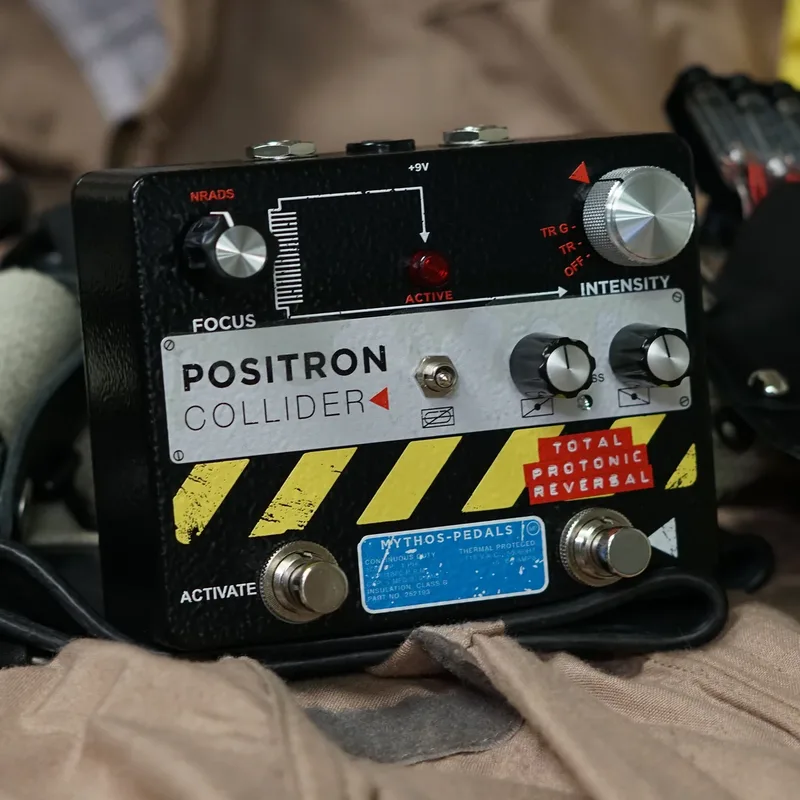
Mythos Pedals builds across the gain spectrum, not only overdrives. Its Positron Collider fuzz, for example, houses what the maker calls "his tweaked version of the iconic Ram's Head Muff circuit"14, a take on the Big Muff family. The same pattern of taking a classic circuit and tweaking it toward a specific target runs through both the fuzz and overdrive sides of the range.
The Herculean Deluxe is where the Runestone currently lives. By combining updated versions of the Herculean and Runestone overdrives in one enclosure, it gives the Runestone circuit a role as one half of a two-stage gain setup: the two sides can be run separately, or the Runestone can be stacked into the Herculean for more overall drive1.
Related circuits
- Marshall Bluesbreaker: the circuit the Runestone is built from
- Klon: the other classic transparent overdrive, paired with a Blues Breaker circuit in GuitarPCB's John Mayer Tribute6
- Big Muff: the Ram's Head variant Mythos tweaks for its Positron Collider fuzz14
- Overdrive Pedals: the effect type the Runestone belongs to
Pedals on this page
Questions
Who makes the Runestone pedal?
The Runestone is made by Mythos Pedals. The circuit is one of the two drives built into the Mythos Herculean Deluxe, where it sits alongside the Herculean overdrive in a dual-pedal format. Mythos describes the Runestone side as a heavily tweaked version of the classic Blues Breaker circuit voiced like a D-style amp.
Is the Mythos Runestone true bypass?
Yes. Mythos Pedals lists True Bypass Switching for the Herculean Deluxe, the pedal that carries the updated Runestone circuit. When the pedal is bypassed, the guitar signal passes through without the circuit in the path, which suits players who want the pedal to disappear when it is off.
How do you switch between soft and hard clipping on the Runestone?
The Runestone side of the Herculean Deluxe features both Soft and Hard Clipping options, selected with a switch on the pedal rather than by rewiring or modding. Soft clipping generally yields a smoother, more compressed overdrive, while hard clipping pushes the circuit toward a harder-edged breakup.
Is the Runestone transparent overdrive?
The Runestone belongs to the Blues Breaker family, a circuit widely described as transparent. NUX, whose Morning Star pedal is based on the same circuit, calls the Bluesbreaker design a very transparent, low gain drive. Mythos itself voices its tweaked version toward a D-style amp rather than advertising it purely as transparent.
Sources (14)
- Herculean Deluxe Overdrive, Mythos Pedals
- Ace of Tone, Nux, 2026-05-11
- Revv Amps: Chatbreaker Pedal, Revv Amplification
- The Protein Dual Overdrive Pedal, Browne Amplification
- Jailbreaker by Volta Custom, RockBoard PedalPedia, 2026
- NostalgiTone John Mayer Tribute Dual Combo PCB SET, GuitarPCB
- Ace of Tone by NUX, RockBoard PedalPedia, 2026
- Mythos Pedals Herculean Dual Overdrive, gearnews.com, 2024-02-02
- Mythos Herculean Deluxe Overdrive, Delicious Audio, 2024-02-13
- Guitar Pedal X, Guitar Pedal X, 2024-02-12
- 2026-NostalgiTone-Rock-Candy-Build-Doc.pdf, GuitarPCB, 2026-10
- TrueOverDrive 1, LunaStone
- Browne Amplification Protein Dual Overdrive review, Guitar World, 2021-11-11
- Positron Collider Fuzz, Mythos Pedals