| Type | Analog overdrive booster1 |
| Maker | Marshall1 |
| Original release | 199212 |
| Status | Original units are coveted collector's items; Marshall sells a Vintage Reissue12 |
| Circuit type | Analog1 |
| Controls | Gain, Tone, Volume2 |
| Power (original) | 9V DC, center negative, 6mA current draw1 |
| Power (reissue) | 9V battery or 9V DC power adapter, not included2 |
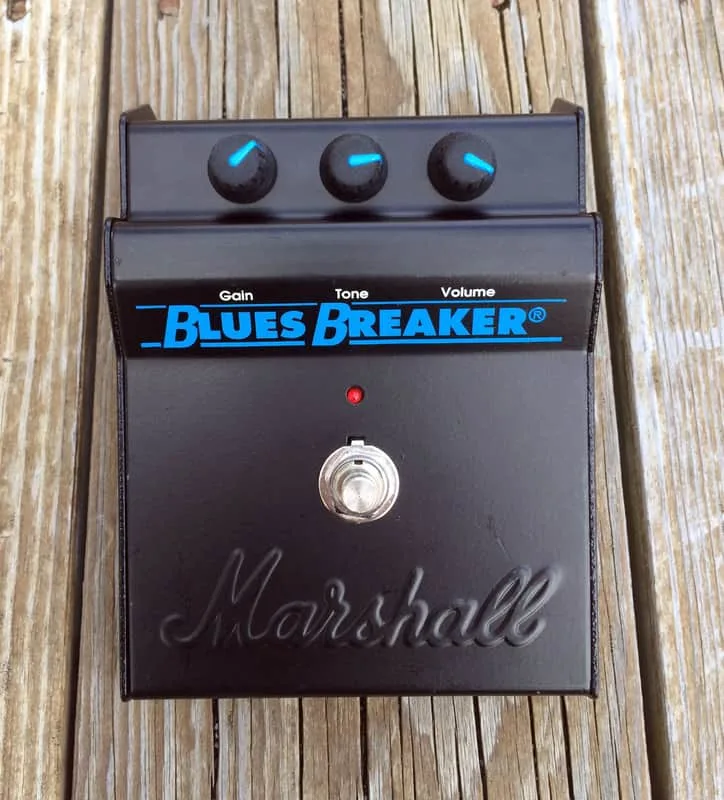
The Marshall Bluesbreaker is an analog overdrive pedal, listed by RockBoard's PedalPedia as an "OVERDRIVE BOOSTER," made by Marshall and first released in 19921. It takes its name from the 1962 "Bluesbreaker" amplifier, the combo version of the JTM45 that gave the band behind Eric Clapton's mid-1960s recordings their nickname23. Where that amp was a low-gain, tube-driven platform, the pedal is a low-gain, soft-clipping overdrive, and its circuit has become one of the most copied overdrive topologies of the last three decades.
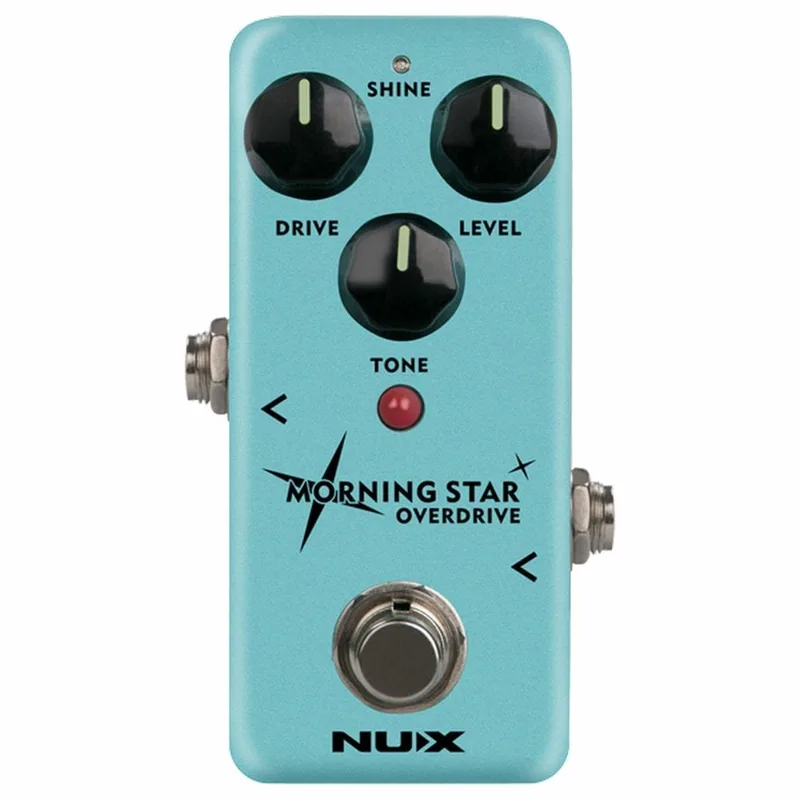
Origin Effects describes the circuit's standing plainly: the Bluesbreaker "has been the starting point for many highly-regarded overdrive pedals," famous for thick, articulate tones from its soft-clipping circuit and broad midrange emphasis4. NUX, whose Morning Star drive is based on it, calls it "a very transparent, low gain drive"5. The original units are now collector's items, and Marshall sells a hand-assembled Vintage Reissue built in its UK factory in Bletchley12.
Where the Bluesbreaker came from
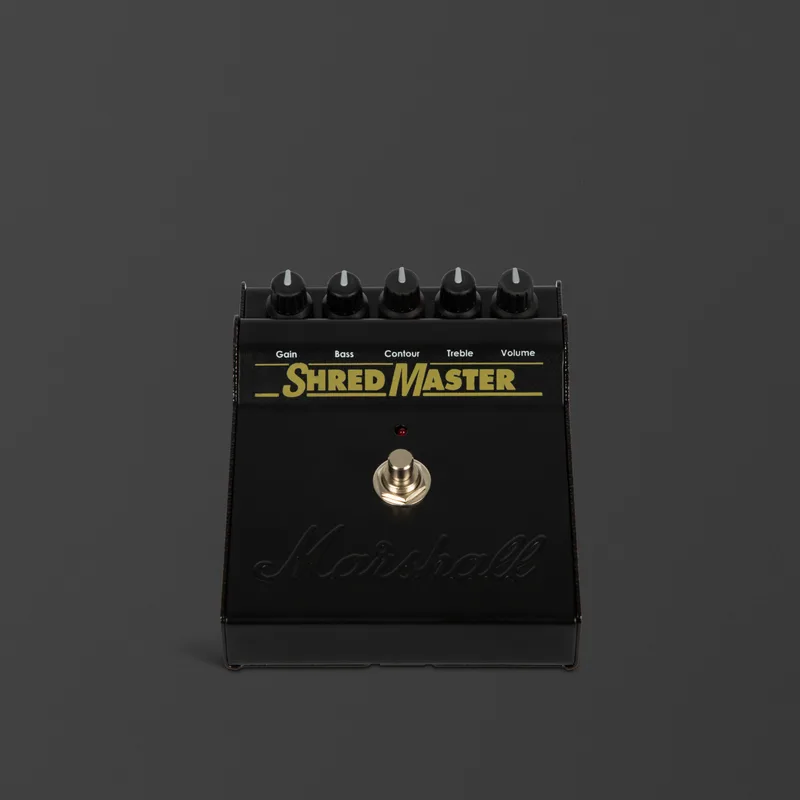
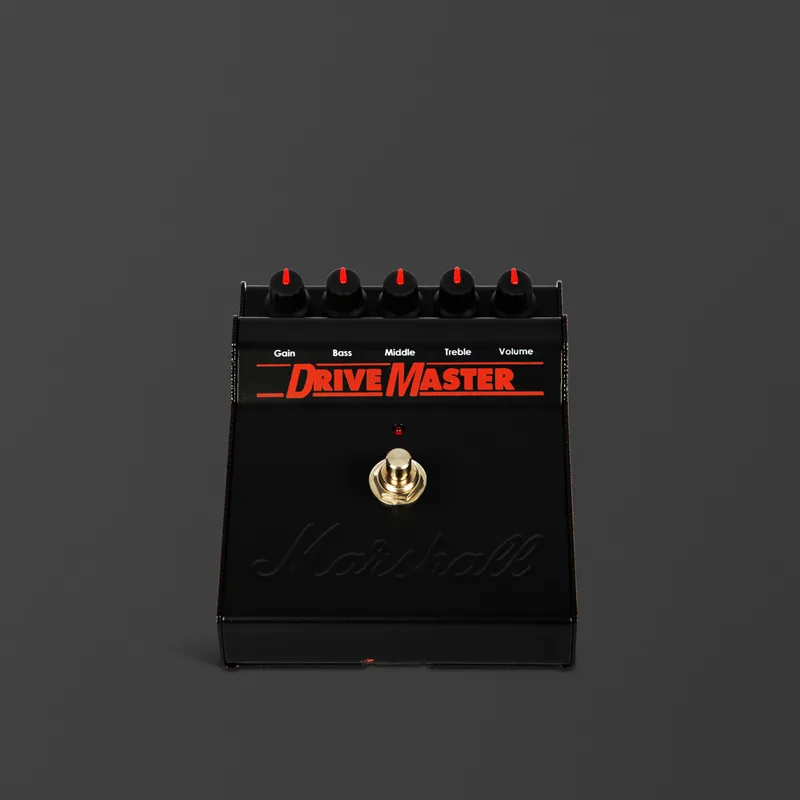
Marshall introduced the Bluesbreaker pedal in 1992, alongside the ShredMaster and DriveMaster pedals6. Marshall's own copy for the reissue says the pedal has been "used on countless stages since its inception in 1992"2, and RockBoard's PedalPedia entry repeats the date1. The name reaches back further: Marshall ties the pedal to the 1962 "Bluesbreaker" amplifier, whose sound "became a legend"2, and Origin Effects' Jacob Holdsworth identifies that amp as "the combo version of the JTM45"3.
The pedal's own history has versions. General Guitar Gadgets, which sells a kit of the circuit, is explicit that its board is "the circuit for the original black unit from the 1980's, not any of the later (thought to be inferior) versions"7. Nordvang Custom likewise points to "the first BB1 - Black Box Blues Breaker circuit" as the one its Triple Gain replicates8. The upshot for a player shopping used: the original black-box units are the ones the circuit's reputation rests on, and they are the ones collectors want. RockBoard calls the pedal "a coveted collector's item, highly sought after by enthusiasts"1.
"It's a classic pedal and, as the name implies, a great tone for blues players."
How the circuit works: low gain soft clipping
The Bluesbreaker belongs to the soft-clipper family of overdrives. Strymon's technical analysis of single-stage gain topologies, written by Pete Celi, describes how this class of circuit works: "Typically, an op amp or high gain BJT (Bipolar Junction Transistor) is used to achieve the gain, and clipping is achieved" with diodes connected in the feedback path of the gain stage, with low frequencies filtered before the gain stage and high frequencies filtered after9. Because the diodes sit in the feedback loop rather than shunting the signal to ground, the clipping is gradual rather than abrupt: the waveform's corners are rounded off rather than sliced, which players hear as a smoother, more amp-like overdrive at low gain.
The Bluesbreaker's gain stage is built on a TL072 op amp, per the GuitarPCB build document for its Beano Bundle project, which combines a Bluesbreaker overdrive section with a Rangemaster boost10. The clipping diodes in that layout are four 1N4148 silicon diodes at D1 through D4, plus a 1N5817 at D510. GuitarPCB's Blues Kicker document, which pairs a Klon-style boost with a Blues Breaker drive section, lists the same diode set11.
The character this produces is what the circuit is known for. NUX calls the topology "a very transparent, low gain drive"5, and Origin Effects credits the soft-clipping circuit and broad midrange emphasis for "thick, articulate tones"4. GuitarPCB's description of its Bluesbreaker section is in the same family: it "evokes vintage amp magic, enriching your sound with sweetness and grit"10.

How that compares to a Tube Screamer is a question builders answer in different ways. The Tube Screamer is a midrange-forward, compressed drive; the Bluesbreaker is more transparent, with a broader midrange4. Rather than treating them as rivals, General Guitar Gadgets suggests you "stack it into a Tube Screamer for a lead boost"7, and Nordvang Custom built an entire pedal around that idea: the Triple Gain runs "from the Bluesbreaker to the Klon and then into the TS-10," with external toggles to change the order and adjust the Bluesbreaker's gain level8.
Diode choice is where builders most often modify the circuit. Some examples121013:
- GuitarPCB's Blues Buster v2 uses 1N914 diodes at D1 through D4, a red LED at D5 and D6, and a 1N5817 protection diode at D713.
- MI Audio's Super Blues Pro carries two toggle switches that select the pair of soft-clipping diodes in the circuit: silicon, MOSFET, or none14.
- General Guitar Gadgets' Guv'nor replica kit supplies 1N914 clippers that can be configured as two diodes, three for asymmetric clipping, or two pairs in series for "smooth distortion like the BluesBreaker"12.
The controls
The Bluesbreaker keeps it to three knobs: Gain, Tone and Volume2. Marshall's reissue page describes them as "adjustable gain, volume and tone controls"2. The build documents give the pot values used in the circuit, which tell you something about how each control behaves:
| Control | What it does | Pot value (GuitarPCB layout) |
|---|---|---|
| Gain | Sets the amount of drive into the soft-clipping stage | B100K10 |
| Tone | Rolls off or opens up the high end | B25K1011 |
| Volume | Sets the output level | A100K10 |
The linear-taper Gain and Tone pots (B taper) and the audio-taper Volume pot (A taper) are the values in the GuitarPCB Beano Bundle and Blues Kicker layouts1011. A B-taper pot changes value evenly across its rotation, so the Gain control's useful range is spread evenly; the A-taper Volume pot puts more of its change in the first part of the rotation, matching how hearing works.
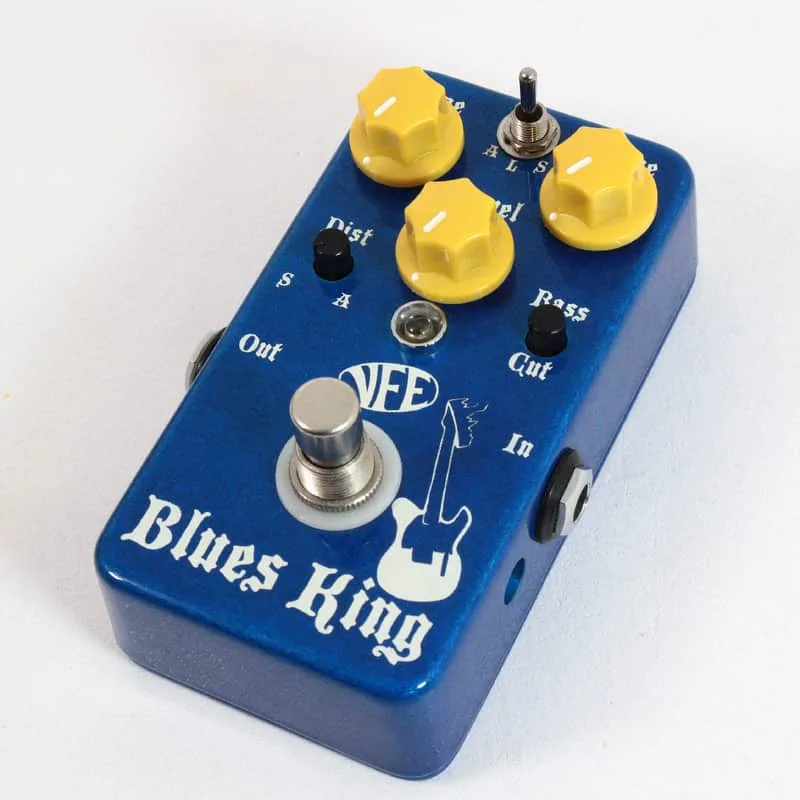
Some Bluesbreaker-derived pedals add a clipping-configuration control. The clearest example is the VFE Blues King, documented in madbeanpedals' manual: its Soft control "transitions between asymmetrical (counterclockwise), symmetrical (clockwise), and diode lift (12:00)," where asymmetrical yields the most compression, distortion and even harmonics, and the diode lift removes all clipping components, turning the stage into a clean boost15. That is a window onto what diode arrangement does in this topology: symmetrical clipping is smoother and more compressed, asymmetrical adds even harmonics and grit, and lifting the diodes entirely makes the stage clean.
Power: 9V, 6mA
The original Bluesbreaker runs on 9V DC, center negative, drawing 6mA1. That is a light draw, well within what any isolated supply or even a daisy chain can provide alongside other analog pedals. Marshall's Vintage Reissue takes either a 9V battery or a 9V DC power adapter, which is not included2.
The 6mA current draw is the original Bluesbreaker's figure as documented by RockBoard's PedalPedia1. The reissue runs on a 9V battery or a 9V DC power adaptor (not included)2, so its power arrangement differs from the original's 9V DC, center negative adapter supply1.
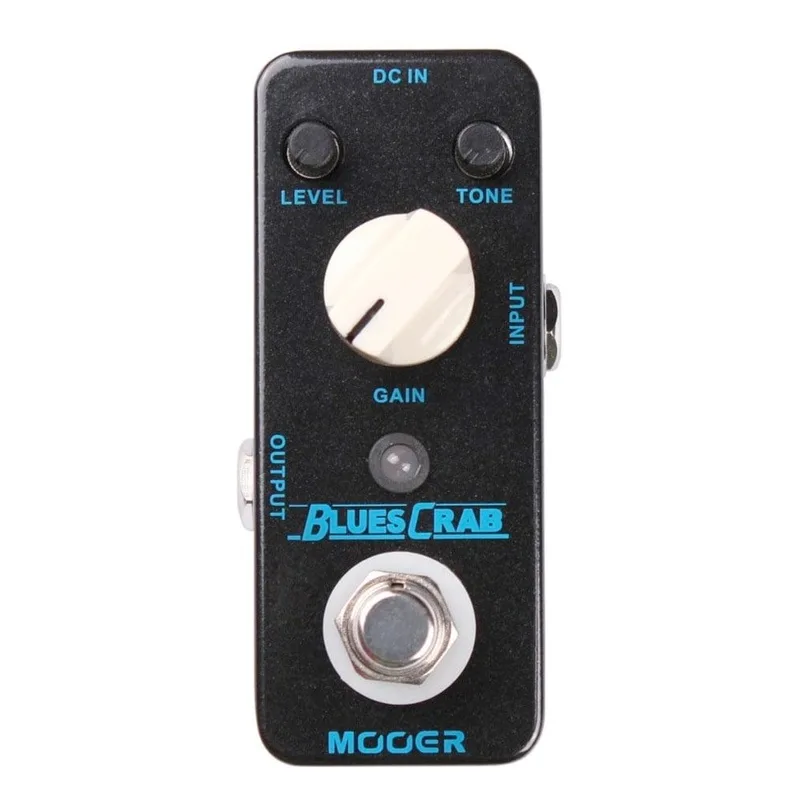
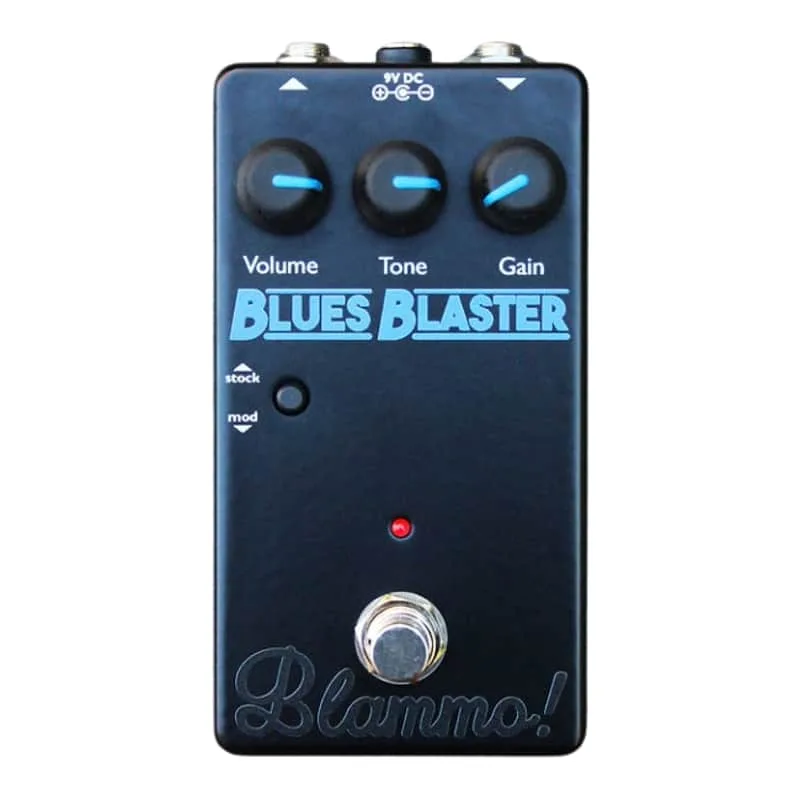
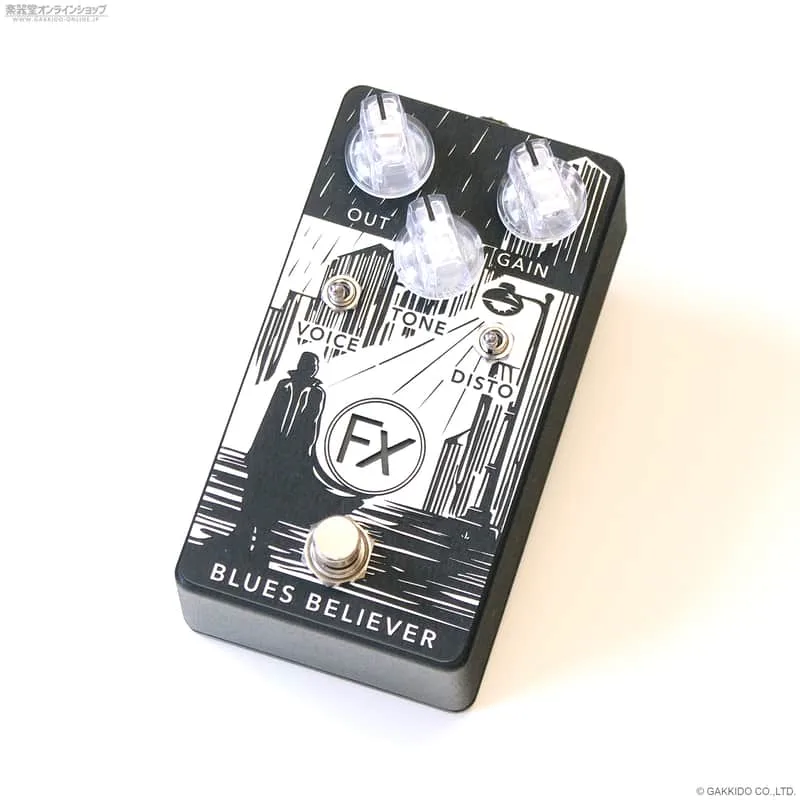
The 9V DC center-negative standard is shared across the Bluesbreaker's descendants: MOOER's Blues Crab takes a 9V DC adapter with a center-minus plug16, BLAMMO! Electronics' Blues Blaster accepts a standard 2.1mm center-negative 9V DC adapter17, Anasounds' Blues Believer manual specifies 9V DC center-negative18, and Pedal Pawn's BluesPrint has a standard 9V power input19.
Pedals based on the Bluesbreaker
The circuit's influence shows up across every tier of the market, from DIY boards to hand-built boutique pedals to digital profiles. A sample of what the makers themselves say202122:
| Pedal | Maker | Relationship to the Bluesbreaker |
|---|---|---|
| Bluesbreaker Vintage Reissue | Marshall | Authentic vintage reissue with a steel chassis2 |
| Spruce Goose Overdrive | Electro-Harmonix | OD circuit inspired by the Marshall Bluesbreaker23 |
| Halcyon Blue Overdrive | Origin Effects | Based on the Bluesbreaker with a custom voicing and adaptive circuitry24 |
| Commodore Overdrive | SolidGoldFX | Bluesbreaker-family overdrive, from the early 90s lineage6 |
| The Breaker Overdrive | PedalPalFx | "A tribute to the Marshall Bluesbreaker MK1 overdrive but this handmade pedal is not an exact clone"25 |
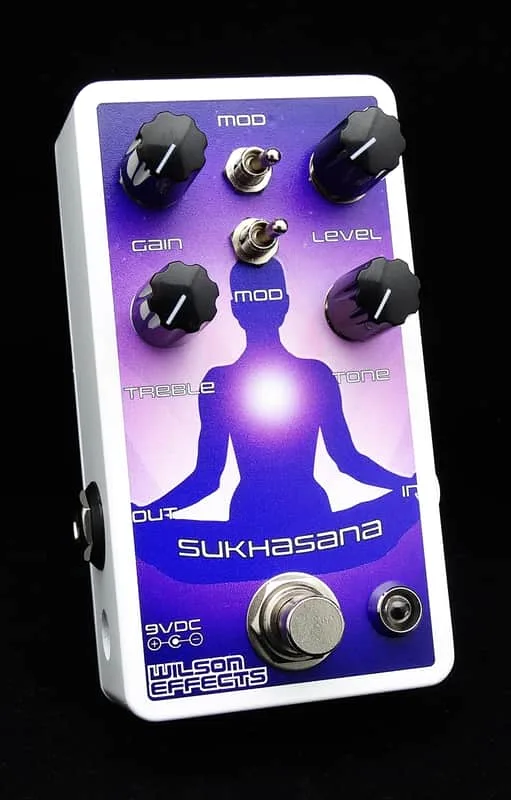
| Sukhasana | Wilson Effects | Based on the vintage Marshall Bluesbreaker pedal, bent for more gain21 |
| Triple Gain | Nordvang Custom | Circuit C is a replica of the first BB1 Black Box Blues Breaker circuit8 |
| Protein Dual Overdrive | Browne Amplification | Blue side is "a Bluesbreaker circuit with modifications and an added output section"26 |
| Blues Crab | MOOER | Bluesbreaker-style mini overdrive, 9V DC16 |
| Blues Blaster | BLAMMO! Electronics | Bluesbreaker-style overdrive17 |
| Blues Believer | Anasounds | Bluesbreaker-based DIY kit with Voice and Disto toggles18 |
| BluesPrint | Pedal Pawn | Bluesbreaker-inspired overdrive19 |
| Midnight Standard | Barber Electronics | Built on the Bluesbreaker circuit, voiced to favor humbuckers more than the original27 |
| Kemper Drive | Kemper | Includes a Marshall Blues Breaker Mk I model22 |
Barber Electronics' note on the Midnight Standard is a fair summary of why so many builders start here: "The original Bluesbreaker circuit is a classic, but we felt it could favor lower-output single coils more than humbuckers"27. That perceived bias toward single coils is the most common reason given for modifying the circuit, along with adding gain, as Wilson Effects does with the Sukhasana21.
The DIY world mirrors the retail one. PedalPCB's Blue Breaker Overdrive board is simply tagged "Compare to Marshall Bluesbreaker"201011, and GuitarPCB's projects combine the circuit with others: the Beano Bundle pairs it with a Rangemaster boost10, and the Blues Kicker pairs it with a Klon-style circuit11. General Guitar Gadgets sells the original black-unit circuit as a kit7.
Pedals on this page

News
Questions
When was the Marshall Bluesbreaker pedal made?
The original dates from 1992, released alongside the ShredMaster and DriveMaster1211. Marshall says it has been used on countless stages since then, and original units are now collector's items12.
Is the Bluesbreaker reissue the same as the original?
Marshall describes the Vintage Reissue as an authentic vintage reissue pedal with the same three controls and a steel chassis2. It runs on a 9V battery or adapter rather than the original's adapter-only 9V DC spec12. Reviewers who A/B'd reissues against originals found them "pretty much identical apart from some small pot tolerance differences that aren't unusual"28.
How do I tell an original black Bluesbreaker from a later one?
The reference circuit is the original black unit, which General Guitar Gadgets distinguishes from later versions it considers inferior7. Nordvang Custom identifies the first BB1, the Black Box Blues Breaker, as the version its replica follows8.
How does a Bluesbreaker compare to a Tube Screamer?
The Bluesbreaker is a transparent, low-gain drive with broad midrange emphasis54, against the Tube Screamer's focused midrange. They also stack well: General Guitar Gadgets suggests running a Bluesbreaker into a Tube Screamer for a lead boost7, and Nordvang's Triple Gain wires exactly that chain, Bluesbreaker into Klon into TS-108.
What clipping diodes does a Bluesbreaker circuit use?
Four 1N4148 silicon diodes at D1 through D4 and a 1N5817 at D5, per the GuitarPCB build documents1011. The diodes sit in the feedback path of the TL072 gain stage, giving the soft-clipping character910.
Where is the unity gain on a Bluesbreaker?
The A100K Volume control sets output level10, and at low Gain settings the soft-clipping stage stays clean enough to work as a boost.
When was the Marshall Bluesbreaker pedal made?
The original Marshall Bluesbreaker pedal dates from 1992, released alongside the ShredMaster and DriveMaster pedals. Marshall describes it as having been used on countless stages since its inception in 1992, and the original units have become coveted collector's items sought after by enthusiasts.
Is the Bluesbreaker reissue the same as the original?
Marshall sells a Vintage Reissue pedal that it describes as an authentic vintage reissue, hand-assembled in its UK factory in Bletchley. It carries the same Gain, Tone and Volume controls and runs on a 9V battery or 9V DC adapter. Marshall markets it as recreating the sound of the original, but the company does not claim it is a part-for-part copy of the 1992 circuit.
How do I tell an original black Bluesbreaker from a later one?
The original black unit is the version from the 1980s-era lineage that General Guitar Gadgets treats as the reference circuit, and that company considers the later versions inferior. The Nordvang Custom Triple Gain replicates the circuit of the first BB1, the Black Box Blues Breaker, which is the version most builders copy. Original black units are the collector's items.
How does a Bluesbreaker compare to a Tube Screamer?
The Bluesbreaker is a transparent, low-gain drive with a broad midrange emphasis, while the Tube Screamer is known for its midrange hump. General Guitar Gadgets suggests stacking a Bluesbreaker into a Tube Screamer for a lead boost, and the Nordvang Custom Triple Gain wires the two in series, Bluesbreaker first, then a Klon, then a TS-10.
What clipping diodes does a Bluesbreaker circuit use?
GuitarPCB's build documents for its Bluesbreaker-based projects list four 1N4148 silicon diodes at D1 through D4 and a 1N5817 at D5. The diodes sit in the feedback path of the gain stage, which is what gives the circuit its soft-clipping character. Builders commonly swap in other diodes, such as the 1N914s and red LEDs used in GuitarPCB's Blues Buster v2.
Where is the unity gain on a Bluesbreaker?
The Volume control, an A100K pot in the GuitarPCB layout, sets the output level. At low Gain settings the soft-clipping stage stays clean enough that the pedal can be set for a clean-ish boost, since the diodes only clip as the gain is raised.
Sources (28)
- Bluesbreaker by Marshall, RockBoard PedalPedia, 2026
- The Bluesbreaker pedal offers smooth tones and full character, Marshall (www.marshall.com)
- Green, Gold & Blue, Origin Effects, 2026-09-08
- HALCYON BLUE OVERDRIVE, Origin Effects, 2026
- Queen of Tone, NUX Audio, 2025-11-06
- COMMODORE, SolidGoldFX
- Marshall™ Bluesbreaker™ Clone Kit: Low-Gain Overdrive, General Guitar Gadgets, 2014-05-12
- NORDVANG TRIPLE GAIN, Nordvang Custom
- Single Stage and Multistage Gain Topologies, Strymon (www.strymon.net), 2017-03-08
- Beano-Bundle-Build-Document.pdf, GuitarPCB, 2024-05
- Blues-Kicker-Build-Document.pdf, GuitarPCB, 2025-07
- Marshall™ Guv'nor™ Clone: DIY Distortion Kit, PCB & Schematic, General Guitar Gadgets, 2014-05-12
- Blues-Buster-v2-2022.pdf, GuitarPCB, 2022-10
- Store | MI Audio, MI Audio, 2020-04-11
- Microsoft Word, madbeanpedals.com, 2019
- Blues Crab_MOOER Audio, MOOER Audio
- Blues Blaster, BLAMMO! Electronics
- blues believer, Anasounds, 2025-01-27
- BLUESPRINT™, Pedal Pawn
- Terrarium, PedalPCB.com
- Sukhasana, Wilson Effects
- KEMPER Distortion Effects, Kemper GmbH
- Spruce Goose Rundown, Electro-Harmonix
- Origin Effects Halcyon Blue Overdrive, Delicious Audio, 2024-10-14
- PedalPalFx, PedalPalFx
- The Protein Dual Overdrive Pedal, Browne Amplification
- Midnight Standard, Barber Electronics
- Which is the ultimate Marshall reissue overdrive and distortion pedal to buy?, MusicRadar (www.musicradar.com), 2023-02-27