| Type | Hard-clipping overdrive pedal2 |
| Designed by | Bill Finnegan with two MIT electronic engineers, 1990 to 19941 |
| Released | 19942 |
| Units made | Around 8,000 over about 15 years13 |
| Clipping | Two back-to-back germanium diodes shunting signal to ground1 |
| Op-amp | TL0721 |
| Power | 9V battery or 9V DC, converted internally to +18V, -9V and +4.5V1 |
| Bypass | Buffered, not true bypass1 |
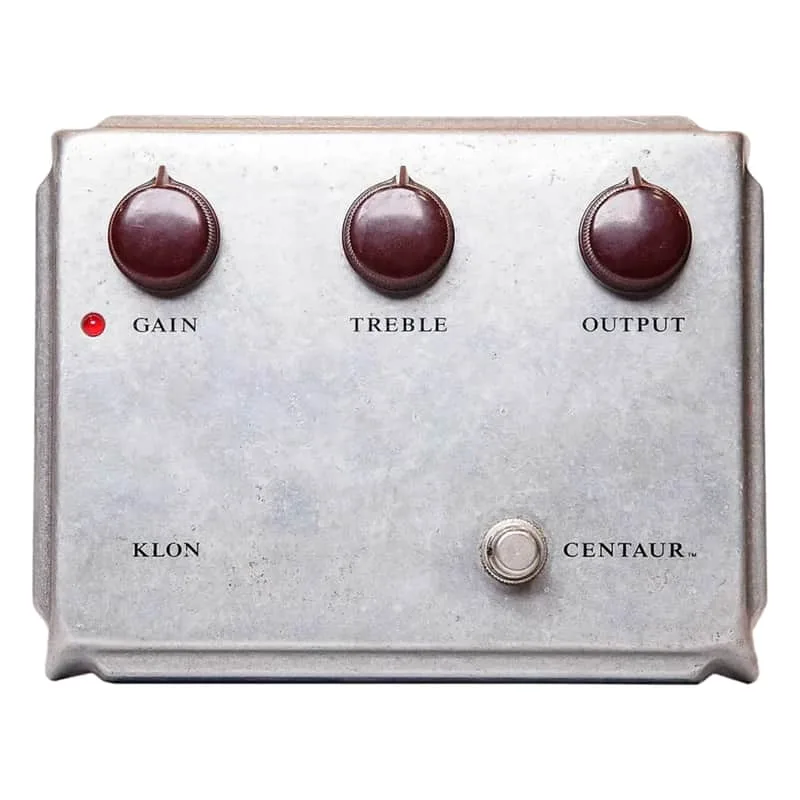
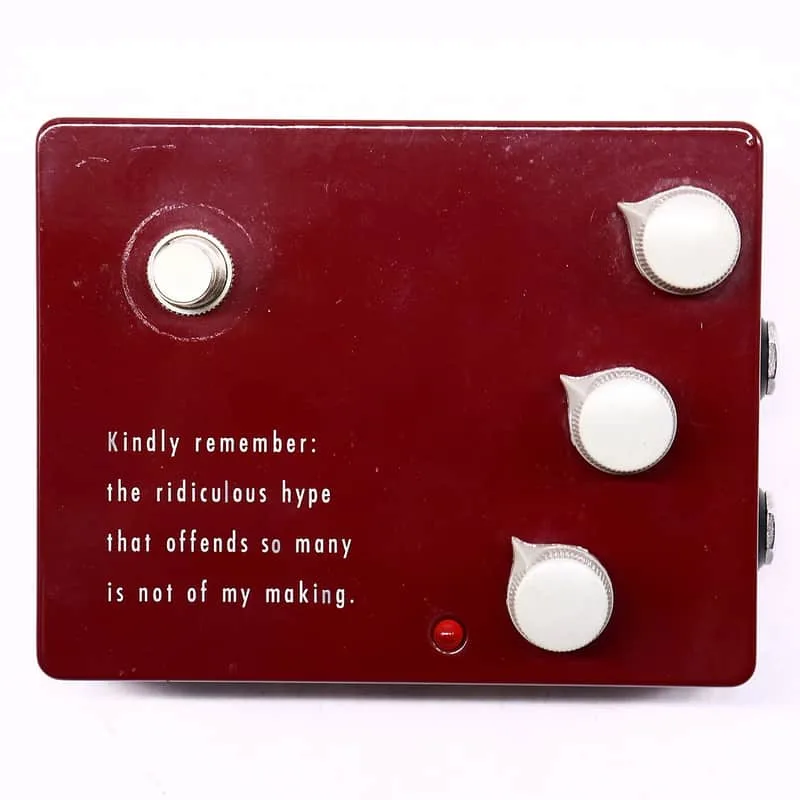
The Klon is the overdrive circuit behind the Klon Centaur, a pedal Bill Finnegan designed between 1990 and 1994 with the help of two MIT electronic engineers and released in 199412. It is a hard-clipping overdrive with what Origin Effects calls "a more gentle mid-forward sound than the 808," and it is the circuit most players mean when they say transparent overdrive: the design goal was to improve on the Tube Screamer's transient response and its handling of midrange and bass, to create a big, open sound with a hint of tube clipping2.
Around 8,000 units were hand built over roughly 15 years of production13. The original now sells for thousands of dollars used4, and the circuit has become one of the most copied overdrive designs in the pedal world, from commercial clones to DIY kits.
Where the Klon came from

Finnegan's starting point was the Tube Screamer, whose midrange-bass handling and transient response he wanted to improve. The development process was based on long listening tests, trying different resistor and capacitor values and listening to how the sound changed, rather than on theory alone1. JHS Pedals frames the origin simply: "in 1995 Bill Finnegan built an overdrive that did the version of high gain overdrive I had always wanted"5.
The result was a hand-built pedal that GuitarPCB's technical analysis calls "a mythic $329 hand build pedal"1. Origin Effects gives the 1994 release price as $220, about $500 in 2026 money2.
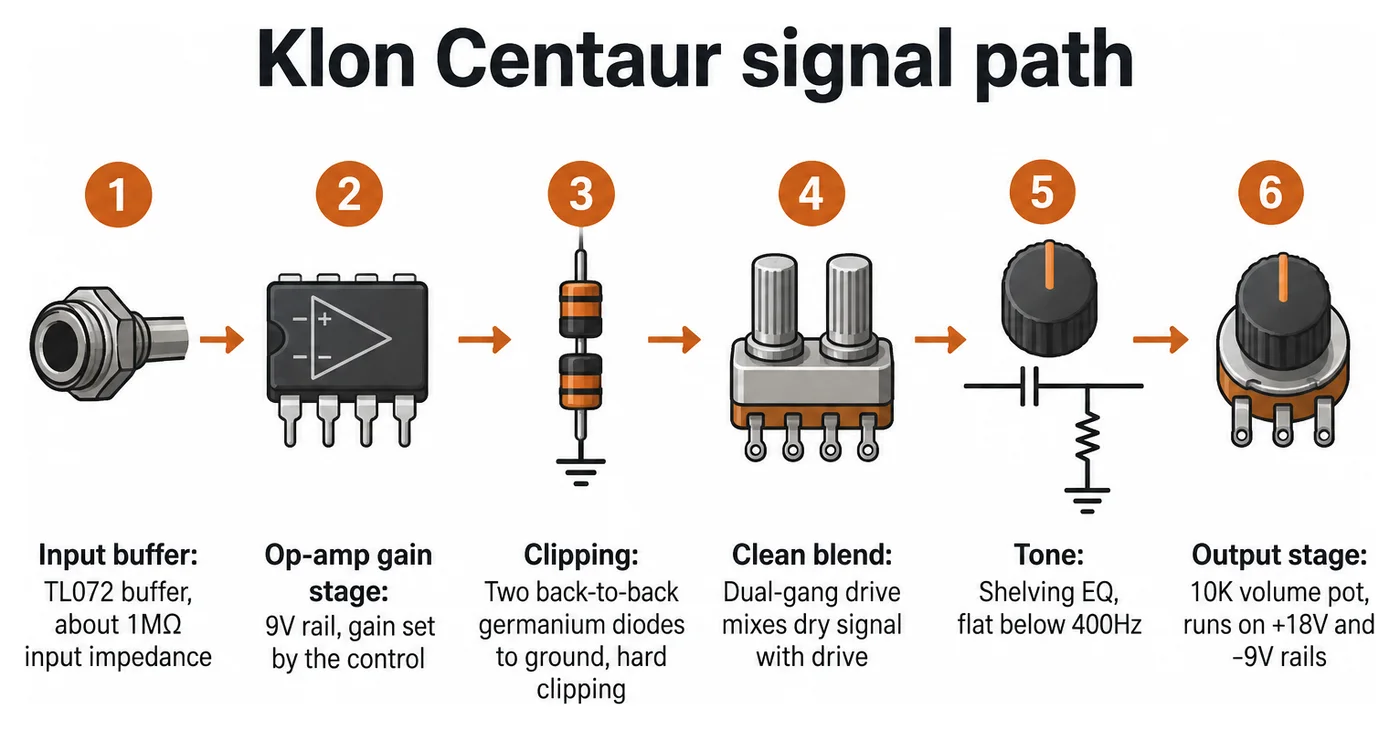
The circuit itself is deliberately ordinary in its parts. The op-amp is a TL072, which GuitarPCB reads as proof "that for a great sounding guitar pedal no exotic/mojo/expensive parts are needed"1. The input stage is a simple buffer based on the TL072, giving high input impedance (approximately 1MΩ) and DC isolation, and the whole pedal is built on a single-layer PCB with standard through-hole components, with wired bridges where a double-sided board would otherwise be needed1.
One documented change came in 1995. Bill Finnegan made three small changes that year, one of which was adding a resistor to give the circuit some protection against a static charge, with no sonic effect1.
Power: 9V in, 18V inside
The Klon runs on a 9V battery, and a TC1044 charge pump IC converts that single 9V supply into three rails at once: it doubles the voltage to +18V, inverts it to -9V, and derives +4.5V for use as a virtual ground in every stage of the circuit1.
Each rail does a specific job1:
| Rail | Where it is used | What it buys |
|---|---|---|
| 9V | Input buffer and op-amp amplifier (first stages) | Basic operation of the front end |
| +18V and -9V | Last stages of the pedal | Double headroom and more slew rate |
| +4.5V | Virtual ground in every stage | Lets a single supply behave like a split supply |
For a player, the doubled voltage in the later stages is the practical point: more headroom means the pedal stays cleaner and more open before it runs out of room, which suits the transparent-overdrive character1.
The original runs on a 9V battery, and from that 9V the internal TC1044 charge pump generates all the rails the circuit needs at the same time1. The 9V rail feeds the first stages, the input buffer and the op-amp amplifier, while the last stages run on 18V and -9V rails, allowing double headroom and more slew-rate1.
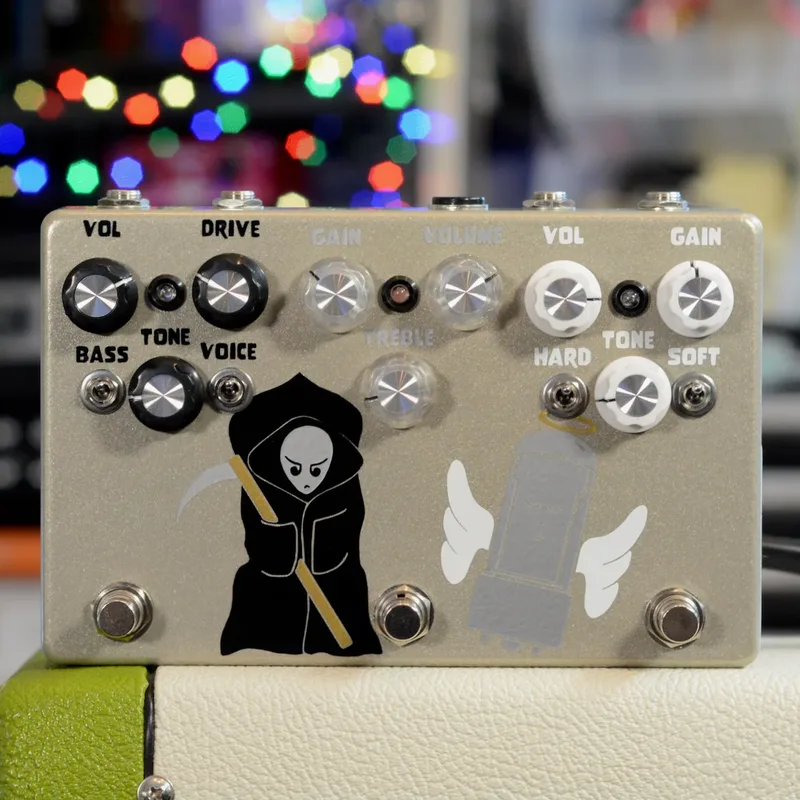
Clones vary on this point. GUPtech specifies its Angel Reaper at "9Vdc Only. Anything higher will blow the Klon circuit"6, while other Klon-style pedals accept only a standard 9V DC center-negative supply. Check the individual pedal's spec before plugging in.
The controls
The Centaur has three knobs, and each is doing something more specific than the usual label suggests.
| Control | What it actually does |
|---|---|
| Gain | Feeds the op-amp gain stage where the germanium diodes clip the signal1 |
| Tone | An active high-pass shelving equalizer: all frequencies up to 400Hz pass untouched, and frequencies above that point get boosted or cut1 |
| Output | A simple 10K potentiometer that shunts part of the signal to ground1 |
The tone control is the one worth understanding. It is an active high pass shelving equalizer that passes all frequencies up to 400Hz, while frequencies above that point get boosted or cut. Because it leaves everything below 400Hz alone and only tilts the top end, it changes presence and bite without thinning the low end, which is central to how the pedal keeps a guitar sounding like itself at higher gain1.
The drive character comes from the clipping stage: two back-to-back diodes shunt the signal to ground, a hard-clipping method also used in the MXR Distortion+, RAT and Boss DS-11. On top of that, Origin Effects describes "a dual-gang DRIVE control that adjusts the dry level and drive at the same time," so the pedal blends clean signal with the overdrive sound as you turn it up2. That clean blend is a big part of why the pedal is called transparent.
What diodes does the Klon use?
This is the most argued-about part of the pedal. GuitarPCB's analysis identifies the clipping diodes as 1N34A germanium types1. Analog Man's page on Klon diodes takes the other view: "Nobody knows what the exact model and manufacturer were," and notes that the later KTR pedal uses germanium diodes7. Delicious Audio reports on a clone using NOS USSR germanium diodes, "which were used in the original Klon," while also saying only that "some say that these are the ones used in the original Klon"8.
Wampler Pedals, describing its own Klon-based Tumnus, sums up the mythology around the part: the original used a very specific "secret" germanium diode, dubbed "unobtanium" by Finnegan, and "It was said that these diodes were the heartbeat of the coveted tone, but they had run out long ago"9.
"Nobody knows what the exact model and manufacturer were."
Is the Klon Centaur true bypass?
No. The Centaur does not use a 3PDT switch, so when the effect is disabled the guitar signal still passes through the input buffer and two high-pass filters at 1.5Hz and 0.3Hz1. Those filter points are far below audio frequencies, so they do not affect the tone; the pedal is buffered rather than true bypass, and that buffering is generally treated as part of the Klon sound. General Guitar Gadgets makes the same point about its replica kit: "The kit is buffered like the original, which is part of the Klon sound"4. Players curious about the tradeoffs can read more on buffer pedals.
Gold, silver and KTR
Over 15 years of production the enclosure and circuit had some variations in color and graphics, but those minimal variations do not affect the sound1. The gold and silver Centaurs look different and sound the same, on the evidence of the circuit analysis.
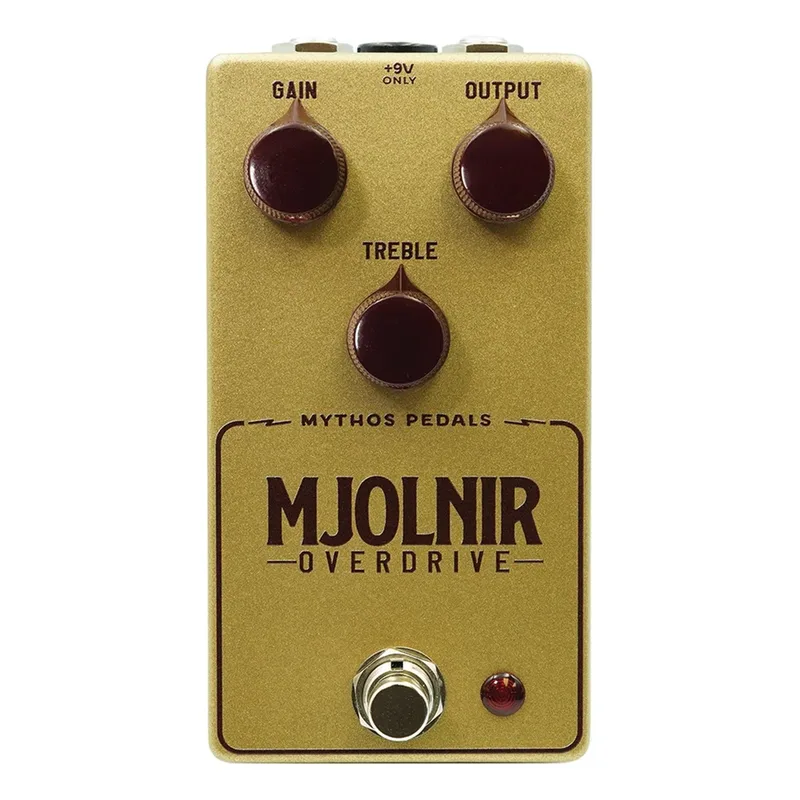
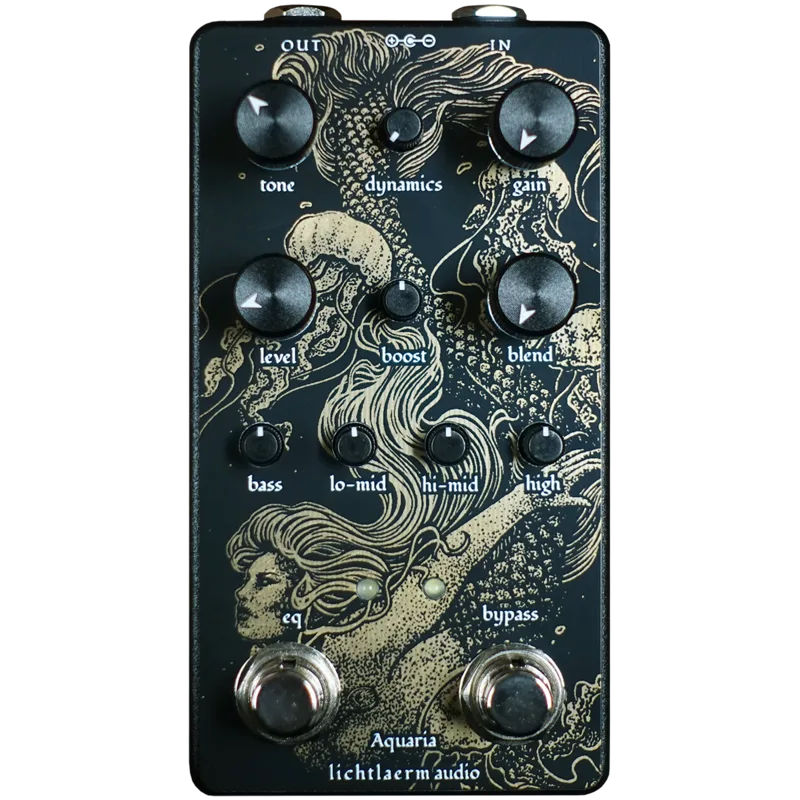
That has not stopped builders from matching against specific units. Mythos Pedals built its Wildwood Mjolnir around a silver unit, saying "the Wildwood Mjolnir is the best sonic representation we can do of the actual circuit we have in our possession"10. Lichtlaerm Audio went the other way for its Aquaria v2: "We sourced a genuine Golden Klon to precisely match the heart of this circuit"11. Kemper's profiling-amp Distortion effect includes a circuit modeled on the Klon Centaur Gold12.
After the Centaur, Finnegan released the KTR, a reissue with surface-mount construction; Analog Man notes it uses germanium diodes7. The Klon name is protected: JHS Pedals states plainly that "THE KLON KTR IS A REGISTERED TRADEMARK. THE JHS PEDALS NOTAKLÖN IS IN NO WAY AFFILIATED WITH OR ENDORSED BY KLON"13.
How the circuit got out
The Centaur's circuit board was covered in epoxy, hiding the schematic from anyone who opened the case. That practice is not unique to Klon: Pete Cornish encases its boards in epoxy resin "to protect the circuit and to eliminate unwanted interference"14. Eventually the Klon circuit was reverse-engineered anyway, and the schematic now circulates freely among builders.
In a Stompbox Book interview, Colt Westbrook places the Klon among the designs that have become permanent fixtures15:
"There are a lot timeless circuits that are always going to be around, like the Blues Breaker circuit, the Tube Screamer..."
The Klon now sits in that company, alongside circuits like the Marshall Bluesbreaker and the King of Tone, as a template other builders work from15.
Pedals based on the Klon
The clone market is large enough that "klone" has become a standard term. A sample of pedals whose makers state a Klon lineage16:
| Pedal | Maker | Stated lineage |
|---|---|---|
| NOTAKLÖN | JHS Pedals | Klon KTR circuit, not affiliated with Klon13 |
| Alcmene | AllPedal | Germanium clipping diodes like the original Klon Centaur17 |
| Klonka-Bar Overdrive | TONECAT | "A deliciously tuned Klon style transparent overdrive pedal"18 |
| CanClon | Union Tube & Transistor | "Our version of the classic Klon Centaur"19 |
| Klone | Jad Freer Audio | Klon-based, 9 VDC powered20 |
| Angel Reaper | GUPtech | Klon circuit, 9Vdc only6 |
| Aquaria v2 | Lichtlaerm Audio | Klon Centaur, matched against a genuine gold unit11 |
| Wildwood Mjolnir | Mythos Pedals | Silver Centaur circuit10 |
| Germanium Tumnus | Wampler Pedals | Klon-based with germanium diodes21 |
| Klone V2 | ARC Effects | "A faithful recreation of a Klon Centaur"22 |
| Klon | Iannucci Audio | Klon-style build, 9V DC center negative23 |
| Klone | Noise Space Audio | Klon circuit with NOS USSR germanium diodes8 |
| Kemper Drive | Kemper | Klon Centaur Gold circuit12 |
DIY Klon kits
Because the schematic is public, the Klon is also one of the most built DIY overdrive projects. Kits and PCBs currently offered include24:
- General Guitar Gadgets Klon Centaur Replica: a full replica kit, buffered like the original, with a true-bypass schematic and layout included as an option; GGG says "ours sounds very close to a silver Centaur"4
- GuitarPCB MKC v4: "allows you to build a stock Klon style circuit"25
- GuitarPCB MKC3: a modified Klon-style circuit26
- JedsPeds Super Klone: a kit comparing to a modified Klon27
- JedsPeds Biklonik: a kit comparing to the Klon and Keeley's Oxblood28
- JedsPeds K Buffer: "compares to the buffer part of a Klon"29
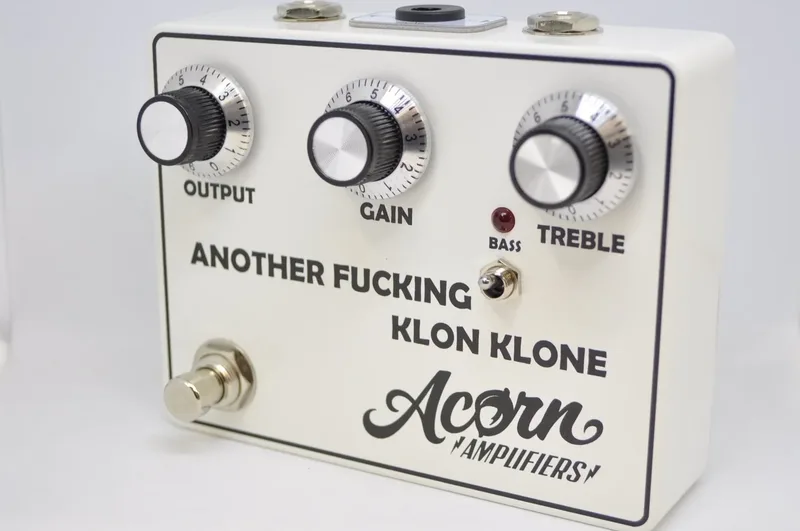
- Acorn Amplifiers Another F#%king Klon Klone: a Klon-based build30
- PedalPCB Kliche Buffer: a standalone Klon-style buffer31
- madbeanpedals The IMP: a compact build "Based on the Klon Siberia"32
For a beginner, the K Buffer or Kliche Buffer projects are the smallest entry point: just the input buffer section, the part responsible for the pedal's high input impedance and always-on signal path12931.
Pedals on this page

News
Questions
Who designed the Klon Centaur?
Bill Finnegan designed it between 1990 and 1994 with the help of two MIT electronic engineers. Finnegan's goal was to improve on the Tube Screamer's transient response and its handling of midrange and bass, to get a big, open sound with a hint of tube clipping. Development relied on long listening tests rather than simulation.
How many Klon Centaurs were made?
Around 8,000 units were produced over the pedal's lifespan, which ran about 15 years. Each unit was hand built, which is part of why the original now sells for thousands of dollars on the used market.
Is the Klon Centaur true bypass?
No. It does not use a 3PDT true bypass switch. When the effect is off, the signal still passes through the input buffer and two high-pass filters at 1.5Hz and 0.3Hz, which are below audio frequencies and do not affect the tone. The buffering is considered part of the Klon sound.
What diodes does the Klon use?
The clipping stage uses two back-to-back germanium diodes shunting the signal to ground, a hard-clipping arrangement also found in the MXR Distortion+, RAT and Boss DS-1. One analysis identifies them as 1N34A types; Analog Man notes that nobody knows the exact model and manufacturer of the originals.
Do gold and silver Klons sound different?
The enclosure and circuit had variations in color and graphics over 15 years of production, but those minimal variations do not affect the sound. Builders of clones still match their circuits against specific units, for example a silver Centaur or a genuine gold one.
What power supply does a Klon Centaur need?
It runs on a 9V battery or a 9V DC adapter. Inside, a TC1044 charge pump converts the 9V into +18V, -9V and +4.5V rails. The original's DC jack is a 1/8 inch plug type rather than the common 2.5mm barrel, and a male plug was included for retrofitting a standard adapter.
Sources (32)
- Klon Centaur Analysis, GuitarPCB
- Green, Gold & Blue, Origin Effects, 2026-09-08
- Best Klon clones 2026: Klon Centaur Klones for every budget, Guitar World, 2022-06-09
- Klon™ Centaur™ Clone Kit: Build a Klon Overdrive for $61, generalguitargadgets.com, 2014-09-11
- WANDERER, JHS Pedals, 1995
- Angel Reaper, GUPtech
- Analog Man KLONE mods, Analog Man (analogman.com), 2025
- Noise Space Audio Klone, Delicious Audio, 2021-08-10
- Germanium Tumnus, Wampler Pedals, 2026-05-27
- Wildwood Mjolnir, Mythos Pedals
- Aquaria (v2) by Lichtlaerm Audio, RockBoard PedalPedia, 2026
- KEMPER Distortion Effects, Kemper GmbH
- NOTAKLÖN, JHS Pedals
- PETE CORNISH: TB-83 Review, petecornish.co.uk, 2025
- Walrus Audio, Stompbox Book, 2021-10-27
- Guitar Pedal X - GPX Blog - Klon Klones Kapsule Collection 27, Guitar Pedal X
- Alcmene® Mini Pedal: Authentic Klon Tone, Legendary Sound, AllPedal (allpedal.com)
- Klonka-Bar Overdrive by TONECAT, RockBoard PedalPedia, 2026
- CanClon - Union Tube & Transistor, Union Tube & Transistor
- Klone (Klon Centaur replica), Jad Freer Audio
- Wampler Gearbox Andy Wood Signature Overdrive/Distortion, Delicious Audio, 2021-05-13
- Pedalboard Feature: Dave Depper, Strymon, 2015-10-05
- Klon by Iannucci Audio, RockBoard PedalPedia, 2026
- Bill Finnegan, gearnews.com, gearnews.com
- MKC-v4-2021-Build-Document.pdf, GuitarPCB, 2021-06
- BI_MKC3, GuitarPCB.com, 2018-06
- Super Klone, JedsPeds
- Biklonik, Jeds Peds (jedspeds.co.uk)
- K Buffer, Jed's Pedds (jedspeds.co.uk)
- Another F#%king Klon Klone, Acorn Amplifiers
- Kliche Buffer, PedalPCB.com
- The_IMP.pdf, madbeanpedals.com, 2020