News
10 Re-Creations of Well-Loved Pedals
Many guitarists, at some point, have fallen under the spell of the sounds heard on iconic rock albums from the mid-to-late 60s. Players like Jimmy Page, Eric Clapton, Jimi Hendrix, Pete Townshend, Robby Krieger, and Jeff Beck had been synonymous with fuzz, wah, tremolo, and/or univibe. Throw Brian Jones and George Harrison into the mix to obtain sitars and other sound-altering effects. They were continuously experimenting, shaking things up, and attempting to outdo one another. Like books, films, impressionist paintings, and albums, the effects pedal history is littered with works that are never greatly appreciated during their time. Several outstanding pedals have come to be considered as landmarks in the field and, although they were a hit when launched, have been discontinued for some reason. Presently, modern players who are big on the classic sounds of yesteryear keep an eye on music stores, patiently waiting for elusive vintage gear, often with eye-watering price tags, to show up. But credits to new technological advancements, vintage models can now be revisited, revamped, and re-created based on customer feedback, their initial success, and features. Over the last couple of years, pedal reissues have become more popular with brands like Ibanez, DigiTech, DOD, Boss, Korg, and several others. Check out some remarkable re-creations and -issues of well-loved vintage units below.
JHS Cheese Ball
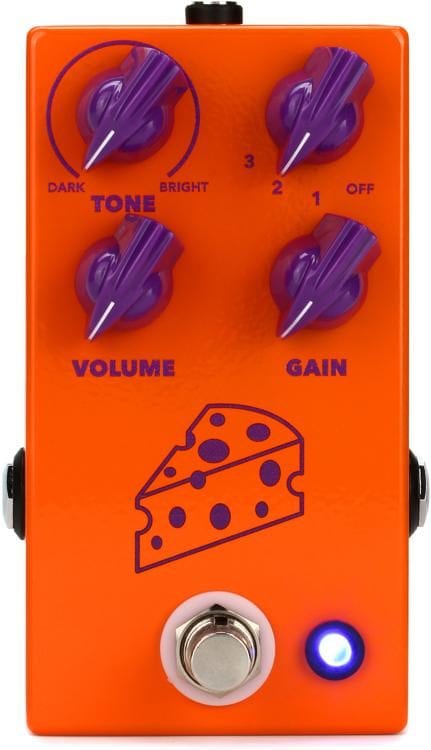
The JHS Cheese Ball is a spot-on re-creation of the highly sought-after, 1990s-era LoveTone Big Cheese distortion/fuzz pedal, which was utilized by Jimmy Page, U2, Wilco, My Bloody Valentine, and Radiohead, amongst others. Merely calling this pedal “versatile” does not do it justice. From violin-esque sustain to searing buzz to spitty grind, the pedal will achieve virtually any fuzz tone one can think of. The Cheese Ball is a homage to one of the best fuzz pedals of all time. The Cheese Ball consists of knobs that mirror those of the LoveTone, but sans the cheese-based labels. While that might disappoint quirky control name fanatics, the controls are now more self-explanatory. “Whey” is now Gain, “Curds” becomes Volume, while the Tone control selects only between “Bright” and “Dark,” instead of choosing between “Bee” and “Hog.” Besides the three knobs that deliver tons of tone-sculpting power, the Cheese Ball also carries a four-way control (Off, 1, 2, and 3) that unleashes all its schizophrenic personalities. The Off position disengages the Tone control for a bright, trashy fuzz, Position 1 provides a mid-scooped, Muff-esque sound, Position 2 gives a slicing, mid-boosted sound, while Position 3 dishes out a spitty, gated fuzz sound. The Cheese Ball’s launch is big news for those who do not have upwards of £600 to splurge on a single unit.
Vick Audio R-Comp
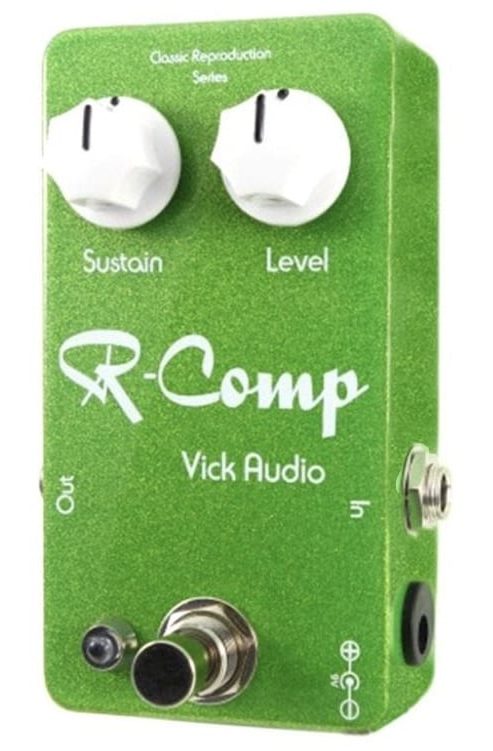
Boasting a rugged metal chassis, streamlined interface, plus some of the warmest, longest-lasting sustain, the Ross Compressor is an authentic effect icon. Endlessly imitated for its distinctive tone, it is a legit holy grail pedal that serves as a crown jewel on whatever pedalboard. Original Ross Compressors were manufactured only for a couple of years in the late 1970s. The units have established a cult-like following but are very elusive and expensive. According to Trey Anastasio of Phish, his Ross Compressor, which he had been using since high school, is the key to his tone. For years, the Ross Compressor was regarded by several would-be Trey-impersonators as the secret to capture his sound. The R-Comp by Vick Audio is a re-creation of that coveted Ross Compressor. It serves up the same excellent response as authentic Ross units. It opens up the tone at higher sustain settings and delivers a warm, natural-sounding compression at lower settings. The R-Comp has an incredible output and boosts the signal above unity even at lower sustain settings.
Ibanez TS808 Tube Screamer
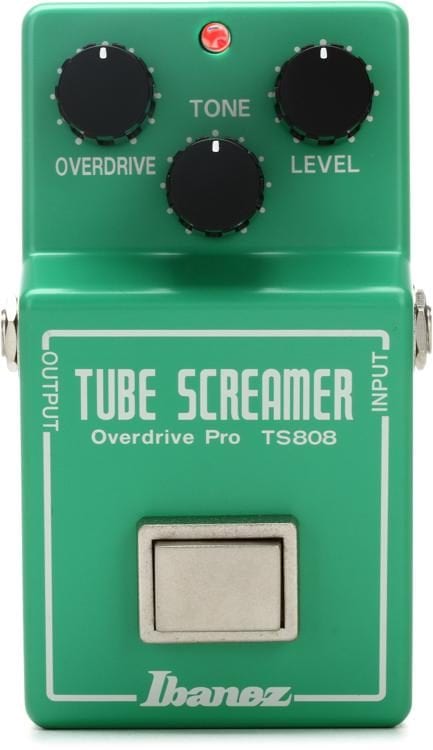
Dubbed as the “holy grail of tube screamers,” the original Tube Screamer propelled into fame after Stevie Ray Vaughan utilized it to create his trademark tone. Now, those original units go for a serious coin on the collector’s market. Many prominent guitarists love the TS808 Tube Screamer for its smooth, overdriven tube-esque full tone. Fortunately, Ibanez has managed to put together an unimaginable reissue. Enthusiasts can already capture the raved-about tones of the original, massively collectible TS808 Tube Screamer without breaking the bank. The JRC4558D IC chip, which Ibanez spec’d it out with, is key to making the original unit so full, smooth, and sweet. The good news is that Ibanez was able to incorporate the same analog circuitry and chip into this reissue, hence making the TS808 Tube Screamer beautiful-sounding. From rock to blues to jazz to anything else, the TS808 Tube Screamer reissue will deliver all of that classic warmth. Just like the original Tube Screamer, the TS808 carries a square footswitch. It also consists of controls for Level, Overdrive, and Tone, so users can tweak their sound to taste.
Vox V846-HW
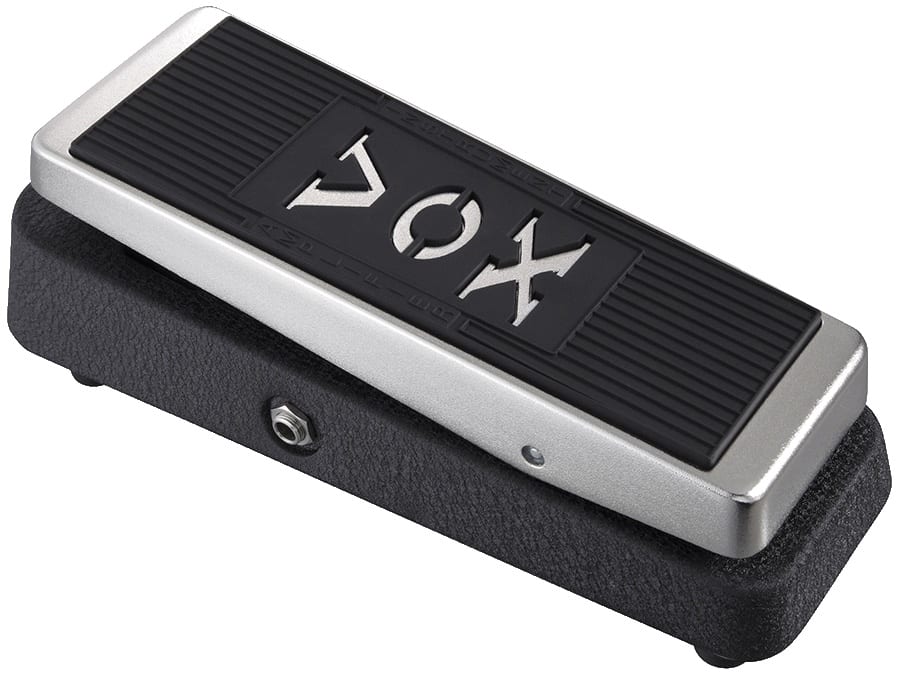
More than four decades after the original VOX Wah altered the sound of rock music for good, the V846 has reincarnated as the V846-HW hand-wired wah pedal. While its signature tone is undeniable, Vox did not build the V846-HW to merely repeat history but to create new chapters in the future. As its name suggests, the V846-HW features hand-wired turret board construction. As if that were not enough, VOX meticulously picked every component, including the potentiometer, resistors, inductors, and capacitors, for superb tone and fidelity. It also incorporated a tone-preserving true bypass to the original design. On the outside, the V846-HW’s die-cast body sports a sandblasted exterior with crepe finish and is capable of enduring years of abuse. With dependable operation and rugged construction, this wah pedal is ready to take to the road. This hand-wired reissue of one of the most-played wah pedals is a perfect blend of VOX’s world-famous technology and classic yet advanced specs, exceeding any previous wah pedal by providing the purest sound.
MXR ‘74 Vintage Phase 90
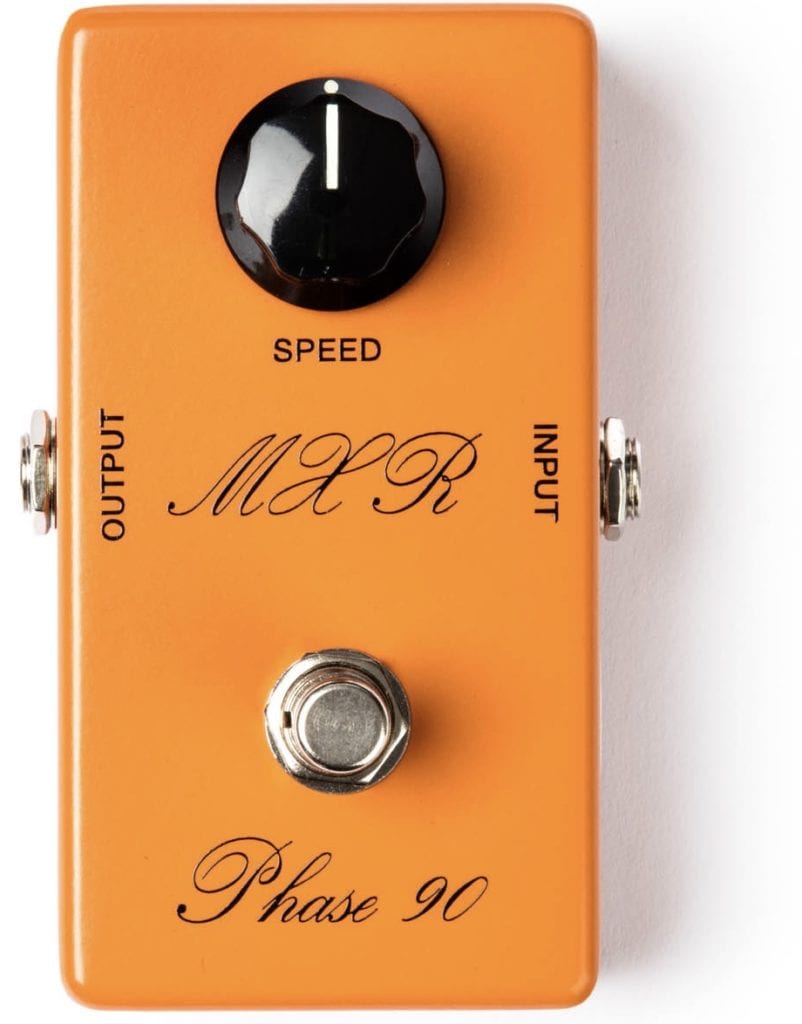
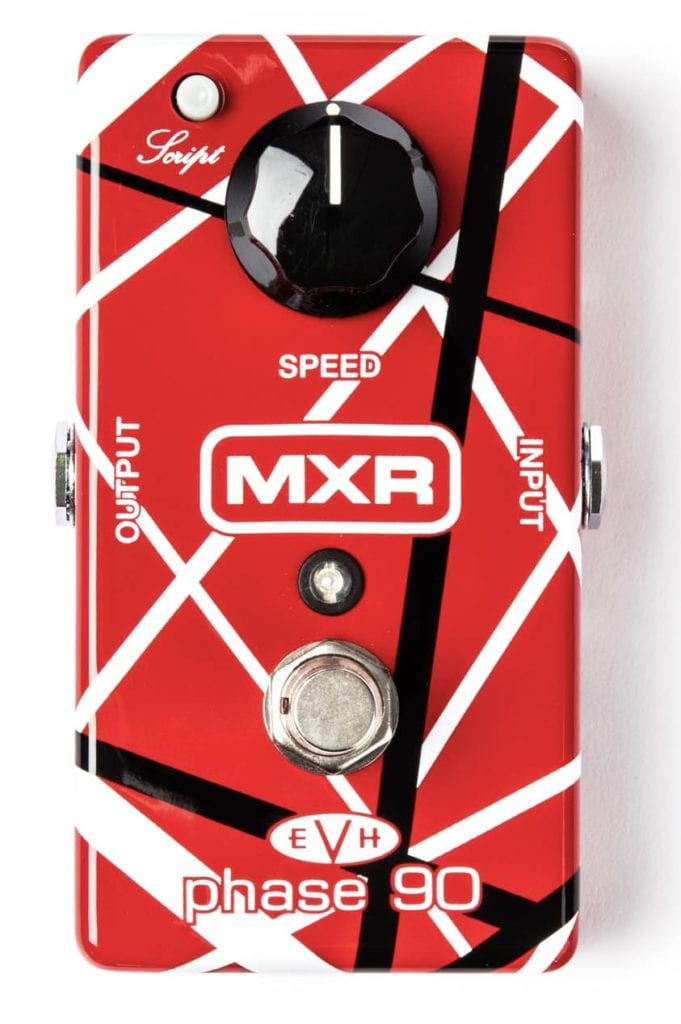
The MXR Phase 90 has set the standard for phasers with its rich and thick tone. It is among the most famous phase shifters of all time. For well over 40 years, the Phase 90 has been a staple on the rigs of numerous guitar heroes and players worldwide. Many revolutionary riffs have benefitted from the sonic features of this little orange box. Besides its signature orange chassis, the Phase 90 is easily recognizable due to its unmistakable script logo. The MXR ‘74 Vintage Phase 90 is a re-creation of a Phase 90 unit bought in 1974 by Dunlop Senior Engineer Bob Cedro. The hand-wired board includes select resistors coupled with hand-matched FETs to capture the same warm and smooth modulation as the original Phase 90. The ‘74 Vintage Phase 90 carries a Speed knob and comes in a classic orange finished box embellished with the signature Script logo.
JHS Muffuletta
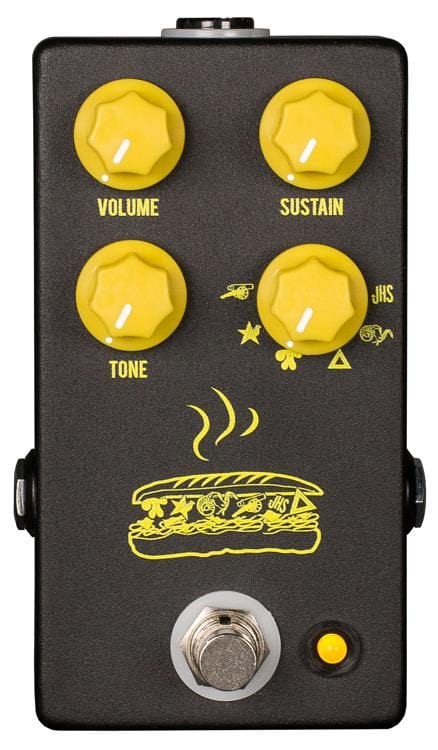
For years, the Big Muff fuzz has been behind numerous classic recordings and seen many variations that just about any guitarist has a favorite version of its iconic tone. JHS wanted to pay homage to such an undeniably classic fuzz pedal, but its team could not agree on which Muff was king. Thanks to that indecision though, JHS opted to take five of the most sought-after ones, and shoehorn them into its Muffuletta six-way fuzz pedal. The Muffuletta is jam-packed with five pure analog re-creations of beloved Big Muff tones plus a JHS-exclusive take on the legendary stomp. It carries a Mode selector for picking from the six models—the Civil War, the Pi, the Russian, the Triangle, the ‘73 Ram’s Head, and JHS Muff. Every mode is displayed by an image representing the graphics found in that era of the fuzz pedal. Choose Pi for a more aggressive sound, Triangle for more articulation and low-end response, Civil War for less gain, more mids, and brighter tone, ‘73 Ram’s Head for scooped mids, less gain, and darker tone, Russian for a nice garage-esque sound, less clarity and low-end, or JHS Muff for more power, less compression, and punchy mids (suitable for bass).
Dunlop Jimi Hendrix Fuzz Face
The Jimi Hendrix Fuzz Face is a painstakingly faithful re-creation of the 1969-70 Dallas Arbiter Fuzz Face unit the guitar legend utilized to craft a tremendous array of exceptional sounds, songs, and styles, as well as on classic albums, including Electric Ladyland. The engineering department at Dunlop went through numerous vintage Fuzz Face pedals, picking and closely examining a select few that possessed the distinctive Jimi voodoo.
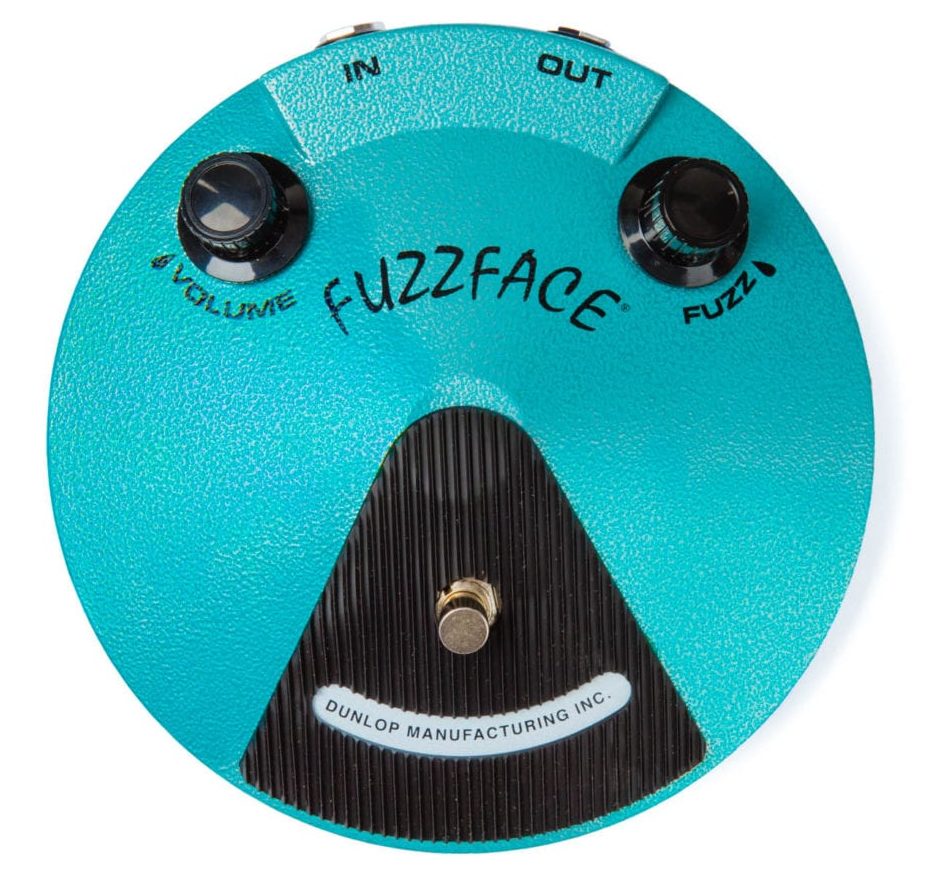
Jimi sculpted his tones into extraordinary sonic textures and shapes, leveraging only some effects plus his cranked-up amp and guitar. In the process, Jimi produced an iconic sound that still makes jaws drop almost four decades after. When dedicated guitar effects sprang in the 60s, he was among the earliest artists to embrace them as sound-sculpting tools. Several of Jimi’s legendary solos and sonic journeys maximized effects such as the Octavio octave doubler, Uni-Vibe chorus/vibrato, Cry Baby wah, and the incredible Fuzz Face distortion. Unlike many guitarists of his time who settled for merely amplifying their instruments’ sound, Jimi continuously sought out innovative tools to transform his guitar tones into malleable shapes ranging from chiming bells to otherworldly sheets of sound. Distortion had been a significant part of his arsenal, and the Jimi Hendrix Fuzz Face delivered the firepower. The Hendrix Fuzz Face is authentic in every detail—circuitry meticulously matched to the original specs and a hand-wired circuit board without a solder mask. It is built around BC108 silicon transistor and comes in an identical groovy circular chassis consists of tooled replicas of the original Fuzz Face knobs.
JHS 1966 Rangemaster Boost
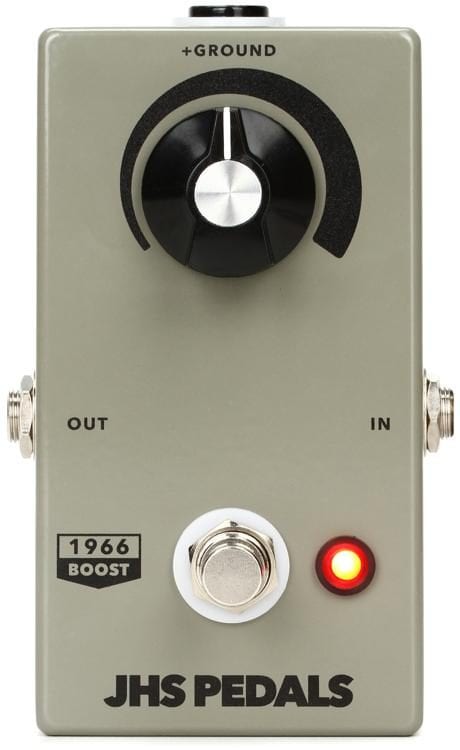
The Dallas Rangemaster Treble Booster is among the most renowned color boosts of the last five decades. It was the secret sauce on the Red Special/AC30 pasty of Brian May and Clapton’s weapon on John Mayall’s seminal Blues Breakers record. The pedal and its numerous replicas have gained a star-studded following, including the likes of Ritchie Blackmore, Rory Gallagher, Toni Iommi, as well as Josh Scott of JHS Pedals. The 1966 Rangemaster Boost pedal by Josh squeezes all the original’s vibe into a future-proof through-hole pedal design. Josh added a pull-down resistance to relieve switch pop, single-power supply filter cap to help with noise, and a revamped pot taper. The 1966 Rangemaster Boost has been built with top-grade carbon composition resistors, a hand-picked germanium transistor, and oversized caps. To get the most out of the 1966 Rangemaster Boost, Josh recommends: “Be sure to always have this pedal first in your signal chain; the guitar must be plugged into its input due to the impedance it requires on its input, no exceptions. As with most classic fuzz pedals, it loves a dirty amp or overdrive afterward in the signal path.”
Voodoo Lab Micro Vibe
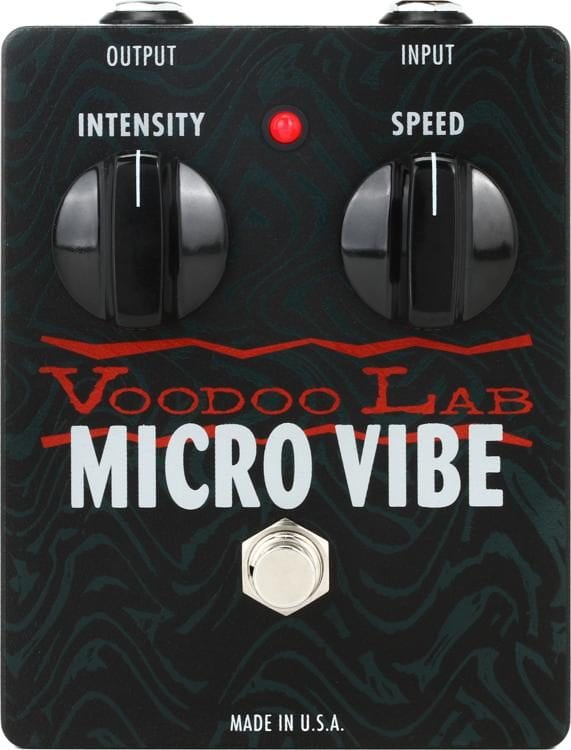
The Micro Vibe by Voodoo Lab features an analog re-creation of the classic 1968 Uni-Vibe four-stage phase shifter. It dishes out a juicy tone identical to the original unit, which reached legendary status when Jimi Hendrix utilized the effect on his Band of Gypsys album as well as his Woodstock performance of The Star-Spangled Banner. The Micro Vibe incorporates the same photocells, incandescent lamp, and sinewave oscillator that provided the real Uni-Vibe its groovy swagger. The Micro Vibe is a sturdy, pedalboard-friendly variant of the Uni-Vibe that serves up the same lush, psychedelic colors that many guitar icons, including Robin Trower, Stevie Ray Vaughan, and David Gilmour, first fell in love with. With this compact stompbox, users can now add the Uni-Vibe’s psychedelic tonal colors into their setup. Each unit is handcrafted one at a time using the finest vintage and modern components.
Electro-Harmonix Ram’s Head Big Muff Pi
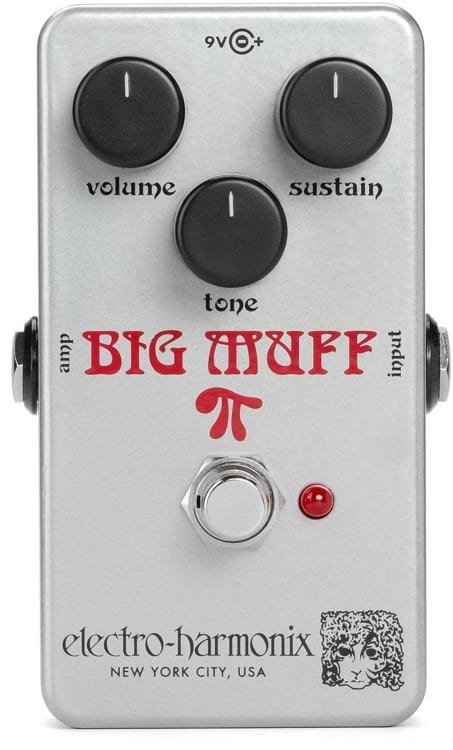
The Ram’s Head Big Muff Pi is an accurate re-creation of the highly sought-after 1973 Violet Ram’s Head Big Muff. Popularized by David Gilmour, this mid-70s classic is famous for its articulate string separation and excellent sustain. It has been heard on many iconic guitar solos and classic recordings. The smooth but aggressive response makes chords roar and solos sing. It has made the original Ram’s Head Big Muff an essential since its debut. The recently announced Ram’s Head Big Muff Pi now comes in a reasonably-sized chassis for a very reasonable price. “Prices of original Ram’s Head Big Muffs have reached astronomical heights. This reissue nails that classic V2 tone heard on legendary recordings and famous guitar solos, and does it at a price the working musician can afford,” Electro-Harmonix founder Mike Matthews detailed. The Ram’s Head reissue carries familiar Sustain, Volume and Tone knobs, and incorporates some updates, including an LED indicator, true bypass switching, and support for a 9V power supply.