News
8 Renowned Guitarists and Their Go-To Pedals
Many think that a guitar pedal must be a direct reflection of the guitarist and the genre they play. Pedals are designed to improve a sound and realize a tone in a musician’s head. They help expand a creative idea and bring an abstract concept to life. Effects used to occur naturally, and artists had to get extremely creative to capture a certain sound. For instance, when the vacuum tubes in vintage amps are pushed to their limits, they would produce a crunchy or distorted sound. That was how overdrive was produced. In Led Zeppelin’s When the Levee Breaks, John Bonham’s drums were set up in a hallway with high ceilings to achieve a very spacious and full sound. That is called reverb, which is among the more popular effects used now. A lot of these effects have been manufactured into compact or large stompboxes that are easily accessible by stomping on a button. Such advancement has opened a whole new world to musicians, letting them explore different options and realize even their wildest fantasy. Some players may find themselves wondering which effects and guitar pedals are used by their favorite guitarist or for a specific genre of music. Every guitarist’s tone is like their fingerprint, unique and special. Sure, one can try to replicate a certain sound, but even if they buy the exact equipment, it will never sound 100% similar to the original. That is because each guitarist has different tone settings on their instrument or amp, certain nuances to their touch, and go-to pedal effects used with their rigs. This article will elaborate on the kinds of effects utilized by eight renowned guitarists of varying styles, including the specific guitar pedals they employ.
David Gilmour
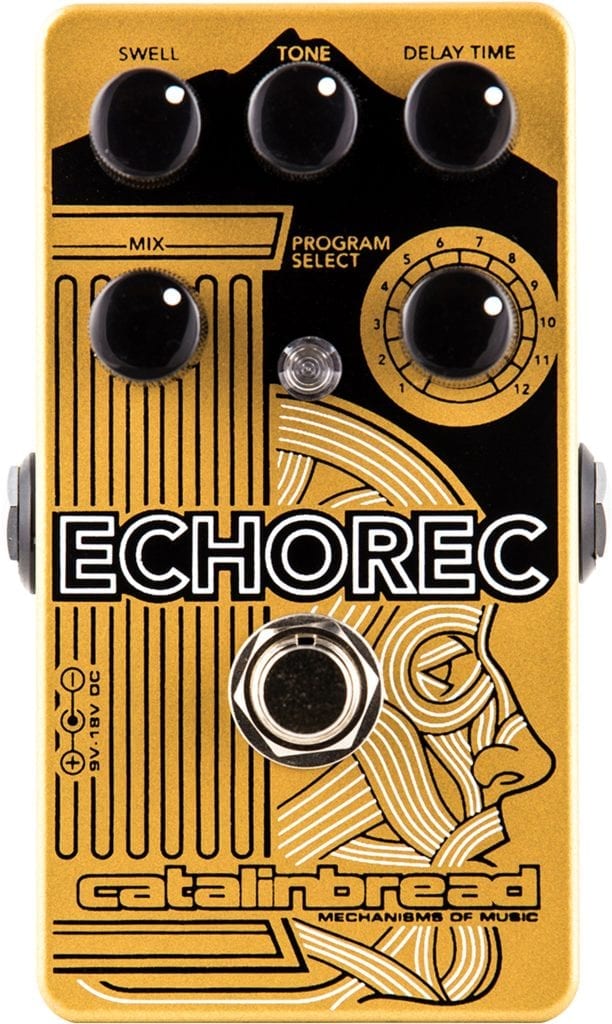
David Gilmour achieved global fame due to his incisive, atmospheric guitar work and vocals with British rock band Pink Floyd. David eventually became the group’s leader during their late period. He pursued an epic solo career and collaborated with several big names in British rock. Surprisingly, David employed only a few guitar pedals. He is a big fan of the Fuzz Face and the Electro-Harmonix Big Muff Pi. For delay, the Binson Echorec, which is a tape-style delay, was his go-to unit. Vintage Binson Echorecs were exceptional drum echo machines, which enabled achieving stunning timed delays of as much as 300ms. Now, these units are difficult to find and quite a challenge to maintain. Good news is Oregon-headquartered effects company Catalinbread has recently released its Echorec Binson-esque delay pedal, which does an outstanding job of emulating the classic sound in a more convenient, pedalboard-friendly stompbox design. The Catalinbread Echorec presents a digital replication of the original’s four-head functionality. Its dynamic features include up-front control knobs—Program Select, Mix, Delay Time, Tone, and Swell. Program Select enables access to a dozen of head configurations. Users also have timbre options with the Tone dial, feedback control via the Swell knob, and a Mix control that is variable from 100% wet to 100% dry.
Jack White
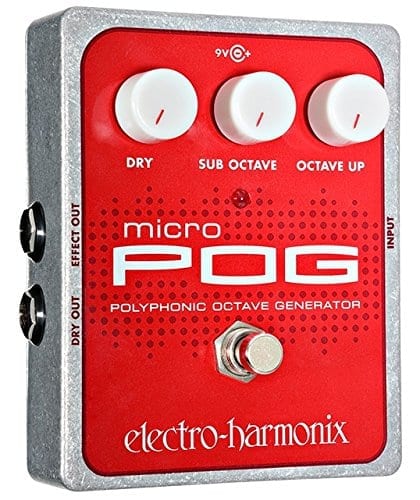
Jack White is an American singer, songwriter, and guitarist who first reached fame with the White Stripes and later performed in different bands before starting an epic solo career. In 2012, White launched his first solo album Blunderbuss, which deepened his songwriting craft and expanded his stylistic reach. White is big on massive thick sounding fuzz. From the Raconteurs and White Stripes to his solo work, he loves the Big Muff Pi from Electro-Harmonix with the knobs positioned around midnight. For many years, this timeless piece has been defining the sound of rock guitar. The Big Muff Pi is the stompbox innumerable players, including the likes of Carlos Santana, Jimi Hendrix, and more, relied on for its creamy, rich, violin-esque sustain. Another significant ingredient of his sound is the Electro-Harmonix POG Polyphonic Octave Generator, which dishes out various octaves smoothly simultaneously. The POG is capable of emulating an organ, making a guitar sing like a 12-string, and capturing distinctive sounds without glitches. It also works well with bass, adding more bottom to the bottom end and providing funky options for customizing tone. The POG consists of Dry, Sub Octave, and Octave Up knobs, which enable blending in the amount of effect, adding a lower octave, and dialing in one octave up, respectively. It comes in a compact, rugged chassis, making it a welcome addition to any pedalboard.
Jimi Hendrix
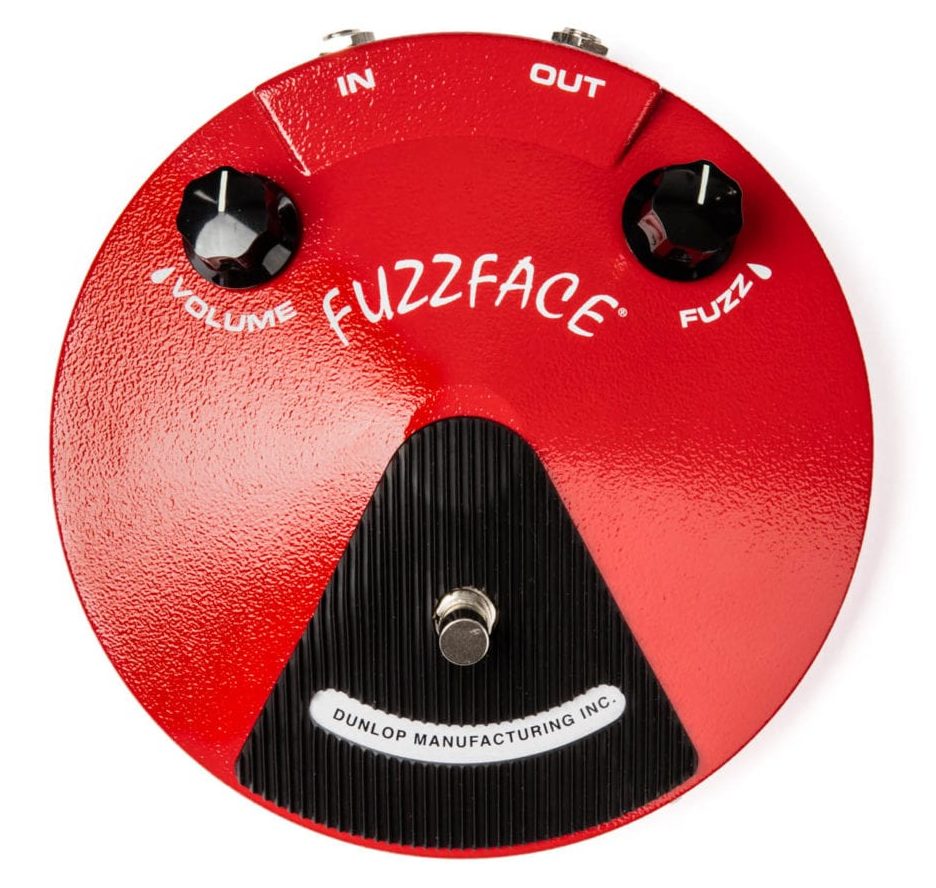
Jimi Hendrix is an American composer, singer, and rock guitarist who fused American traditions of soul, jazz, blues, and rock with methods of British avant-garde rock to reinvent the electric guitar in his image. He was a pioneer in effects utilization at a time when hardly any guitarist bothered to try anything. Jimi popularized the wah effect on songs such as Voodoo Child. He also loved fuzz, and at Woodstock, Jimi employed a Dallas-Arbiter Fuzz Face, which Dunlop reissued to his specifications. The original Fuzz Face is legendary for its thick and warm tones. Over the years, it has witnessed different variations by several manufacturers. The first model was created by Dallas Arbiter. It comes in an enclosure inspired by a mic stand mount, featuring Fuzz and Volume knobs. Fuzz Faces were later manufactured by Crest Audio and then by Dunlop. The Fuzz Face reissue by Dunlop has been built to the exact specs of the original Dallas Arbiter unit. Ruggedly constructed to the vintage specifications and germanium PNP transistor design, this reissue was utilized by Jimi and other iconic rockers of the 1960s and 1970s. This classic fuzz box carries familiar Fuzz and Volume knobs for dialing in the perfect sound. The Fuzz Face is excellent for modern guitarists who are into the beautiful guitar tones of yesteryear.
Slash
Award-winning former Guns N’ Roses guitarist Slash loves to add some accents of effects, such as chorus, to specific songs. He is popular for massive distortion and solos that are full of wah. Most of Slash’s distortion is provided by his amps—classic Marshall JCM-800s turned up—while for his wah effect, he started with the Dunlop 535Q Cry Baby.
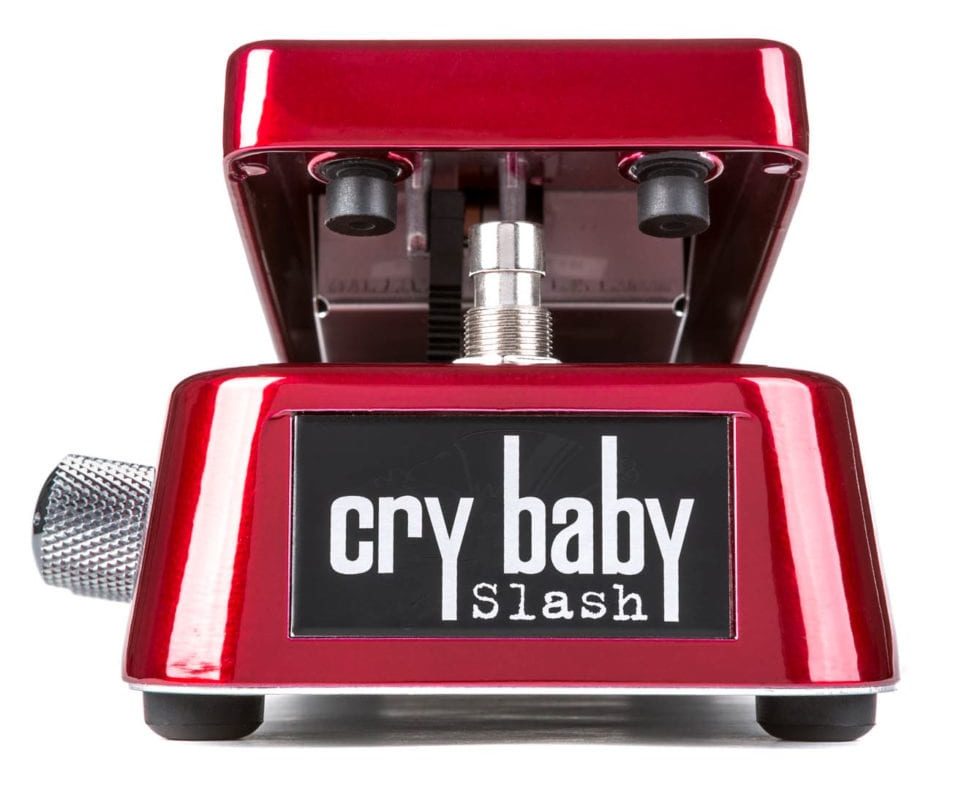
The engineers at Dunlop worked closely with leading guitarists to devise the 535Q Cry Baby Multi-Wah pedal, which enables fine-tuning the wah sound and making it personal. The 535Q Cry Baby serves as the “Swiss Army knife of wah pedals.” The 535Q Cry Baby carries a six-way Range Selector knob that lets users select from six frequency ranges, every position is based on the distinct tonal characteristics of Dunlop’s beloved wah specimens. With a roll of the Variable Q control, users can take the 535Q’s response from sharp and narrow to subtle and broad. The 535Q offers command over the most essential wah parameters, allowing players to craft their ideal wah tone. When Slash became a household name, Dunlop built his signature wah, which is spec’d from the 535Q Cry Baby but incorporates an added boost control to give more punch. Per Jim Dunlop, “Like the man himself, the Slash Cry Baby Wah is both revolutionary and classic, right down to its hot rod metallic red finish and cutting edge circuit design. The Slash Wah deploys a searing high gain distortion coupled with the Fasel-loaded Classic circuit for instant lead tone that not only cuts through, but sings with a sweet and lush top end.”
Kurt Cobain
Kurt Cobain is an American rock musician who became famous as the primary songwriter, lead singer, and guitarist for the seminal grunge band Nirvana.
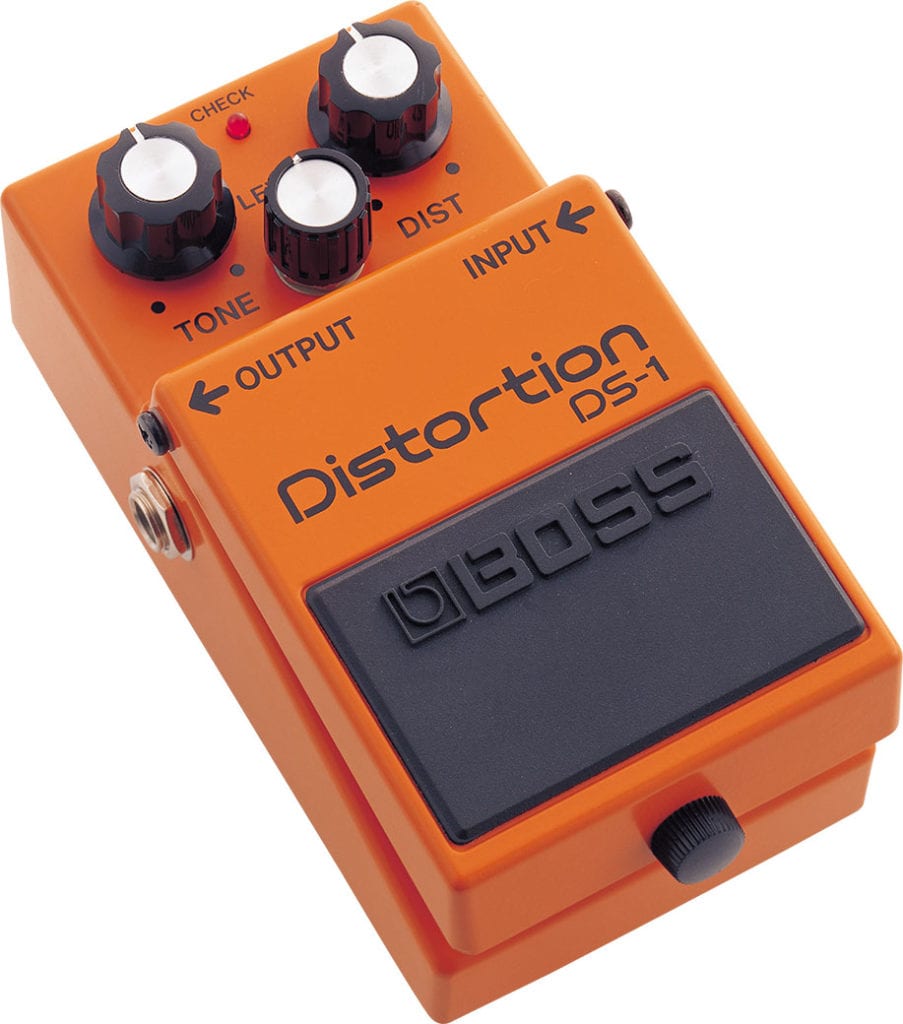
Kurt fancied that dirty stripped-down sound that revolutionized music, but that does not mean he did not employ some pedals on stage. His favorite was the Boss DS-1 Distortion pedal, which may well be an entry-level stompbox, but possesses exceptional tone for a massive distortion. Introduced in 1978, the DS-1 Distortion pedal is a real icon in the guitar effects realm. It defined a bold new sound, dishing out smooth sustain and hard-edged attack that has become a must-have of players for generations. The DS-1 Distortion boasts powerful tone shaping. “Unlike typical tone controls that only cut highs, the DS-1’s tone circuit features an innovative design that offers far more range,” Boss claims. The DS-1 is the best-selling BOSS compact pedal, and its original design is still inspiring music creation everywhere. The signature DS-1 tone is responsible for the sounds of many rock legends.
The Edge
U2 guitarist The Edge is known for having one of the most extensive effects arrays ever assembled at more than fifty various effects. He plays a variety of guitars and changes between them regularly during a show. The Edge has recorded several studio albums with U2 and has released one solo record. His distinctive guitar sound—incisive, cutting-edge, sharp, and clean—became a trademark of the Irish rock band.
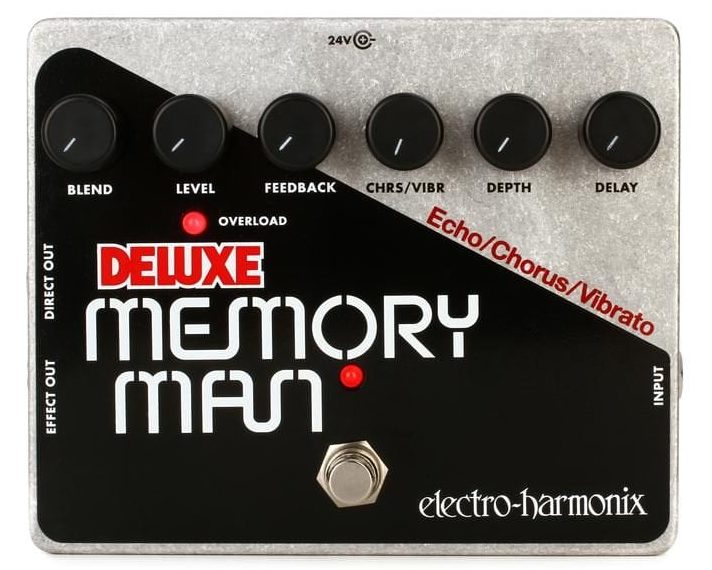
Delays gave The Edge his signature tones. The Memory Man by Electro-Harmonix for the older songs while digital delay for the majority of the newer songs. For digital delay, The Edge loves the discontinued TC Electronics 2290. Cherished by collectors and loved by musicians, the Memory Man is touted as the “most in-demand analog delay ever built.” It delivers as much as 550ms of vibrant echo, which rivals tape delay. Haunting vibrato and lush, spatial chorus are only some of the treats found in the sonic smorgasbord of the Memory Man. The Memory Man incorporates a bypass footswitch for switching the effect in and out. It also consists of controls for Delay, Depth, Chorus/Vibrato, Feedback, Level, and Blend. The unaltered signal is always available at the direct out jack. The Memory Man lets users experience the warmth of analog delay, vibrato, and chorus.
John Mayer
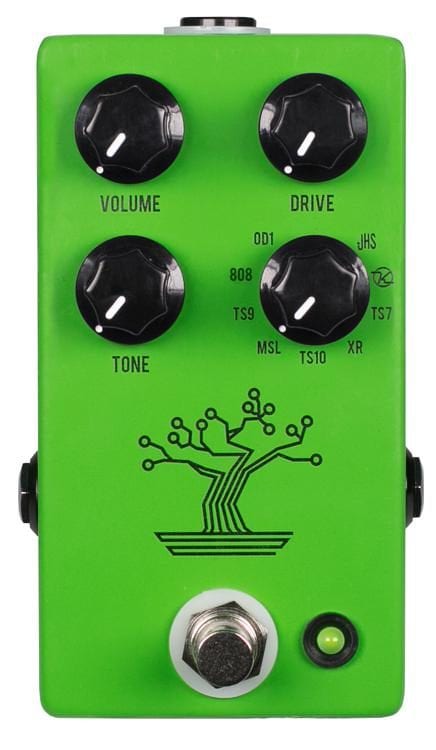
John Mayer captures most of his tone from three Ibanez Tube Screamers—the standard TS-9, the discontinued TS-10, and the classic TS-808, which is now available as a reissue. While all these Tube Screamers achieve the primary goal of adding mild overdrive and boost, they possess a slightly different tone, and John usually loves using them together to capture different levels of overdrive.
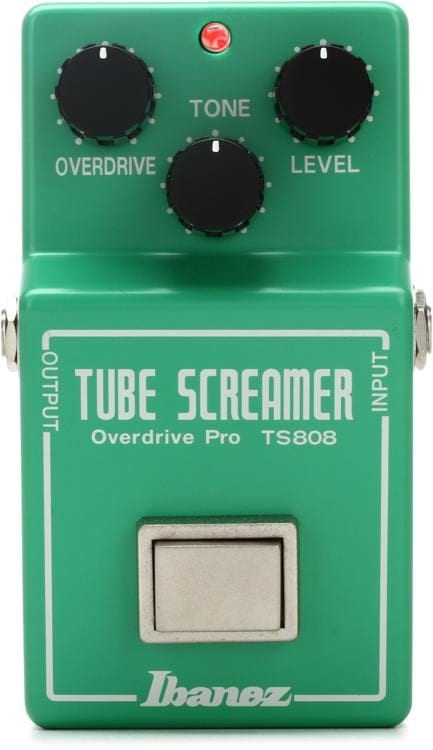
Ibanez’s Tube Screamer ranks as among the most influential pedals of all time, setting the standard for generations of overdrives to come. The TS808 Tube Screamer is loved for its smooth, overdriven tube-style full tone. This green beast is constructed with a narrow box enclosure, coveted JRC4558D overdrive circuitry, square footswitch, and familiar three-knob interface. The TS9 from early-to-mid ‘80s was the second Tube Screamer model. Used by guitarists from a gamut of styles, this often-imitated classic distortion pedal is now available in a reissue that is very similar to the original, from the crankin’ overdrive that made the original phenomenal right down to the chassis with a seasick-green paint job. Much like other Tube Screamers, the TS10 features the same three-knob layout with controls for Level, Drive, and Tone. This model is very responsive to playing dynamics. It is excellent for utilization with other pedals, particularly a good boost, which is capable of propelling the overdriven sound to push the amp beautifully, merely beyond break-up, but stay clear and clean.
**Jonny Greenwood **
Best-known as the jack of all trades of Radiohead, Jonny Greenwood is a multi-instrumentalist equally comfortable playing keyboards, sampler, xylophone, or guitar. As if that were not enough, he also pursued a solo career as a composer. Jonny sometimes crafts dreamy sounds using envelop filters such as the Roland Space Echo RE201 or the DOD 440, but he is recognized for heavy distorted guitar tones as well. On several Radiohead songs, Jonny leverages either the Marshall Shredmaster or Pro Co RAT.
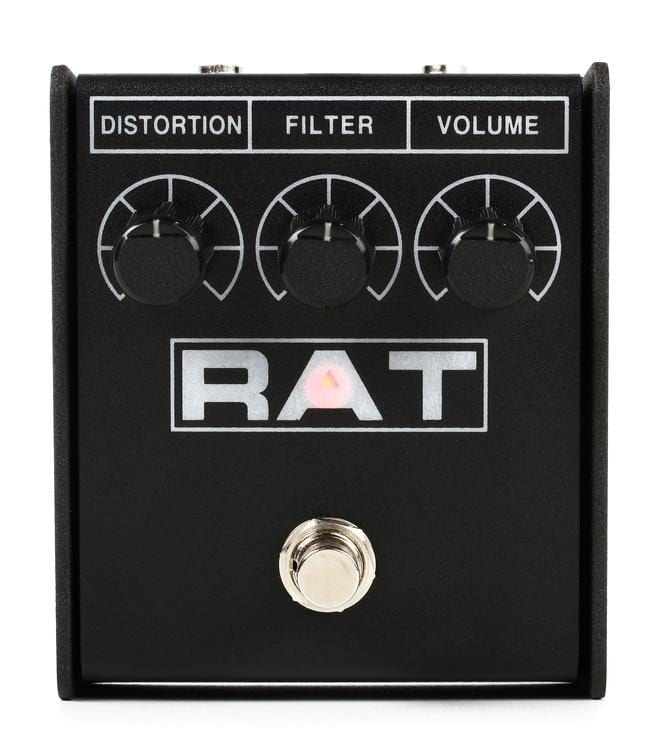
Expressive, quirky, and quacky, the DOD Envelope Filter 440 is a reissue anticipated by many guitarists. Its pick attack-activated slow filter sweeps deliver a funky auto wah effect. Pair it with overdrive, and it becomes a real beast. The DOD Envelope Filter 440 reissue features true-bypass switching, light aluminum enclosure, and a crisp blue status LED. Since 1978, the Pro Co RAT’s quirks have earned it a reputation as a real classic stompbox. Today, virtually all hard-clipping distortions owe it a passing debt. The incredibly versatile RAT is utilized as a primary distortion. It excels at soaring leads and arena rock rhythm tones. It is capable of capturing the sweet spot where the tube amp goes from sparkly clean to warm overdrive.