News
Children of the Tube pt. 2 - The 10 Best Tube Screamer-type Pedals Under $100
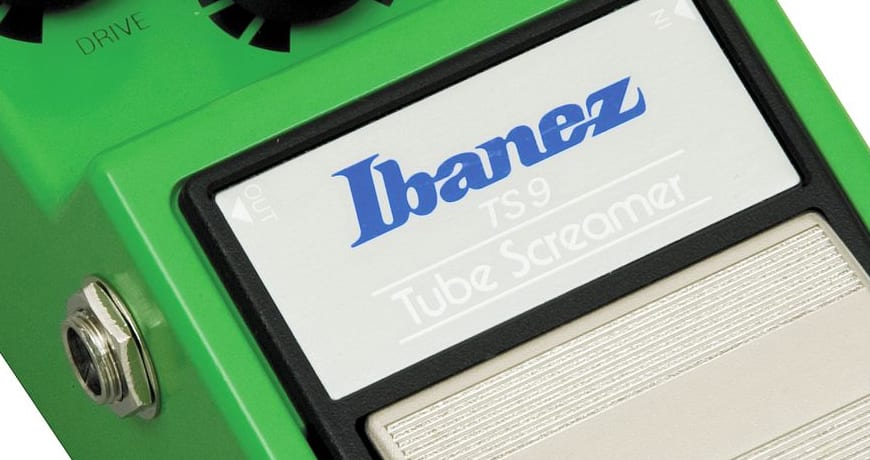
The world is drowning in Tube Screamers. There are just way too many available options for anyone on the hunt for a good Tube Screamer-type pedal that we decided to split our list of the best Tube Screamer-type pedals available right now into two parts. In part one, we talked about the feature-rich, high-end, boutique stuff that costs well over $100. As I also mentioned in that article, though, you don’t really need a big budget if you’re looking for a good Tube Screamer-type pedal. In fact, you can buy some great Tube Screamer-y and Tube Screamer-ish pedals for less than a tank of gas. This time, we’re focusing on that particular end of the price spectrum and looking at the best Tube Screamer-type pedal options that you can buy for $100 or less. Let’s get right to it! Ibanez Tube Screamer Mini
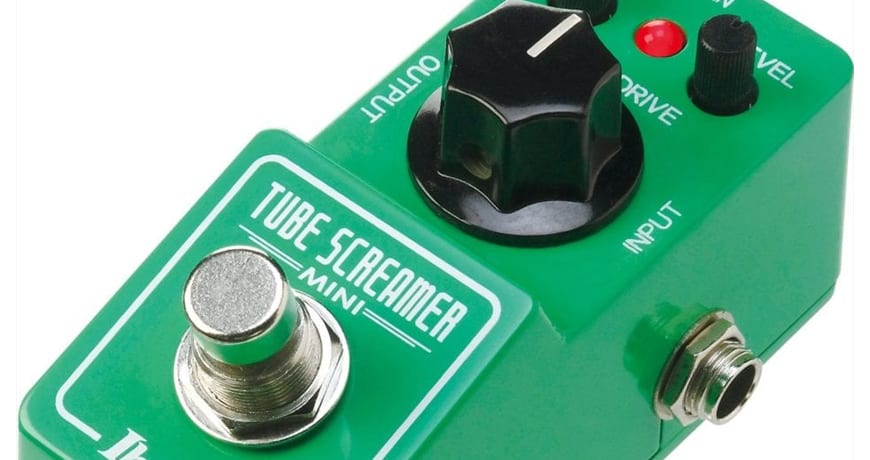
Ibanez clearly followed the adage “if it ain’t broke, don’t fix it” with the Tube Screamer Mini. In terms of sound and functionality, it doesn’t differ at all from its late ‘70s brethren. It has all of the transparency and tonal flexibility of a vintage Tube Screamer, but with the slim form factor and affordable price tag that characterize today’s popular budget stomps. The signature emphasis that the Tube Screamer line puts on the mid-range lends extra presence and adds sustain to the Japan-made Tube Screamer Mini’s tonal output. Ibanez also did a great job keeping the mini pedal responsive and dynamic. Even at high gain levels, you can shape the overdrive attack to your liking by merely playing gentler or harder. The Tube Screamer Mini is the perfect upgrade for Tube Screamer tone purists; the onboard JRC4558 IC chip, which is the exact same chip that powered the TS-9, gives it an authentic vintage Tube Screamer sound. Plus, you can pick it up on the cheap, and it doesn’t take up too much space on your pedalboard. Its small size doesn’t allow for a 9V battery enclosure, so you’ll need an AC adapter, but unless you’re utterly obsessed with having only battery-powered pedals on your board, that shouldn’t be an issue. Joyo Vintage Overdrive
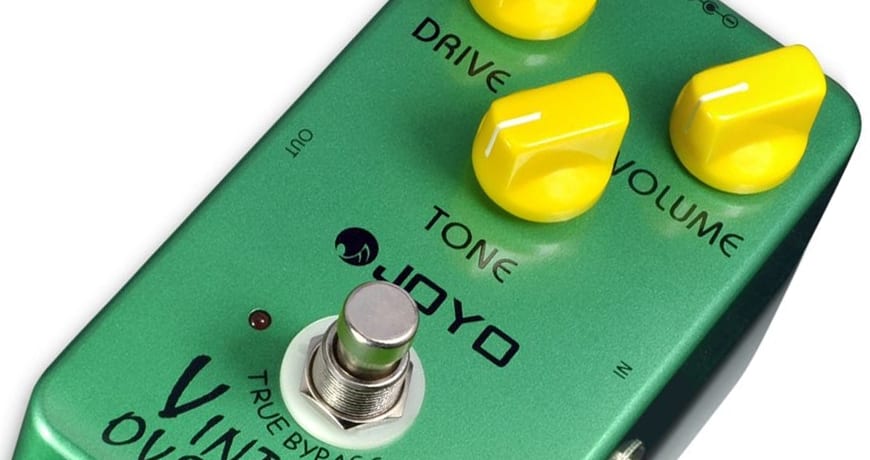
There’s been a significant surge in the amount of budget-priced guitar pedals on the market in recent years. Although it’s often a case of “you get what you pay for,” there are quite a few budget-priced pedals that buck the trend. The Vintage Overdrive from Joyo is a perfect example. Like its more expensive yet similarly featured compatriots (I’m looking at you, Maxon OD808), the Vintage Overdrive can work well as both a clean boost when the Drive pot is down at a minimum and for busting out some dirty tube-powered licks once you crank that Drive pot up. It’s quiet, clean, and pretty transparent, and unless you’ve got nigh-superhuman hearing, it sounds pretty close to indistinguishable from a Maxon or Ibanez Tube Screamer. Yes, the insanely cheap-looking yellow knobs make the Vintage Overdrive look like a toy, but for a $30 pedal that sounds this good (and, contrary to what you might expect from a budget pedal, is actually pretty well built), I really couldn’t care less about its looks. Caline Midlander
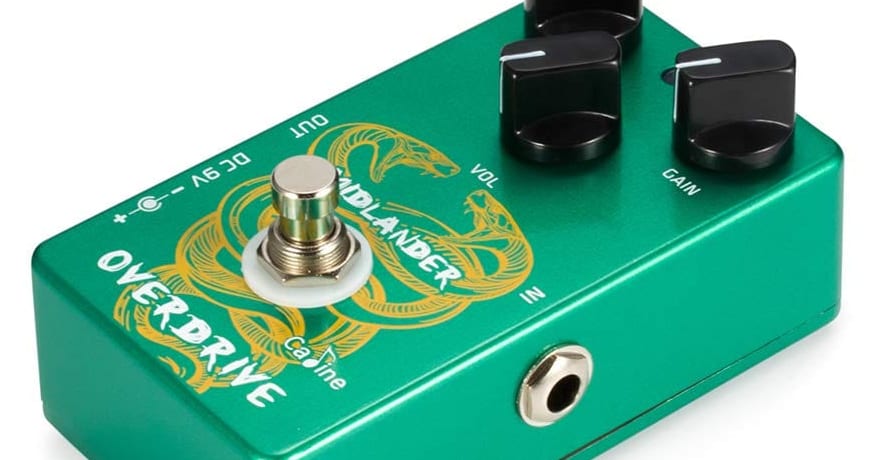
The Midlander is Caline’s answer to Joyo’s Vintage Overdrive. This is yet another dirt-cheap Tube Screamer clone that actually won’t let you down in the tone and sound department. It’s very comparable to the Vintage Overdrive; so much so, in fact, that I kinda suspect they’re basically the same internally. It neither covers any new ground nor adds anything new to the already saturated Tube Screamer market, but for the musician on a shoestring budget who needs a warm, mid-range overdrive in their arsenal, it’s a pretty good choice considering its price. Mosky Demon and Mini Screamer
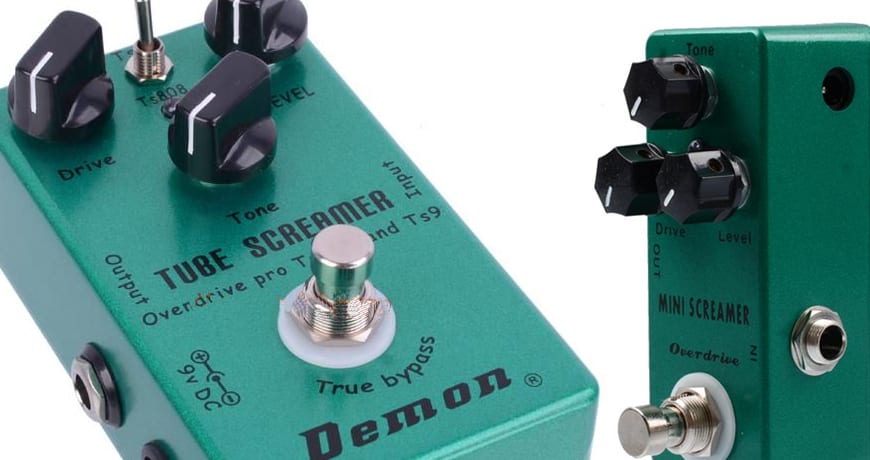
These are actually two separate pedals, but since they’re both from the same budget pedal company, Mosky, I’ll just bundle them into one section. First up, the Demon. This pedal suffers from the exact same issue I have with the Fulltone OCD: they’re both covered in Comic Sans. But that’s really just a stupid little quibble, and for the sound that you get at the Demon’s price point, it’s one that’s very easy to ignore. What sets it apart from other budget Tube Screamer clones is that it’s actually two Tube Screamer clones in one. You can switch between a TS08 and a TS9 sound via a two-way toggle situated between the three control pots. It’s worth noting, though, that there really isn’t that big of a tonal difference between these two switchable modes. The TS08 mode is a bit more open, but that’s about it. The one thing that pushes the Demon into the “recommended” category is that its TS808 mode comes packed with Robert Keeley’s classic Mod Plus mod. Compared to the stock TS808, the modded version has an enhanced low-end presence, a much more extensive gain range, and increased transparency. The Demon may not quite live up to its promise of “two Tube Screamers in one,” but with a real modded Tube Screamer going for well over $100, it’s a great budget option for those who want the power of a Keeley-modded TS808. If you really need a TS9 clone, though, there’s always the Mini Screamer. It’s a straight-up TS9 clone, albeit in a much more pedalboard-friendly enclosure. Like Joyo with the Vintage Overdrive and Caline with the Midlander, Mosky eschews its usual mini-sized pedal enclosure and circuit design with the Demon. For the Mini Screamer, however, the company has stuck to the minified form factor that’s so popular among the budget crowd these days. Sound-wise, the Mini Screamer serves up the signature TS9 bright and edgy hot tube valve-style overdrive that we all know and love, making it perfect for cranking out some quite searing Texas blues-style licks and solos. For those who are interested in the internals, the Mini Screamer has a JRC4558D and is, according to Mosky’s product page, hand-made. Not bad for a pedal that’s under $30; you can get almost three of these babies for the price of one used TS9. It’s also worth noting that Ammoon, another budget guitar effects pedal company, has its own Mini Screamer. It looks exactly the same as the Mosky Mini Screamer on the surface, has the same tech specs, and is priced similarly, which leads me to believe that one is just a rebranded version of the other. TC Electronic MojoMojo
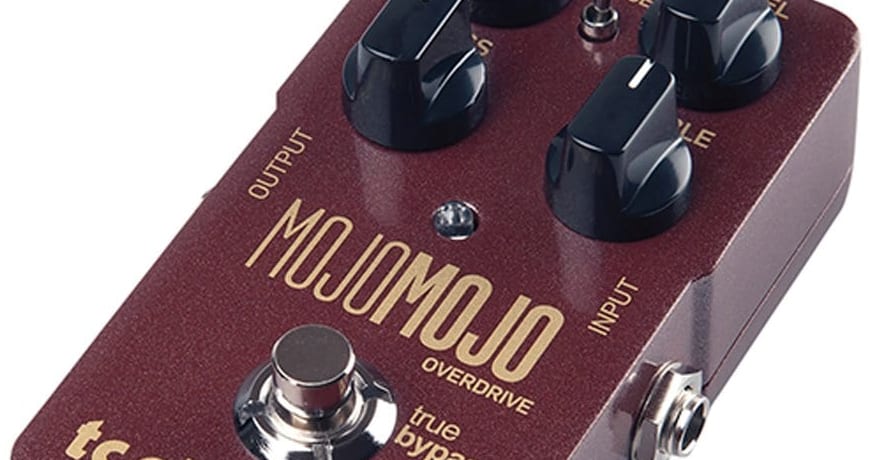
TC Electronic successfully packs quite a lot of tone tweaking options into the MojoMojo’s chassis, which makes it a great budget-priced choice for those who want more sonic control over their drive boxes. The MojoMojo replaces the classic Tone pot with separate control knobs for Bass and Treble. It’s a commonly seen upgrade in the more expensive Tube Screamer-based pedals, but not at this price range. This, by itself, already elevates the amount of tonal control you can squeeze out of the MojoMojo over other budget-priced Tube Screamer-type stompboxes, but TC Electronic went ahead and added a two-way Voice toggle anyway just to give you more options. This Voice switch has two settings. The first mode is pure natural overdrive, while the second is a juicier tone with a little less bass and a substantial mid-range boost to help you cut through the mix. Internally, TC Electronic also gave the MojoMojo’s circuit board a higher voltage for increased headroom and an enhanced response to your unique picking dynamics and guitar volume control. The MojoMojo does a great job of emulating the sound of an overdriven tube amp, and it’s not just any kind of amp, either. TC Electronic set the voicing for this pedal to make it sound like an overcranked and pushed to the limit vintage tweed amp. Its valve-like drive sound retains a surprising amount of dynamic response and tonal clarity that’s rarely seen within this price range, and while it works best when the drive pot is cranked up, you can still get a lot of mileage out of the MojoMojo for subtler phrases or even use it as a workable clean-ish boost. Animals Pedal Surfing Bear

Animals Pedal, the Japanese pedal company formerly known as Ninevolt, has been expanding its reach beyond its native Japan and into the world at large in the past few years via its growing stable of quirky-looking and great sounding affordable guitar pedals. On the overdrive front, the Surfing Bear has the basics down pat. Its tone is based on the TS808, but it doesn’t just settle for straight up replication. Designed by Japanese pedal switch company One Control, the Surfing Bear manages to pack a much wider tonal range than the average Tube Screamer into its cute housing. It has enough flexibility to go from a clean-ish boost to thick overdrive bliss, all with that familiar mid-range hump that characterizes the TS808 sound. It’s a simple overdrive and is at the higher end of the particular price range on which we’re focusing, but the Surfing Bear’s excellent sound and very high build quality make it a good choice for your go-to medium gain overdrive. Electro-Harmonix East River Drive
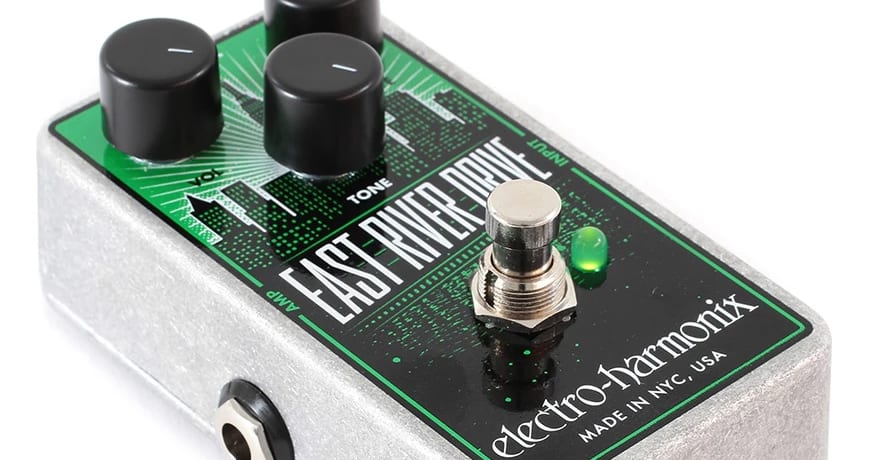
Electro-Harmonix has steadily built up an impressive array of overdrive pedals in the past few years, but when it comes to value for money, it’s hard for another EHX pedal to top the East River Drive. The East River Drive serves up just about everything you might expect from a modern Tube Screamer-based stompbox. Just like the TS808 and the early TS9s, it’s built around a JRC4558 chip. The sound, meanwhile, is a more refined version of the classic TS808 tone with a fuller low end and a more mellow mid-hump. EHX also crammed in a wide usable gain range and enough power to help your signal cut through the mix despite the more mellow drive sound. The East River Drive works well as a standalone overdrive, but it really shines when used to push another overdrive pedal further. With regards to build quality, it’s as excellent as any EHX pedal. The East River Drive might be budget-priced, but it’s clear EHX didn’t cut corners when it came to the build quality. Sturdy, great sounding, and affordable—that’s the most straightforward recipe for great value right there. Behringer TO800
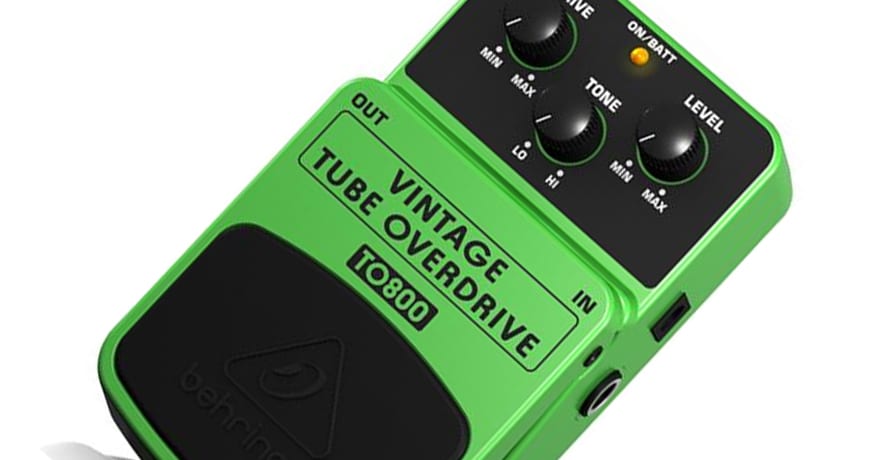
The Behringer TO800 is made of plastic. Put it next to a real Tube Screamer, and it looks like a kids’ toy version of the latter. That said, for a budget pedal that costs about the same as five days’ worth of Starbucks grandes, it sounds fantastic. And when it comes to guitar pedals, isn’t it the sound that matters, not how cool they make your pedalboard look? The TO800 sounds remarkably similar to the TS808 that it’s based on, thanks mainly to the 4558 IC op-amp and MA150 distortion diodes that Behringer is using to replicate that vintage warm overdrive sound. There are a few noticeable differences, though. For one, it delivers just slightly more output at every knob setting compared to a TS808. It’s also a bit brighter, and some noise may creep into your signal once you start approaching maximum gain levels. Still, we’re talking about budget pedals here, and as one that nearly hits rock-bottom in terms of price, the fact that the TO800 can capture even 90% of the original Tube Screamer’s sound makes it more than worth its price. Sure, it likely won’t hold up for long under the rigors of regular gigging, but it should be more than enough for practice and personal bedroom use. Keeley Red Dirt Mini
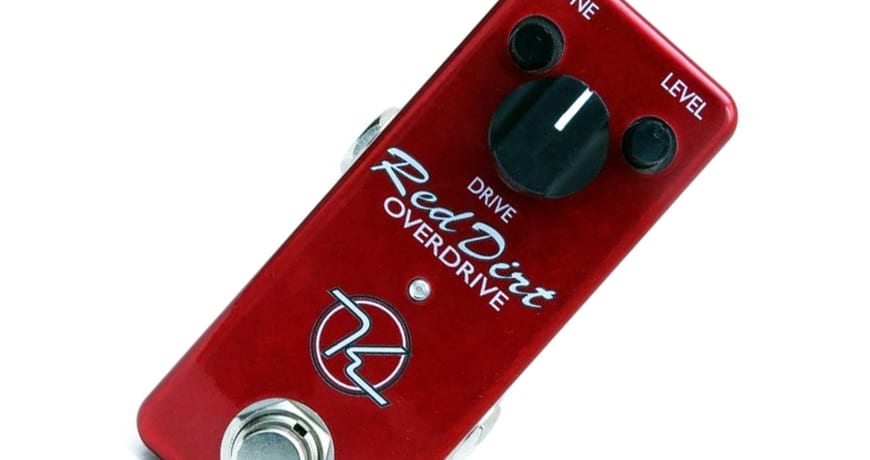
I was vacillating about whether or not to include the Red Dirt Mini on this list because while it has a $99 price point on the Keeley webpage, our product page has it listed for $109. But it’s just a $10 difference anyway, and the official price point puts it below our maximum price tag for this article, so I’m going to go ahead and include it because this mini pedal is a doozy. I’ve already talked up the Red Dirt Mini’s big brother, the Red Dirt, in part one of this two-part article. It’s basically a distillation of everything Robert Keeley’s ever learned in the years he spent modding Tube Screamers, and all of that experience and know-how is on full display in both the Red Dirt and the Red Dirt Mini. The Red Dirt Mini doesn’t feature the switchable Baked mod of its larger brethren, coming packed with only the Mod Plus modded circuit, but it does have its own secret weapon in the form of two internal DIP switches that let you change the clipping diodes four different ways. These DIP switches effectively turn the Red Dirt Mino into a four-mode overdrive. In Distortion mode, it can squeeze out double to three times a regular Tube Screamer’s gain. Going from there to Overdrive mode, Crunch mode, and finally, Amp mode, the Red Dirt Mini’s tone becomes progressively cleaner and more open. The Red Dirt Mini just barely passes the “under $100” requirement, but its sheer functionality, great sound, and pedalboard-friendly size make it well worth every cent. What’s your favorite budget Tube Screamer-type pedal?