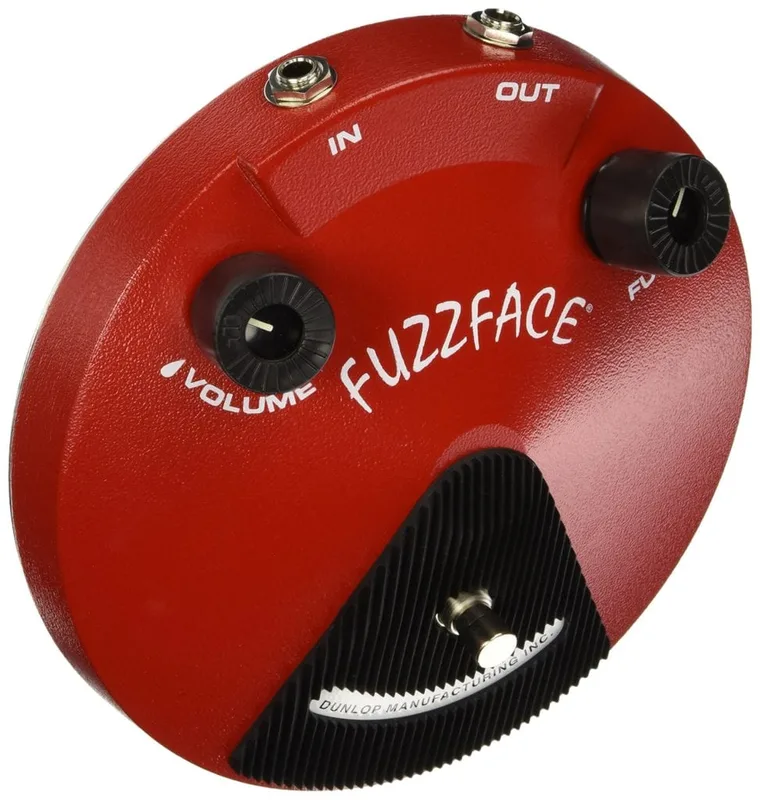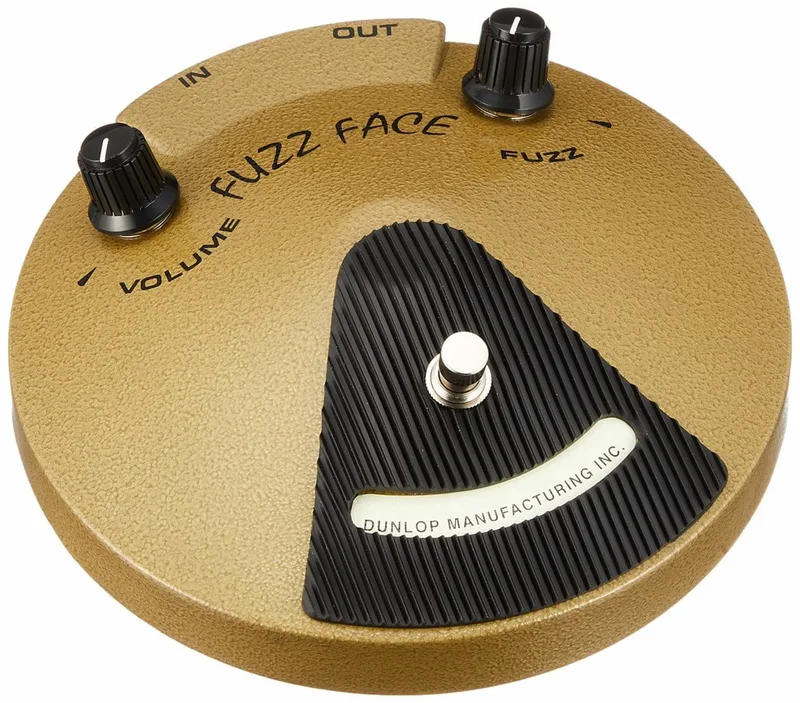


The Dunlop Eric Johnson Fuzz Face, also sold as the Eric Johnson Signature Fuzz Face and identified as the EJF1, is a silicon fuzz stompbox in the round Fuzz Face enclosure. Dunlop built it with Eric Johnson to recreate the sound of his prized late-'60s Fuzz Faces from his personal collection, while delivering what the company described at launch as modern consistency12. Johnson had used original Fuzz Faces for years as his choice for what Guitar Interactive Magazine called "sweet, singing lead tones," and the signature model was developed so he could get that sound without relying on aging originals3.
The pedal was first shown at Winter NAMM in January 201214 and officially announced for release that April1. By August 2012 Johnson had made it his working fuzz: in a Guitar World interview he said, "I've sold all my original Fuzz Faces except one I don't use. I use the new Fuzz Face."5
How it sounds and how Johnson describes it
Johnson draws a clear line between this pedal and an overdrive. In his Guitar World interview he said5:
"It's not an overdrive unit; it's more of a fuzz saturation"
Dunlop's artist page says the hand-selected high-gain silicon transistors give "a dynamic, expressive, and powerful sound"6, and the launch coverage at NAMM 2012 described the result as "a beautifully dynamic, expressive, and powerful pedal"4. For a player comparing circuits, the useful distinction is the one Johnson himself makes: this is a fuzz saturation rather than a transparent gain stage, closer in spirit to the original Fuzz Face than to an overdrive pedal.
The transistors: silicon, with two reported part numbers
The pedal uses silicon transistors, hand-selected for higher gain. Two part numbers have been reported for it437:
| Source | Transistors reported |
|---|---|
| Dunlop artist page (2026) | Hand-selected high-gain BC138 silicon6 |
| Guitar World, NAMM 2012 | Hand-selected BC183 silicon, for higher gain4 |
| Guitar Interactive Magazine, 2012 | Hand-selected BC183 silicon, for higher gain3 |
| Vintage Guitar, 2012 | BC183 silicon7 |
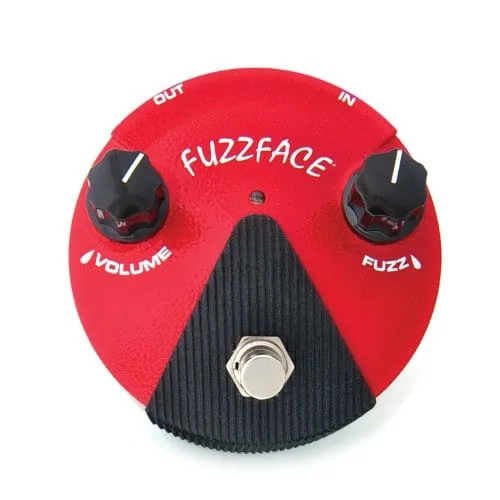
The 2012 press coverage reported BC183s, while Dunlop's current artist page for Johnson says BC138s. Both accounts agree on the essentials: silicon clipping and hand-selected transistors. Silicon Fuzz Faces behave differently from germanium versions like the Dunlop Germanium Fuzz Face Mini; the BC183s here were chosen for higher gain, and the circuit was built to deliver modern consistency743.
History: built from his late-'60s Fuzz Faces
Dunlop set out to create a Fuzz Face that recreated the vintage sounds of Johnson's late-'60s pedals while delivering modern consistency1. The company looked to his personal collection, the same approach it took with his signature Jazz III pick6. Press coverage at launch described the pedal as inspired by Johnson's prized personal Fuzz Faces and built to his strict specifications43.
The cosmetics follow the originals too. The pedal wears a vintage-style hammertone finish in the classic round Fuzz Face enclosure, with custom repro '68-'69 knobs647.
Who designed it
Johnson worked closely with Jeorge Tripps, described in the launch coverage as a Fuzz Face guru, to create the pedal43. In his Guitar World interview, Johnson credited the result:
"Jeorge Tripps really went far and beyond to capture that '60s sound, which he really did"
Circuit details
A circuit document for the EJF1 notes that the fuzz bypass cap is 15uF2. The bypass cap value affects how much low end survives when the fuzz control is rolled back, one of the details that separates Fuzz Face variants from one another.
Videos
Guitar World
Sweetwater
Prymaxe
Questions
What transistors are in the Dunlop Eric Johnson Fuzz Face?
The transistors are silicon and hand-selected for higher gain, but two part numbers have been reported. Dunlop's own artist page for Eric Johnson describes hand-selected high-gain BC138 silicon transistors, while 2012 press coverage of the pedal's launch, including Guitar World and Vintage Guitar, reported BC183 silicon transistors selected for higher gain.
Is the Eric Johnson Fuzz Face silicon or germanium?
It is a silicon Fuzz Face. Dunlop's artist page and the 2012 launch coverage all describe silicon transistors, hand-selected for higher gain. That sets it apart from germanium Fuzz Face variants, which behave differently with temperature and cleanup.
Who designed the Dunlop Eric Johnson Fuzz Face?
Eric Johnson worked closely with Jeorge Tripps, described in the launch coverage as a Fuzz Face guru, to create the pedal. Johnson said in a Guitar World interview that Tripps went far and beyond to capture the '60s sound of his original pedals.
Does Eric Johnson still use original Fuzz Faces?
No. In a 2012 Guitar World interview Johnson said he had sold all his original Fuzz Faces except one he does not use, and that he plays the new Fuzz Face instead. Dunlop's artist page lists the Fuzz Face Distortion among the gear he has adopted.
What is the model number of the Eric Johnson Fuzz Face?
The model is identified as the EJF1. A circuit document for the pedal refers to it by that designation when describing its components, including a 15uF fuzz bypass cap.
Sources (7)
- Dunlop Introduces Eric Johnson Signature Fuzz Face Pedal, Guitar World, 2012-04-09
- Violenzz.pdf, madbeanpedals.com, 2020
- New Eric Johnson Signature Fuzz Face, Guitar Interactive Magazine, 2012-04-03
- NAMM 2012: Dunlop Eric Johnson Fuzz Face Video Demo, Guitar World, 2012-01-20
- Interview: Eric Johnson Discusses His Dunlop Signature Fuzz Face Pedal, Guitar World, 2012-08-27
- Eric Johnson is a Dunlop Artist., Jim Dunlop (www.jimdunlop.com)
- Dunlop Offers Eric Johnson Signature Fuzz Face, Vintage Guitar magazine, 2012-04-02
 Eric Johnson