News
Children of the Tube pt. 1 - The 8 Best Tube Screamer-type Pedals Over $100
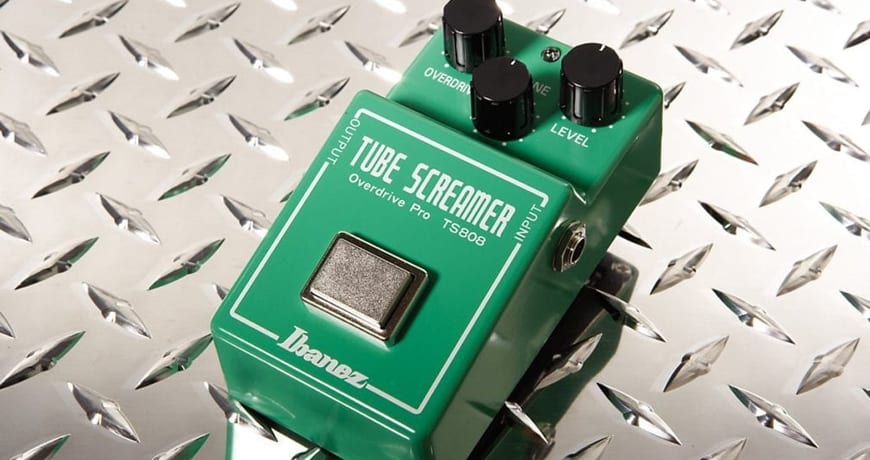
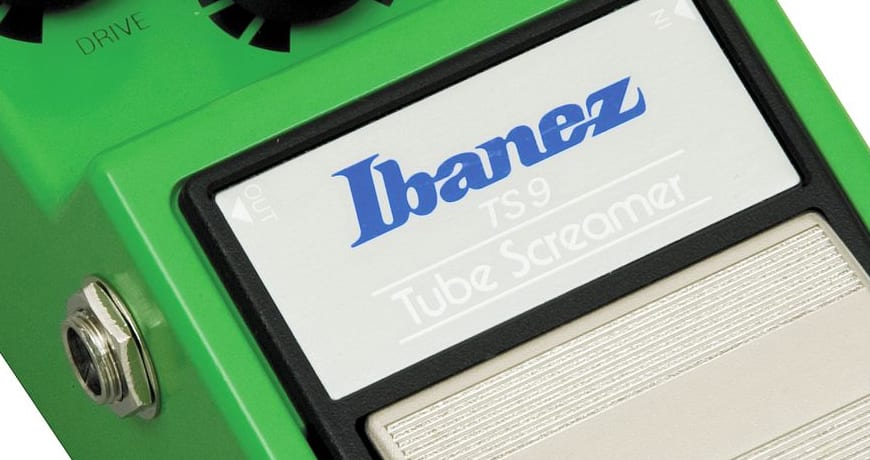
There’s a name that you’ll come across whenever you look for a new overdrive pedal: Tube Screamer. Since its release in the late ‘70s, the Tube Screamer’s light, mid-pushed distortion has become synonymous with top-quality, highly transparent, and mild overdrive. This single pedal line, designed by Susumu Tamura and developed by Japanese company Nisshin, also helped Ibanez transition from a company that mostly made cheap Fender and Gibson knock offs into a guitar effects pedal powerhouse. Stevie Ray Vaughn was among the vanguard of musical greats who stepped on a Tube Screamer and never looked back. The classic green stompbox from Ibanez, especially the venerated TS808 and TS9 models, is now one of the most copied pedals in history; it seems like every single pedal company nowadays has their own take on the legendary Tube Screamer design and tone. What this means for the regular pedal enthusiast is nothing but good things. Getting that authentic Tube Screamer tone no longer involves hunting down an old TS808 or TS9 and hoping against hope that all the components inside have held up over the past few decades. It doesn’t even require a big budget; you can buy some great Tube Screamer-y and Tube Screamer-ish pedals for less than a tank of gas. Due to their ubiquity, it’s a bit too daunting of a task to list down every single Tube Screamer-type pedal ever released on the market. That’s why we’ll have to cheat a bit and make the job easier by just listing eight of the very best above the $100 price point. Here we go! Maxon OD-808
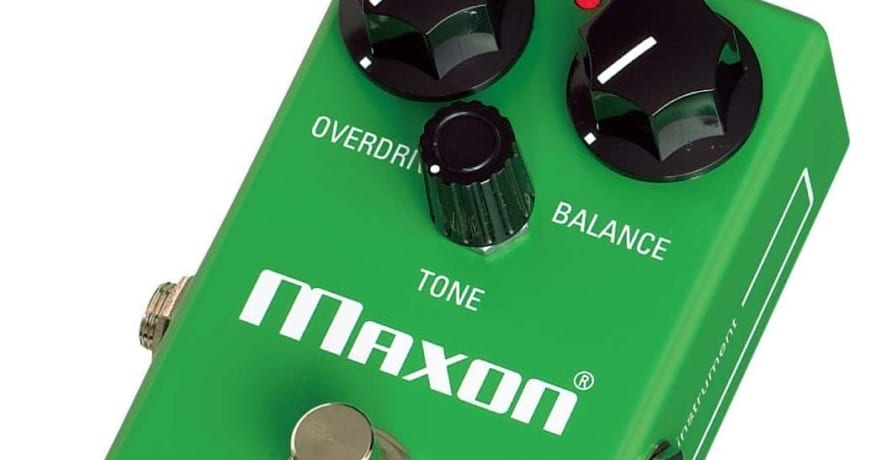
Maxon might not have the instant name recognition of a brand like Ibanez, but hardcore stompbox historians will definitely know the deep ties between this Japanese company and the Tube Screamer: it was the brand used by Nisshin to manufacture the TS808 and TS9 Tube Screamers as well as a whole load of other pedals for Ibanez. Maxon has stayed under the general public’s radar for years, but now the company is breaking into the collective stompbox consciousness in a big way by reintroducing virtually all of its old pedals to a whole new and much larger audience. Leading the pack is the OD-808, which is not only similar in design to the old TS808s but is also powered by the legendary JRC4558D chip. Maxon has put its decades of pedal expertise into good use with the OD-808 reissue. Considering its lineage and pedigree, it’s no surprise that the OD-808 is one of the pedals that have come closest to replicating the exact “often imitated, never equaled” overdrive sound of the TS808. After all, the TS808 is pretty much just a rebranded OD-808. Drive heads will definitely appreciate its transparent and dynamic mid-range overdrive tone, while those who prefer more pronounced mids will love the OD-808’s milder “mid-knock” compared to the TS9. It might not be the first ever overdrive pedal, but it’s definitely no exaggeration to call the OD-808 the mother of them all. Maxon also released a limited edition 40th anniversary version of the OD-808 earlier this year that features specs modified by original TS808 designer Susumu Tamura and designed to give the OD-808 a more open and responsive sound. If you’re into collectibles, the limited edition is probably worth getting, but if all you’re after is that classic TS808 sound but without the Ibanez brand on it, then the regular OD-808 is all you need. Maxon OD-820 Overdrive Pro
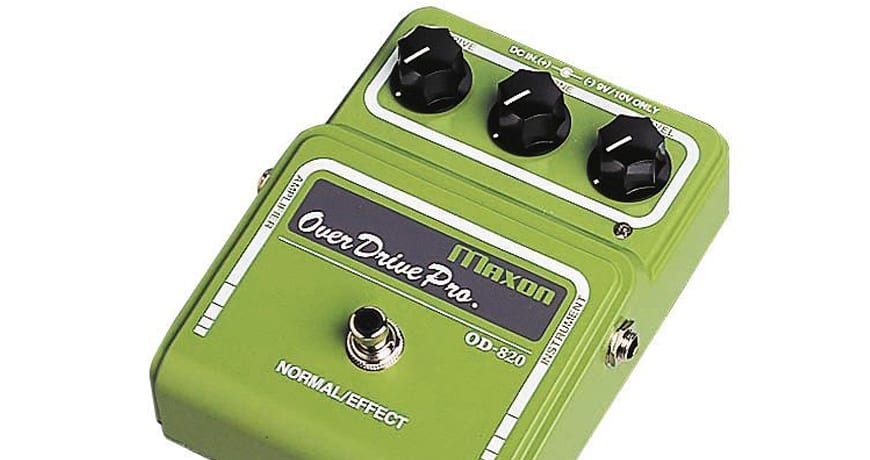
The OD-820 Overdrive Pro from Maxon is what Nigel Tufnel of Spinal Tap would have on his pedalboard if he used a Tube Screamer. To create the OD-820, Maxon basically took an OD-808 and turned everything about it all the way to 11. The OD-820 is built to provide more output, more low end, and more drive than the OD-808. At its heart is a voltage doubling circuit that maximizes the drive tone without sacrificing transparency. What you get is a highly transparent, very musical, and heavier than usual mid-range overdrive that boasts extreme responsiveness to picking and volume dynamics. One con regarding the OD-820 is that compared to other three-knob Tube Screamer type drive stomps, this drive pedal is huge; way too big, in fact, considering how many dials are on it. There’s a reason for the oversized chassis, though. Apparently, giving the internal components more room to breathe helps eliminate unwanted hums and clicks. The second con here is the price. At over $200, the OD-820 is way cheaper than an original vintage TS808, but it’s still one of the more expensive pedals on this list. If your budget allows for it, however, you do get a next-level Tube Screamer that gives you a more complete frequency response and higher gain with shocking clarity and less noise. Voodoo Lab Sparkle Drive MOD
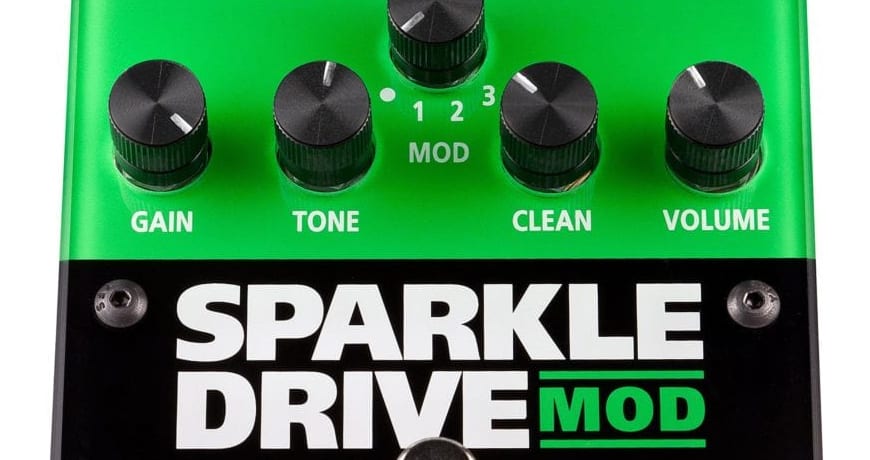
There have been many Tube Screamers released over the years, both from Ibanez and from other pedal manufacturers, and that’s not even counting mods. Each of these pedals has its own personality, its own individuality. If a simple stock Tube Screamer doesn’t quite scratch your overdrive itch, why not get four different Tube Screamers in one go? That’s precisely what you get with the Voodoo Lab Sparkle Drive MOD: four different overdrive and distortion tones, including a stock drive tone based on the TS808 circuit that dishes out the classic tube amp-style mid-range crunch that we know and love. The stock mode by itself boasts a lot of versatility, transparency, and dynamic response that exemplify a Tube Screamer. The three additional mod settings make subtle changes to the stock TS808 sound to give you an even more extensive sonic palette to play with. Mod 1 is geared towards leads and solos. It features extra gain, a fuller and juicier bottom end, and silky smooth high notes that make it perfect for ripping through single note melodies. You want your guitar to scream? This will make it scream. Mod 2, meanwhile, rolls the mids back for punchy, mid-cut tones that work well for chugging power chord-based riffs and squeezing some funk out of your sound. Finally, Mod 3 is balls-to-the-wall aggression that pumps out a high-gain attack with highly articulate highs and a growling low end. The real star of the Voodoo Lab Sparkle Drive Mod, however, is a simple Clean dial that lets you blend in the exact amount of boosted direct signal that you want for even more tonal control whichever mode you’re currently using. Wampler Clarksdale
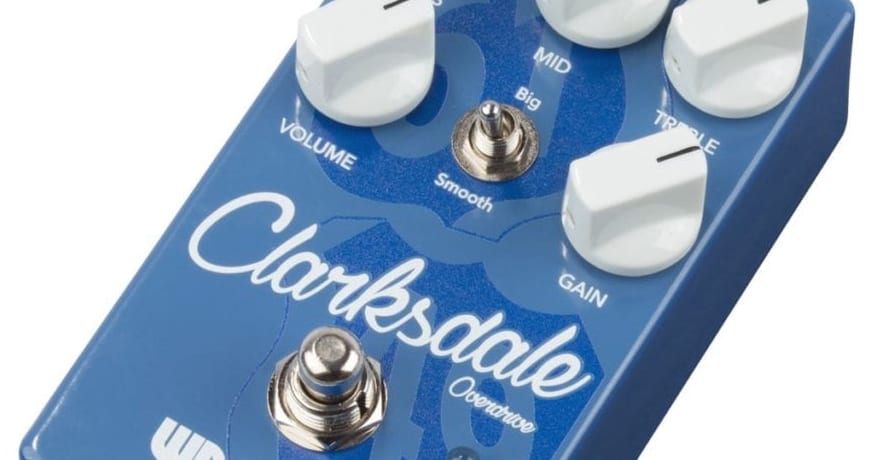
I’ll say it straight out: I’m an unabashed Wampler fan, so I have a particular fondness for the Clarksdale. That’s not just because of single-minded fanboy mania, however. As a Tube Screamer-based overdrive pedal, the Clarksdale is among the most powerful and versatile ones out there, with far more flexibility than most other Tube Screamer-based stompboxes bring to the tone shaping table. Heck, not even the original TS808 or TS9 can come close in terms of tonal control. Wampler accomplishes this by replacing the Tone pot with a three-band EQ; the Bass and Mid pots are active EQ knobs and can be boosted or cut by 15dB, while the Treble pot acts like a Tube Screamer’s classic Tone control knob. These three tone shaping knobs give you a much broader and more tailored sonic palette than a regular Tube Screamer or Tube Screamer clone. That’s not all. The Clarksdale also features a two-way toggle switch that lets you customize the clipping mode. Use Big for a more open and touch-sensitive tone with higher gain levels or use Smooth to compress the tone and make the Clarksdale’s overdrive sound hew closer to the ones produced by the original TS808 circuit. The Clarksdale is very, very versatile, but versatility becomes moot if the core sound doesn’t measure up, right? Of course, the Clarksdale shines in this aspect, as well. It more than captures the classic mid-level Tube Screamer overdrive tone accurately, it raises it to near-perfect levels. It eliminates the high-end fizz and keeps a full sound, even at extremely low or high gain settings. The Clarksdale is an excellent example of a Tube Screamer clone that does things right. Not only does it nail that vintage tone, but it also brings new and useful improvements to the table. JHS Bonsai
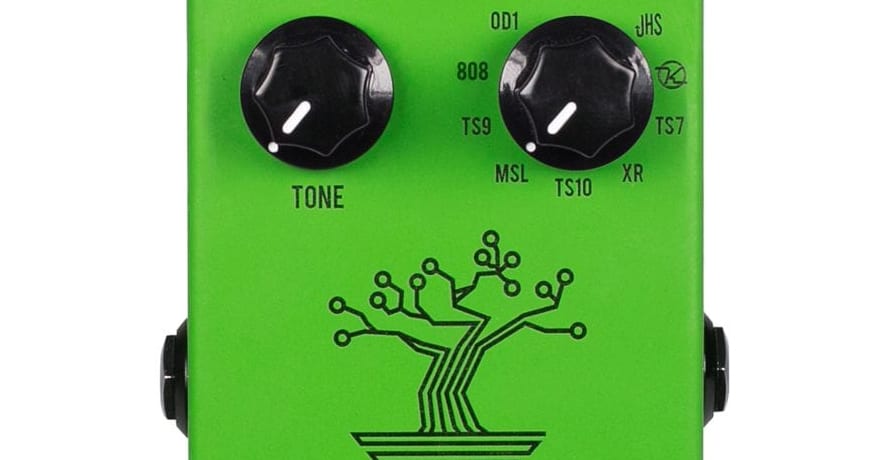
Speaking of versatility, the JHS Bonsai is right up there with the Clarksdale, although it goes about it in a completely different way. Instead of replacing the Tone knob with a three-band EQ, the JHS Bonsai retains it and adds a nine-way rotary dial that lets you directly select a specific Tube Screamer model’s circuit. Yup, the JHS Bonsai is nine different Tube Screamers in one regulation-sized stompbox. OK, six, technically, plus one Boss pedal and one mod each from Robert Keeley and JHS. The authentic overdrive sounds the JHS Bonsai can conjure up go from 1977 to 2008. You want the classic low-gain, mid-bumped dirt of the TS808? Or maybe you want the SRV-style Texas Blues grit of the TS9? The JHS Bonsai has it all; almost everything, in fact, from 1979’s OD1 straight through to the TS7 released in 1999. As for the modded circuits, there’s Robert Keeley’s classic Mod Plus and JHS’s own Strong Mod. The former serves up a much tighter, less noisy Tube Screamer tone with silky smooth mids and a discernible bass bump. The latter, meanwhile, focuses on giving the classic Tube Screamer tone a hell of a lot more power, while cleaning it up a bit in the process. Perhaps even more impressively, this multi-drive pedal isn’t a digital modeler. That’s right, the JHS Bonsai replicates each Tube Screamer tone by running your signal through the exact same circuitry, from the design to the components, that powered the original stomp it’s copying. There’s no emulation here, just pure analog replication of four decades’ worth of classic Tube Screamer tone. It’s a true shapeshifter in stompbox form. Keeley Red Dirt Overdrive
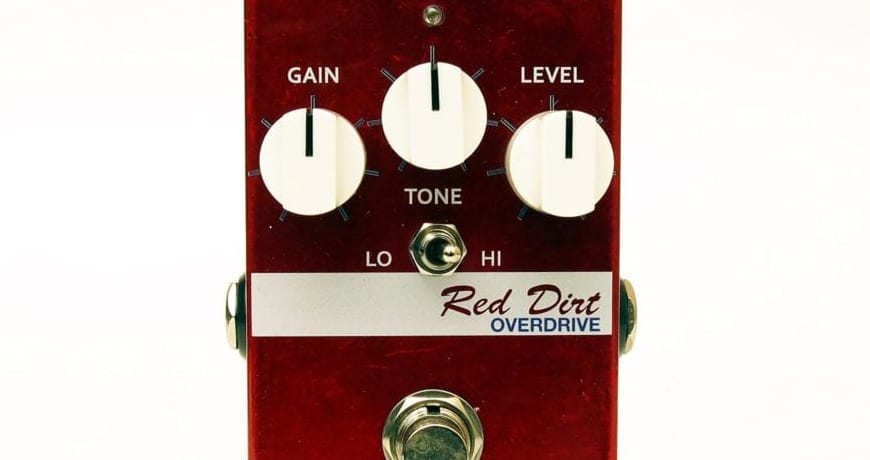
Robert Keeley, the genius behind Keeley Electronics, has long been tinkering with the Tube Screamer’s design and architecture. As I mentioned under the JHS Bonsai entry above, his Mod Plus mod for the TS808 Tube Screamer has already become a modern classic, serving up a tighter, less noisy, and bass-pumped version of the vintage overdrive tone. The Mod Plus sound is on full display in the Red Dirt overdrive as its “Lo” mode. Keeley has even made the Mod Plus onboard the Red Dirt retain clarity even better than the original mod. Plug in a Strat, and you’ll get the thick, extremely articulate mid-range drive that characterizes the signature sound of such guitar slingers as John Mayer and Kenny Wayne Shepherd. The Red Dirt also features another popular Keeley Tube Screamer mod, the Baked mod for the TS9, as its “Hi” mode. Switching the Red Dirt to Hi mode bolsters the classic TS9 sound with incredible saturation, insane sustain, and dynamic feedback. Similar to Lo mode, the Hi mode also has virtually zero noise and a much wider gain range. Whichever mode you choose, you’ll be able to go grittier and dirtier than ever. The Red Dirt overdrive is the distillation of the years’ worth of experience with Tube Screamer tones and circuits. With the Red Dirt, Keeley has extracted the essential components of the vintage tube-style overdrive sound and further refined them into a more flexible, more powerful sound with a more wide-ranging appeal. EarthQuaker Devices Palisades
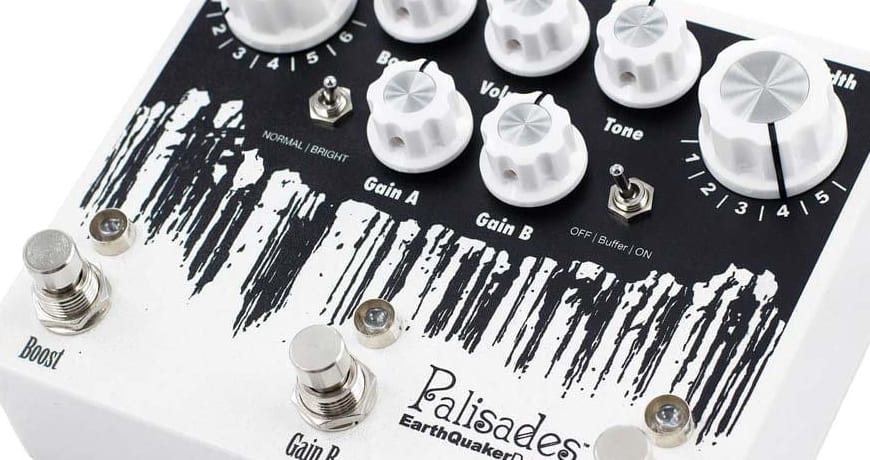
I said before that the Wampler Clarksdale is “among the most powerful and versatile ones out there.” EarthQuaker Devices’ Palisades is the reason the Clarksdale doesn’t sit at the top of that particular heap. The Palisades is based on the TS808, yes, but it looks like EarthQuaker gave the old stomp a long and slow bath in a tub of mutagenic ooze. The result is a radically more flexible drive box with an array of tonal options so extensive it could give an entire old-school pedalboard a run for its money. Even before you get to the nitty gritty and really start tweaking individual parameters and specific values, you’re greeted by a choice between six clipping voices and five distinct bandwidth settings. With a twist of a dial, you can choose between no diodes, LED clipping, MOSFET clipping, asymmetrical Silicon clipping, symmetrical Silicon clipping, and Schottky Diode clipping—each of which can have dramatic effects on the nature and character of the overdriven sound. The bandwidth settings, meanwhile, let you play around with the gain; you can get everything from a thin low-gain sound to fat, hefty gain. Past that, the Palisades has a Normal / Bright switch that helps compensate for darker pickups and amps by brightening your tone with some extra sparkle. It also features a switchable buffer input; turn it on for a tight, brighter tone or leave it off for a warmer sound with extra sag. It doesn’t stop there. The Palisades is also a dual-channel overdrive pedal, with each channel having its own gain knob and footswitch. Gain A serves up low, loose gain while Gain B dishes out tight, high-gain drive. And then there’s a third footswitch that lets you boost the gain even further. Classic tone aside, it’s not a stretch to say that Tube Screamers are basically one-trick ponies when it comes to tone sculpting. The Palisades completely overturns that notion by giving you complete, iron-fisted control over the base Tube Screamer tone with enough options to send even the most hardcore tone tweaker shivering in ecstasy. Walrus Audio Warhorn
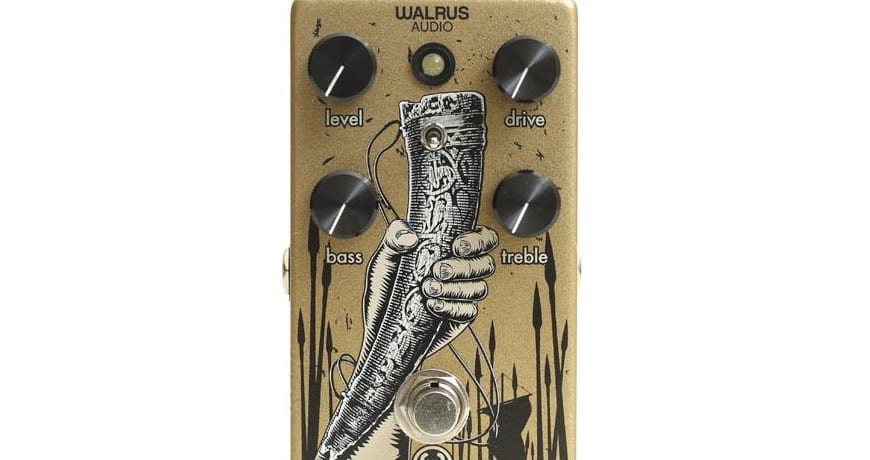
There’s no other overdrive as synonymous with “Texas Blues” as Ibanez’s little green wonders. So when Walrus Audio described the Warhorn as capable of spitting out “searing Texas Blues leads,” there can be little doubt about where this pedal is getting its tonal cues. Be that as it may, the Warhorn is similar to many other Tube Screamer-ish and Tube Screamer-y pedals on its list—it doesn’t just copy the circuit and tone verbatim, but molds it into a more versatile form that can actually function equally well in both classic and modern music genres. One of the most apparent differences between the Warhorn and the Tube Screamer line is the former’s splitting of the latter’s Tone knob into two separate pots, one for Bass and another for Treble. You want that Tube Screamer mid hump present? Sure, you can have that. Want it gone? Just dial it out with the Bass and Treble controls. The Warhorn also comes with a compression toggle that lets you switch between two distinct overdrive flavors. Flip it to the upwards position for a compressed, symmetrically clipped sound or flip it downwards for a more open, organic, and asymmetric tone. With these tone sculpting options, plus the mid-level gain courtesy of the Drive pot, you can dial in everything from a subtle, sweet sprinkling of dirt to, as Walrus Audio itself puts it, “searing Texas Blues leads.” SRV would be proud.