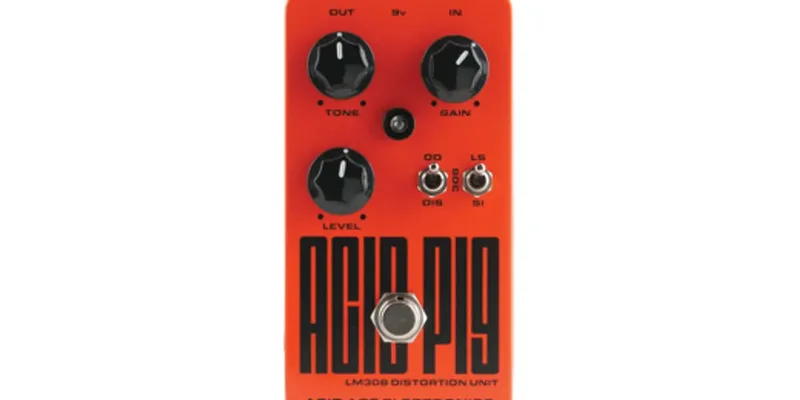


The Acid Pig is a distortion pedal from Acid Age Electronics that reproduces the circuit of the original Pro Co RAT, built around the LM308 op amp that powered the earliest versions of that pedal. Premier Guitar's reviewer described it as "an excellent Rat reproduction, but it's also more than just a clone," because it adds switchable clipping diodes and a second mode switch that the original Rat never had1.
In sound it sits where a Rat sits: harder-edged than a Tube Screamer-style overdrive and more tightly focused than a '60s-style transistor fuzz, with a loud, bright core distortion and strong note attack1. It sold for a street price of $160 at the time of the review1.
A Rat-based distortion with an LM308
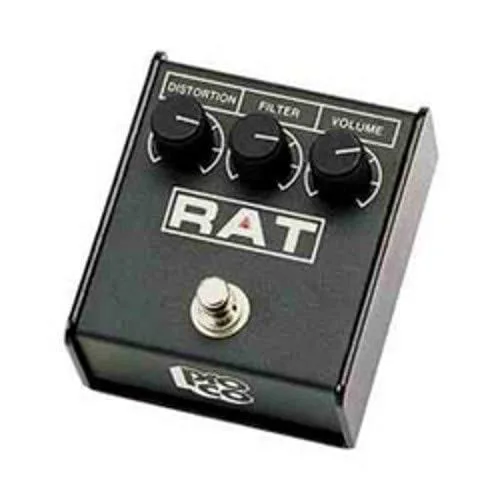
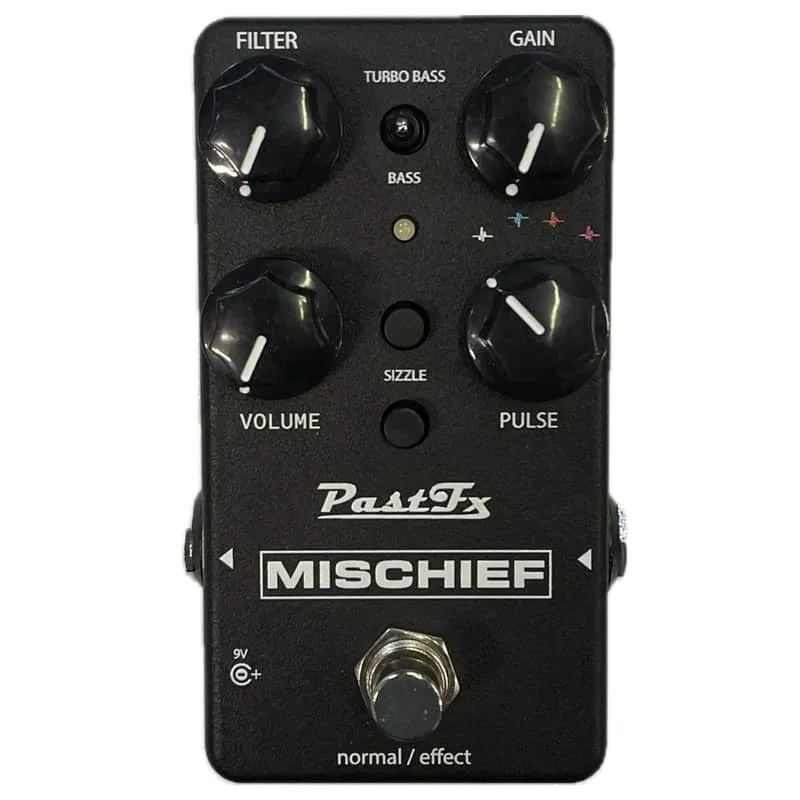
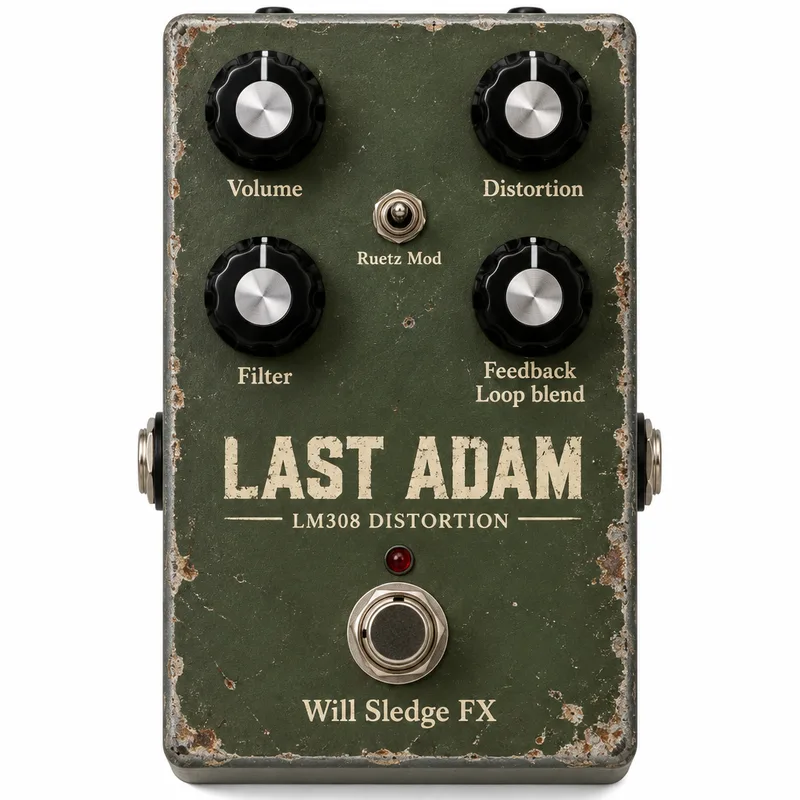
The Pro Co Rat has been in continuous production since 1978 and is one of the classic distortion circuits2. What makes the Acid Pig a reproduction of the original Rat rather than a copy of the current one is its chip. The first Rats used the LM308 op amp, the integrated circuit that provides gain in most overdrive and distortion circuits1. That chip is now obsolete and expensive to buy, though still available from some sources34, and MusicRadar has described the LM308 as "the bedrock of the original Pro Co Rat"4. The current production Rat 2 uses the OP07 op amp instead5, so pedals like the Acid Pig, the PastFX Mischief LM308 Distortion and the Will Sledge FX Last Adam LM308 Distortion exist largely to put the original chip back in a player's hands.
Like a Screamer, a Rat generates its distortion via a pair of diodes, though they are inserted at a different point in the circuit1. That is the design detail the Acid Pig expands on.
The controls and diode switching
The three pots are exactly what a Rat player expects: gain, tone and level1. The pedal's two footswitches do double duty, also securing the PCB to the housing1. Beyond that, the Acid Pig adds two switches the original Rat never had.
| Control | What it does |
|---|---|
| Gain | Sets the amount of distortion, as on a Rat1 |
| Tone | Shapes the brightness, as on a Rat1 |
| Level | Sets the output volume, as on a Rat1 |
| Three-way diode switch | Selects the clipping diodes: original Rat silicon, silicon mixed with an LED, or diode bypass1 |
| Overdrive/distortion switch | Selects between overdrive and distortion modes; the overdrive setting softens the bite1 |
The three-way diode switch is where the extra tones live. One setting replicates the original Rat configuration with silicon diodes. A second mixes silicon with an LED, which changes the clipping character. The third removes the diodes from the circuit altogether1.
The second switch selects between overdrive and distortion modes. As you would expect, the overdrive setting softens the pedal's bite, though it has no effect when the diodes are bypassed1.
What the diode bypass setting does
Diodes suck volume as they distort, so bypassing them triggers a hefty level boost. With the diodes out of the circuit, distortion is generated exclusively within the op amp itself, which gives a harder, more open clip than diode clipping and a big jump in output level1. Players using this setting will want to set the level control with that boost in mind.
What reviewers said
Premier Guitar reviewed the Acid Pig and was positive about both the sound and the build1.
"The Pig sounds as good as any Rat I've heard. If you dig the Rat sound, you won't be disappointed."
The reviewer also found the internal construction immaculate, with wires neatly routed and flawless soldering1, and praised the "cool alternate sounds via diode switching"1.
On low tunings the review was enthusiastic: "Drop-D sounds great. Baritone guitars in B or A sound great. Heck, even low-tuned bass guitars can sound great"1, which puts it on the short list of distortions worth trying for bass and extended-range players.
The review was not entirely uncritical. The tight, bright distortion does not suit all styles, and the reviewer noted it is not a great choice for players who want warm, smooth distortion or who rely on volume-knob cleanup1. On value, the reviewer observed that it costs nearly twice as much as a new Rat, but offers far more tones and the coveted LM308 component1.
How it compares to other LM308 Rat pedals
The Acid Pig is one of several pedals built to bring back the original LM308 Rat circuit1:
- Pro Co RAT: the original, in production since 19782. Current versions use the OP07 op amp rather than the LM30845, and the range includes the Rat 2, You Dirty Rat and the Vintage Big Box Rat reissue, among others5.
- PastFX Mischief LM308 Distortion: a distortion pedal built around the LM308 chip6.
- Will Sledge FX Last Adam LM308 Distortion: a vintage Rat clone with an added feedback loop7.
What separates the Acid Pig from a straight reproduction is the switching: the diode selection, the diode bypass and the overdrive mode give it more tonal range than a stock Rat, at the cost of a higher price than a current-production Rat1.
Videos
Premier Guitar
Ryan Veitch
Wal MK2 Bass Covers
Questions
Is the Acid Pig a ProCo Rat clone?
It is a reproduction of the original Pro Co Rat circuit built around the same LM308 op amp, but it adds features the original does not have: a three-way clipping diode switch, a diode bypass mode, and an overdrive/distortion mode switch. Premier Guitar's reviewer called it an excellent Rat reproduction that is also more than just a clone.
Does the Acid Pig use an LM308 chip?
Yes. The Acid Pig uses an LM308 op amp, the same integrated circuit that provided gain in the original Pro Co Rat. That chip is now obsolete and expensive to buy, which is part of why LM308-based Rat reproductions command a premium over current Rat versions, which use the OP07 op amp instead.
Can the Acid Pig run on a 9-volt battery?
Yes. Premier Guitar's review confirms the pedal runs on either a 9-volt battery or a standard power supply, neither of which is included with the pedal. No special power requirements are mentioned, so a normal 9V supply from a pedalboard power brick is fine.
Does the Acid Pig work well on bass or low tunings?
Yes, according to Premier Guitar's reviewer, who found it works well on low-tuned strings. Drop-D sounded great, baritone guitars tuned to B or A sounded great, and the reviewer reported that even low-tuned bass guitars can sound great through it.
What does the diode bypass setting do?
It removes the clipping diodes from the circuit entirely, so all the distortion is generated inside the op amp itself. Because diodes reduce volume as they clip, bypassing them also produces a hefty level boost, making this setting noticeably louder than the clipped modes.
Sources (7)
- Acid Age Electronics Acid Pig Distortion Review, Premier Guitar, 2013-10-17
- David Gilmour Tone Building, Kit Rae (kitrae.net), 2022-05
- ProCo™ Rat™ Clone Kit: Build the Rodent Distortion Pedal, General Guitar Gadgets, 2014-05-12
- “The snake has shed its old skin to usher in a new era of decadent saturation!”: Jam Pedals has designed its own op-amp for the Rattler MkII, MusicRadar, 2024-07-19
- 2024 UPDATE! The Best Distortion Pedals, Delicious Audio, 2024-05-03
- Mischief LM308 Distortion, pastfx.com, 2026
- Will Sledge FX Last Adam LM308 Distortion, Pedal of the Day, 2015-03-26