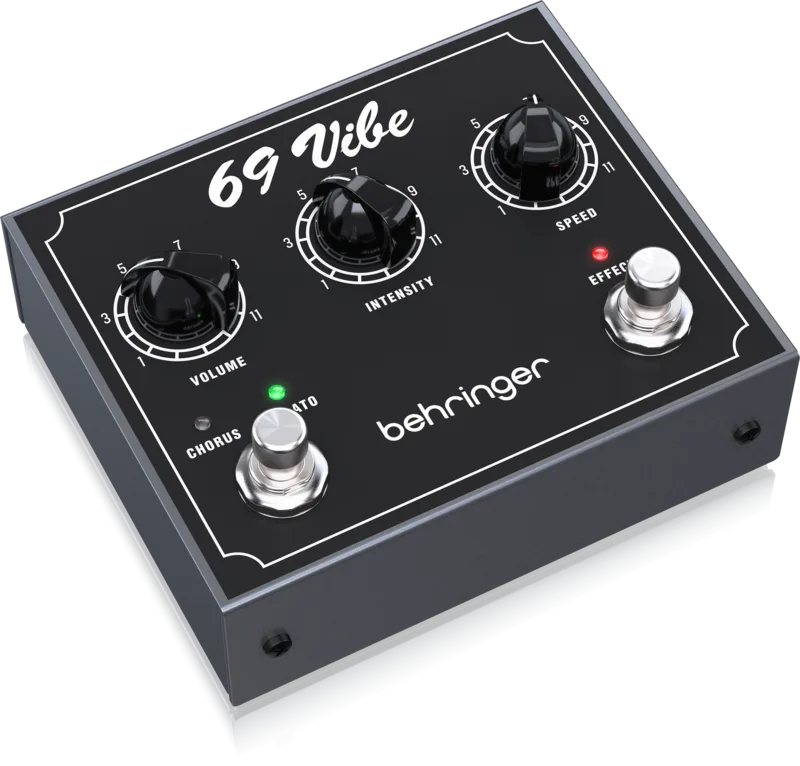


The Behringer '69 Vibe is a compact vibe pedal that recreates the Shin-Ei Uni-Vibe, the 1960s Japanese effect whose swirling, pulsing character became a signature of players like Jimi Hendrix. Behringer says the pedal aims to bring that same, authentic syrupy sound onto your pedal board without breaking the bank1. It was announced in December 2024 at $69 in the US and £59 in the UK2, and by February 2025 gearnews.com listed it at $62.00, £55.00 or 66.00 euros3.
What it does
The '69 Vibe offers the two modes the original Uni-Vibe was known for. Behringer's product page says the pedal lets you "toggle between Chorus or Vibrato mode with a simple footswitch which makes it super easy to change modes especially duri[ng a performance]"1.
"toggle between Chorus or Vibrato mode with a simple footswitch which makes it super easy to change modes especially during live play."
The Chorus mode is described by Behringer as the one "for some classic Hendrix vibes"1. The original Shin-Ei Uni-Vibe offered selectable chorus and vibrato options, as Trevor Curwen noted in a MusicRadar review of a related vibe pedal4, and the '69 Vibe follows that same two-mode layout. MusicRadar's Alex Lynham has also written that there were two main versions of the original unit5, so players comparing clones to vintage originals have that history to weigh.
Controls and connections
The pedal keeps things simple on the top panel2:
| Control | What it does |
|---|---|
| Volume | Sets the overall level of the effect |
| Intensity | Sets the depth of the swirl |
| Speed | Sets how fast the swirl pulses |
And on the foot end:
- A main footswitch for effect on/off
- A second footswitch that toggles between Chorus and Vibrato, so both modes stay available mid-song without touching the knobs1
- An input for attaching an expression pedal so you can control the effect on the fly, according to MusicRadar's Jonathan Horsley2
The expression pedal input means the vibe's Speed can be swept by foot while you play, rather than reached for on the pedal's top panel2.
The Uni-Vibe lineage
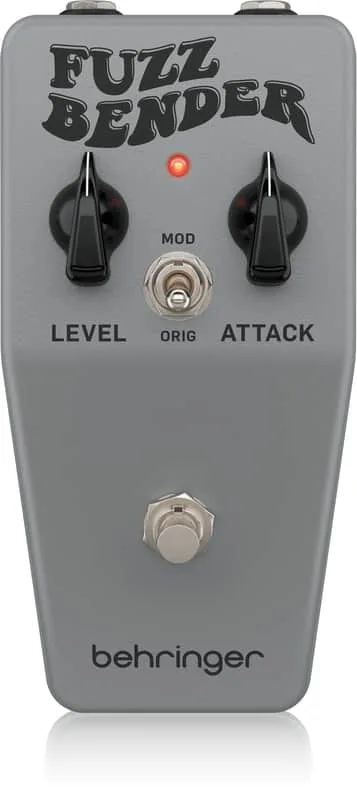
Behringer's product page says the original Shin-Ei Uni-Vibe from Japan "ended up introducing a wholly unique effect" and that the '69 Vibe's circuit is based on it1. MusicRadar's Jonathan Horsley described the pedal plainly as "a similarly priced clone of the Shin-Ei Uni-Vibe"6, announced alongside Behringer's broader clone program: the month before, the company unveiled a Tone Bender clone and a Klon Centaur replica, both under $702.
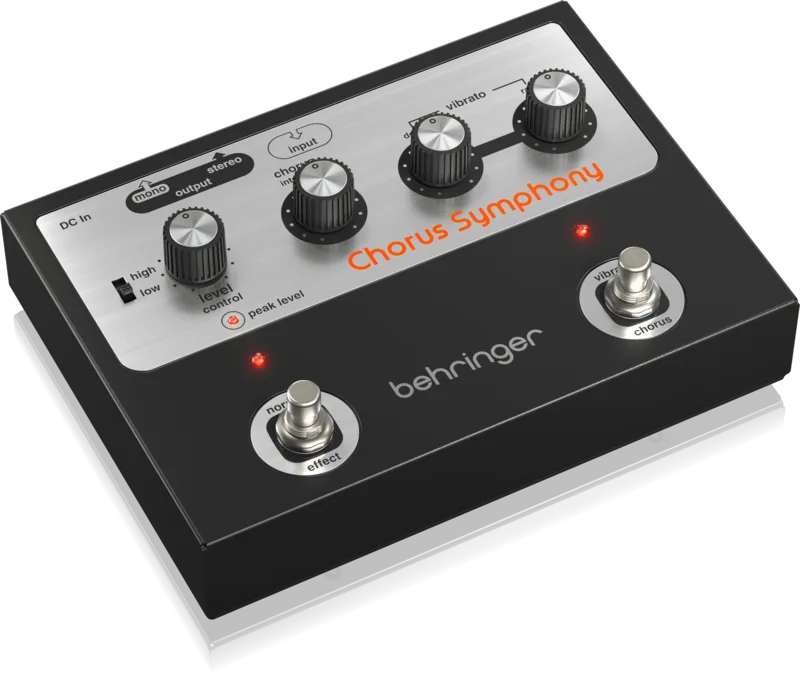
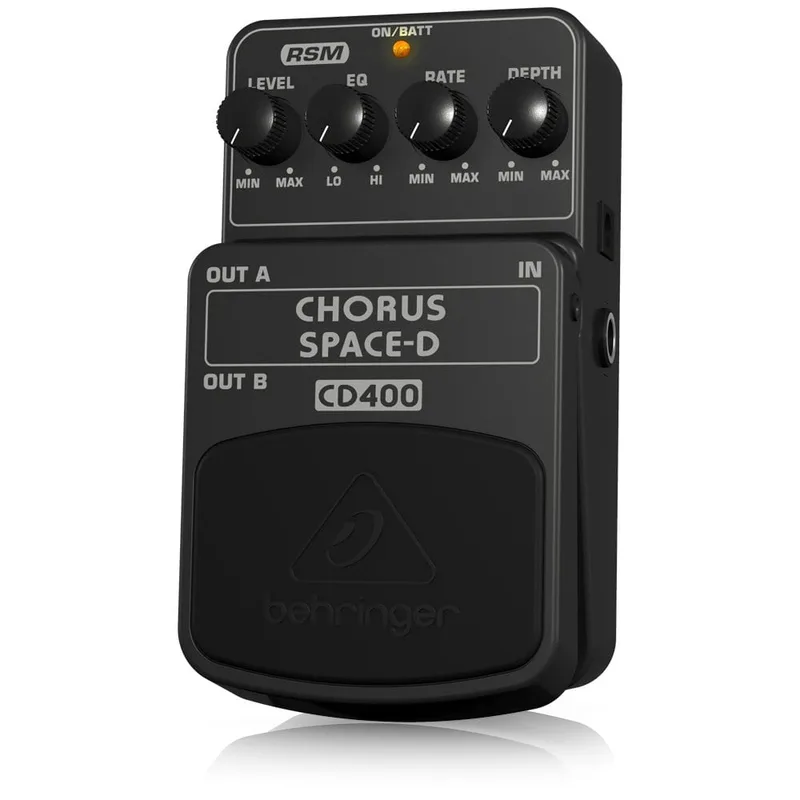
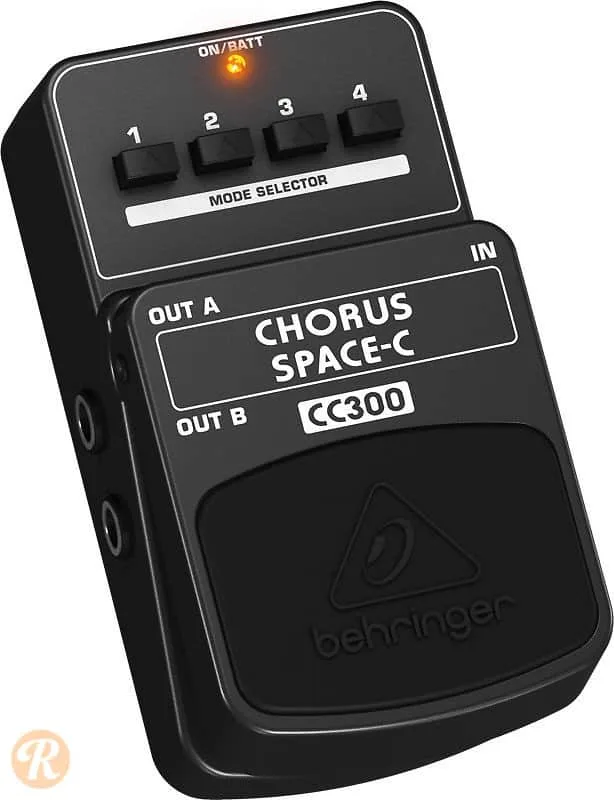
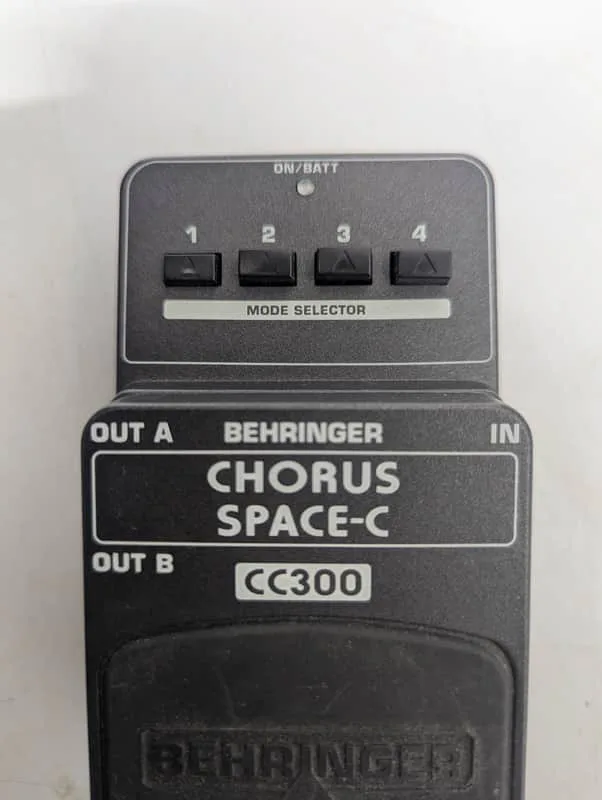
The '69 Vibe is part of a wider run of Behringer modulation pedals, including the Chorus Symphony, the company's take on the Boss CE-1, and the Chorus Space. For the broader effect family, see Chorus Pedals and Vibrato Pedals.
On the board
The '69 Vibe follows the modern pattern for Uni-Vibe-style pedals. As tru-fi.com's history of the Uni-Vibe puts it, "Modern Univibe pedals come in compact, pedalboard-friendly enclosures"71. MusicRadar's report on the pedal describes "a familiar look, black enclosure, white text" in metal2.
Videos
Behringer
Budget Pedal Chap
TheToneShack
Questions
How much does the Behringer '69 Vibe cost?
Behringer announced the '69 Vibe in December 2024 at $69 in the United States and £59 in the UK. By February 2025, gearnews.com listed it at $62.00, £55.00 or 66.00 euros depending on region. It sits alongside Behringer's other low-priced clones of classic effects, such as the Klon Centaur and Tone Bender replicas the company unveiled the month before, both under $70.
Does the Behringer '69 Vibe have an expression pedal input?
Yes. MusicRadar's Jonathan Horsley reported that there is an input for attaching an expression pedal so you can control the effect on the fly. In practice that means the Speed of the vibe can be swept by foot while you play, rather than reached for on the pedal's top panel.
What does the Behringer '69 Vibe's second footswitch do?
The second footswitch toggles between the pedal's two modes, Chorus and Vibrato. Behringer says this makes it super easy to change modes, especially during a performance, without bending down to turn a knob or switch.
Is the Behringer '69 Vibe a Uni-Vibe clone?
Yes. Behringer's own product page says the circuit is based on the original Shin-Ei Uni-Vibe from Japan, and MusicRadar's Jonathan Horsley described the pedal as a clone of the Shin-Ei Uni-Vibe. The original offered selectable chorus and vibrato options, and the '69 Vibe carries both.
Sources (7)
- 69 VIBE | Behringer, Behringer
- “That same, authentic syrupy sound onto your pedalboard without breaking the bank!”: Having unveiled super-affordable Klon and Tone Bender clones, Behringer unveils a $69 take on the Shin-Ei Uni-Vibe, MusicRadar, 2024-12-05
- Behringer Octavia Octave Fuzz: The Sixties' Legend Revived, gearnews.com, 2025-02-20
- TC Electronic Viscous Vibe review, MusicRadar, 2015-06-15
- The FX files: Uni-Vibe, MusicRadar, 2019-04-10
- “A unique octave bass fuzz with a built-in, 2-voice ring modulator”: The Maestro BB-1 Brassmaster is a super-rare bass octave fuzz from the '70s that sounds great on guitar, sells for $2,000+, and Behringer just made a $69 clone of it, MusicRadar, 2024-12-13
- The Swirl Start of the Univibe vintage guitar pedal, tru-fi.com