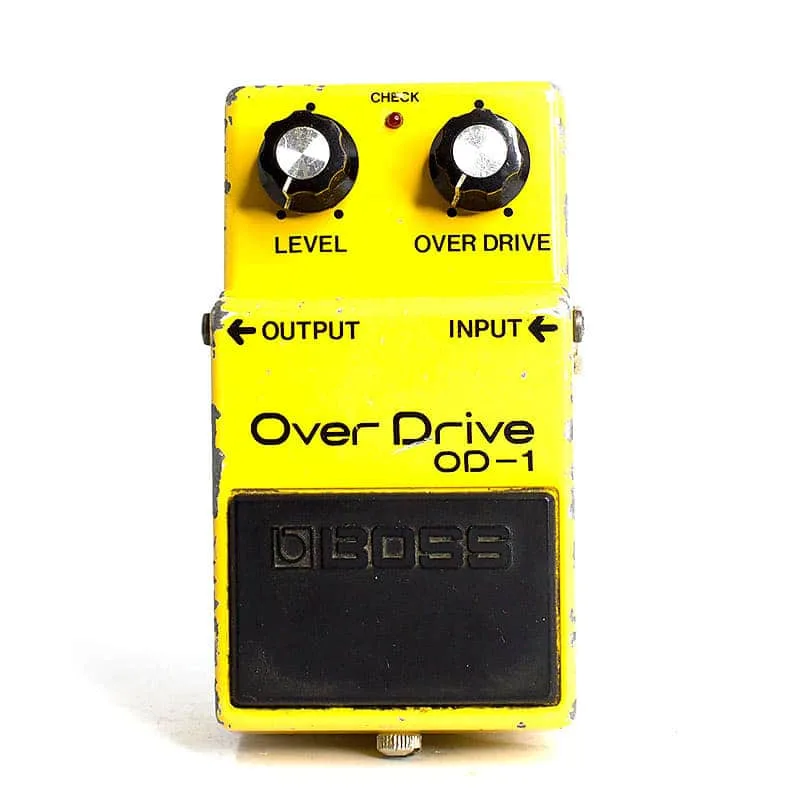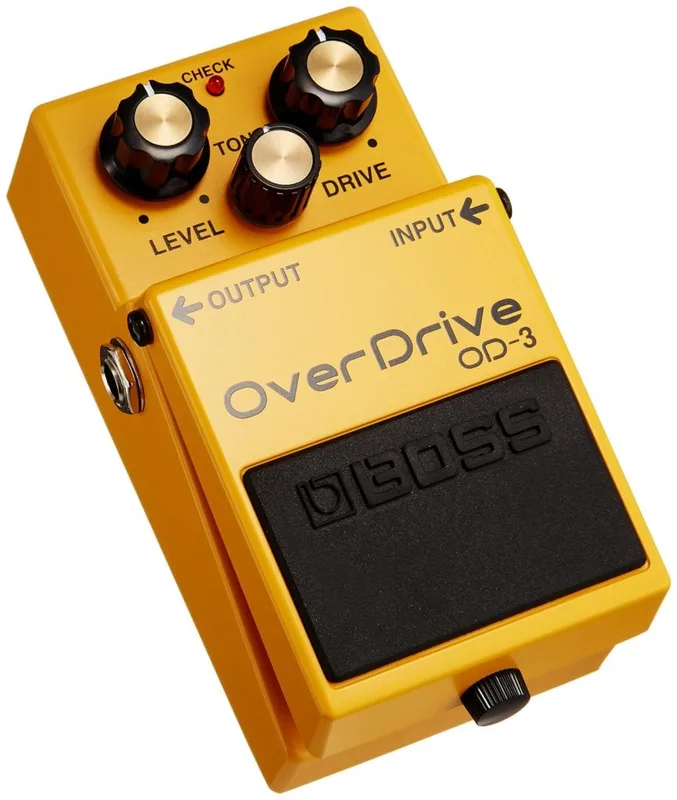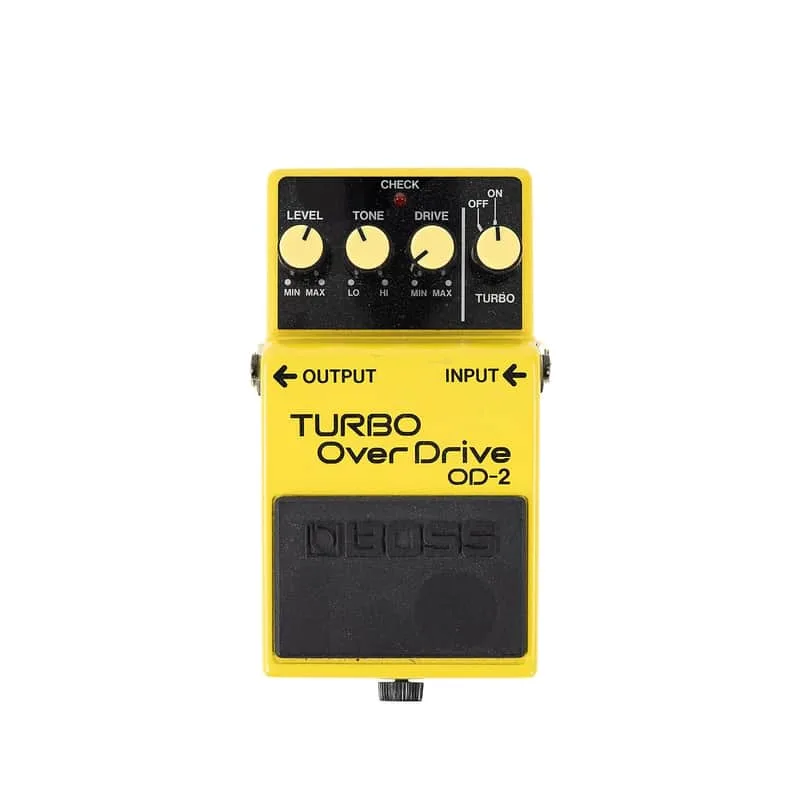


The BOSS OD-2 Turbo OverDrive is a two-mode overdrive pedal first released in 1985 as the successor to the OD-11. It was the first in a series of pedals using BOSS's "discrete op-amp" circuit topology, which Aion FX describes as overdriving "more like an amplifier than traditional diode-clipping circuits"1. The pedal ran through two revisions: the OD-2r arrived in 1994, and the OD-2 line was officially succeeded by the OD-3 in 19971.
Standard mode and Turbo mode
The OD-2 carries two distinct drive circuits, selected by the Turbo control. BOSS describes standard mode as a mild, well-defined overdrive with a sweeter character than the OD-1, while "Switching on Turbo mode activates an independent drive circuit with higher gain and increased presence, ideal for playing" leads4. Aion FX takes a blunter view of the standard side: "The non-'Turbo' mode is a completely separate drive circuit within the pedal, and generally speaking it's unremarkable" compared with the Turbo mode1.
Guitar World's history of BOSS overdrives lists the original OD-2 as "This four-knob unit, featuring Level, Tone, Drive and Turbo On/Off controls," and notes that the Remote switch-compatible OD-2R followed it3.
| Control | What it does |
|---|---|
| Level | Output volume |
| Tone | Treble shaping |
| Drive | Amount of overdrive |
| Turbo On/Off | Selects between the standard drive circuit and the independent higher-gain Turbo circuit |
The discrete op-amp circuit
Despite the name, the "discrete op-amp" topology contains no op-amps. Aion FX explains that it was "the first appearance of Boss's 'discrete op-amp' circuit topology which uses two JFETs and a PNP transistor to create a variable gain stage that can be controlled like an op-amp but clips gracefully when overdriven"1. The OD-2 is one of only three fully discrete circuits BOSS ever made, alongside the FZ-3 Fuzz and the DS-2 Turbo Distortion1.
The original OD-2 uses the 2SK117-GR JFET, a low-cutoff type similar to the J201, which is no longer made in through-hole format1. Aion FX also notes a practical limit of the earliest units: the original OD-2 "could barely get to unity gain at the highest volume setting"1, meaning the pedal could not quite match the volume of a clean signal at full Level.
"The first in a series of legendary pedals using BOSS's 'discrete op-amp' topology that overdrives more like an amplifier"
The OD-2 today and the PX-1 Model Pass
The OD-2's lasting contribution is its circuit. It was the first appearance of BOSS's "discrete op-amp" topology, which uses two JFETs and a PNP transistor to create a variable gain stage that can be controlled like an op-amp but clips gracefully when overdriven41. That approach to gain staging carried forward into BOSS's later overdrive designs, and it remains the technical detail most often attached to the OD-2's name: a pedal remembered less for its own controls than for the circuit idea introduced inside it4.
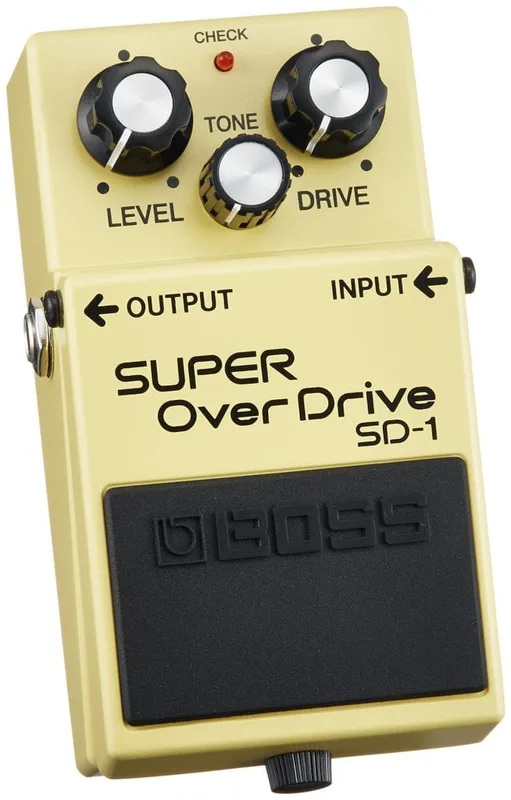
For players comparing it within BOSS's overdrive range, the OD-2 sits apart from the diode-clipping SD-1 and the current OD-3, and its amplifier-like discrete gain stage is a different approach from either1.
Videos
Reverb
James Hood
TheSuperFunAwesomeHappyTimePedalShow
Questions
What is the difference between the BOSS OD-2 and the OD-1?
The OD-2 arrived in 1985 as the successor to the OD-1. Its standard mode produces a mild, well-defined overdrive with a sweeter character than the OD-1, and it adds a Turbo mode that switches in an independent drive circuit with higher gain and increased presence. It was also the first BOSS pedal to use the discrete op-amp circuit topology, which overdrives more like an amplifier than traditional diode-clipping circuits.
What does the Turbo switch do on the OD-2?
Turbo mode activates an independent drive circuit inside the pedal with higher gain and increased presence, which BOSS describes as ideal for playing leads. The non-Turbo mode is a completely separate drive circuit of its own, generally regarded as unremarkable compared with the Turbo side, so the switch effectively gives you two different pedals in one box.
Did the OD-3 replace the OD-2?
Yes. The OD-2 was first released in 1985, was revised as the OD-2r in 1994, and was officially succeeded by the OD-3 in 1997. The OD-3 remains in production as a current BOSS overdrive.
Does the OD-2 use op-amps?
No. Despite the name of its circuit topology, the OD-2 is one of only three fully discrete circuits BOSS ever made, with no op-amps, alongside the FZ-3 Fuzz and the DS-2 Turbo Distortion. The discrete op-amp design uses two JFETs and a PNP transistor to create a variable gain stage that can be controlled like an op-amp but clips gracefully when overdriven.
Is the OD-2 available as a PX-1 Model Pass?
Yes. BOSS released the OD-2 TURBO OverDrive as a Model Pass for the PX-1 Plugout FX on 29 September 2026, alongside the DM-2 Delay and DC-2 Dimension C. Model Passes are purchased through the Boss Effect Loader app at $9.99 each, with demo versions available to audition.
Sources (4)
- Aurum Amp Overdrive / BOSS® OD-2 Overdrive, Aion FX, 2021-11-23
- OD-2 Turbo Overdrive by BOSS, RockBoard PedalPedia, 2026
- Boss overdrive pedals: the evolution of its essential stompboxes, Guitar World, 2021-09-28
- BOSS - PX-1 | Plugout FX, BOSS (boss.info)