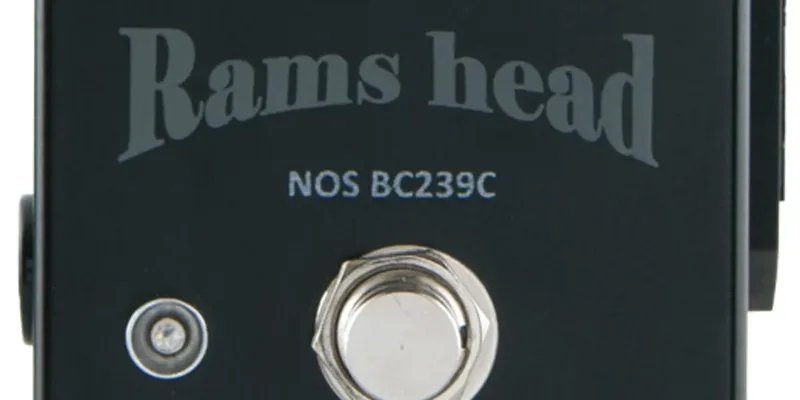


The Buffalo FX Ram's Head is a hand-wired fuzz pedal that recreates the sound of the mid-1970s Electro-Harmonix Ram's Head Big Muff. It was announced in June 2013 as a sonic replica of a mid-1970s Muff, built with NOS BC239C transistors and period-accurate parts throughout1. Steve Painter, the one-man builder behind Buffalo FX, made only two component changes from the original circuit, both aimed at the midrange scoop that Muff players know well2.
Premier Guitar's reviewer summed up the result as "Excellent Muff-style leads with extra midrange to cut through the mix," and found the pedal has "a perceptible midrange bump and increased top-end headroom" compared with a stock Ram's Head1.
A transistor Big Muff with extra mids
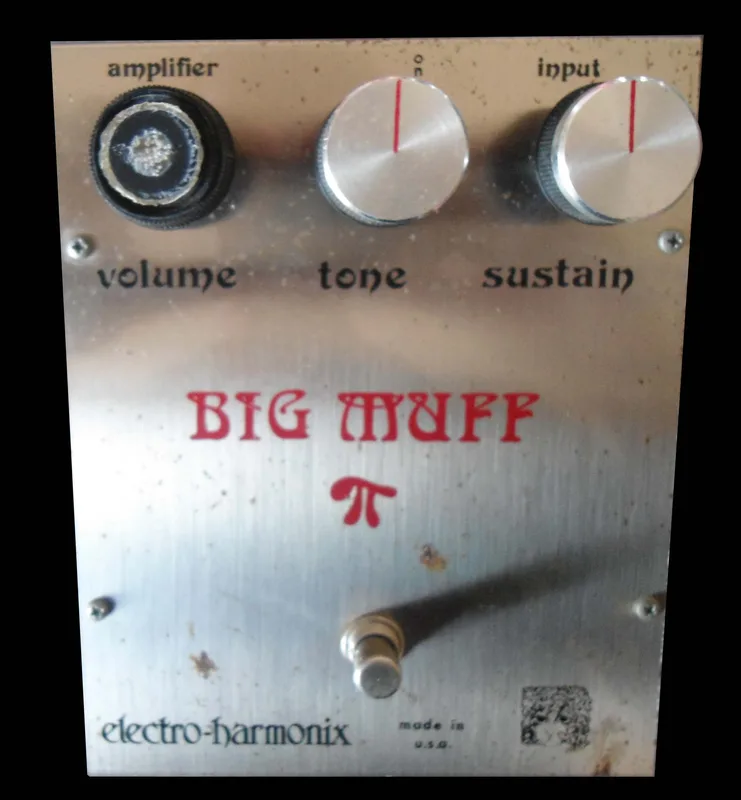
The Ram's Head name comes from the Electro-Harmonix logo, a small ram's head printed on the bottom right of the original pedal3. The V2 Big Muff that carried it was produced for a few years from 1973, and Kit Rae's history of the circuit notes that the V2 was essentially the V1 circuit in a larger enclosure4. Anasounds dates the Ram's Head's production run from 1973 to 19773.
Painter's build follows the four-transistor Big Muff topology of the original, but his choice of NOS BC239C transistors and his two component changes give it a character of its own. Premier Guitar's reviewer found the unit has a midrange bump and more top-end headroom than a stock Ram's Head, and that Painter said addressing the midrange drop was the first priority of his clone1. Guitar Interactive reported the same design goal at the pedal's release: the two changes give it slightly more mids and a more open top end2.
"The components are period-accurate, everything inside this black box existed in the '70s."
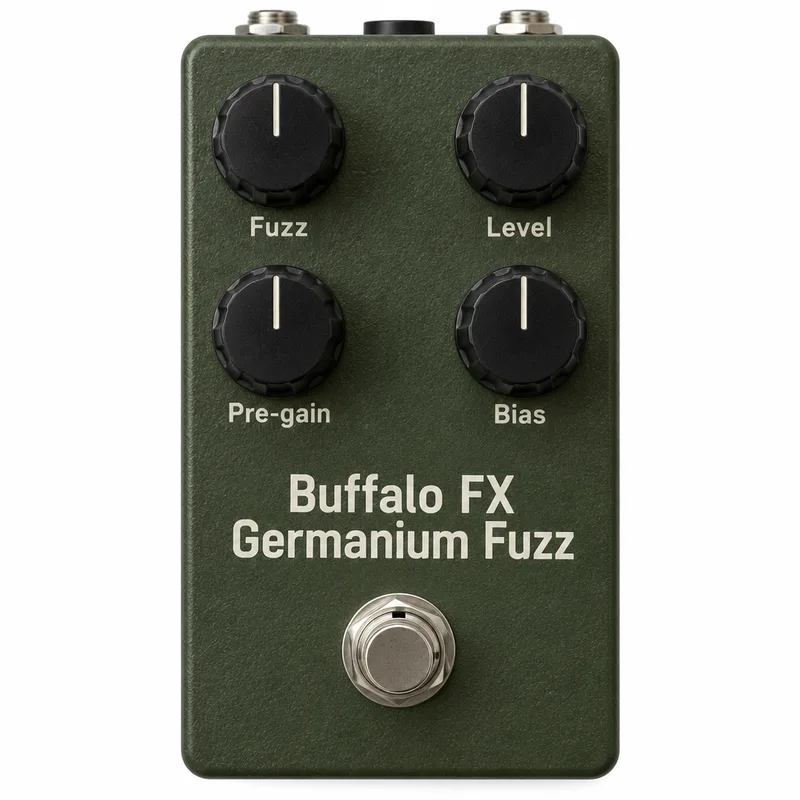
The enclosure is the same one Painter used for his Buffalo FX Germanium Fuzz, and it is taller than most pedals. One reason for that height is the quick-release 9-volt battery drawer, which needs no wires or connectors1.
The controls: Sustain, Level and Tone
The control panel mirrors the original three-knob Muff layout1.
| Control | What it does |
|---|---|
| Sustain | Sets the amount of gain and compression, the fuzz character of the pedal |
| Level | Sets the output volume |
| Tone | Tilts the EQ between darker and brighter settings |
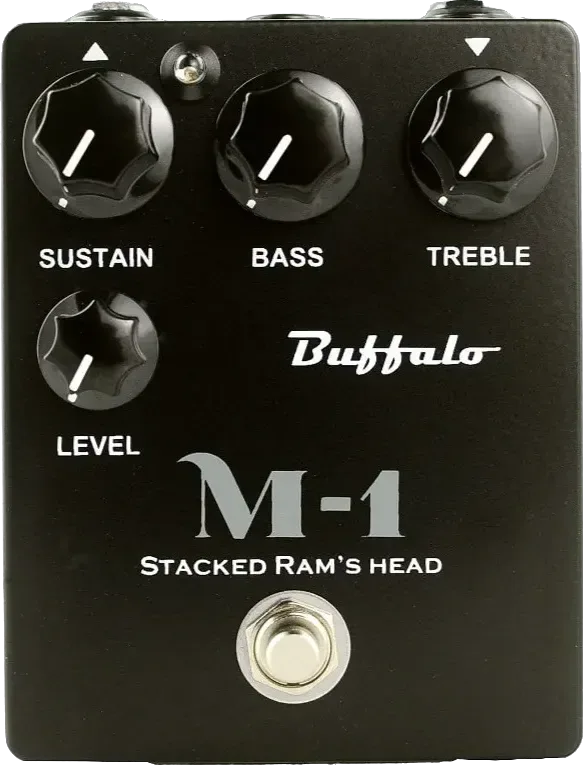
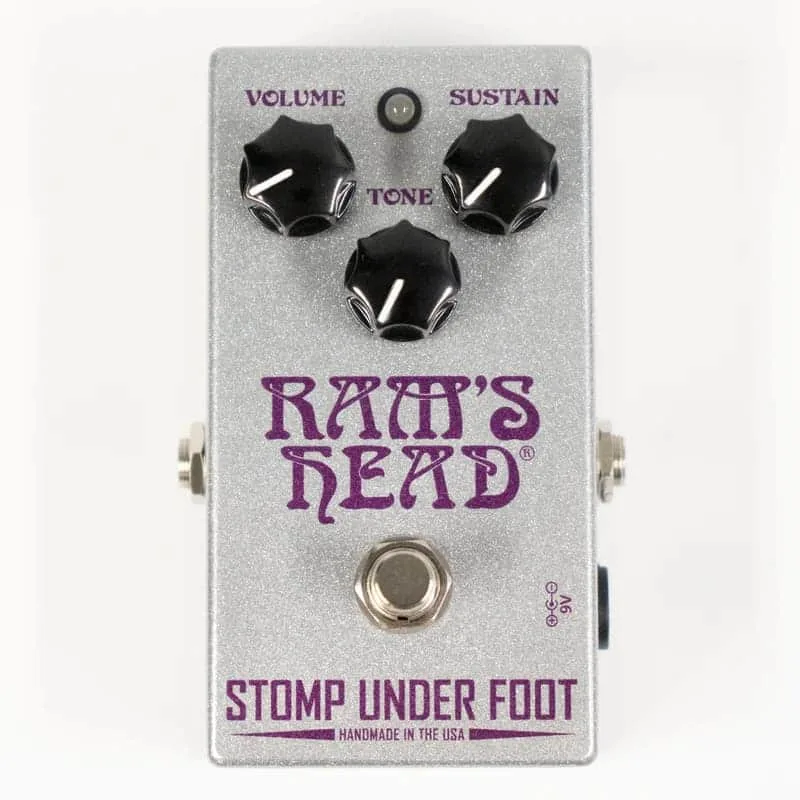
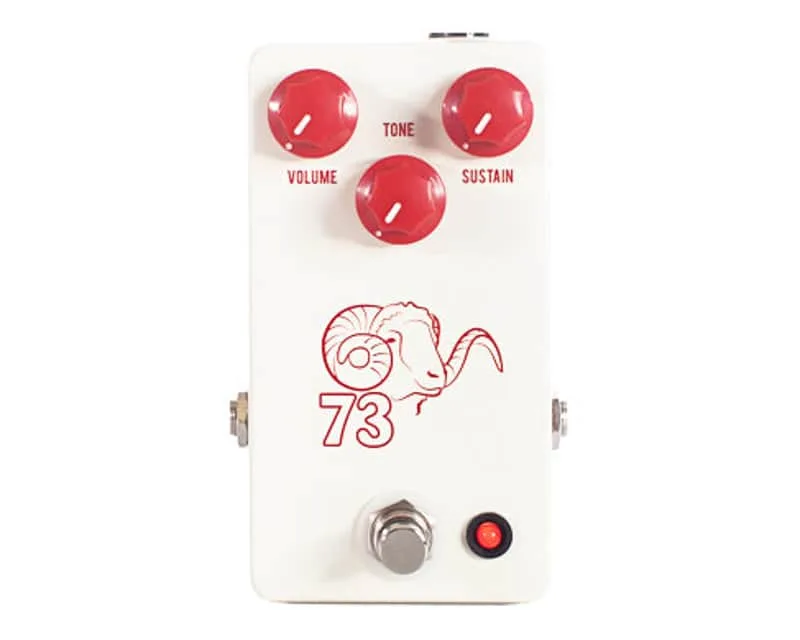
Pedal of the Day, reviewing the related Buffalo FX M-1 Ram's Head Fuzz, described the Sustain knob as bringing the sonic qualities of the Muff but with a slightly less harsh, rounder tone and more midrange, and noted that the EQ was modified to be usable at all settings, allowing both classic and modern tones5. The same three-knob topology appears across the Ram's Head clone market, from the Stomp Under Foot Ram's Head to the JHS Pedals '73 Ram's Head Replica Fuzz6.
Power and connections
Power comes from a 9-volt battery in the quick-release drawer, or from a center-negative 9-volt barrel adaptor1. Input and output jacks sit at the crown of the box, so both cables leave the top of the pedal, a layout that suits tight pedalboards1.
The battery drawer is part of why the enclosure is taller than most pedals. If you power it from a supply, use a standard center-negative 9V barrel plug1.
History: the Ram's Head Big Muff and Steve Painter's build
The circuit it copies has a long documented history. Kit Rae's research on the V2 Big Muffs counts at least twenty variations of the circuit, including the violet iteration used in 1973-74 Big Muffs and in custom-branded versions like the Foxey Lady and the Lyle Distortion Sustainer7. The original violet circuit was populated with silicon 2N5133/36999 transistors, carbon comp resistors, silicon diodes and ceramic filter capacitors7. Guitar Pedal X's technical analysis adds that the 1973 V2 Violet Ram's Head most commonly used FS36999 transistors, with several Ram's Heads using up the remaining 2N5133 stock8.
Painter's build differs from that original in its transistors, NOS BC239C rather than FS36999 or 2N5133, and in the two component changes that shape the mids and top end182. Everything else inside is period-accurate1.
How it compares with other Ram's Head clones
The Ram's Head has been cloned widely, and the Buffalo FX version sits among hand-wired takes rather than mass-produced reissues1.
| Pedal | Approach |
|---|---|
| Buffalo FX Ram's Head | Hand-wired by Steve Painter, NOS BC239C transistors, two component changes for more mids and open top end12 |
| Stomp Under Foot Ram's Head | Familiar Sustain, Volume and Tone three-knob layout for old-school Muff users6 |
| JHS Pedals '73 Ram's Head Replica Fuzz | Ram's Head recreation in the JHS lineup |
| Electro-Harmonix Ram's Head Big Muff Pi | Mass-produced nano reissue of the 1973 Violet Ram's Head, with four BC547 transistors on a through-hole board9 |
The Electro-Harmonix reissue route is the cheaper, factory-built option, and Guitar World's Trevor Curwen found EHX "nailed the vintage circuit" when A/B-ing it against a 1973 original10. The Buffalo FX pedal takes the opposite approach: one builder, hand wiring, testing and screen printing each box, and parts that all existed in the 1970s1.
Videos
gilmourish
Brett Kingman
Prymaxe
Questions
What Big Muff is the Buffalo FX Ram's Head based on?
It is a clone of the Electro-Harmonix Ram's Head Big Muff, the V2 Muff produced from 1973 and named for the ram's head logo on the original pedal. Steve Painter built it as a sonic replica of a mid-1970s Muff, with only two component changes from the original circuit.
Does the Buffalo FX Ram's Head take a battery?
Yes. The pedal has a quick-release 9-volt battery drawer with no wires or connectors, which is one reason for its taller-than-usual enclosure. It can also be powered with a center-negative 9-volt barrel adaptor.
What transistors does the Ram's Head use?
It is driven by NOS BC239C transistors, and every component inside is period-accurate, meaning everything in the box existed in the 1970s. The original 1973 V2 Violet Ram's Head most commonly used FS36999 transistors, with some units using remaining 2N5133s.
Is the Buffalo FX Ram's Head hand-wired?
Yes. Steve Painter hand-wires, assembles, tests and screen-prints each unit himself. Buffalo FX is a one-man French pedal maker, and the Ram's Head was sold through its own website at a street price of $205 as of 2023.
How is it different from the original Ram's Head Big Muff?
Only two component changes were made, giving slightly more mids and a more open top end. Addressing the midrange drop of the original was Painter's first priority, and reviewers found the result cuts through a mix better than a stock Muff-style fuzz.
Sources (10)
- Buffalo FX Ram's Head Review, Premier Guitar, 2013-08-14
- Buffalo FX Releases the Ram's Head, Guitar Interactive Magazine, 2013-06-13
- The history of the big muff over time, anasounds.com, 2022-06-08
- Big Muff Versions_Quick Identifier, Kit Rae (kitrae.net), 2026
- Buffalo FX M-1 Ram's Head Fuzz, Pedal of the Day, 2017-11-25
- Stomp Under Foot Ram's Head Pedal Review, Premier Guitar, 2010-10-20
- The Big Muff History of All Versions Part 1, Kit Rae (kitrae.net), 2024-04
- Guitar Pedal X, Guitar Pedal X, 2026-04-06
- Electro-Harmonix Ram’s Head Big Muff Review, Premier Guitar, 2020-02-03
- Electro-Harmonix Ram's Head Big Muff Pi review, Guitar World, 2020-05-25