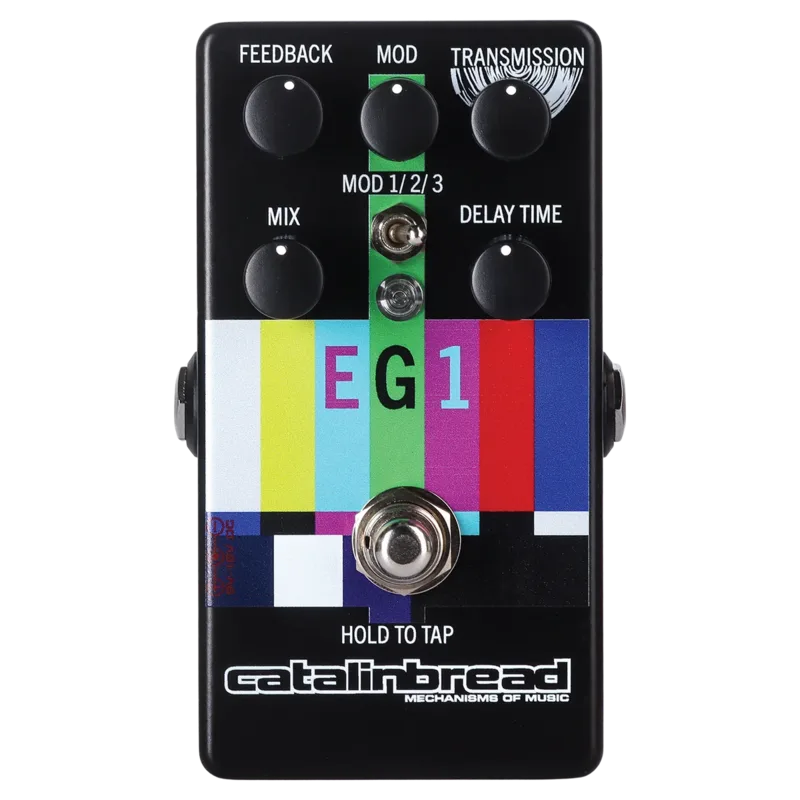


The Catalinbread EG1 is a lo-fi delay pedal from Portland's Catalinbread, built as the second release on the company's tap-tempo platform1. Where a standard delay aims for clean repeats, the EG1 is designed around degradation: it packages up to 900ms of delay time with processing artifacts that make each repeat sound more worn than the one before it1. Delicious Audio describes the design goal as an attempt to "move past the simple buzzword of 'lo-fi' and truly examine what physical degradation and signal decay actually feel like"1.
The core of the pedal is a three-position MOD toggle that selects one of three transmission modes: Vintage Radio (1), Cassette Tape (2) and Digital Television (3)2. Each mode changes how the delay line behaves, from the filtering of an old broadcast receiver to the mechanical wobble of a tape machine to the grit of digital artifacts and downsampling1.
The three transmission modes
The MOD toggle is where the EG1's character lives. Delicious Audio describes the three modes as distinct transmissions that "fundamentally alter how the delay line behaves"1.
| Mode | Toggle position | What it does |
|---|---|---|
| Vintage Radio | 1 | Simulates an old broadcast receiver using targeted high-pass and low-pass filtering1 |
| Cassette Tape | 2 | Emulates the organic mechanical quirks of vintage tape machines1 |
| Digital Television | 3 | Introduces grit via digital artifacts and downsampling1 |
Radio Mode is the filtered end of the range. Delicious Audio describes it as simulating the character of an old broadcast receiver, with high-pass and low-pass filtering carving the repeats into something that sounds received rather than played1. Tape Mode moves toward mechanical wobble, emulating the quirks of vintage tape machines, while Digital Television Mode is the most overtly digital of the three, using downsampling and digital artifacts for its grit1.
Controls and what the Mod knob does
The control set covers standard delay parameters plus the mode-specific lo-fi shaping. Delicious Audio notes the pedal is "backed by standard delay parameters, including time, self-oscillating feedback, a mix knob capable of 100% wet blends"1.
| Control | What it does |
|---|---|
| DELAY TIME | Sets delay time manually in Classic mode2 |
| MOD | A mode-specific knob that injects three different processing artifacts into the delay line repeats2 |
| TRANSMISSION | Governs the amount of depth for each mode's MOD effect2 |
| FEEDBACK | Controls the amount of signal fed back into the delay line, compounding the artifacts; may self-oscillate at extreme settings2 |
| MIX | Goes from 100% dry to 100% wet, where only the delayed signal is heard2 |
The MOD knob behaves differently depending on which mode is active. In Cassette Tape Mode, Catalinbread describes it as controlling the rate of modulation and distortion depth, something players may have seen called "wow and flutter" elsewhere. The MOD knob introduces a higher rate of modulation that sits comfortably in the mix at all settings, while TRANSMISSION adjusts the depth of this effect2.
Delicious Audio's account of the two other modes lines up with that division of labor. In Radio Mode, the Mod control shapes the filtering intensity, letting you dial in everything from a warm, band-passed echo to a harsh, distant transmission1. In Tape Mode, it adjusts the depth of the wow, flutter and tape saturation, providing everything from a subtle, breathing quality at low settings to heavier degradation when pushed1. Across all three modes, the Transmission knob controls the depth of the active modulation effect1.
Tap tempo and the footswitch
The EG1 has an integrated footswitch tap tempo, and the LED color indicates which mode you are in2. Holding the footswitch from any mode enters Tap Input mode2.
- Green LED: Tap Input mode, where you rhythmically tap the footswitch to set the delay time hands-free2
- Blue LED: Tap Bypass mode, which uses the tempo entered in Tap Input mode and lets you bypass the pedal with that time saved2
- Red LED: Classic mode, which operates like a standard delay, with the DELAY TIME knob setting the delay time manually2
Powering the EG1
The EG1 accepts a center-negative power supply supplying 9VDC with at least 200mA of current, and Catalinbread notes that over 200mA is fine2.
Improper powering voids the warranty on the EG1, in Catalinbread's words it "will effectively end the transmission"2. The 200mA minimum current draw means the pedal needs a supply with real headroom, not a minimal output.
Where it sits in Catalinbread's delay line
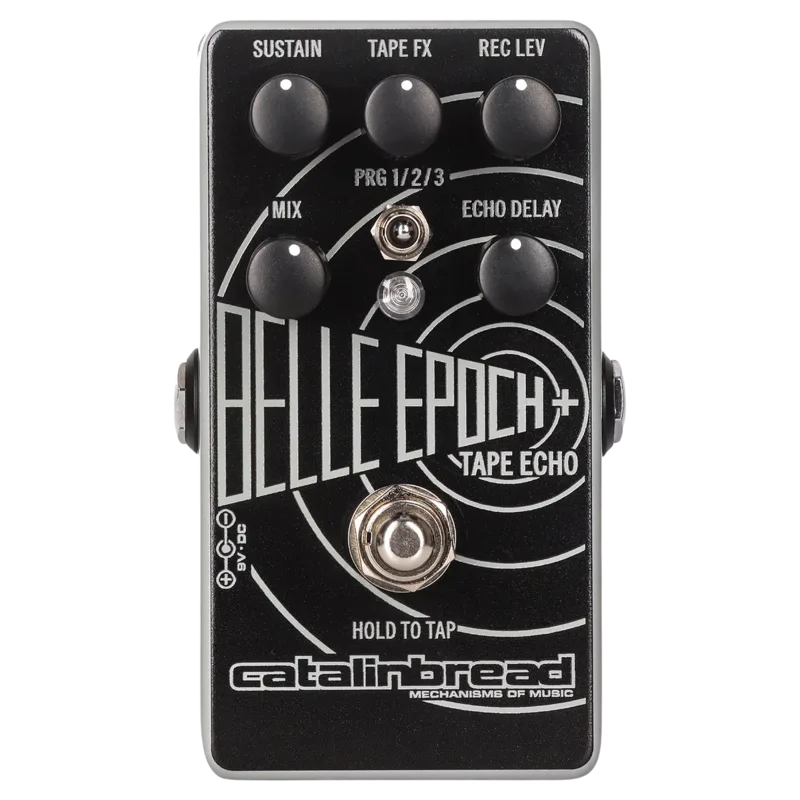
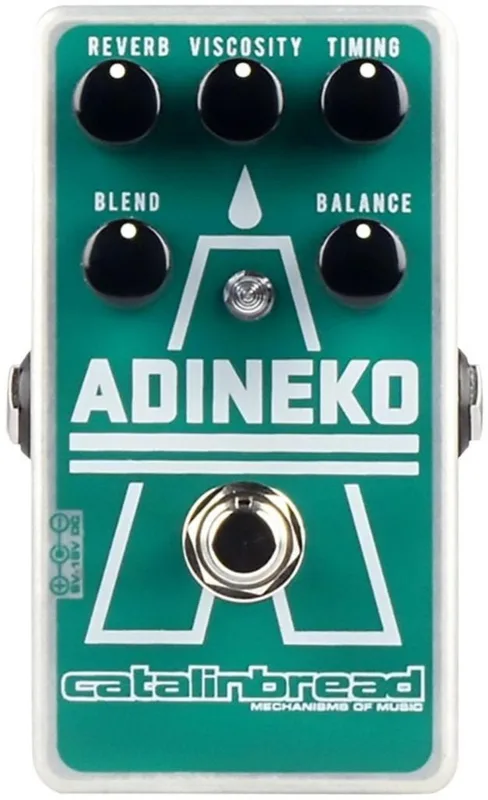
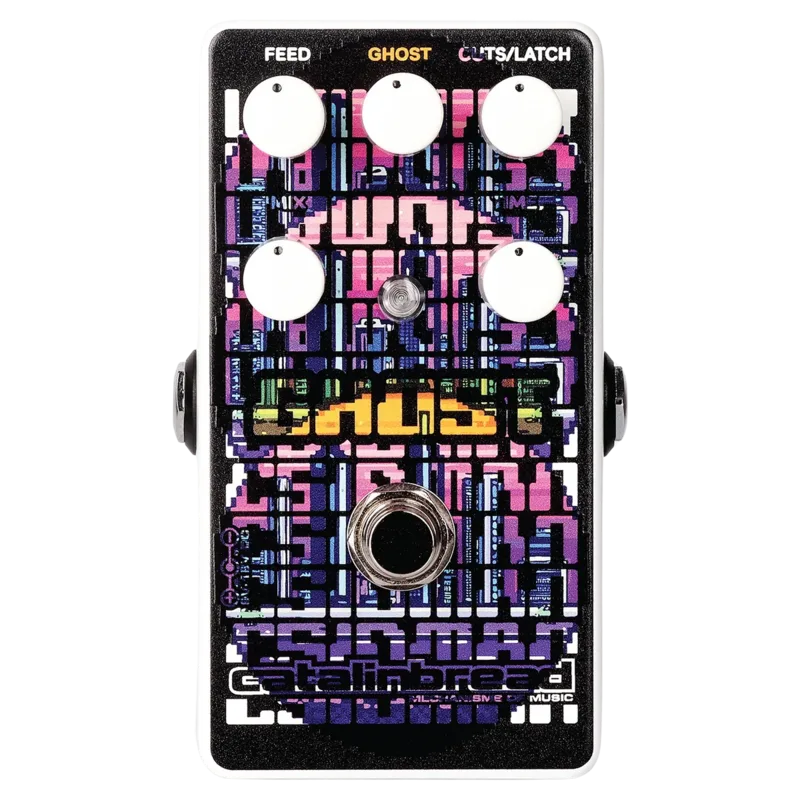
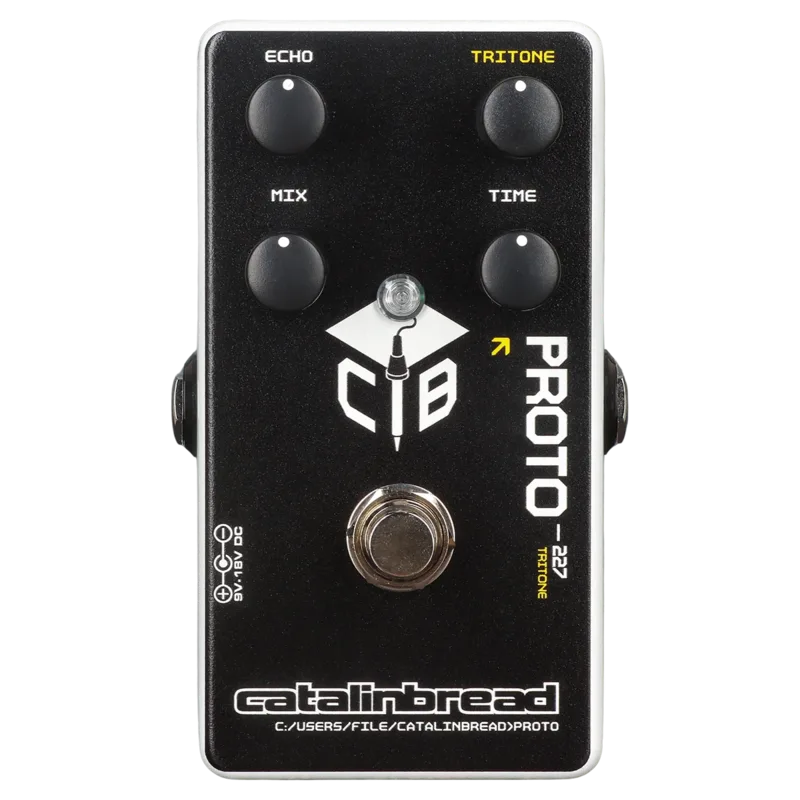
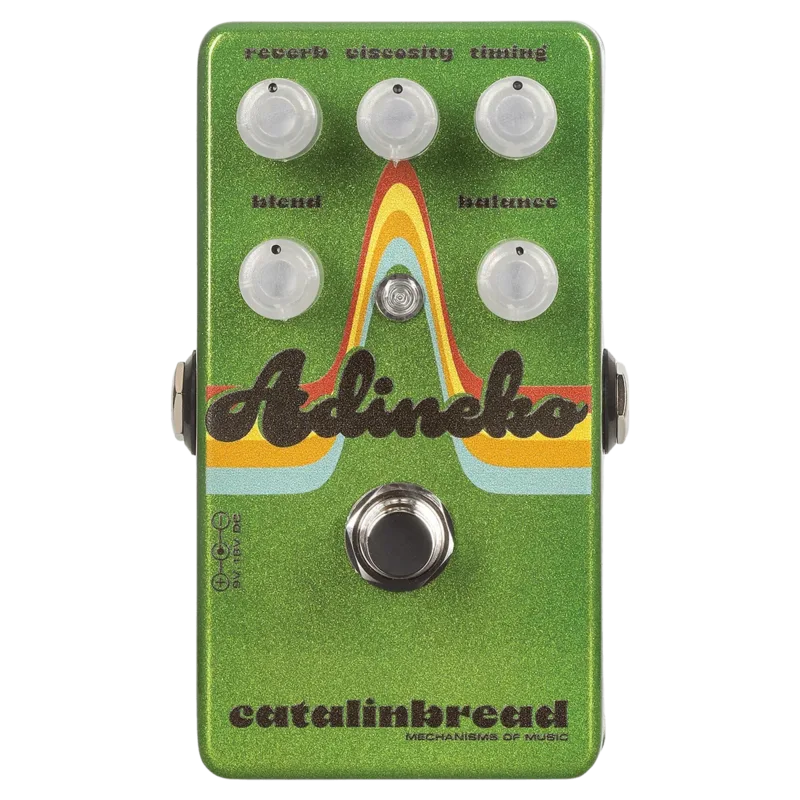
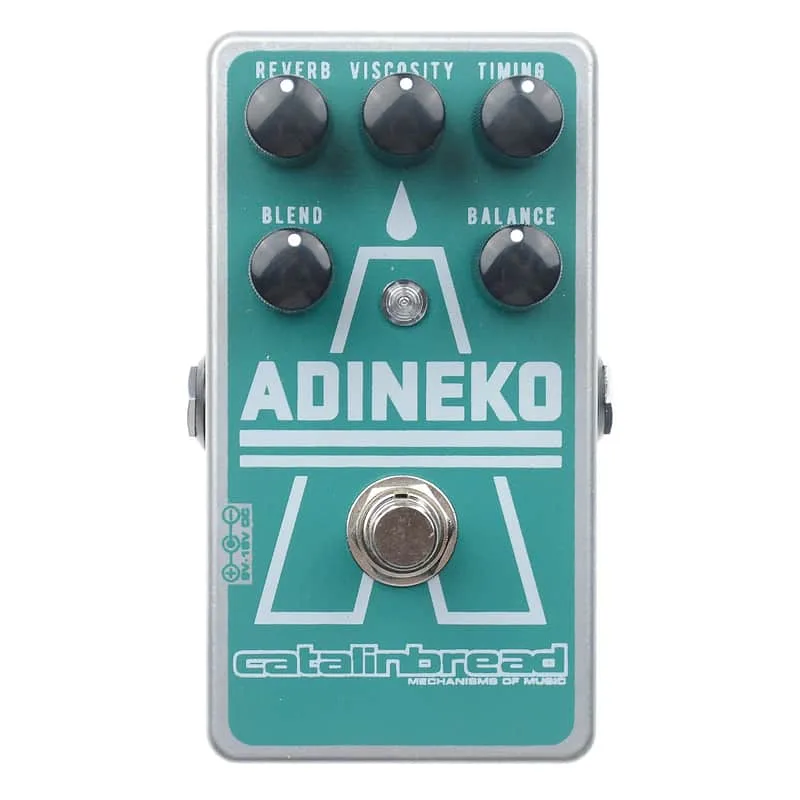
The EG1 is the second release on Catalinbread's tap-tempo platform1. It joins a delay range that includes the Echoplex-derived Belle Epoch family, the oil-can Adineko, the glitch-oriented CSIDMAN and the pitch-echo Tritone Proto 227. Where those pedals chase specific vintage machines or glitch effects, the EG1 is built around the idea of signal decay itself, with three different flavors of degradation on one toggle.
Videos
AndyDemos
Let's Play All
Nowyouknow
Questions
Does the Catalinbread EG1 have tap tempo?
Yes. The EG1 has an integrated footswitch tap tempo. Holding the footswitch enters Tap Input mode, where the LED glows green and you tap rhythmically to set the delay time hands-free. In Tap Bypass mode the LED glows blue and the pedal keeps the tempo you entered while letting you bypass it. A red LED indicates Classic mode, where the Delay Time knob sets the delay manually.
Is the Catalinbread EG1 analog or digital?
The EG1 uses digital signal processing. Delicious Audio describes it as a character-driven tool that shows digital decay can be as expressive as tape, and its Digital Television mode works by injecting digital artifacts and downsampling into the repeats rather than emulating an analog medium.
How long is the delay time on the Catalinbread EG1?
The EG1 offers up to about 900ms of delay time. Catalinbread's product page gives the maximum as roughly 900ms, and Delicious Audio's write-up cites the same figure. In Classic mode the Delay Time knob sets the time manually; in the tap tempo modes the footswitch sets it.
What are the Radio, Tape and Digital Television modes on the EG1?
They are three transmission modes selected by a three-position toggle. Radio Mode simulates an old broadcast receiver using high-pass and low-pass filtering. Cassette Tape Mode emulates the mechanical quirks of vintage tape machines, with wow, flutter and tape saturation. Digital Television Mode adds grit through digital artifacts and downsampling.
Can the EG1 self-oscillate?
Yes. The Feedback knob controls how much signal is fed back into the delay line, compounding the lo-fi artifacts, and Catalinbread states that it may self-oscillate at extreme settings. Delicious Audio likewise lists self-oscillating feedback among the pedal's standard delay parameters.
Sources (2)
- Catalinbread EG1 Lo-Fi Delay, Delicious Audio, 2026-09-09
- EG1 Lo-Fi Delay, Catalinbread Effects