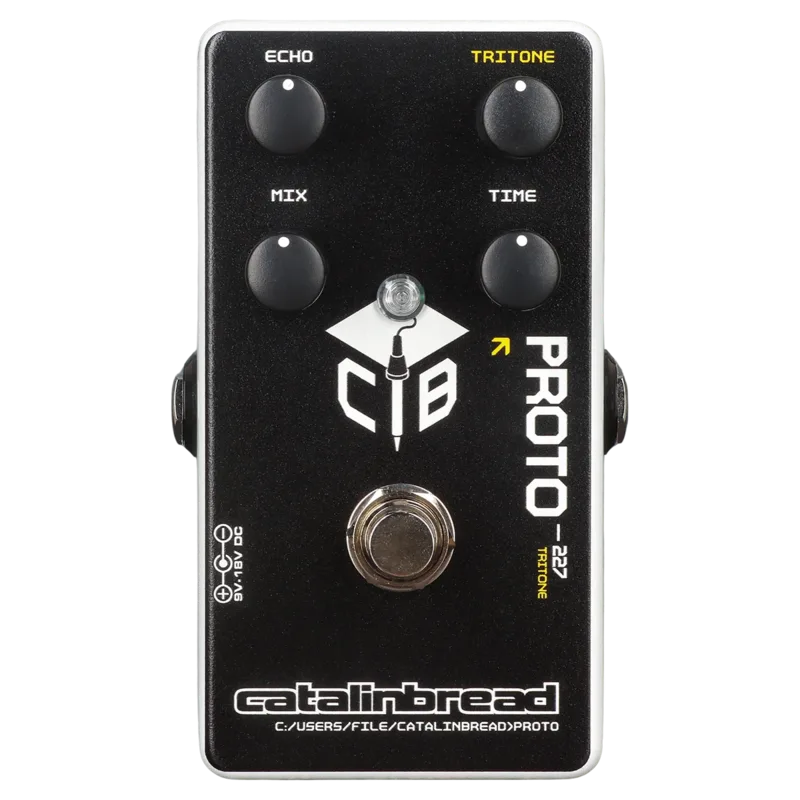


The Catalinbread Tritone Proto 227 is a compact four-knob pedal that MusicRadar describes as technically a "pitch echo": a very different kind of delay pedal that blends a delayed perfect fifth into your signal alongside an onboard slapback echo1. It was the first release in Catalinbread's Proto Club, a limited-availability program, announced in June 2025 at $1491. MusicRadar's Jonathan Horsley framed it as an experimental pedal that "should reward adventurous tone-seekers," possibly more useful for synth players than electric guitar1.
The controls
The Tritone sits in Catalinbread's familiar four-knob compact enclosure1. Each knob does a distinct job:
| Knob | What it does |
|---|---|
| MIX | Master wet-dry mix for the entire effect. Fully counterclockwise you hear only what you fed into the Tritone; fully clockwise, just the effect2 |
| TRITONE | Wet-dry blend for the perfect fifth, delayed at one-half the delay time of the pedal2 |
| ECHO | Feedback of the onboard slapback echo. Low settings yield minimal results; cranking it introduces a rich regenerative feedback that may self-oscillate in certain settings2 |
| TIME | Adjusts the timing of the arpeggio. Turning it up increases the speed2 |
The pitch content is the heart of the pedal. Catalinbread says the Tritone knob blends in that perfect fifth at half the pedal's delay time, and MusicRadar notes the pedal has "the capability to create three-note arpeggios out of the repeats, as a 'call-and-response type octave-up'" effect running in tandem with a perfect fifth1. Horsley called the "Triton" dial the pedal's USP1.
"There's an Echo dial for controlling feedback, i.e. the number of repeats, and if you crank this setting to expect some oscillation."
Power: 9 to 18V, 100mA or more
Catalinbread specifies a center-negative power supply between 9 and 18 volts, capable of supplying at least 100mA of current2. The company is blunt about the stakes: "Plugging in the wrong supply has some dire consequences, ranging from not working to potentially damaging your device," which can void the warranty2.
At 100mA or more, the Tritone draws enough current that a low-output daisy-chain supply may not keep up. Give it its own outlet on a supply rated for at least 100mA2.
A Proto Club release, from the Soft Focus Deluxe
The Tritone arrived as a Proto Club release from Catalinbread, offered as a prototype run rather than a standard catalog pedal. MusicRadar describes it as "a very different kind of delay pedal," a delay/pitch echo design priced at £110/$1491. On the sound, MusicRadar writes: "In this instance, the vibe is experimental. This should reward adventurous tone-seekers," adding that it may be more useful for synth players than electric guitar1. Catalinbread's product page carries the full control layout and operating details for the Proto 2272.
The controls are simple. The MIX knob, per Catalinbread's product page, "Gives you a master wet-dry mix for the entire effect. When this is fully counterclockwise, you'll hear only what yo[u] fed into the Tritone," and fully clockwise just the effect2. The TRITONE knob "acts as a wet-dry blend for the perfect fifth, delayed at one-half the delay time of the pedal"2. On power, Catalinbread warns that "Plugging in the wrong supply has some dire consequences, ranging from not working to potentially damaging your device," which can void the warranty2.
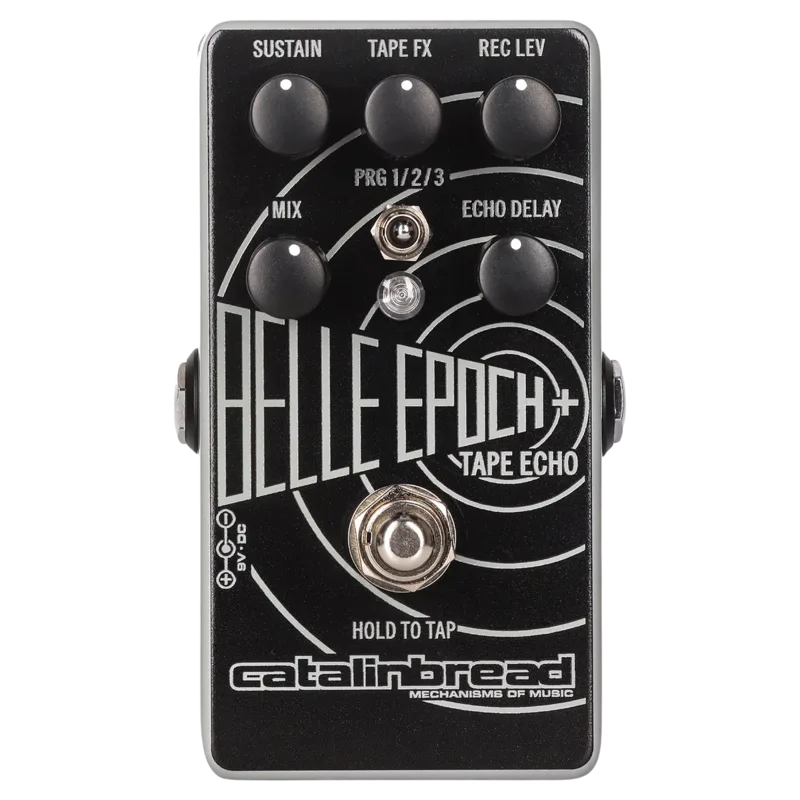
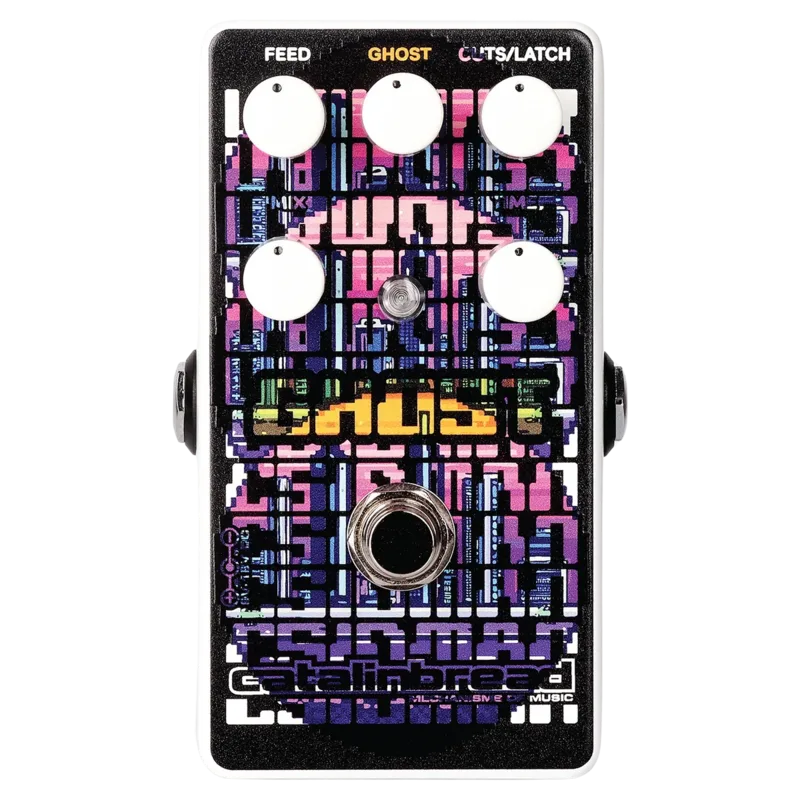
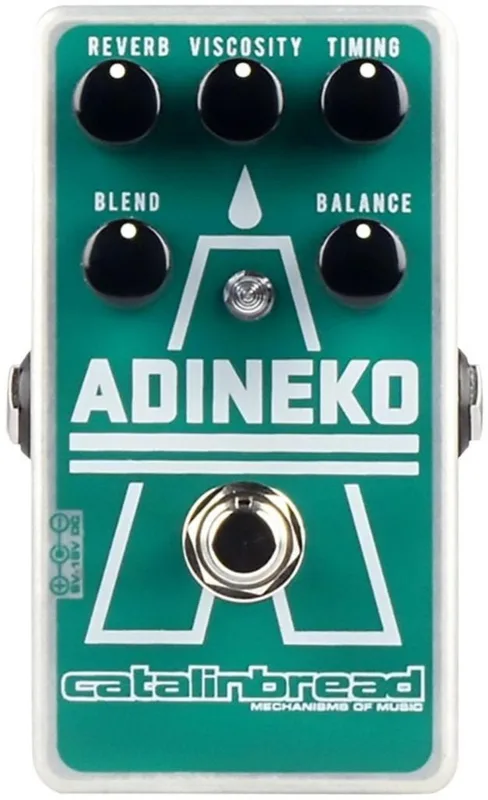
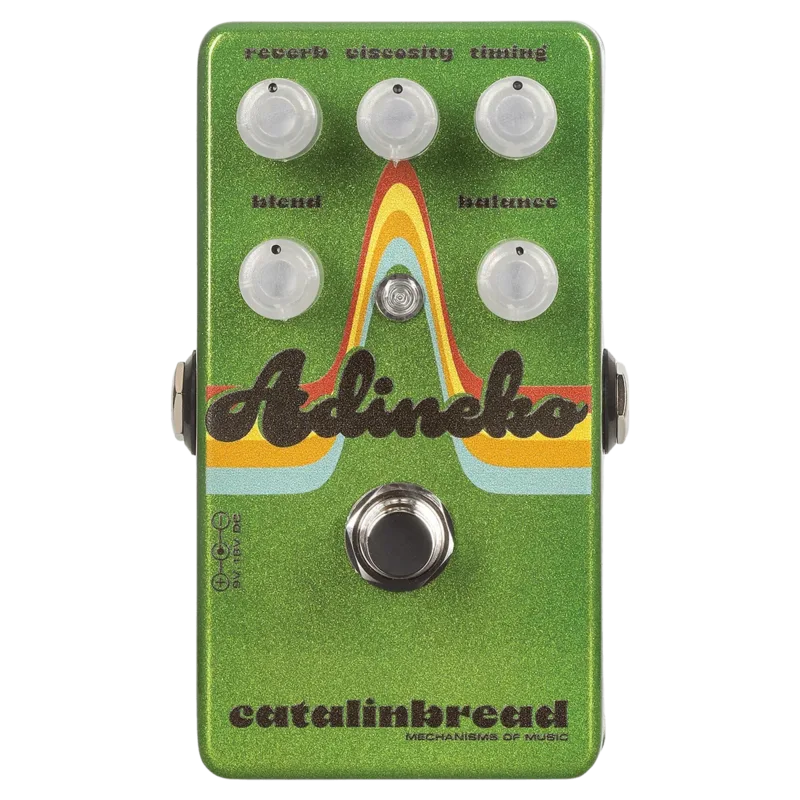
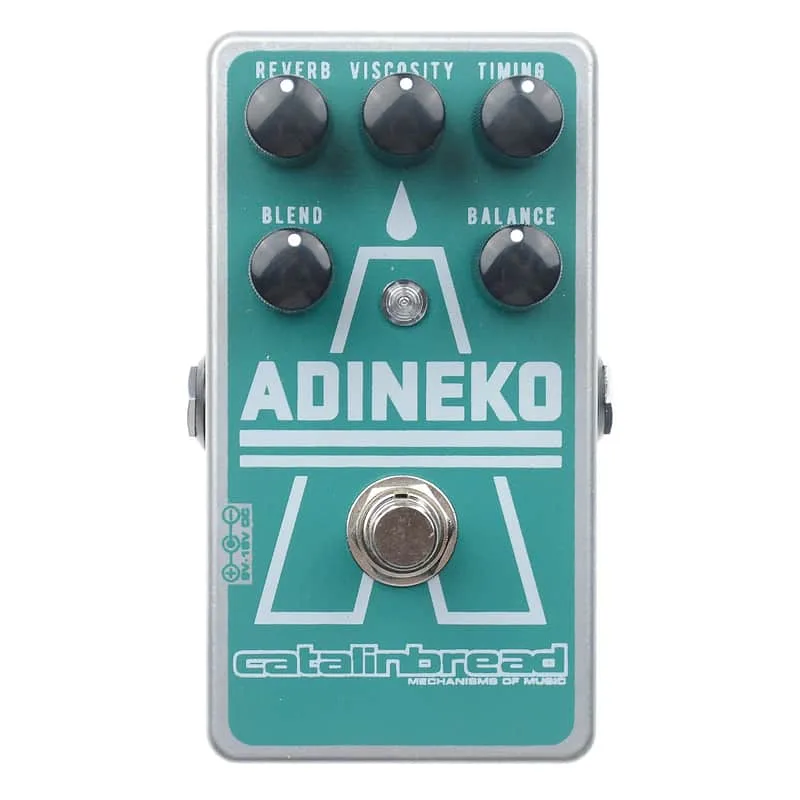
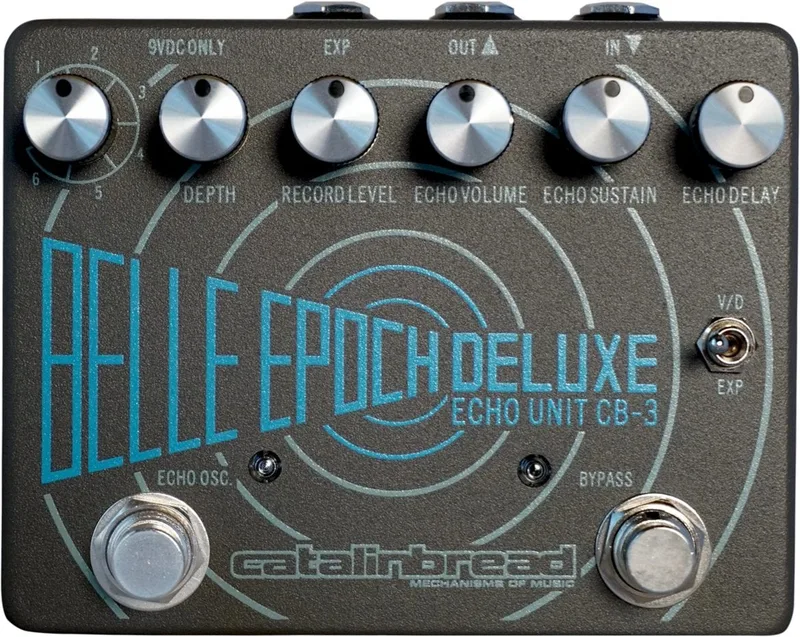
If the Tritone's pitch-echo approach interests you but you want a more conventional delay, Catalinbread's delay range runs from the Belle Epoch tape echo emulations to the glitch-oriented CSIDMAN and the oil-can style Adineko.
Videos
60 Cycle Hum
Nowyouknow
Questions
What is the Tritone knob on the Catalinbread Tritone Proto 227 for?
The Tritone knob acts as a wet-dry blend for a perfect fifth that is delayed at one-half the delay time of the pedal. MusicRadar's Jonathan Horsley called the Triton dial the pedal's unique selling point. Alongside the Echo feedback control and the master MIX knob, it shapes the pitch-shifted character of the repeats rather than just their number or level.
Can the Tritone Proto 227 run on 18 volts?
Yes. Catalinbread states the Tritone requires a center-negative power supply between 9 and 18 volts, capable of supplying at least 100mA of current. The company warns that plugging in the wrong supply has consequences ranging from the pedal not working to potentially damaging the device and voiding the warranty.
What is the Catalinbread Proto Club?
The Proto Club is a Catalinbread release program for pedals that began as prototypes or offshoots of existing designs. The Tritone Proto 227 was the first Proto Club release, announced in June 2025 and available for a limited window priced at $149. Catalinbread has since run further Proto Club releases, such as the Mirror (Proto 4224) in December 2025.
Does the Tritone Proto 227 self-oscillate?
It can. Catalinbread says the Echo knob controls the feedback of the onboard slapback echo: low settings yield minimal results, but cranking the knob introduces a rich regenerative feedback that may self-oscillate in certain settings. MusicRadar likewise notes that if you crank the Echo dial you should expect some oscillation.
How is the Tritone Proto 227 related to the Soft Focus Deluxe?
MusicRadar reports the Tritone was originally intended to be one of the modes on Catalinbread's Soft Focus Deluxe, the brand's shoegaze-in-a-box pedal, before being spun out as its own compact pedal. The Soft Focus Deluxe itself expands on the non-deluxe Soft Focus, adding a dual-footswitch format, a series/parallel toggle for its distortion circuits and a multi-function jack for expression control or tap tempo.
Sources (2)
- “The Tritone was universally loved by the crew but the vibes clashed with the palette of the Soft Focus Deluxe”: Catalinbread is selling off its prototype guitar pedals, and the first is a “B-side” pitch echo from its smash-hit shoegaze stompbox, MusicRadar, 2025-06-26
- Tritone Proto 227 (Pitch Echo) B-Stock, Catalinbread Effects