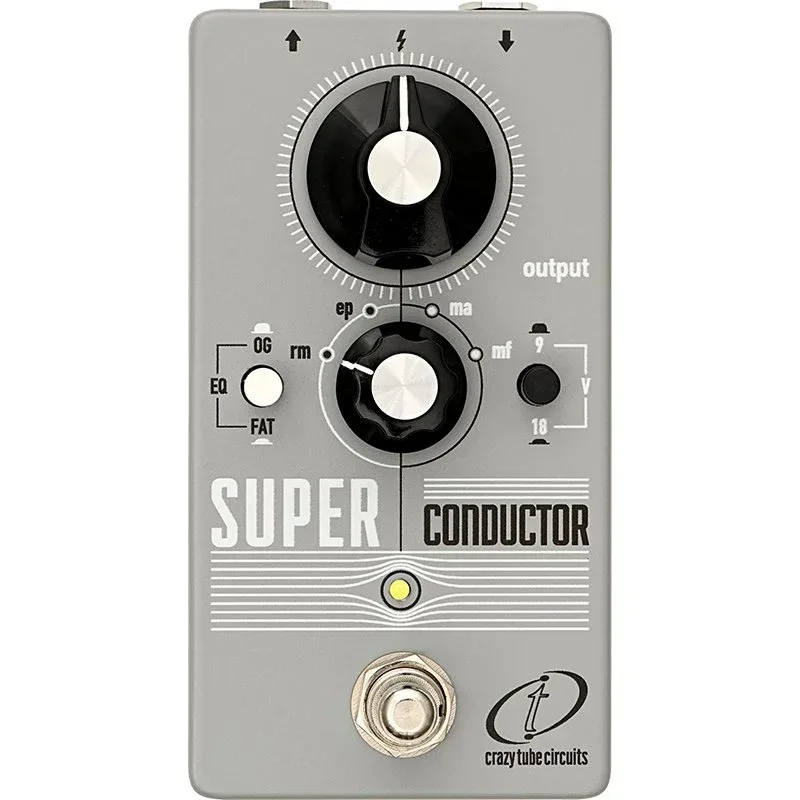


The Crazy Tube Circuits Super Conductor is a boost pedal that puts four distinct boost circuits in one small, all-analog box. A rotary knob in the middle of the case selects among four modes, rm, ep, ma and mf, each based on an established boost circuit from a different era, and each with its own input and output impedance, internal voltage and behavior on the volume knob12. Instead of buying four separate pedals, a player gets a Rangemaster-style treble boost, an Echoplex-style preamp, a transparent volume booster and a MOSFET clean boost in one enclosure.
The pedal was announced in May 2022 and, like all Crazy Tube Circuits pedals, is designed and made in Athens3. It is fully analog, with no digital processing in the signal path1.
Four boost circuits in one pedal
The core idea is simple: four classic boost flavors, one footswitch. Delicious Audio described it as a pedal that "delivers four flavors of boost, each inspired by established circuits producing different sonic characters"2. The maker says each all-analog circuit has different input/output impedance, internal voltage and behaves differently on the volume control, so the four modes are genuinely different circuits rather than one boost with EQ variations1.
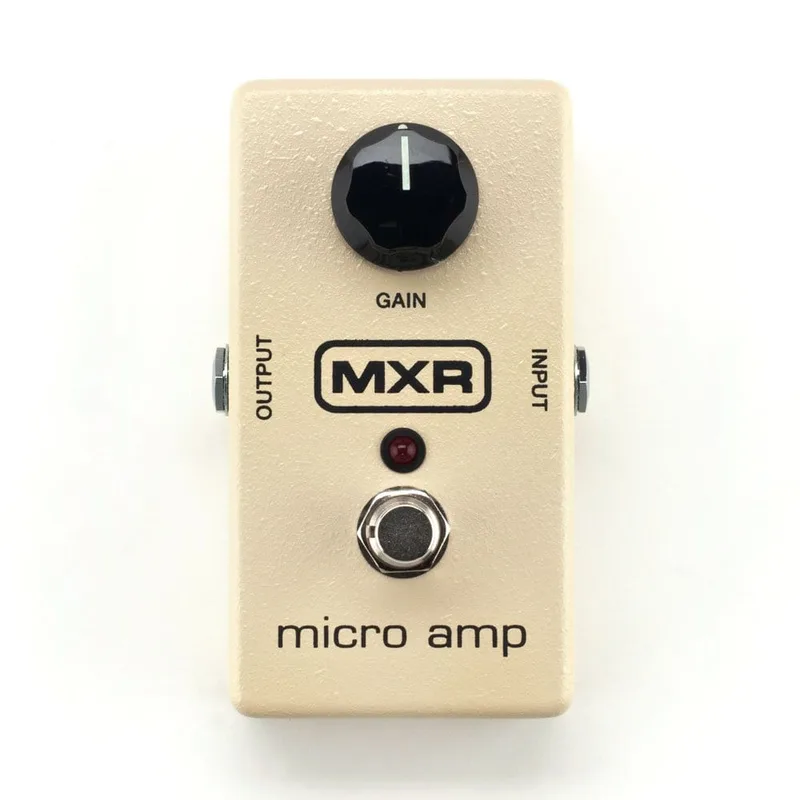
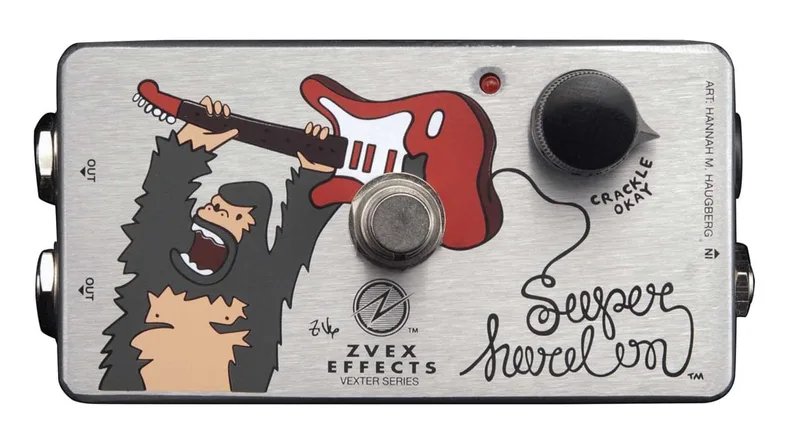
Gearnews named the lineage directly when the pedal was announced: the Rangemaster, the Echoplex preamp, an MXR Micro Amp-style volume booster and the ZVex Super Hard On2. Premier Guitar's news piece broke the modes down the same way, with rm as a silicon treble booster, ep as a tape echo preamp, ma as a transparent volume booster and mf as a late 90s MOSFET boost5.
The controls and the four modes
The control layout is compact: a big knob on top sets the amount of boost, a rotary knob in the middle of the case selects the mode, and two pushbuttons modify the selected circuit2.
| Control | What it does |
|---|---|
| Big knob (top) | Sets the amount of boost2 |
| Rotary knob (middle) | Selects among rm, ep, ma and mf2 |
| White button | Tone shaping modifier, operates only on rm and ep circuits1 |
| Black button | Tone shaping modifier, operates only on ma and mf circuits1 |
The two pushbuttons are where the pedal gets flexible. Each mode gets its own tailored modification, switchable at will5. In general terms, one button gives a "fatter" sound with more low-end emphasis, and the other changes the circuit's internal voltage from 9V to 18V for extra headroom2. What each button does depends on the mode selected:
- rm: silicon interpretation of the 60s classic germanium treble booster, built by paralleling 2 low gain silicon transistors. The maker suggests using it to push an already overdriven amp or add presence and bite to a dark sounding setup1.
- ep: a JFET preamp gain stage based on the preamp circuit of a tape echo unit of the early 70s, run at true to the original specs 24V DC via an internal voltage boost. The maker calls it a tone enhancer "known for its magical coloration and the added focus and detail it gives to your sound"12. Its modifier switches between the original 70s voicing and an enhanced full frequency boost with extra output2.
- ma: an op-amp boost based on a clean and "transparent" volume booster of the late 70s / early 80s. Its modifier selects between the original 9V DC power supply and an internally boosted 18V DC for increased headroom. The maker suggests using it to run long signal chains with its low output impedance, or to drive an amp harder into natural saturation12.
- mf: based on a late 90s ultra-transparent, high input impedance MOSFET boost15.
The pedal runs on 9V DC input only. The maker warns: "This unit was designed for 9V DC input only. Do not use higher voltage power supply." The 18V and 24V internal voltages in some modes are generated inside the pedal, not supplied at the jack12.
Is the Super Conductor a clean boost?
It depends on the mode. The ma and mf circuits are built around clean, transparent boosting: the maker describes mf as retaining "the massive clean boost with pristine highs" of its inspiration, noting that this interpretation doesn't crackle like the original1. The rm and ep modes are a different story. Gearnews' 2026 boost pedal guide put it bluntly: "This thing boost, but it doesn't do so cleanly"6. That is the point of the rm and ep circuits: they add coloration, focus and treble push rather than pure volume.
Guitar.com's clean and treble boost buyer's guide includes the Super Conductor among its picks, noting that "at roughly $180, this premium pedal from Crazy Tube Circuits packs a serious punch"4.
History: the circuits behind rm, ep, ma and mf
Each mode traces back to a specific piece of gear history:
- rm references the 60s germanium treble booster, the Dallas Rangemaster type that players used to push dark amps. Crazy Tube Circuits built its own silicon version, paralleling two low gain silicon transistors to get close to the germanium sound12.
- ep references the preamp stage of the Echoplex EP-3 tape delay of the early 70s, a preamp that players have long used as a tone sweetener. The pedal runs this JFET stage at 24V internally, true to the original specs12.
- ma references the clean, transparent volume boosters of the late 70s and early 80s, the MXR Micro Amp style of circuit15.
- mf references the late 90s ultra-transparent, high input impedance MOSFET boosts, the ZVex Super Hard On style of circuit15.
That Pedal Show covered the pedal in a demo video, with separate sections for the RM sounds and the MA and MF sounds, so players can hear the modes compared side by side7.
Videos
Pete Thorn
CrazyTubeCircuits
Rabea Massaad
Questions
What boost pedals is the Crazy Tube Circuits Super Conductor based on?
Its four circuits reference four established boosts: rm is Crazy Tube Circuits' own silicon take on the 60s germanium treble booster (the Rangemaster type), ep is a JFET preamp based on the preamp of an early 70s tape echo unit, ma is based on a clean and transparent late 70s / early 80s volume booster, and mf is based on a late 90s ultra-transparent high input impedance MOSFET boost.
Is the Super Conductor a clean boost?
Partly. The ma and mf modes are built around clean, transparent boost circuits, and the maker describes mf as a massive clean boost with pristine highs. The rm and ep modes color the signal by design, and Gearnews' boost pedal guide notes that the pedal boosts but doesn't do so cleanly, meaning some modes add character rather than pure volume.
What do the two buttons on the Super Conductor do?
They are modifier switches for tone shaping. The white button works only on the rm and ep circuits, the black button only on ma and mf. Depending on the mode, they switch things like a fatter sound with more low end, an internal voltage change from 9V to 18V for extra headroom, or a choice between original and enhanced voicing.
Where is the Crazy Tube Circuits Super Conductor made?
It is designed and made in Athens, Greece, like the rest of Crazy Tube Circuits' pedals. The maker's store lists it as shipping in 5 to 6 days, priced at €189.00, roughly $180.
Sources (7)
- Super Conductor, Crazy Tube Circuits
- Crazy Tube Circuits Super Conductor Multi-Boost, Delicious Audio, 2022-07-28
- Crazy Tube Circuits Super Conductor 4-in-1 analogue boost, gearnews.com, 2022-05-20
- The 10 best boost pedals for guitarists 2026, from budget to boutique, Guitar.com
- Crazy Tube Circuits Introduces the Super Conductor, Premier Guitar, 2022-05-23
- The 7 Best Boost Pedals of 2026: Make it Louder Better!, www.gearnews.com, 2026-05-11
- New Pedal Day NPD: SurfyBear, Reeves, Crazy Tube Circuits, Catalinbread & Cornerstone, That Pedal Show, 2022-10-14