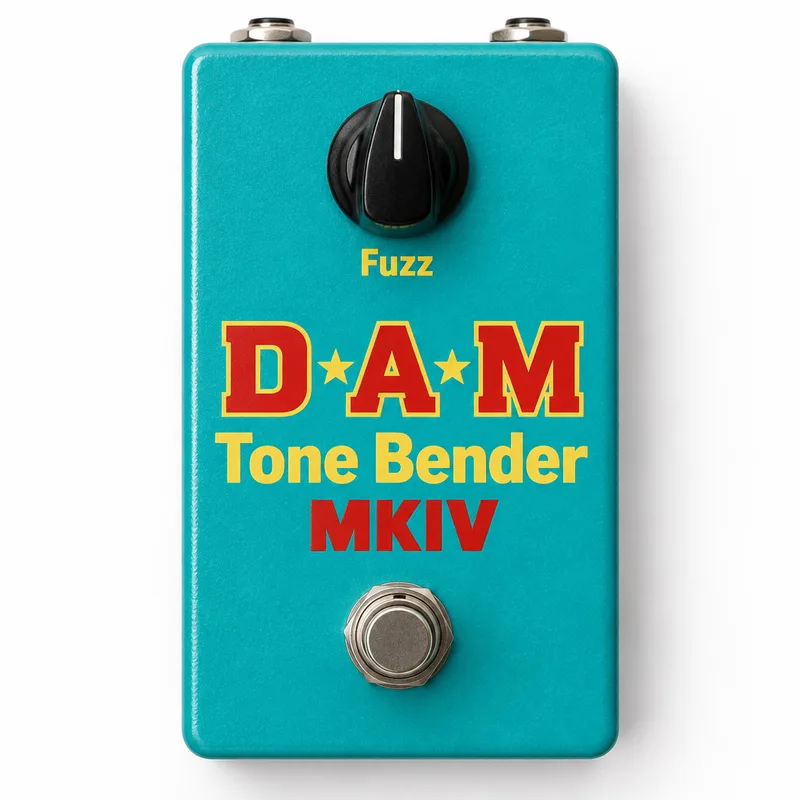


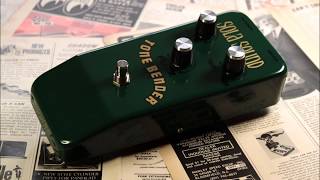
The D*A*M Tone Bender MKIV is a germanium fuzz pedal built as a replica of the Sola Sound Tone Bender MKIV, a British fuzz box first released around 1970. D*A*M describes the design goal of the project in two words: "flexible vintage." The builder sums up the intent as "The theme of function that I wanted for this project can be summed up as, flexible vintage."12
The pedal uses carefully selected NOS NKT OC84N (New Market OC84N) germanium transistors, which the builder credits for a fuzz tone with "a good deal of liquidity and movement in its tonal repertoire," not static in its dynamics or overly clumpy.1 The enclosure carries a turquoise paint scheme with red and yellow screen print.1
A flexible vintage fuzz
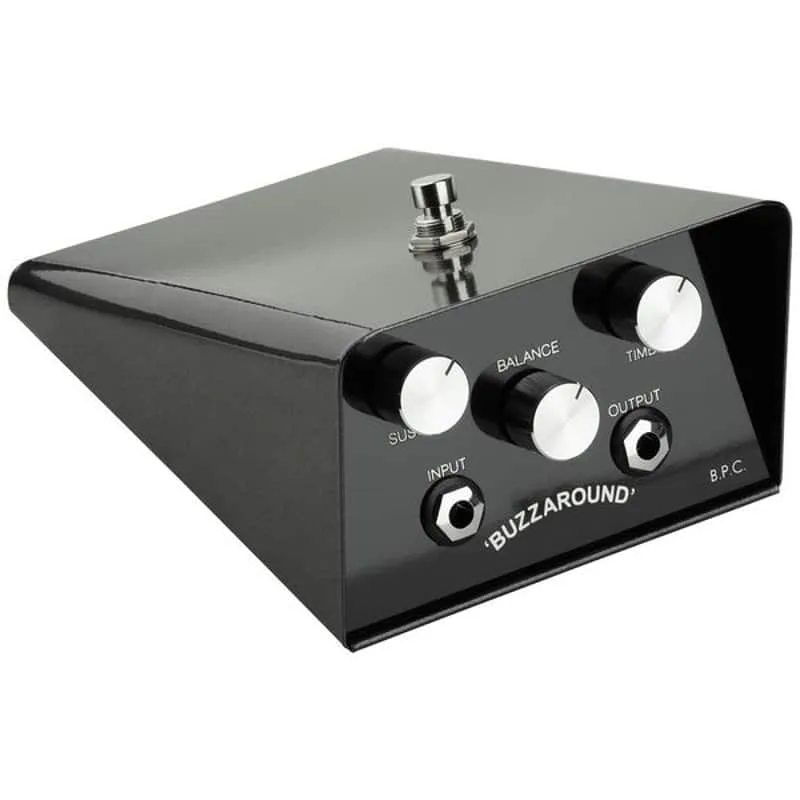
The original Sola Sound Tone Bender MKIV appeared approximately during 1970, and early MKIVs built during the first half of the 1970s featured a three-transistor circuit loosely based on the Baldwin-Burns Buzzaround.3 At launch, the only thing that set the MKIV apart from the Tone Bender MKIII that Sola Sound was already producing for Vox was the enclosure and graphics; the two share the same circuit family.3 D*A*M puts it plainly: "Tone Bender MKIII, Tone Bender MKIV. Same party different frock," with the two distinguished by biasing.1
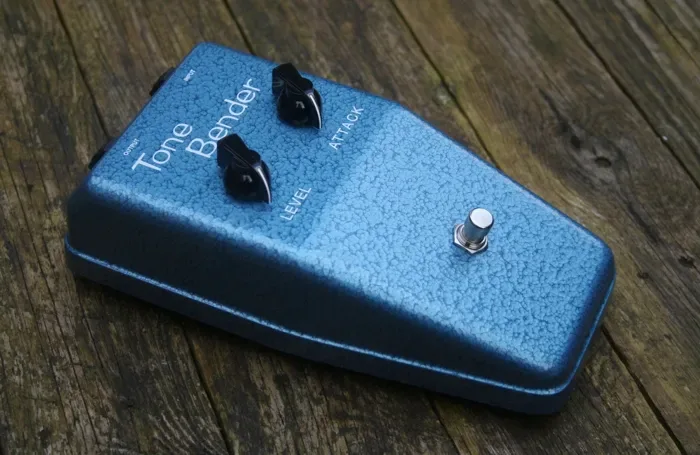
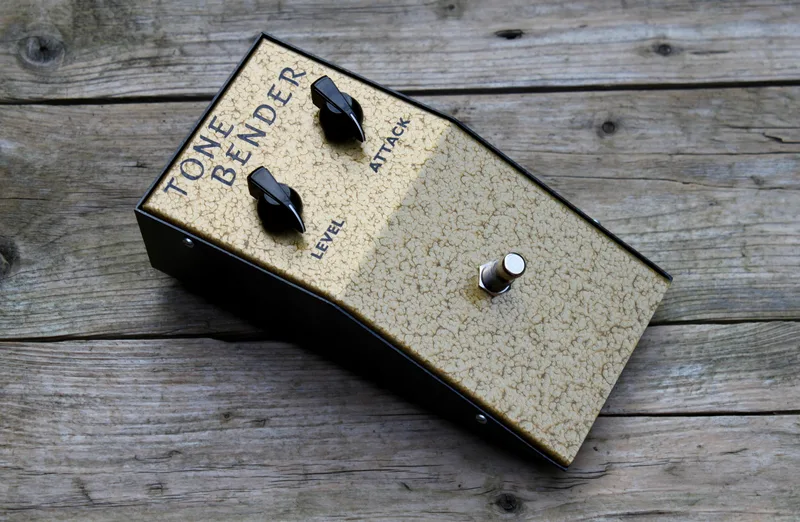
The lineage runs back through the whole Tone Bender line. The earliest Tone Benders used three germanium transistors like the MKIV, and later Sola Sound models such as the Tone Bender Fuzz were, in Tom Hughes's words in Premier Guitar, "again very much like the MKIV but with a different name and graphics."4 The MKIII added a tone control and a different cast-metal housing, and MusicRadar's Jonathan Horsley and Jamie Stillman note that "MkIV revised the EQ range."5 Analog Man's manual for its own MK-III/MK-IV style build describes the shared format as three germanium transistors and a TONE knob.6
D*A*M's own history with the line is long. The builder has been making Tone Benders since 2002, after studying a large percentage of the surviving vintage units, and D*A*M has produced Sola Sound-branded reproductions including the D*A*M Tone Bender MKII SCB and the D*A*M System Tone Bender MKI.789 The MKIV was project number 5 for D*A*M, and project number 2 for Miss Haynes.1
The controls and reversed sockets
The D*A*M MKIV keeps the control layout of the original, which includes one behavior players used to modern fuzzes need to know about1.
| Control | Behavior |
|---|---|
| Fuzz | Works in reverse: full fuzz at full left1 |
| Tone | Treble cap slightly increased in value so the full span of the control is useful1 |
The reverse-wired fuzz control is a trait of the circuit family rather than a D*A*M quirk. Aion FX, describing the Colorsound/Sola Sound Tone Bender Mk III circuit, explains that "it's a gain cut control wired in reverse, so it has the illusion of increasing it in the same way as other fuzzes or overdrives."10 On the D*A*M MKIV, the builder states it directly: "The fuzz control works in reverse, full fuzz, full left."1
The tone control was also tweaked from the original: the treble cap was slightly increased in value to give the brighter side of the control a bit more range, so the full span of the knob is useful and can match unity with the bypassed tone.1
The input and output sockets are reversed compared to conventional pedals, following the original Sola Sound layout. Plan your pedalboard placement accordingly, since the signal enters and exits on the opposite sides from what most modern pedals use.1
The Tone Bender MKIV circuit and the D*A*M project
The circuit is built with the 680k/100k bias network that D*A*M identifies with the MKIV family, described by the builder as constructed with "the 680k/100k bias network."1 The replica circuit boards are the work of Mr. Castledine: "The replica circuit boards are courtesy of the magical mind of Mr. Castledine."1
The transistors are NOS NKT OC84N germanium devices, selected by the builder.1 This differs from the vintage originals, where fuzzboxes.org notes the vast majority of 1970s MKIVs were built with unlabelled transistors, possibly made by STC.3 It also differs from other D*A*M Tone Bender projects: the MKII SCB uses OC75 transistors, black glass and for the most part unbranded,8 and the D*A*M reproduction MKI.5 uses genuine Mullard stamped OC84 devices.7
A D*A*M reissue of the Sola Sound Tone Bender Mk. IV, made in England, was documented by TONEHOME in 2013.11
"This arrangement along with the careful selection of NOS NKT OC84N's offer your auditory processors with a rather delightful fuzz tone that is yet very much a fuzz box but with a good deal of liquidity and movement in its tonal repertoire."
Availability
D*A*M states that the MKIV is sold through Macari's in London, and asks that interested buyers not contact D*A*M directly: "Please do not contact D*A*M about purchasing this product. We are purely the builders and cannot supply this product to the public."1 The same arrangement covers D*A*M's other Sola Sound reproductions, including the Tone Bender Professional MKII.12
Videos
blackholeproductions
pinstripedclips
pinstripedclips
Questions
Why does the D*A*M Tone Bender MKIV fuzz control work in reverse?
The MKIII and MKIV family uses a gain cut control wired in reverse, so turning the knob gives the illusion of increasing gain the way other fuzzes do. On the D*A*M MKIV, full fuzz sits at the full left position of the control rather than full right, following the original Sola Sound wiring.
What transistors are in the D*A*M Tone Bender MKIV?
The D*A*M MKIV uses carefully selected NOS NKT OC84N (New Market OC84N) germanium transistors. The builder describes this arrangement as offering a fuzz tone with liquidity and movement in its tonal repertoire, rather than static dynamics.
Where can you buy the D*A*M Tone Bender MKIV?
D*A*M states that the pedal is sold through Macari's in London, and that D*A*M cannot supply it directly because they are purely the builders. Interested buyers are asked to contact Macari's rather than the builder.
Are the input and output jacks reversed on the D*A*M MKIV?
Yes. The builder notes that the input and output sockets are reversed compared to conventional pedals, matching the layout of the original Sola Sound units the replica reproduces.
Who made the circuit boards for the D*A*M Tone Bender MKIV?
The replica circuit boards were made by Mr. Castledine. D*A*M describes them as courtesy of the magical mind of Mr. Castledine, while D*A*M itself built the pedals around those boards.
Sources (12)
- Tone Bender MKIV, D*A*M (stompboxes.co.uk), 2017
- TONE CITY® London Bender-British Fuzz Guitar Effect Pedal-TONE CITY ▏Analog Pedals & Power supplies, Tone City Audio, 2026
- Sola Sound Tone Bender MKIV • Fuzzboxes, Fuzzboxes.org, 2021-06-03
- Stompbox Classics: Tone Bender, Part 2, Premier Guitar, 2009-10-21
- “A feral supernova awaits if you dime those dials”: EarthQuaker Devices Barrows Fuzz Attacker review, MusicRadar, 2025-11-12
- sunbenderMKIV.docx, Analog Man, 2021-08
- Tone Bender MKI.5, www.stompboxes.co.uk, 2017
- Tone Bender MKII SCB, D*A*M (stompboxes.co.uk), 2017
- Tone Bender MKI, D*A*M (stompboxes.co.uk), 2019
- Phobos Germanium Fuzz / Tone Bender Mk. III, Aion FX, 2020-07-03
- TONEHOME, TONEHOME - the World of Vintage Guitar Effect Pedals
- Tone Bender MKII, stompboxes.co.uk, 2017