

The Death By Audio Robot is an 8-bit pitch transposer fuzz: instead of the analog clipping of a conventional fuzz pedal, it pushes your signal through a lo-fi, 8-bit chip that changes the pitch, giving bit-crushed octaves, pitch bends and robotic arpeggiation in one box12. Delicious Audio described it as "a manic 8-bit pitch transposer fuzz that's become somewhat cherished among experimental guitarists"1. In a Stompbox Book interview, Death By Audio's Oliver Ackermann explained that "the Robot uses this lo-fi, 8-bit chip to change the pitch"2.
The pedal runs four operational modes: Normal, Octave Up, Octave Down and Arpeggiator3. In Normal mode it works as a lo-fi fuzz pedal; the other modes transpose the pitch up or down an octave or sequence it automatically. One builder who cloned the circuit said the sound "reminds me of my old commodore 64"3, which is a fair picture of where the 8-bit character sits.
How the modes and controls work
The Robot's single Control knob does something different in each mode, and the fuzz amount is set by a trimmer inside the enclosure rather than a knob on the outside3.
| Mode | What it does | What the Control knob does |
|---|---|---|
| Normal | Lo-fi fuzz pedal | Bends the pitch down from clockwise |
| Octave Up | Transposes the pitch up an octave | Fully clockwise gives the octave; turned down, it bends the pitch |
| Octave Down | Transposes the pitch down an octave | Fully clockwise gives the octave; turned down, it bends the pitch of the octave down |
| Arpeggiator | Steps the pitch through a sequence | Sets the arpeggiation speed and shifts the pitch slightly, letting the arpeggiator go higher |
The fuzz itself is adjusted with the internal gain control, so changing how dirty the pedal sounds means opening the box3. Builders on Guitar FX Layouts noted that the amount of fuzz "can be further toyed with using the internal gain control"3.
Inside, the original pedal selects its pitch using pins 1 to 3 of the IC, based on a logic table of which combination of the three pins is grounded3. That is what gives the pedal its pre-selected sounds rather than a continuously variable pitch control.
The arpeggiator mode
Arpeggiator mode is the Robot's most distinctive setting. The pitch arpeggiates in a sequence on its own, and the Control knob adjusts the speed of the arpeggiation while also making a slight change in pitch, allowing the arpeggiator to go higher3. Guitar FX Layouts summed up the pedal as packing "arpeggiation, whacky robotic nonsense, and 8-bit fuzz fun" together3.
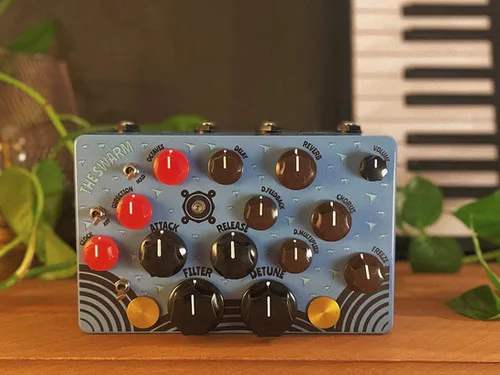
For comparison, a monophonic arpeggiator that automatically sequences held notes in a variety of patterns is also the headline feature of the Arpeggiator Mode on Hungry Robot's The Swarm4, a pedal built around the same idea of automatic note sequencing, though as a dedicated function rather than one mode of a fuzz.
Vibrato: not on the original
The original Robot has no vibrato mode3. A modded vero layout of the circuit published by IvIark on Guitar FX Layouts added one: his version used pins 15 to 18 of the IC instead of pins 1 to 3, so that one pin turns vibrato on and off, one turns the robot function on and off, and the other two step through the pitches in sequence up or down3. In that build the vibrato switch is momentary, and the gain control was taken external as a knob after a recommendation from another builder3. That layout was verified as working after corrections in May 20133.
DIY versions and the builder community
The Robot has a real following among DIY builders, with two main routes.
- A vero (stripboard) layout by IvIark with individual switching for the IC's internal functions, including the momentary vibrato switch described above3.
- The Roboto, a PCB from PedalPCB inspired by the pedal. PedalPCB states plainly that the Roboto is not manufactured or distributed by Death By Audio5.
Builder reports on the Guitar FX Layouts thread give a mixed picture of the DIY experience:
- One builder of the rotary-switch version reported it "sounds and works like the clips I've seen posted"3.
- Another found the modded version "sounded too messy for my taste" and preferred the original's simpler, pre-selected sounds3.
- A builder of a tagboard layout reported an extremely low volume issue after a build3.
- One builder found a clone "verbatim to the original" and observed that "this effect is loved or hated, but nobody shows indifference when listens to the box"3.
Builders also worked out fixes along the way: adding a BMP tonestack with an LPB booster after the circuit made a bass-heavy build more usable, and for the Zener diodes in the circuit, any 3.6V Zener was reported to work3.
Where it sits in Death By Audio's range and what reviewers said
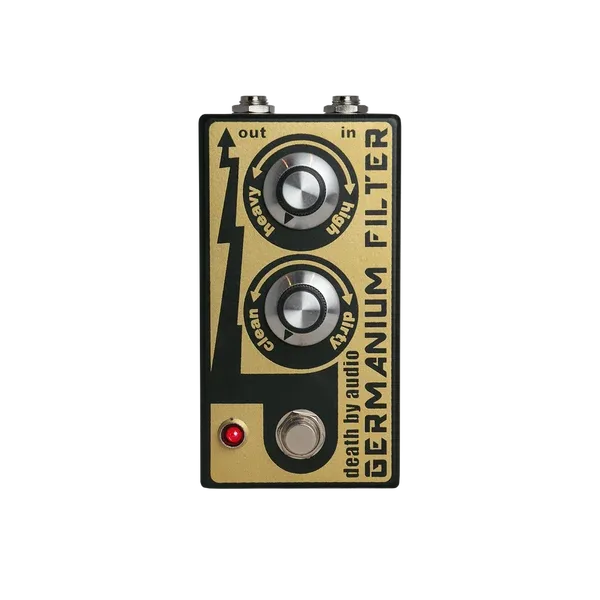
The Robot brought Death By Audio into the lo-fi, bit-crushing side of effects3, a different lane from the high-gain Fuzz War and the filter-based Harmonic Transformer and Germanium Filter. Its pitch-shifting character also places it closer to the octave and pitch pedal category than a typical fuzz.
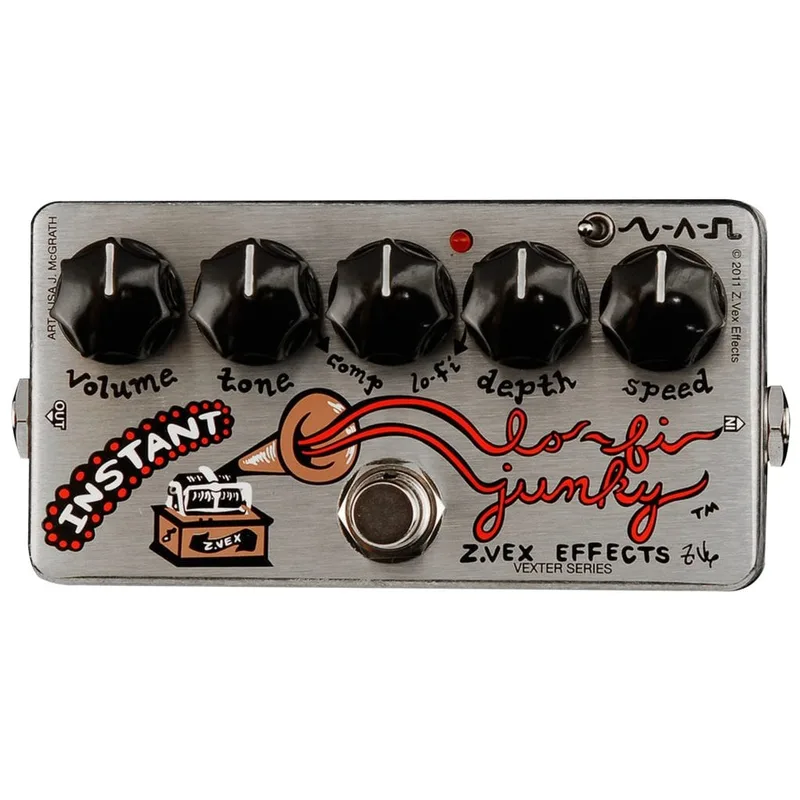
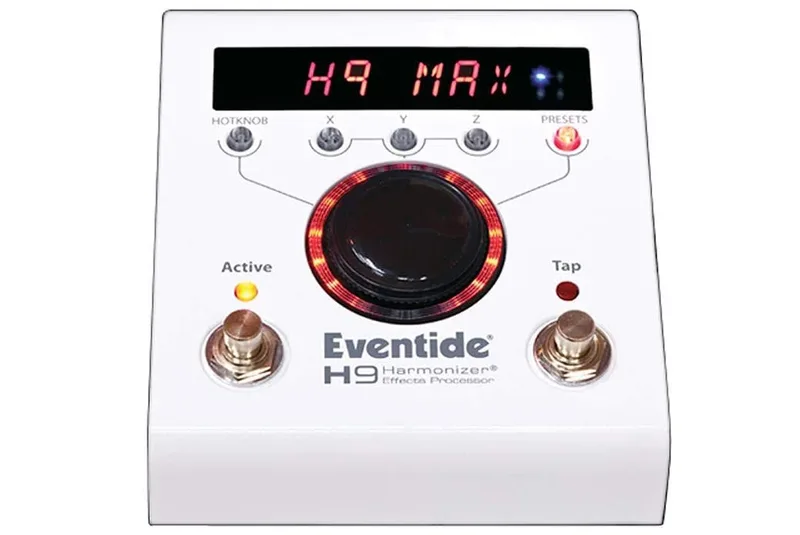
In a 2026 JHS Pedals rundown of the greatest pedals of the century, the Robot tied for first in the modulation category, alongside the ZVex Instant Lo-fi Junky Vexter Chorus/Vibrato and the Eventide H9 Max6, a notable placement for a pedal that is, at heart, a fuzz.
Videos
ProGuitarShopDemos
Rabea Massaad
intheblues
Questions
What does the arpeggiator mode on the Death by Audio Robot do?
In Arpeggiator mode the Robot steps the pitch of your note through a sequence automatically. The Control knob sets the speed of the arpeggiation and also shifts the pitch slightly, letting the arpeggiator climb higher. It is the mode most responsible for the pedal's robotic, video-game character.
Does the Death by Audio Robot have a vibrato mode?
No. The original pedal has four modes: Normal, Octave Up, Octave Down and Arpeggiator, with no vibrato among them. A DIY vero layout published on Guitar FX Layouts added a momentary vibrato switch by rewiring the pitch-selection IC, but that was a builder modification, not a factory feature.
Is there a DIY version of the Death by Audio Robot?
Yes, in the DIY community. Guitar FX Layouts published a vero layout of the circuit with individual switching for the IC's internal functions, and PedalPCB sells a PCB called the Roboto inspired by the pedal. PedalPCB notes the Roboto is not manufactured or distributed by Death By Audio.
How do you adjust the fuzz on the Death by Audio Robot?
The amount of fuzz is set by an internal gain control inside the pedal, so you have to open the enclosure to change it. In Normal mode the pedal acts as a lo-fi fuzz and the external Control knob bends the pitch down from its clockwise position.
Sources (6)
- Death By Audio Robot 8-bit Fuzz Octaver, Delicious Audio, 2018-05-17
- Death by Audio, Stompbox Book, 2019-12-20
- Guitar FX Layouts: Death By Audio Robot, Guitar FX Layouts (tagboardeffects.blogspot.com), 2013-04-24
- SWARM MANUAL, Hungry Robot
- Roboto - PedalPCB.com, PedalPCB.com
- GREATEST PEDALS OF THE CENTURY, JHS Pedals