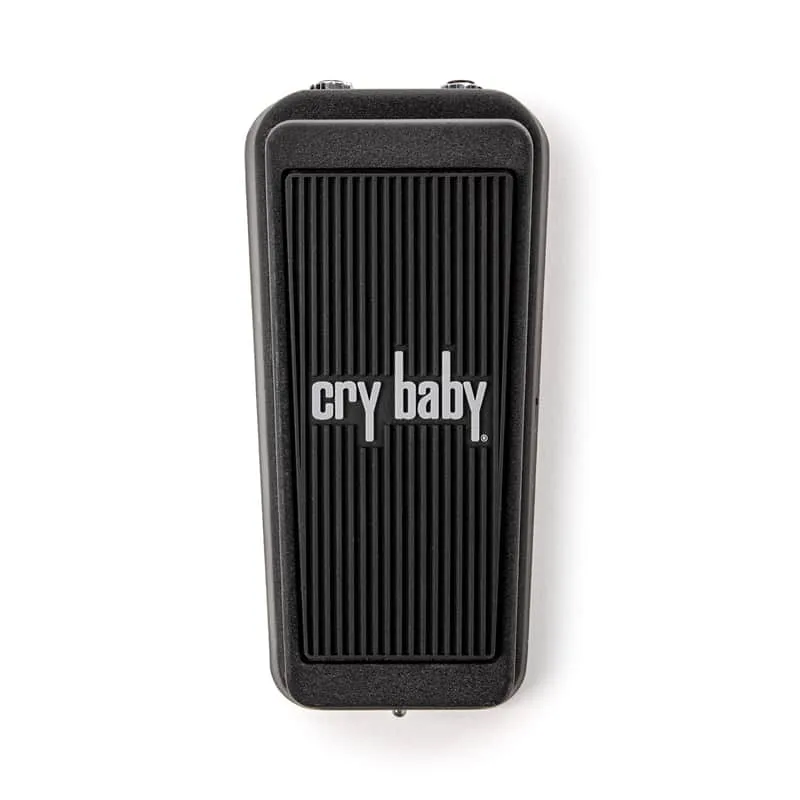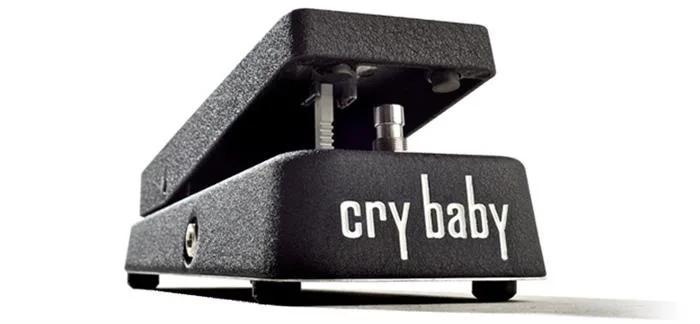


The Dunlop Cry Baby Junior Wah (CBJ95) is a wah pedal from Dunlop built for players who want the full-size Cry Baby voice without the footprint of a standard wah on their pedalboard. It was designed in collaboration with Pedaltrain, and its 8-inch housing length is meant to line up with the routing spaces on Pedaltrain-style boards1. The input, output and power jacks are all front-mounted, which frees up space on the sides of the pedal and lets pedals sit closer together1.
What sets the Junior apart from a single-voice wah is its three-position voicing switch on the side of the pedal, which selects one of three Cry Baby voices covering the full frequency spectrum1. Dunlop describes the H setting as the aggressive modern sound of the GCB95, M as the midrange growl of vintage wah pedals, and L as a sound that is dark and rich1.
What it does: a full-size Cry Baby voice in a smaller housing
A wah pedal sweeps a resonant filter across a band of frequencies as you rock the treadle with your foot, producing the vocal "wah" effect. The Junior keeps the treadle-and-rocker format of a standard Cry Baby in a more travel-friendly, compact housing, with front-mounted jacks for tighter pedal configurations1. Dunlop positions it as a board-friendly wah rather than a downsized compromise: the three voicings cover the same territory as several full-size Cry Baby models in one pedal.
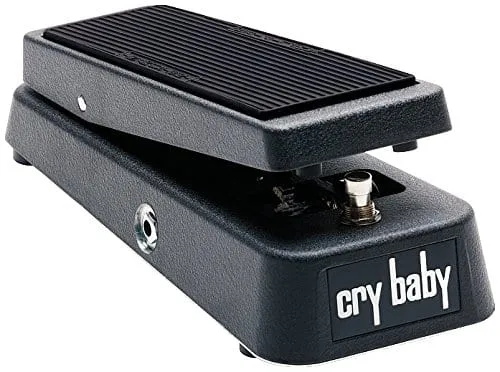
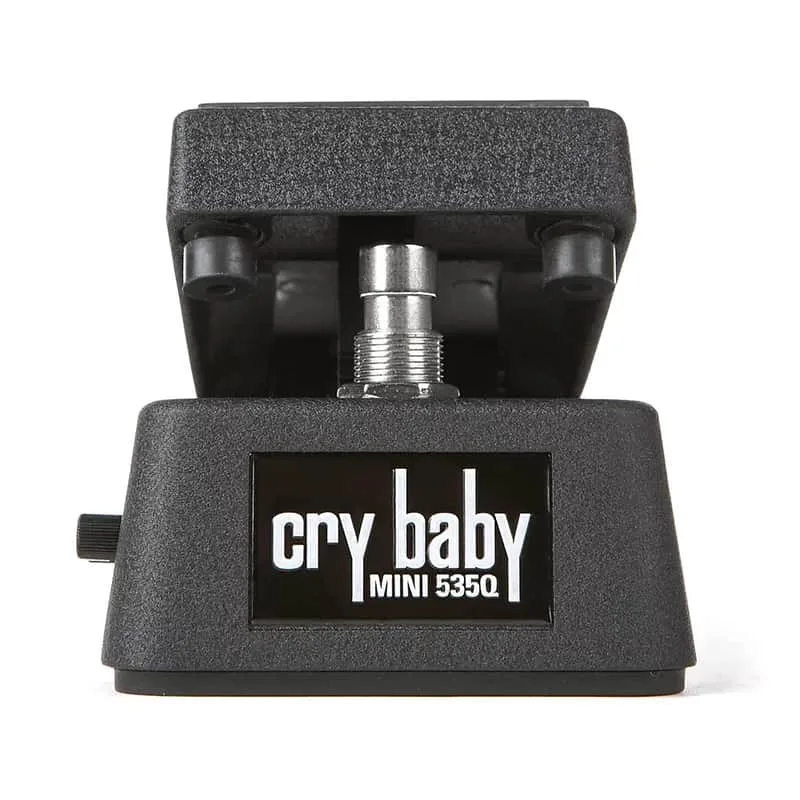
The three voices map onto familiar Cry Baby territory. H reproduces the sound of the GCB95 Cry Baby Standard, which Dunlop describes as a modern interpretation of the original 1966 Cry Baby Wah sound6. M moves toward the midrange growl of vintage wah pedals, and L drops the sweep lower for a dark, rich voice1. For comparison, the Cry Baby Mini packs three internally adjustable voicings (Low, Vintage, GCB95) into a housing half the size of a standard Cry Baby7, while the Junior keeps a full-length treadle in a shorter chassis.
MusicRadar's review team summed up the pedal's appeal:
"The Cry Baby Junior delivers three great-tasting flavours of wah in a pedalboard-friendly format"5
MusicRadar review team5
The same review noted the sensible size for a pedalboard, its versatility as a wah, and its top-mounted jacks, and added that the Cry Baby Mini 535Q is smaller still if space is an issue5.
The controls: voicing switch, torque clutch and footswitch
The Junior has three controls, and the manual walks through each in order28:
| Control | What it does |
|---|---|
| VOICING switch | Selects one of three frequency ranges: H, M or L2 |
| FOOTSWITCH | Toggles the effect on/bypass; a white LED indicates on8 |
| Torque clutch | Sets the rocker's resistance to being moved8 |
The voicing switch sits on the side of the pedal, where it stays accessible without opening the enclosure. The manual for the Special Edition explains the settings: the default is H, for the standard GCB95 sound; M gives a more vintage, midrange-focused sound; and L selects a lower frequency range8. The switch orientation is H toward the heel and L toward the toe8.
The torque clutch is an adjustable clutch under the rocker at the heel of the pedal. Turning it clockwise increases the rocker's resistance, and counterclockwise decreases it, so you can set how firmly the treadle holds its position under your foot. A wrench is included8.
Power and connections: 9V, 3 mA, front-mounted jacks
The Junior runs on one 9-volt battery, accessed via the bottom of the pedal2. For pedalboard use, it also takes a 9V DC center-negative supply4, and the Special Edition manual lists the Dunlop ECB003 9-volt adapter or an MXR Brick Series power supply as options8. Current draw is 3 mA4, low enough that it places almost no demand on a shared power supply.
The input, output and power jacks are all mounted on the front face of the pedal rather than the sides, which Dunlop says allows a tighter configuration of pedals and frees up space on the sides of your board14. The manual labels the jacks INSTRUMENT (from your guitar) and AMPLIFIER (to your amp input)8.
The battery is accessed through the bottom of the pedal, so swapping it means taking the Junior off the board. On a powered board, the 3 mA draw makes the 9V DC jack the practical everyday option24.
Specifications
Dunlop's manual gives the full measured spec sheet for the Junior28:
| Specification | Value |
|---|---|
| Wah frequency range, H | 380 Hz to 2100 Hz2 |
| Wah frequency range, M | 330 Hz to 1800 Hz2 |
| Wah frequency range, L | 270 Hz to 1500 Hz8 |
| Input impedance | 800 kΩ8 |
| Output impedance | <10 kΩ8 |
| Max input level | -8.0 dBV2 |
| Max output level | +10 dBV2 |
| Gain, heel down | +19.5 dB8 |
| Gain, toe down | +19.0 dB8 |
| Noise floor, heel down | -98 dBV A-weighted8 |
| Noise floor, toe down | -89 dBV A-weighted8 |
| Bypass | True Hardwire2 |
| Current draw | 3 mA4 |
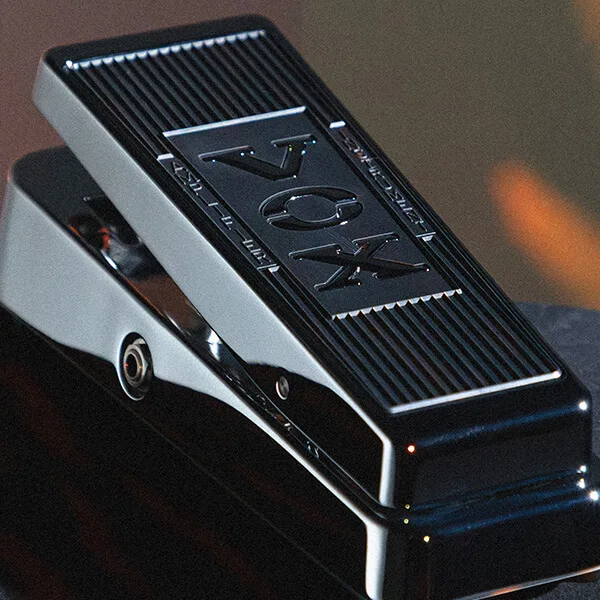
The three frequency ranges are the practical story here: H places the sweep where the GCB95 lives, M pulls it down and in for a vintage midrange focus, and L drops it further for a dark, low voice. A technical analysis of the GCB95 circuit by GuitarPCB notes that the Cry Baby has slightly less bass content than the VOX V847 due to its input buffer filtering part of the bass, which is the lineage the H setting draws on97.
History and versions
The CBJ95 Cry Baby Junior Wah is a current Dunlop product, made in the USA5, with its manual dated 20202. Dunlop also produced a Cry Baby Junior Wah Special Edition, documented in a 2022 manual with the same voicing ranges, torque clutch and power spec as the standard Junior8. Dunlop's buying guide lists the Junior among its wah lineup as a pedal that lets you switch between high, mid and low Cry Baby Wah voices10.
Dunlop continues to support the pedal with replacement parts through its Cry Baby Junior Wah Parts page, which also carries the $169.99 list price for the CBJ953.
Videos
Premier Guitar
guitarguitar
GAK
Questions
Is the Cry Baby Junior true bypass?
Dunlop's manual lists the CBJ95's bypass as True Hardwire, which passes the signal straight through the switching when the effect is off. It is not described as true bypass in the way some other Cry Baby models are, such as the Cry Baby Classic, so check the manual's wording if bypass type matters to your rig.
Does the Cry Baby Junior take a battery?
Yes. The manual specifies one 9-volt battery, accessed via the bottom of the pedal. It can also run on a 9V DC center-negative supply, drawing only 3 mA, so it is easy to power alongside other pedals on a board.
How big is the Cry Baby Junior compared to the Cry Baby Mini?
The Junior measures 100 mm wide by 202 mm deep by 68 mm tall, with an 8-inch housing length that Dunlop says lines up with the routing spaces on Pedaltrain boards. MusicRadar's reviewers note the Cry Baby Mini 535Q is smaller still if board space is the main concern.
Does the Cry Baby Junior sound the same as the GCB95?
On the H voicing setting, yes: Dunlop says H gives you the aggressive modern sound of the GCB95, and the manual calls it the standard GCB95 sound. The M and L settings offer a vintage midrange-focused voice and a lower, darker range, so the Junior covers more ground than a single-voice GCB95.
What is the frequency range of the Cry Baby Junior?
It depends on the voicing switch. H sweeps 380 Hz to 2100 Hz, M sweeps 330 Hz to 1800 Hz, and L sweeps 270 Hz to 1500 Hz, according to Dunlop's manual. The three ranges let you place the wah's sweep higher or lower to suit your playing.
Sources (10)
- CRY BABY® JUNIOR WAH, Dunlop (www.jimdunlop.com)
- CBJ95.pdf, Jim Dunlop, 2020
- CRY BABY® JUNIOR WAH, Jim Dunlop (www.jimdunlop.com)
- CBJ95 Cry Baby Junior Wah by Dunlop, RockBoard PedalPedia, 2026
- Dunlop CBJ95 Cry Baby Junior and DVP5 Volume (X) review, MusicRadar, 2021-07-28
- CRY BABY® STANDARD WAH, Dunlop (jimdunlop.com)
- CRY BABY® MINI WAH, Dunlop (www.jimdunlop.com)
- CBJ95SW.pdf, Jim Dunlop, 2022
- Dunlop CryBaby GCB-95 Cicuit Analysis, GuitarPCB
- RANGE OF EXPRESSION: FIND YOUR CRY BABY® WAH, Dunlop (lifestyle.jimdunlop.com), 2021-10-08