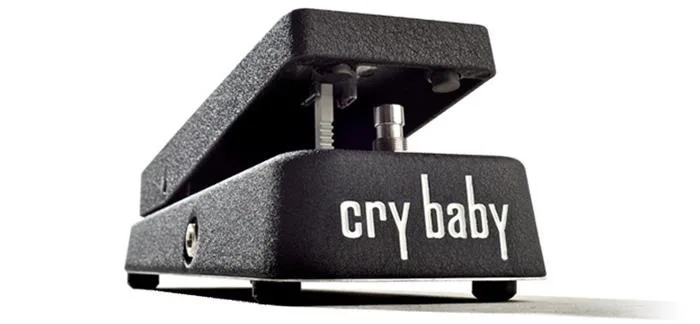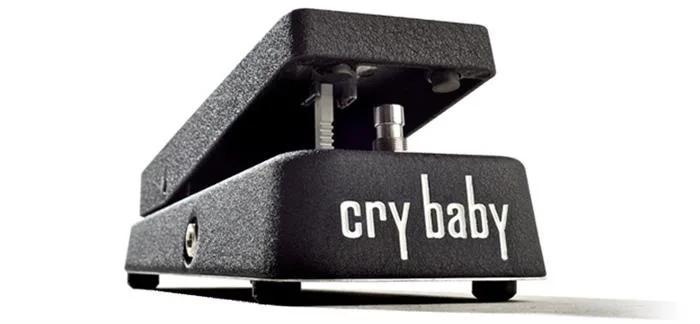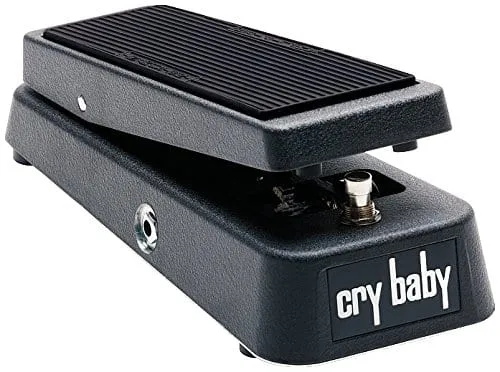


The Dunlop Cry Baby Standard, model GCB95, is the baseline pedal of the Cry Baby wah line: a rocking treadle that sweeps a bandpass filter across your guitar's frequency range, producing the vocal "wah" effect heard on countless recordings. Dunlop describes it as featuring "the legendary Fasel® inductor, a focused high end, and an aggressive wah sound"1, and positions it as "a modern interpretation" of the original 1966 Cry Baby sound1. It lists at $99.992.
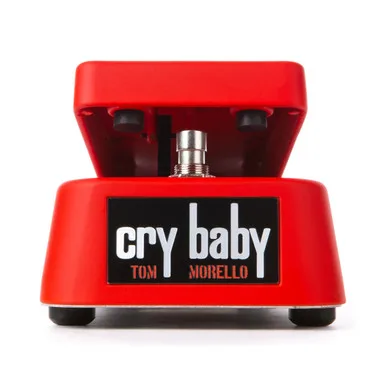
A wah works by moving a resonant peak up and down the spectrum as you rock the pedal with your foot. In the GCB95 that peak sits relatively high and the effect is pronounced, which is why Dunlop's own buying guide groups it as the "Standard Wah" voicing and why later Dunlop pedals, such as the Tom Morello signature model, are described as built around "the aggressive, modern sound of the GCB95"3. Dunlop's history article says its engineers designed the GCB95 by "raising the frequency range and giving it a more pronounced wah effect"4.
What the GCB95 does to your sound
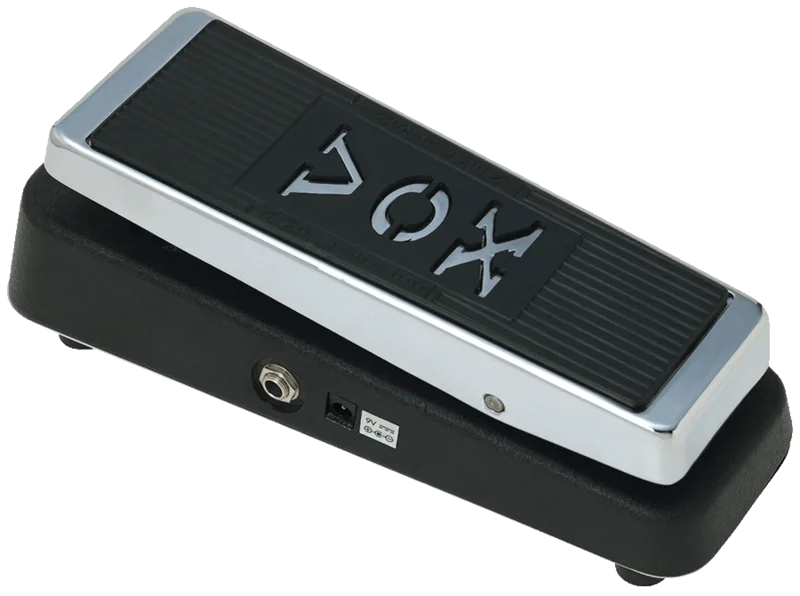
Dunlop's own words for the Standard are a focused high end and an aggressive wah sound1. In practice that means the sweep emphasizes the upper mids and top of the range rather than the low end. GuitarPCB's circuit analysis of the GCB-95 considers it to have the classic wah tone, but notes it carries slightly less bass content than the VOX V847 because the input buffer filters part of the bass out of the signal6. The same analysis identifies the inductor in the circuit as an L1 500mH part6.
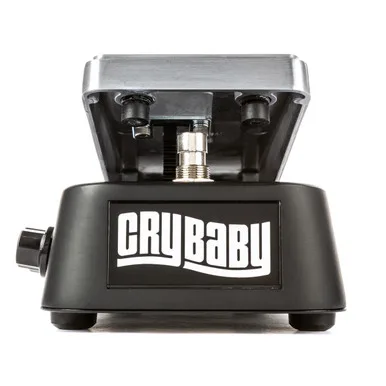
The Fasel inductor is the component most often credited with the Cry Baby's voice. Dunlop's history of the wah line records that the red Fasel inductor replaced the original custom inductor in 20044, and the current product page lists the Fasel as a standard feature1. The same red Fasel turns up elsewhere in the line, for example in the Custom Badass Dual-Inductor Edition, which Dunlop describes as combining a red Fasel with GCB95 circuitry78.
For players who want the GCB95 sound in a smaller box, the Cry Baby Junior's H setting is described by Dunlop as giving "the aggressive modern sound of the GCB95"9.
The treadle and Hot Potz pot
The GCB95 is built around two durability claims from Dunlop: a heavy-duty die-cast housing and a Hot Potz potentiometer tested to one million cycles1. The potentiometer is the part that actually moves with the treadle, translating your foot position into the filter sweep, so its cycle rating is a measure of how long the pedal's action should stay smooth before the pot wears out. There are no knobs to set: the pedal is switched on by pushing the treadle forward, and the sweep is entirely under your foot.
Power and specifications
The GCB95 runs on 9 volts from three sources: one 9-volt battery accessed through the bottom of the pedal, a Dunlop ECB003 AC adapter (ECB003E in Europe), or a Dunlop DCB10 DC Brick power supply5. Dunlop's manual lists the current draw at 900µA5, and GuitarPCB's analysis agrees the simple circuit keeps consumption below 1mA6. RockBoard's listing for a GCB95 finish gives 2.5mA instead10, so the published figures differ, but either number is negligible next to most digital pedals.
| Specification | Value |
|---|---|
| Power supply | 9 volts DC16 |
| Current draw | 900µA5 |
| Input impedance | 800 kΩ5 |
| Output impedance | 10 kΩ5 |
| Max input level | -8.0 dBV5 |
| Max output level | +10 dBV5 |
| Signal-to-noise, heel down | 98 dBV5 |
| Signal-to-noise, toe down | 89 dBV5 |
On bypass, GuitarPCB's circuit analysis lists a true bypass switch for the GCB-95 and also describes the popular true bypass mod, which "uses a 3PDT switch to bypass the whole circuit in the typical boutique pedal arrangement," typically done before the input buffer stage6. Griffin Effects sells a true bypass kit it says "will work with The Crybaby GCB-95. All Revisions"11, so players with older units can convert them.
From the 1966 Cry Baby to the GCB95
The Cry Baby name goes back to the original 1966 wah, and Dunlop's manual for the GCB95 carries the line "THE ORIGINAL SINCE 1967"51. The GCB95 itself is newer: GuitarPCB dates the Dunlop Cry Baby to a release "around 1982" and describes its circuit as a copy of the original VOX model made by VOX/Thomas Organ Co in 197061. Dunlop's product page frames the pedal as "a modern interpretation" of the 1966 sound1.
The key change in the pedal's life came in 2004, when, according to Dunlop's own history, the original custom inductor was replaced with the red Fasel inductor still used today4. Since then the GCB95 has become the reference point for the whole line: Dunlop's buying guide describes the 95Q as based on the GCB953, and the Tom Morello signature wah as carrying the GCB95's aggressive modern sound3.
Standard versus Classic
The closest sibling in the current line is the Cry Baby Classic (GCB95F). Dunlop says its engineers "re-tuned the Cry Baby Standard Wah circuit to have a lower frequency center and a more subtle effect" for the Classic1213, which also adds true bypass switching and a Fasel inductor12. The Classic lists at $139.9913 against the Standard's $99.99141315. In short: the Standard is the brighter, more aggressive, cheaper of the two; the Classic moves the sweep lower and softens the effect.
Several other Cry Babies are built on or voiced around the GCB95, including the 95Q and the Tom Morello signature wah3. If a GCB95 sound with extra features appeals, those pages cover the differences.
Videos
Sweetwater
Pedal Tone
Reverb
News
Questions
Is the Cry Baby GCB95 true bypass?
GuitarPCB's circuit analysis of the GCB-95 lists a true bypass switch, and also describes a popular true bypass mod using a 3PDT footswitch to bypass the whole circuit ahead of the input buffer stage. Griffin Effects sells a true bypass kit that it says works with the GCB-95 in all revisions, so players can convert older or stock units.
When did the GCB95 get a Fasel inductor?
According to Dunlop's own history of the Cry Baby, the red Fasel inductor replaced the original custom inductor in 2004. Today's Cry Baby Standard product page lists the Fasel inductor as a core feature of the pedal.
What is the difference between the Cry Baby Standard and the Classic?
Dunlop says the Classic (GCB95F) takes the Standard's circuit and re-tunes it to a lower frequency center for a more subtle effect. The Standard keeps the higher, more aggressive sweep. The Classic also lists true bypass switching and a $139.99 price against the Standard's $99.99.
How much current does the Cry Baby GCB95 draw?
Dunlop's GCB95 manual lists a current draw of 900 microamps, and GuitarPCB's circuit analysis puts consumption below 1mA. RockBoard's listing for a GCB95 finish gives 2.5mA, so the figures differ between sources, but either way the draw is tiny by pedalboard standards.
Does the Cry Baby Standard take a battery?
Yes. Dunlop's manual says the GCB95 runs on one 9-volt battery accessed through the bottom of the pedal, or on a Dunlop ECB003 AC adapter (ECB003E in Europe), or a Dunlop DCB10 DC Brick power supply.
Sources (15)
- CRY BABY® STANDARD WAH, Dunlop (jimdunlop.com)
- TOM MORELLO CRY BABY® WAH, Dunlop (jimdunlop.com)
- RANGE OF EXPRESSION: FIND YOUR CRY BABY® WAH, Dunlop (lifestyle.jimdunlop.com), 2021-10-08
- Evolution of the Cry Baby Wah at Dunlop, Dunlop (lifestyle.jimdunlop.com), 2017-04-27
- GCB95.pdf, Jim Dunlop, 2019
- Dunlop CryBaby GCB-95 Cicuit Analysis, GuitarPCB
- CRY BABY® CUSTOM BADASS™ DUAL-INDUCTOR EDITION WAH, Dunlop (jimdunlop.com)
- LTD Edition: Dunlop GCB65 Cry Baby, Delicious Audio, 2022-01-11
- CRY BABY® JUNIOR WAH, Dunlop (www.jimdunlop.com)
- GCB95 Cry Baby Wah (Sparkly Red) by Dunlop, RockBoard (PedalPedia), 2026
- Crybaby GCB-95 True Bypass Kit, Griffin Effects
- CRY BABY® CLASSIC WAH, Dunlop (www.jimdunlop.com)
- IRON MAIDEN KILLERS CRY BABY® WAH, Jim Dunlop (jimdunlop.com)
- CRY BABY® DAREDEVIL™ FUZZ WAH, Jim Dunlop (www.jimdunlop.com)
- LEO NOCENTELLI CRY BABY® MARDI GRAS WAH, Jim Dunlop (jimdunlop.com)